Akai GX-747: The Pinnacle of Open-Reel Engineering
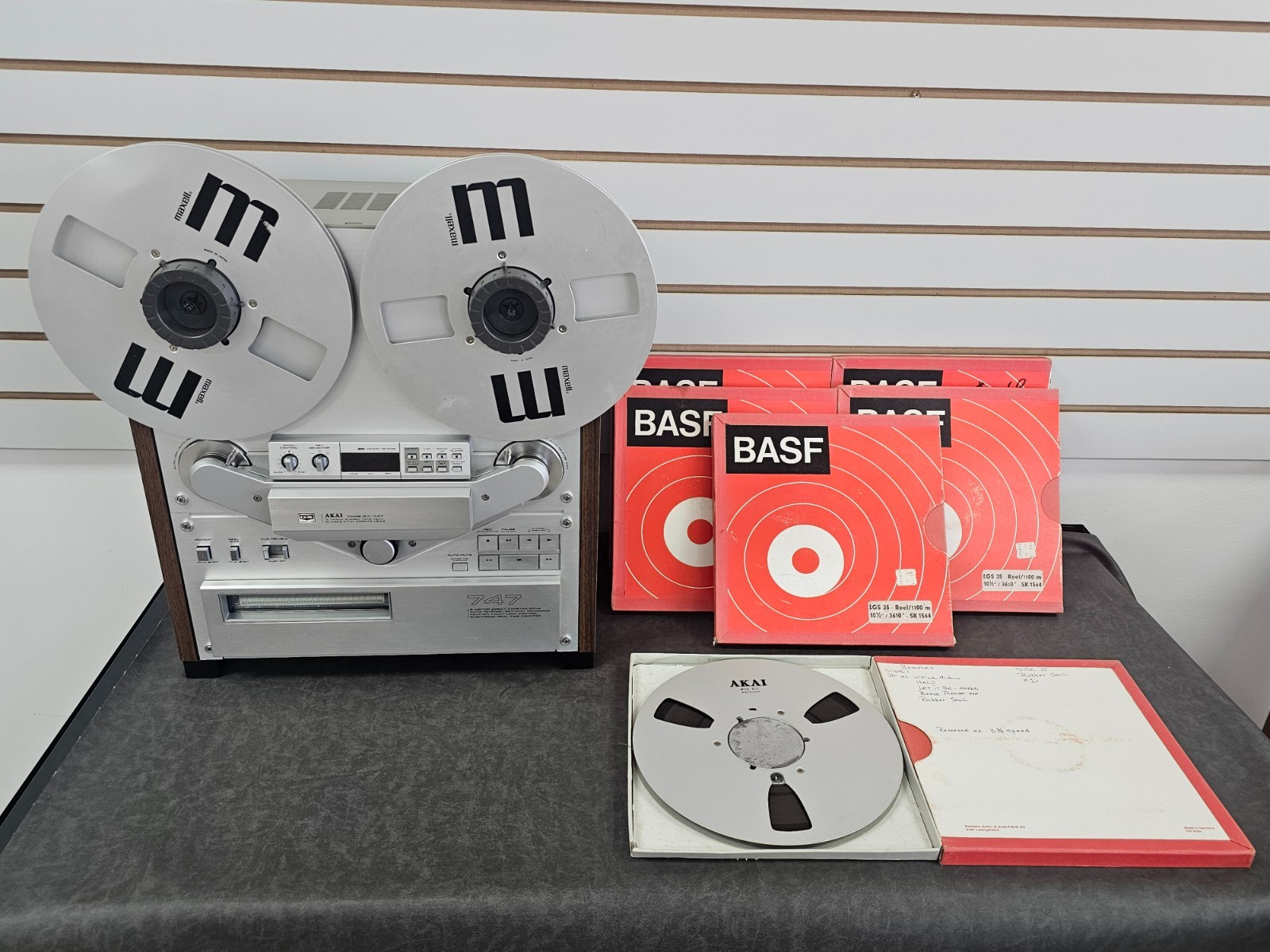
In the golden era of analog audio, few tape decks captured the imagination of audiophiles and recording engineers quite like the Akai GX-747. Released in 1979, this 3-head, dual-motor, full-track open-reel tape recorder stood as a flagship model in Akai’s illustrious lineup, representing the culmination of decades of Japanese innovation in reel-to-reel technology. Though often overshadowed by brands like Sony or Tandberg in mainstream discussions, the GX-747 has earned a devoted following among analog purists for its robust build, exceptional sound quality, and thoughtful engineering.
Born during a time when high-fidelity home audio systems were reaching new heights, the GX-747 was designed not just for casual listening but for serious tape enthusiasts and semi-professional users who demanded precision, reliability, and sonic transparency. It was a machine built to last—both in construction and in musical relevance.
Technical Specifications
The GX-747 was engineered with audiophile-grade components and a no-compromise approach to tape transport mechanics. Below is a detailed breakdown of its key specifications:
| Feature | Specification |
| Type | 3-head open-reel tape deck |
| Heads | Separate record, playback, and erase heads (all permalloy) |
| Motors | Dual direct-drive capstan motors |
| Tape Speeds | 7.5 ips, 15 ips (with optional 3.75 ips via pulley change) |
| Track Formats | Full-track mono, stereo (½-track), and ¼-track |
| Wow and Flutter | < 0.08% (WRMS) |
| Frequency Response (15 ips) | 30Hz – 20kHz (+/-2dB) |
| Signal-to-Noise Ratio | > 60dB (Dolby B/C) |
| Input/Output Levels | Line In: 1V, Line Out: 0.8V; Mic In: 1.5mV |
| Equalization Settings | 120µs (NAB), 180µs (IEC) switchable |
| Recording Bias | Manual calibration via front-panel meter |
| Tape Compatibility | Type I (Normal), Type II (Chrome), Type IV (Metal) |
| Remote Control | Optional RM-747 remote |
| Dimensions | 440mm (W) × 150mm (H) × 350mm (D) |
| Weight | 14.5 kg (32 lbs) |
| Impedance | 2mV (DIN), 0.25mV (mic) |
| Noise Reduction | dbx Type1 |
| Years Produced | 1982-1985 |
The GX-747 supported standard 10.5" reels and featured a solenoid-controlled tape transport with auto-stop at reel end, a rarity in consumer decks of the era. Its quartz-locked speed control (on later revisions) ensured exceptional speed stability, critical for maintaining pitch accuracy and minimizing wow and flutter.
Sound Characteristics and Performance
The GX-747 is often praised for its neutral, detailed, and dynamic sound signature—a hallmark of Akai’s design philosophy. Unlike some tape decks that impart a "colored" or overly warm tonality, the GX-747 aims for transparency, making it an excellent choice for critical listening and archival transfers.
At 15 inches per second (ips), the deck delivers a wide frequency response and low distortion, capturing the full depth and spatial imaging of master tapes. The separate playback head allows for precise azimuth alignment, enabling users to optimize stereo separation and high-frequency response. When paired with Dolby B or C noise reduction and high-quality tape stock (such as Ampex 456 or BASF SM46), the GX-747 achieves a signal-to-noise ratio that rivals early digital formats.
Its ability to handle Type IV metal tapes—a relatively new innovation in the late 1970s—gave the GX-747 future-proofing that many contemporaries lacked. Metal tapes required higher bias and optimized equalization, both of which the GX-747 could accommodate with manual calibration, appealing to advanced users who pushed the limits of analog fidelity.
Notable Features and Innovations
What truly set the GX-747 apart from its peers were its user-centric design elements and professional-grade features:
- 3-Head Configuration: Separate record, playback, and erase heads allow for real-time monitoring of the recorded signal, a feature typically found in studio decks. This enables immediate feedback during recording sessions.
- Manual Bias and EQ Calibration: While intimidating to beginners, this feature gives experienced users precise control over tape formulation optimization, maximizing fidelity across different tape types.
- Dual Capstan Drive System: Ensures consistent tape tension and speed, reducing slippage and wear on both the tape and heads.
- Comprehensive Metering: Large VU meters for output and record level, plus a dedicated bias adjustment meter, provide visual feedback for optimal setup.
- Selectable Playback EQ: Switch between NAB and IEC equalization curves, allowing playback of tapes recorded to different standards.
- Direct Drive Capstans: Eliminate belt wear and slippage, contributing to long-term reliability and speed accuracy.
The front panel is cleanly laid out, with tactile knobs and switches that feel substantial and precise. The tape path is fully accessible, making cleaning and demagnetizing straightforward—a necessity for maintaining peak performance.
Common Issues and Maintenance
Like all high-performance analog equipment, the GX-747 requires regular maintenance to perform at its best. Over time, several issues may arise:
- Dried-up Lubricants: The precision mechanical transport relies on grease in the reel table assemblies and solenoids. After 30+ years, these can harden, leading to sluggish operation or binding. A full mechanical service with ultrasonic cleaning and relubrication is recommended for units that have been idle.
- Worn Pinch Pads: The rubber pinch rollers can harden or deform, causing speed instability. Replacement with modern equivalents is straightforward.
- Head Wear and Alignment: Permalloy heads are durable but can wear or become misaligned. Azimuth adjustment is critical for stereo imaging and high-frequency response.
- Demagnetization: Regular demagnetizing (using a non-residual tape head demagnetizer) is essential to prevent dull sound and increased noise.
- Capacitor Aging: Electrolytic capacitors in the power supply and audio circuits may degrade, leading to hum or channel imbalance. A recap by a qualified technician can restore performance.
Despite these age-related concerns, the GX-747 is known for its mechanical robustness. Its metal chassis, heavy-duty reel tables, and over-engineered transport make it far more durable than many consumer-grade decks of the era.
Current Market Value and Collectibility
Today, the Akai GX-747 is a highly sought-after machine among analog enthusiasts and reel-to-reel collectors. While not as widely recognized as some Japanese contemporaries, its reputation for quality has grown steadily in niche circles.
In excellent working condition, a GX-747 typically sells for $800–$1,500, depending on accessories (such as the remote control or original case), included tape heads, and overall cosmetic state. Fully serviced units with aligned heads and new pinch pads command premium prices.
Its collectibility is bolstered by its relative rarity—Akai produced fewer GX-747 units compared to mass-market models—and its appeal to both audiophiles and archivists. The ability to record and play back metal tapes also makes it a favorite for digitizing vintage recordings with high fidelity.
Conclusion and Legacy
The Akai GX-747 stands as a testament to the art of analog engineering. In an era increasingly dominated by digital convenience, the GX-747 reminds us of the tactile joy and sonic richness of reel-to-reel tape. It was not merely a playback device but a tool for creation, capable of capturing music with warmth, depth, and presence that remains unmatched by many modern formats.
While it demands respect, maintenance, and a bit of technical know-how, the GX-747 rewards its users with a listening experience that is both immersive and authentic. For collectors, restorers, and analog lovers, the GX-747 is more than a vintage machine—it’s a sonic time capsule, preserving the golden age of high-fidelity audio in every revolution of the reel.
eBay Listings



As an eBay Partner, we earn from qualifying purchases. This helps support our independent vintage technology research.
Service Manuals & Schematics
- Service Manual (2021) — archive.org
- Service Manual — archive.org
- Manual — archive.org
Related Models
- Akai CS-F33R (1985)
- Akai DX-59 (1983)
- Akai GX-280D-SS (1979)
- Akai DX-57 (1978)
- Akai AA-5200 (1978)
- Sony TC-2050SD (1978)
- Aiwa AD-F990 (1993)
- Kenwood KX-3060 (1982)
- Sony TC-2130A (1974)
- Sony TC-2220 (1972)