Akai GX-620: The Precision-Built Workhorse of Reel-to-Reel Enthusiasts
In the golden era of analog audio, when fidelity was measured in tape hiss and wow/flutter percentages, few machines embodied the pursuit of perfection quite like the Akai GX-620. Introduced in 1976, this open-reel tape recorder was not merely a consumer upgrade—it was a bold statement from Akai that Japanese engineering could rival, and in some cases surpass, the best European and American reel-to-reel machines of the time. Though often overshadowed by more famous contemporaries like the Revox A77 or the TEAC A-3340, the GX-620 has quietly earned a devoted following among audiophiles, archivists, and vintage gear collectors who appreciate its exceptional build, sonic transparency, and mechanical precision.
A Step Above the Rest: Design and Purpose
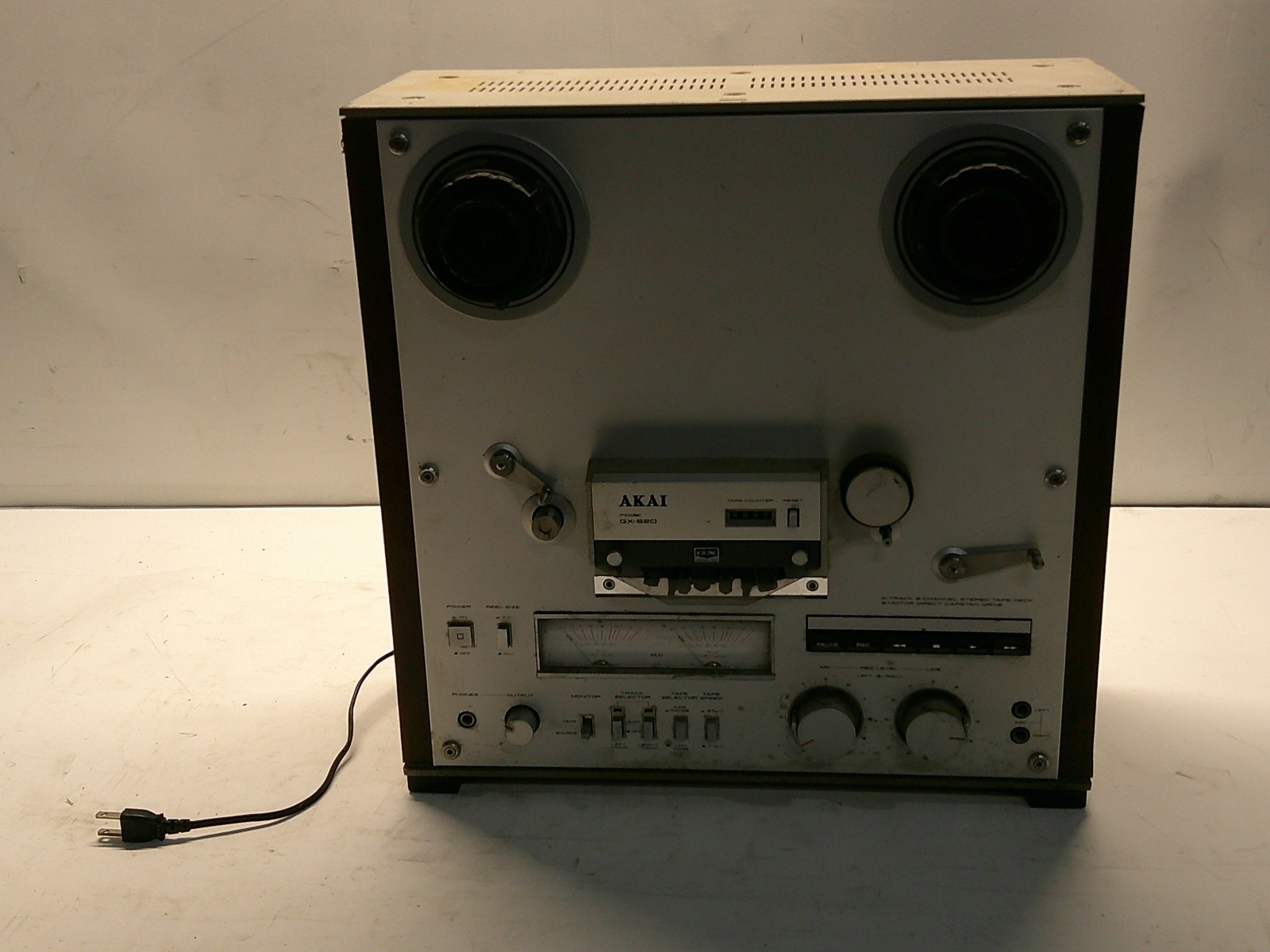
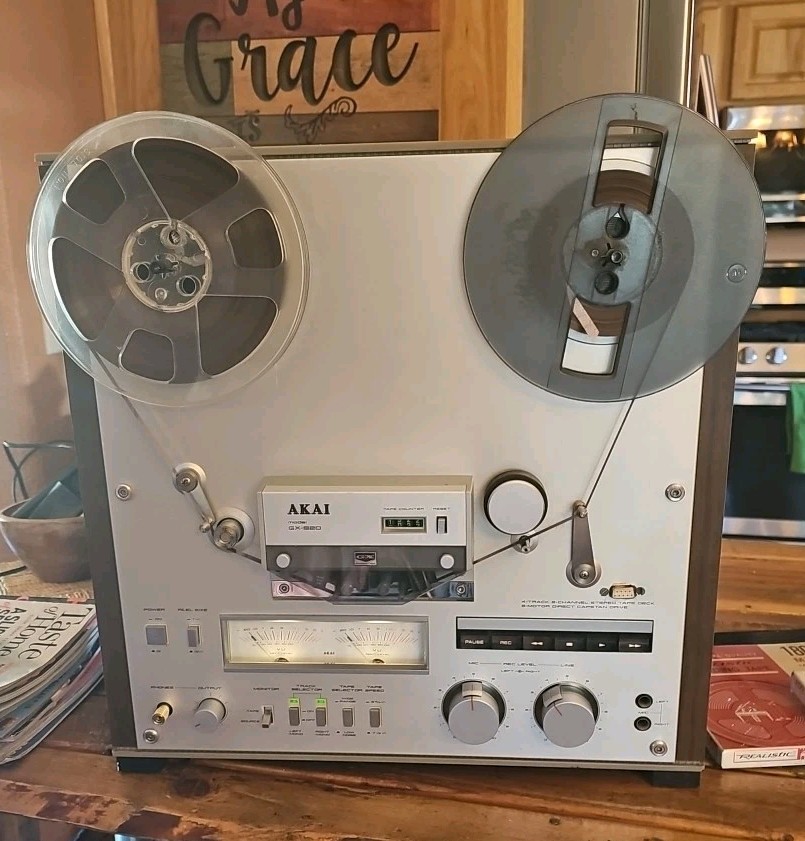
The Akai GX-620 was positioned as a high-end semi-professional recorder, designed for serious home tapers, studio engineers on a budget, and educational institutions. Unlike Akai’s more common consumer models such as the GX-400D or GX-635D, the GX-620 was built with a focus on performance, durability, and serviceability. Its sleek, minimalist front panel—featuring large VU meters, a precision capstan assembly, and a robust tape path—hinted at its serious intentions.
Housed in a heavy-gauge steel chassis with a brushed aluminum faceplate, the GX-620 exudes a no-nonsense professionalism. The transport system is fully direct-drive, with separate motors for the capstan and reels, minimizing wow and flutter to remarkably low levels. This attention to mechanical stability was critical in an era when tape speed consistency directly influenced perceived audio fidelity.
Technical Specifications
| Specification | Detail |
| Year Introduced | 1976 |
| Format | 1/4" Open-Reel Tape |
| Tracks | 4-Track, 1/4" (2-track stereo / 4-track mono) |
| Tape Speeds | 7.5, 15 ips (inches per second) |
| Heads | 3 (Record, Playback, Erase) |
| Head Configuration | Full-track or half-track selectable |
| Frequency Response | 30Hz – 20kHz (at 15 ips, ±3dB) |
| Wow and Flutter | < 0.15% (weighted, RMS) |
| Signal-to-Noise Ratio | > 60dB (Dolby B encoded) |
| Input/Output | Line In/Out (RCA), Mic In (RCA), Phones |
| Recording Modes | Stereo, Monaural, 4-Track |
| Equalization Settings | 120µs, 180µs, 250µs (selectable) |
| Noise Reduction | Dolby B (switchable) |
| Motor System | Direct-drive capstan and reel motors |
| Power Supply | 110–120V or 220–240V (region-specific) |
| Dimensions | 440mm (W) × 145mm (H) × 340mm (D) |
| Weight | 13.6 kg (30 lbs) |
Sound Characteristics and Performance
The GX-620 is celebrated for its clean, neutral, and detailed sound signature—uncommon in many consumer-grade reel-to-reel machines of the era. Thanks to its precision-ground heads (typically made by TDK or Akai’s own magnetics division), low wow/flutter, and stable tape transport, the GX-620 delivers a listening experience that rivals professional studio recorders.
At 15 ips, the machine achieves a frequency response that extends well into the upper treble, capturing cymbals and vocal sibilance with remarkable clarity. Bass response is tight and controlled, avoiding the flabbiness that plagued some lesser machines. When paired with Dolby B noise reduction (a relatively new feature at the time), the GX-620 could deliver a signal-to-noise ratio that approached cassette decks a decade ahead of their time.
One of the standout features is its four-track capability. While most home users recorded in standard 2-track stereo, the GX-620 allowed for 4-track mono recording on 1/4" tape, enabling multi-track experimentation or voice logging. This flexibility made it popular in broadcast and educational settings, where versatility was key.
Notable Features and Innovations
The GX-620 wasn’t just about raw specs—it introduced several thoughtful design elements that set it apart:
- Dual Direct-Drive Motors: Unlike belt-driven systems prone to wear and speed variation, the GX-620 used direct-drive motors for both capstan and reels. This ensured consistent tape tension and speed accuracy, critical for high-fidelity playback.
- Selectable Equalization: The ability to switch between 120µs, 180µs, and 250µs time constants allowed users to optimize recording for different tape formulations (e.g., ferric, chrome), a feature typically found only on professional machines.
- Full/ Half-Track Switching: This gave users flexibility in recording mode, allowing them to maximize tape usage or prioritize stereo separation.
- Large, Calibrated VU Meters: These weren’t just for show—the meters were highly accurate and essential for setting proper recording levels, a must for avoiding distortion or under-modulation.
- Modular Head Assembly: The head block was designed for easy removal and alignment, a boon for technicians and serious users who maintained their own gear.
Common Issues and Maintenance
Like all vintage reel-to-reel machines, the GX-620 requires regular maintenance to perform at its best. Over four decades, rubber parts degrade, lubricants dry out, and tape heads wear or become clogged.
- Pinch Roller and Idler Tires: These rubber components harden over time and should be replaced or rejuvenated. A hardened pinch roller can cause speed instability and poor tape contact.
- Head Alignment: Misaligned heads are the most common cause of poor frequency response and channel imbalance. Periodic azimuth and height alignment by a qualified technician is recommended.
- Capstan Bearing Lubrication: The direct-drive capstan requires clean, properly lubricated bearings. A dry or gritty capstan will increase wow and flutter.
- Cleaning and Demagnetizing: Regular cleaning with isopropyl alcohol and periodic demagnetizing (using a tape head demagnetizer) are essential to maintain clarity and prevent signal loss.
- Dust and Oxide Buildup: The open-reel design invites dust and tape oxide, so frequent cleaning of the tape path, guides, and heads is crucial.
Despite these needs, the GX-620 is known for its serviceability. Its modular design and widely available service manuals make it a favorite among DIY restorers.
Current Market Value and Collectibility
The Akai GX-620 is not as widely recognized as some of its peers, but its reputation among reel-to-reel enthusiasts is growing. In excellent, fully serviced condition, units typically sell for $400–$700, depending on region and included accessories (such as reels, cables, or calibration tapes).
Fully restored models with new pinch rollers, aligned heads, and cleaned electronics command premium prices, especially if they include original packaging or documentation. While not yet a “blue-chip” vintage item like a Revox or Studer, the GX-620 is increasingly seen as a sleeper hit—offering near-professional performance at a fraction of the cost.
Its appeal lies in its balance of performance, build quality, and relative affordability. For analog purists looking to enter the world of reel-to-reel without breaking the bank, the GX-620 is an excellent starting point.
Conclusion: A Hidden Gem of Analog Engineering
The Akai GX-620 may not have the brand cachet of a Revox or the Hollywood pedigree of an Ampex, but it stands as a testament to the quiet excellence of Japanese audio engineering in the 1970s. It combines thoughtful design, mechanical precision, and audiophile-grade sound in a package that’s both usable and reliable.
For those who appreciate the tactile ritual of threading tape, the warmth of analog recording, and the satisfaction of owning a machine built to last, the GX-620 delivers on every front. It’s not just a relic—it’s a working instrument, a tool for preserving and creating sound with authenticity and soul.
In an age of digital perfection, the Akai GX-620 reminds us that sometimes, the most musical machines are the ones you can see, touch, and maintain with your own hands. For the discerning vintage audio enthusiast, it remains a worthy addition to any collection.
eBay Listings


As an eBay Partner, we earn from qualifying purchases. This helps support our independent vintage technology research.
Related Models
- Akai AM-2850 (1975)
- Akai AP-206 (1975)
- Akai AM-2450 (1978)
- Akai CS-M40R (1983)
- Akai GX-F66RC (1981)
- Nakamichi BX-1 (1985)
- Acoustic Research research-ar-17 (1978)
- Acoustic Research AR-19 (1994)
- Acoustic Research AR-1W (1954)
- Acoustic Research AR-28S (1992)