Akai GX-600DB: The Pinnacle of Dual-Transport Cassette Engineering
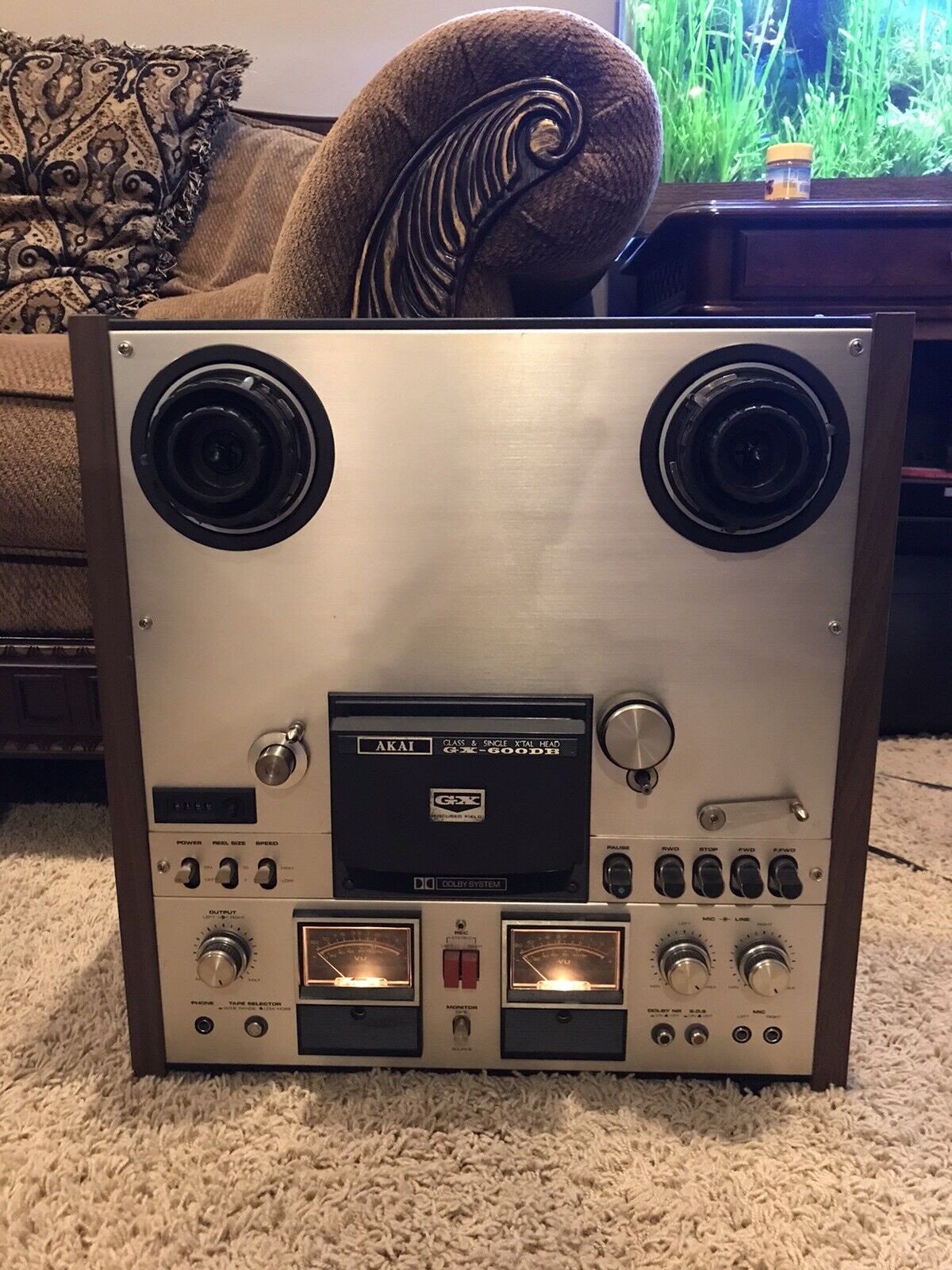
In the golden era of analog audio, few cassette decks captured the imagination of audiophiles and professional users quite like the Akai GX-600DB. Released in 1978, this dual-transport cassette deck stood as a bold statement of engineering ambition, combining broadcast-quality performance with a unique dual-deck configuration that allowed for seamless duplication, monitoring, and editing. While not as widely recognized as some of its contemporaries from Nakamichi or Revox, the GX-600DB remains a cult favorite among tape enthusiasts and a testament to Akai’s commitment to precision and innovation.
Historical Context: Akai’s Legacy in Analog Tape
Akai, a Japanese electronics company founded in 1946, became synonymous with high-quality reel-to-reel recorders in the 1960s and 1970s. As the cassette format matured in the late 1970s, Akai transitioned its engineering expertise to compact tape systems, producing a line of high-fidelity cassette decks under the GX series. The GX-600DB was one of the most ambitious models in this lineup—designed not just for home listening, but for semi-professional use in studios, radio stations, and mastering environments.
The "DB" in GX-600DB stands for Dual Base, referring to its twin transport mechanisms housed in a single, robust chassis. This design allowed users to play one tape while recording onto another, or to dub between cassettes with minimal generational loss—ideal for archivists, educators, and musicians before the digital era.
Technical Specifications
| Feature | Specification |
| Year Introduced | 1978 |
| Transport Type | Dual independent cassette transports |
| Tape Speed | 1⅞ ips (4.76 cm/s) |
| Head Configuration | Separate record/play heads per transport |
| Erase Method | AC erase |
| Frequency Response | 30Hz – 18kHz (with CrO₂ tape) |
| Wow and Flutter | < 0.06% (WRMS) |
| Signal-to-Noise Ratio | 66 dB (Dolby B), 72 dB (Dolby C) |
| Total Harmonic Distortion | < 1.5% |
| Input/Output | Line in/out (RCA), mic in (¼"), headphone out |
| Tape Types Supported | Type I (Normal), Type II (CrO₂) |
| Dolby Noise Reduction | Dolby B and C (switchable per deck) |
| Motor System | Dual direct-drive capstans |
| Display | Dual VU meters, tape type indicators |
| Dimensions | 480 mm × 175 mm × 420 mm (W×H×D) |
| Weight | 16.5 kg (36.4 lbs) |
Sound Characteristics and Performance
The Akai GX-600DB was engineered for accuracy and transparency. Equipped with separate record and playback heads for each transport, it avoided the compromises of combined heads, delivering a cleaner, more detailed sound. The use of ferrite playback heads ensured excellent high-frequency response and durability, while the precision tape path—featuring rubber pinch rollers and metal guides—minimized tape wobble and azimuth errors.
Sonically, the GX-600DB presents a balanced, neutral tonal character. Bass is tight and well-controlled, mids are clear without harshness, and highs extend smoothly with minimal sibilance. When paired with CrO₂ tapes and Dolby C noise reduction, the deck achieves a signal-to-noise ratio that rivals many reel-to-reel systems of the era.
One of its standout qualities is dynamic range and transient response—critical for capturing live music or spoken word with realism. The dual VU meters provide accurate level monitoring, and the direct-drive capstan motors ensure stable tape speed, contributing to low wow and flutter and excellent pitch stability.
Notable Features and Innovations
The GX-600DB’s dual-transport design was its defining feature, but several other innovations set it apart:
- Independent Deck Control: Each transport can be operated separately, with full record, play, pause, and stop functions. This allows for real-time monitoring of a source tape while recording a copy.
- Dolby B and C Compatibility: Offering both noise reduction systems gave users flexibility—Dolby B for casual listening, Dolby C for high-fidelity duplication.
- Professional Connectivity: Line-level RCA inputs/outputs, a ¼" microphone input, and a dedicated headphone amplifier made it suitable for field recording, broadcasting, and studio use.
- Tape Type Selector: Manual switches for Type I and Type II tapes allowed optimal bias and equalization settings, maximizing fidelity.
- Robust Build Quality: Housed in a heavy-gauge steel chassis with a brushed aluminum front panel, the GX-600DB was built to endure daily use in demanding environments.
The front panel layout is clean and functional, with large transport buttons, clearly labeled switches, and dual VU meters that add both utility and visual appeal. The mechanical feel of the transport controls—solid, precise, and tactile—reflects Akai’s attention to user experience.
Common Issues and Maintenance
Like all vintage tape decks, the Akai GX-600DB requires periodic maintenance to perform at its best. Common issues include:
- Deteriorated Rubber Components: Pinch rollers and drive belts can harden or crack over time. Replacement with modern equivalents is essential for proper tape tension and speed accuracy.
- Dirty or Worn Heads: Playback and record heads should be cleaned with isopropyl alcohol and demagnetized regularly. Over time, heads may wear and require replacement or resurfacing.
- Capstan Bearing Dryness: The direct-drive capstans rely on lubricated bearings, which can dry out, leading to speed instability.
- Switch and Potentiometer Noise: Dust and oxidation in volume controls or mode switches can cause crackling. Contact cleaner can help, but severe cases may require component replacement.
Due to its dual-transport design, the GX-600DB has more moving parts than standard decks, increasing the complexity of servicing. However, its modular construction makes repairs more manageable for experienced technicians.
Current Market Value and Collectibility
The Akai GX-600DB is a rare find today. While not as widely collected as the Nakamichi 580 or Sony TC-800B, it has developed a loyal following among cassette purists and analog archivists. In working condition, with both transports functional and properly aligned, the GX-600DB typically sells for $400–$700, depending on cosmetic condition and included accessories.
Fully restored units with replaced belts, cleaned heads, and calibrated electronics command higher prices, especially if accompanied by original manuals or packaging. Its dual-deck functionality makes it particularly desirable for those digitizing cassette collections or creating high-quality tape dubs.
Collectibility is enhanced by its low production numbers and professional pedigree. Unlike mass-market cassette decks, the GX-600DB was a niche product, which adds to its allure among vintage audio enthusiasts.
Conclusion: A Forgotten Gem of Analog Engineering
The Akai GX-600DB is more than just a cassette deck—it’s a symbol of a time when analog technology reached its peak. Its dual-transport design, professional-grade components, and meticulous build quality reflect Akai’s dedication to audio excellence. While overshadowed by flashier competitors, the GX-600DB delivers performance that stands the test of time.
For the modern audiophile, it offers a tangible connection to the analog past—a machine that rewards care and attention with warm, detailed sound and the satisfying mechanics of tape in motion. Whether used for music, archiving, or simply as a centerpiece of a vintage setup, the GX-600DB remains a remarkable achievement in cassette deck engineering.
If you’re lucky enough to find one in good condition, consider it not just a purchase, but an investment in analog heritage.
eBay Listings


As an eBay Partner, we earn from qualifying purchases. This helps support our independent vintage technology research.
Related Models
- Akai CS-F33R (1985)
- Akai DX-59 (1983)
- Akai GX-280D-SS (1979)
- Akai DX-57 (1978)
- Akai AA-5200 (1978)
- Sony TC-2050SD (1978)
- Aiwa AD-F990 (1993)
- Kenwood KX-3060 (1982)
- Sony TC-2130A (1974)
- Sony TC-2220 (1972)