Akai GX-1820: The Broadcast-Grade Workhorse of Reel-to-Reel Recording
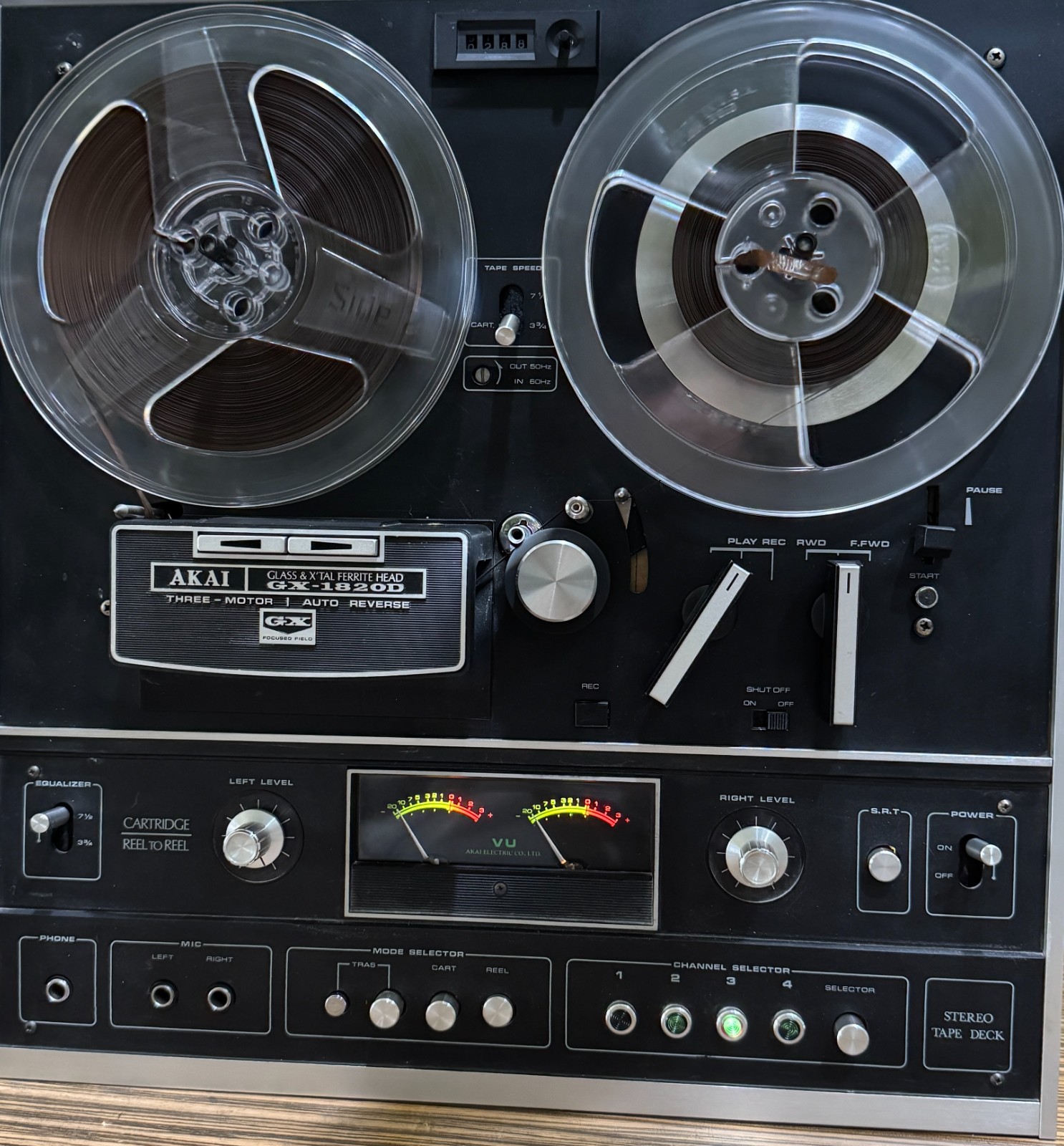
In the late 1970s, when magnetic tape still reigned supreme in professional audio environments, Akai carved out a respected niche with its line of high-performance reel-to-reel tape recorders. Among these, the Akai GX-1820 stands out as a robust, no-nonsense machine designed for broadcast, studio, and institutional use. Though not as widely known among home audiophiles as some of its contemporaries from Studer or Revox, the GX-1820 earned a loyal following among engineers and technicians who valued reliability, precise mechanics, and excellent sonic fidelity.
Released in 1978, the GX-1820 was part of Akai’s GX series — a line that represented the pinnacle of the company’s reel-to-reel engineering. Unlike consumer models that prioritized compact design and affordability, the GX-1820 was built like a tank, with a heavy-duty chassis, precision capstan drive, and professional connectivity. It was intended for environments where consistent performance under continuous use was essential — think radio stations, educational institutions, and recording studios that needed dependable analog recording without the high price tag of Swiss-made alternatives.
Technical Specifications
The GX-1820 is a ¼-inch, two-track stereo reel-to-reel recorder capable of operating at multiple tape speeds, making it versatile for both high-fidelity music recording and longer-duration voice applications. It supports standard tape widths up to 7 inches in diameter and features a dual-capstan transport system for exceptional tape stability and reduced wow and flutter.
| Specification | Detail |
| Format | ¼-inch stereo, 2-track |
| Tape Speeds | 7.5, 15, 30 ips (inches per second) |
| Heads | Separate record, playback, and erase heads |
| Transport System | Dual capstan with rubber pinch rollers |
| Motor Type | Hysteresis-synchronous motors (2) |
| Wow & Flutter | < 0.15% (weighted, 30 ips) |
| Frequency Response | 30 Hz – 20 kHz (±2 dB, 30 ips, +6 dB EQ) |
| Signal-to-Noise Ratio | > 60 dB (Dolby B optional) |
| Input/Output Connectors | XLR (balanced), RCA (unbalanced), 1/4" jack |
| Equalization Options | 120 µs, 180 µs, 250 µs (switchable) |
| Recording Modes | Stereo, monophonic (selectable) |
| Power Requirements | 110–120V or 220–240V AC, 50/60 Hz |
| Dimensions | 485 mm × 170 mm × 400 mm (W×H×D) |
| Weight | 18.5 kg (approx. 41 lbs) |
The machine features switchable equalization settings to accommodate different tape formulations (such as normal, high-bias, or metal tapes), and it supports both NAB and IEC equalization curves, making it adaptable to international standards. The inclusion of balanced XLR inputs and outputs underscores its professional orientation, allowing for noise-resistant signal transmission in studio and broadcast settings.
Sound Characteristics and Performance
The Akai GX-1820 delivers a sound signature that can best be described as clean, transparent, and dynamically expressive. At 30 ips, it captures high-frequency detail with remarkable clarity, while the low end remains tight and well-controlled. The separate record and playback heads allow for optimal alignment and calibration, which contributes to its excellent transient response and stereo imaging.
Thanks to its robust transport and dual capstan system, the GX-1820 exhibits exceptionally low wow and flutter, a critical factor in broadcast applications where pitch stability is paramount. The frequency response is impressively flat across the audible spectrum, especially when using high-quality tape and proper calibration. When paired with Dolby B noise reduction (available via external processor or optional internal module, depending on configuration), the machine achieves a signal-to-noise ratio that rivals more expensive professional recorders of the era.
Users often praise the GX-1820 for its neutral tonal balance — it doesn’t color the sound like some consumer tape decks that emphasize warmth or bass. Instead, it serves as a faithful analog documenter, making it ideal for voice recording, music mastering, and archival transfers.
Notable Features and Innovations
What sets the GX-1820 apart from many of its peers is its hybrid approach to usability and professionalism. While it lacks the automation and digital displays of later machines, it compensates with thoughtful mechanical design:
- Dual Capstan Transport: Minimizes tape slippage and ensures consistent tape-to-head contact, critical for high-speed recording.
- Front-Panel Speed Selection: Easy switching between 7.5, 15, and 30 ips with illuminated indicators.
- Level and Balance Controls: Precision VU meters for both left and right channels, with adjustable input sensitivity.
- Remote Control Capability: Supports external start/stop and record functions via a 9-pin connector, useful in studio automation setups.
- Head Selector Switch: Allows users to switch between playback and monitoring the record head signal (for real-time recording verification).
- Durable Construction: Steel chassis, rubber-isolated feet, and high-quality potentiometers ensure longevity.
The GX-1820 also features user-replaceable heads, a rarity in many professional decks of the time. This design choice made maintenance more accessible and extended the machine’s usable life, especially in high-traffic environments.
Common Issues and Maintenance
Like all reel-to-reel machines from the 1970s, the GX-1820 requires regular maintenance to perform at its best. Over time, rubber components such as pinch rollers and drive belts can harden or degrade, leading to speed instability or tape slippage. Technicians recommend replacing these every 10–15 years, depending on usage.
The head alignment is another critical area. Misaligned heads can cause phase issues, reduced high-frequency response, and poor stereo imaging. Periodic demagnetization is also essential, as magnetic buildup can degrade signal quality.
Another common issue is oxidized potentiometers and switches, which can cause channel dropouts or noisy controls. These are typically easy to clean with contact cleaner, though some components may need replacement if severely worn.
Despite these age-related concerns, the GX-1820 is generally considered mechanically reliable. Its modular design makes servicing straightforward, and many units still function perfectly today with basic upkeep.
Current Market Value and Collectibility
The Akai GX-1820 is not a mainstream collector’s item like the Revox B77 or Studer A80, but it holds a quiet reputation among reel-to-reel enthusiasts and archivists. On the secondhand market, a fully functional GX-1820 typically sells for $400–$700, depending on condition, included accessories, and whether it has been recently serviced.
Its value is driven more by utility than nostalgia — many buyers are audio professionals digitizing old tapes or musicians seeking analog warmth with professional-grade reliability. Because it was not mass-produced for consumers, original GX-1820 units in good condition are relatively scarce, which adds to their appeal.
Collectors of broadcast equipment or institutional audio gear often seek out the GX-1820 for its rugged build and clean signal path. It’s also a favorite among podcasters and field recordists who appreciate analog recording for its tactile workflow and sonic character.
Conclusion and Legacy
The Akai GX-1820 may not have the glamour of high-end Swiss recorders, but it represents something equally important: professional-grade performance at an accessible price. In an era when tape was the backbone of audio production, the GX-1820 served faithfully in studios, radio stations, and universities around the world.
Today, it stands as a testament to Akai’s engineering prowess — a company better known for consumer cassette decks but capable of producing broadcast-quality reel-to-reel machines when called upon. For those who value durability, sonic accuracy, and mechanical precision, the GX-1820 remains a compelling choice in the world of vintage analog recording.
Whether you're restoring a classic studio setup, transferring vintage tapes, or simply exploring the art of analog tape, the Akai GX-1820 offers a rare combination of professionalism, reliability, and sonic integrity. It may not be a household name, but for those in the know, it’s a true unsung hero of the reel-to-reel era.
eBay Listings


As an eBay Partner, we earn from qualifying purchases. This helps support our independent vintage technology research.
Related Models
- Akai AM-2850 (1975)
- Akai AP-206 (1975)
- Akai AM-2450 (1978)
- Akai CS-M40R (1983)
- Akai GX-F66RC (1981)
- Nakamichi BX-1 (1985)
- Acoustic Research research-ar-17 (1978)
- Acoustic Research AR-19 (1994)
- Acoustic Research AR-1W (1954)
- Acoustic Research AR-28S (1992)