Akai CS-M40A: A Compact Cassette Companion of the Early '80s
In the early 1980s, cassette technology was at the heart of the personal audio revolution. As consumers sought greater flexibility in how and where they listened to music, manufacturers like Akai responded with innovative, all-in-one solutions that blended portability, functionality, and affordability. The Akai CS-M40A is one such example—a compact cassette deck system that reflects the design philosophy and engineering priorities of its era. Though not a flagship model or a high-end audiophile machine, the CS-M40A occupies a special place in the history of portable audio as a reliable, user-friendly device that brought cassette recording and playback to a broader audience.
While detailed technical documentation and service manuals for the CS-M40A are scarce today, surviving units and user recollections paint a picture of a modest yet well-constructed cassette system aimed at students, casual listeners, and those needing a mobile solution for tape-based audio. Akai, known primarily for its professional reel-to-reel recorders and later for its foray into consumer electronics and video equipment, applied its core audio expertise to create a product that balanced performance with practicality.
Technical Specifications
The Akai CS-M40A is best understood as a portable cassette player/recorder with integrated speakers and AM/FM radio—a "boombox" in the broader sense, though more compact than the larger stereo systems of the time. It was designed for battery or AC operation, making it suitable for home use, travel, or outdoor listening.
| Feature | Specification |
| Model | CS-M40A |
| Manufacturer | Akai Corporation |
| Year of Release | 1982 |
| Type | Portable cassette player/recorder with radio |
| Playback Functions | Play, Record, Stop, Rewind, Fast Forward |
| Recording Capability | Yes (manual level adjustment) |
| Tuner | AM/FM with analog tuning dial |
| Speakers | Dual built-in mini speakers (stereo) |
| Audio Output | Headphone jack (3.5mm), no line-out |
| Power Source | 6 x C-cell batteries or 9V AC adapter (optional) |
| Dimensions | Approx. 28 x 10 x 15 cm (L x H x W) |
| Weight | Approx. 2.3 kg (without batteries) |
| Tape Compatibility | Type I (Normal) ferric cassettes |
| Noise Reduction | None |
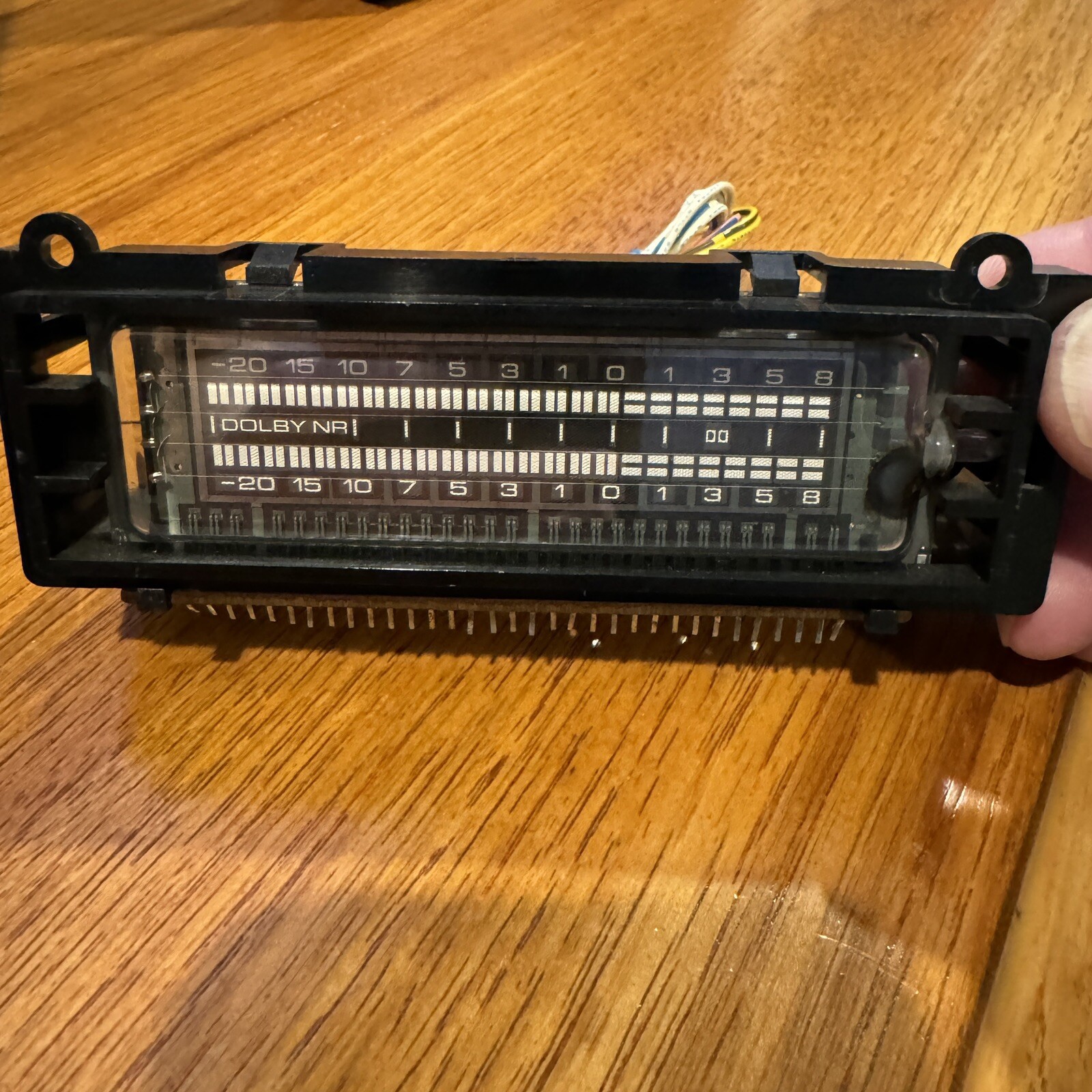
| Display | Analog VU meters (twin) for recording levels |
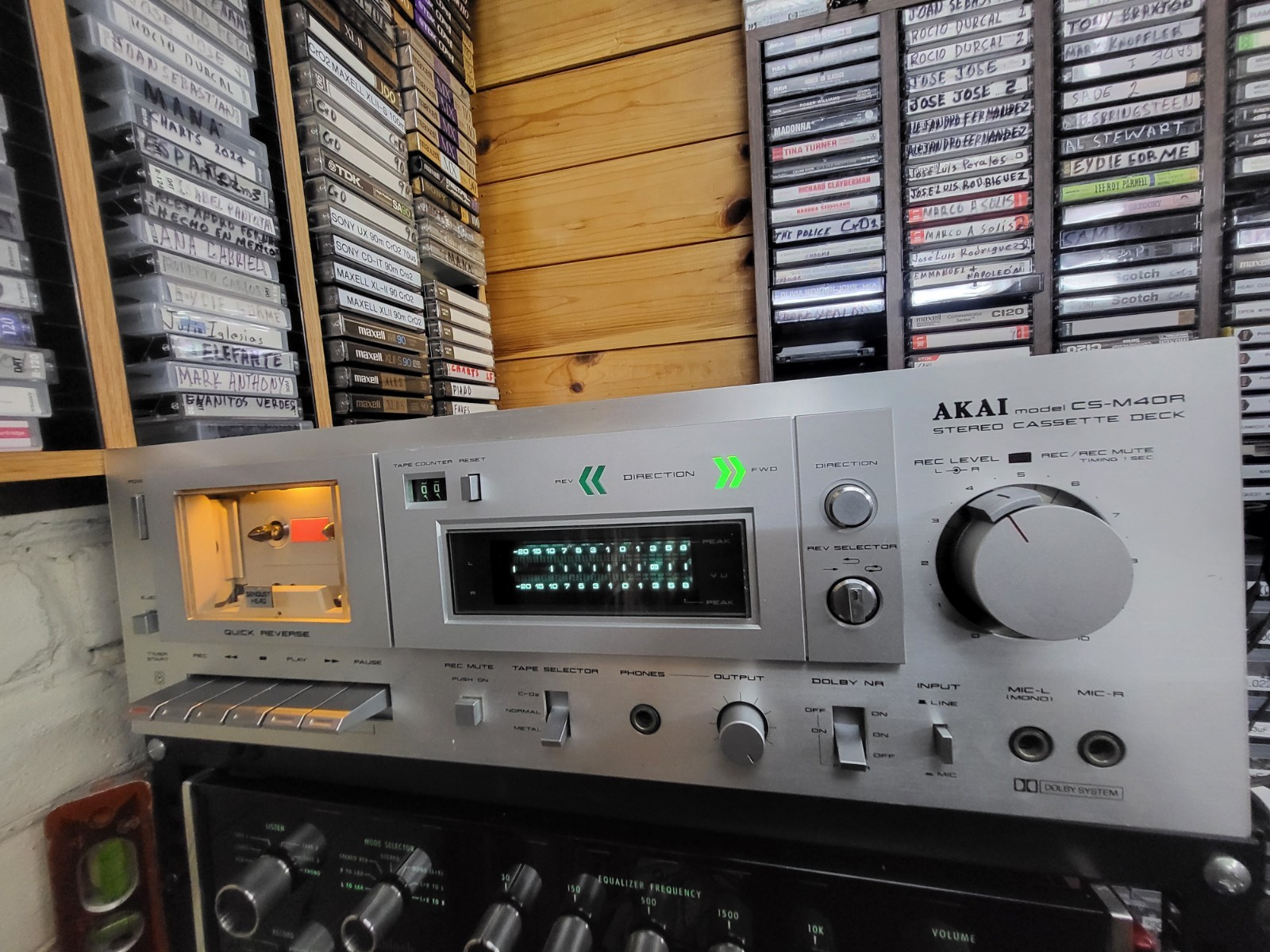
The CS-M40A features a top-loading cassette compartment with a manual tape door, typical of compact systems from the period. The twin analog VU meters, while small, provide visual feedback during recording—a rare and welcome feature at this price point. The inclusion of manual record level controls allows users to adjust input sensitivity, improving recording quality when used with external sources via microphone or line input (likely through a 3.5mm auxiliary jack or internal mic).
Sound Characteristics and Performance
As a mid-tier portable cassette system, the CS-M40A delivers sound quality that is respectable for its class. The built-in speakers produce a warm, slightly bass-heavy response, optimized for close-range listening rather than room-filling audio. Treble is present but not overly detailed, and stereo separation is modest due to the close speaker placement.
In playback mode, the CS-M40A handles standard ferric (Type I) tapes with reasonable fidelity. Azimuth alignment is fixed, so the unit performs best with well-recorded tapes. High-frequency response is limited compared to higher-end decks, and wow and flutter—while not excessive—are noticeable during quiet passages or sustained notes.
Recording performance is functional but not exceptional. Without Dolby or dbx noise reduction, tape hiss is audible, especially on quieter recordings. However, the manual level controls help prevent distortion, and the internal electret microphone (likely located on the front panel) enables voice memos, lectures, or ambient recordings—useful for students or journalists of the era.
When used with headphones, the CS-M40A reveals a more balanced soundstage, bypassing the limitations of the small speakers. The headphone amplifier is adequate for low-impedance cans of the time (e.g., Sony MDR or Panasonic RP series), though it lacks the drive for modern high-impedance models.
Notable Features and Innovations
While not groundbreaking, the CS-M40A incorporates several thoughtful design elements:
- Dual VU Meters: Rare in budget portables, these allow users to monitor recording levels and avoid clipping.
- Manual Record Level Control: Offers greater flexibility than fixed-level record systems.
- Battery and AC Operation: Enhances portability and usability in various environments.
- Compact Form Factor: Smaller than most boomboxes, making it easy to carry.
- Integrated Radio: AM/FM tuner with manual tuning provides access to broadcast content.
The CS-M40A also reflects Akai’s attention to user experience: controls are logically laid out, the tape transport is responsive, and the overall build quality—while plastic-heavy—is durable for its time. Rubberized feet prevent slipping, and the handle (if present on certain variants) adds to its portability.
Common Issues and Maintenance
Like many vintage electronics from the early '80s, the Akai CS-M40A is prone to age-related wear. Common issues include:
- Worn Drive Belts: The rubber belts driving the capstan and tape transport dry out and crack over time, leading to speed instability or transport failure. Replacement with modern silicone belts is essential for restoration.
- Dirty Tape Heads and Pinch Roller: Accumulated oxide residue degrades sound quality. Regular cleaning with isopropyl alcohol and cotton swabs is recommended.
- Capacitor Deterioration: Electrolytic capacitors in the power regulation and audio circuits may leak or lose capacitance, potentially causing noise, distortion, or failure to power on.
- Sticky Buttons or Faders: The mechanical switches and sliders can become stiff or unresponsive due to oxidation or dirt.
- Speaker Foam Disintegration: The foam surrounds on the internal speakers often degrade, causing rattling or loss of bass. Re-foaming or replacement may be necessary.
Servicing the CS-M40A requires careful disassembly, as the casing is typically secured with multiple screws and fragile plastic clips. Due to the scarcity of original parts, restorers often rely on generic replacements and donor units.
Current Market Value and Collectibility
The Akai CS-M40A is not a highly sought-after collector’s item, but it holds niche appeal among enthusiasts of vintage portable audio, cassette culture, and retro design. Units in working condition typically sell for $30–$60 on online marketplaces like eBay or Reverb, depending on cosmetic condition and functionality.
Fully restored models with replaced belts, cleaned heads, and upgraded capacitors may command slightly higher prices, especially if paired with original accessories like the AC adapter or carrying case (if available). Its value lies more in nostalgia and usability than in investment potential.
Collectors of Japanese audio gear from the 1980s may appreciate the CS-M40A as a representative example of Akai’s consumer electronics output during a transitional period—when the company was expanding beyond professional tape recorders into the competitive home and portable audio market.
Conclusion and Legacy
The Akai CS-M40A may not have the prestige of a Nakamichi or the cult status of a Sony Walkman, but it represents an important segment of audio history: the democratization of personal recording and playback. It was a tool for everyday use—ideal for recording lectures, copying mixtapes, or listening to the radio at the park.
Today, the CS-M40A serves as a charming relic of analog portability. Restored and maintained, it offers a tactile, hands-on experience that modern digital devices often lack. For cassette enthusiasts, DIY restorers, or those nostalgic for the sound and feel of 1980s audio, the Akai CS-M40A is a worthy addition to any collection—a modest yet meaningful piece of the cassette era.
eBay Listings

As an eBay Partner, we earn from qualifying purchases. This helps support our independent vintage technology research.
Related Models
- Akai CS-F33R (1985)
- Akai DX-59 (1983)
- Akai GX-280D-SS (1979)
- Akai DX-57 (1978)
- Akai AA-5200 (1978)
- Sony TC-2050SD (1978)
- Aiwa AD-F990 (1993)
- Kenwood KX-3060 (1982)
- Sony TC-2130A (1974)
- Sony TC-2220 (1972)