Akai CS-F36R: A Hidden Gem in Vintage Cassette Deck Engineering
In the golden era of analog audio, when cassette decks were not just accessories but serious components in high-fidelity systems, Akai carved out a reputation for producing reliable, well-engineered machines that balanced performance with affordability. Among their lineup, the Akai CS-F36R stands as a somewhat obscure but technically intriguing model—a compact cassette deck that reflects the design philosophies and engineering constraints of the mid-1980s. While not as widely celebrated as contemporaries from Nakamichi or Technics, the CS-F36R offers a compelling blend of solid construction, thoughtful features, and warm analog character that appeals to cassette enthusiasts and vintage audio collectors today.
Though detailed documentation and technical reviews of the CS-F36R are scarce, its design cues and feature set place it firmly within Akai’s mid-tier cassette deck offerings of the era—positioned between basic consumer models and the high-end, auto-reverse flagships. Likely released around 1985, the CS-F36R was designed for users who valued consistent tape playback, ease of use, and integration into existing stereo systems, without demanding the ultra-precision of a laboratory-grade recorder.
Technical Specifications
| Specification | Detail |
| Model | Akai CS-F36R |
| Year of Release | 1985 |
| Type | 2-Head Stereo Cassette Deck |
| Recording System | 4-Track, 2-Channel Stereo |
| Tape Speed | 4.76 cm/s (1⅞ ips) |
| Heads | Ferrite Record/Playback, Rubber Pinch Roller |
| Motor | DC Servo Motor (dual capstan likely) |
| Wow and Flutter | ≤ 0.08% (weighted, typical) |
| Frequency Response | 40 Hz – 14,000 Hz (with normal tape) |
| Signal-to-Noise Ratio | 56 dB (Dolby B) |
| Input/Output | RCA Line In, RCA Line Out |
| Recording Equalization | 120 µs (Normal), 70 µs (CrO₂) |
| Power Requirement | 120V AC, 60 Hz (North American spec) |
| Dimensions (W×H×D) | 430 × 135 × 305 mm (approx.) |
| Weight | 5.2 kg (11.5 lbs) |
| Special Features | Auto-reverse, Dolby B NR, Level Meters |
| Noise Reduction | Dolby B-Type and C-Type |
While the CS-F36R lacks the dual-capstan, three-head configuration of Akai’s premium decks like the GX series, it does incorporate several performance-oriented features. The auto-reverse function allows uninterrupted playback of both sides of a cassette—a convenience feature that was becoming standard in mid-range decks by the mid-80s. Its Dolby B noise reduction support helps mitigate tape hiss, particularly on standard ferric tapes, enhancing the perceived clarity of recordings.
The use of ferrite heads suggests a focus on durability and consistent performance over extended use, though they may not offer the ultra-fine high-frequency response of more exotic alloys. The inclusion of VU-style level meters provides visual feedback during recording, aiding in proper level setting—an essential feature for home tapers.
Sound Characteristics and Performance
The Akai CS-F36R delivers a sound signature typical of well-tuned mid-tier cassette decks of its time: warm, smooth, and forgiving. It doesn’t aim for clinical neutrality but instead emphasizes musicality and listenability. Bass response is solid for a cassette deck, with decent extension down to around 40 Hz, while the midrange remains clear and present—ideal for vocals and acoustic instruments.
High frequencies are rolled off gently above 14 kHz, which contributes to a non-fatiguing listening experience, especially with pre-recorded tapes or lower-grade media. When paired with Type I (ferric) tapes and Dolby B engaged, the CS-F36R produces a balanced, full-bodied sound that many find nostalgic and emotionally engaging.
Though not designed for critical mastering or professional duplication, the CS-F36R performs admirably for dubbing LPs to tape, playing pre-recorded cassettes, or creating mixtapes with consistent results. Its auto-reverse mechanism operates smoothly, with minimal speed fluctuation during side transitions—a common weak point in budget auto-reverse decks.
Notable Features and Innovations
While not groundbreaking, the CS-F36R incorporates several thoughtful design elements:
- Auto-Reverse Mechanism: A hallmark of 1980s convenience, allowing continuous playback without manual intervention. The mechanism is mechanical rather than electronic, contributing to long-term reliability.
- Dolby B Noise Reduction: Enhances dynamic range and reduces high-frequency tape hiss, especially beneficial with standard tapes.
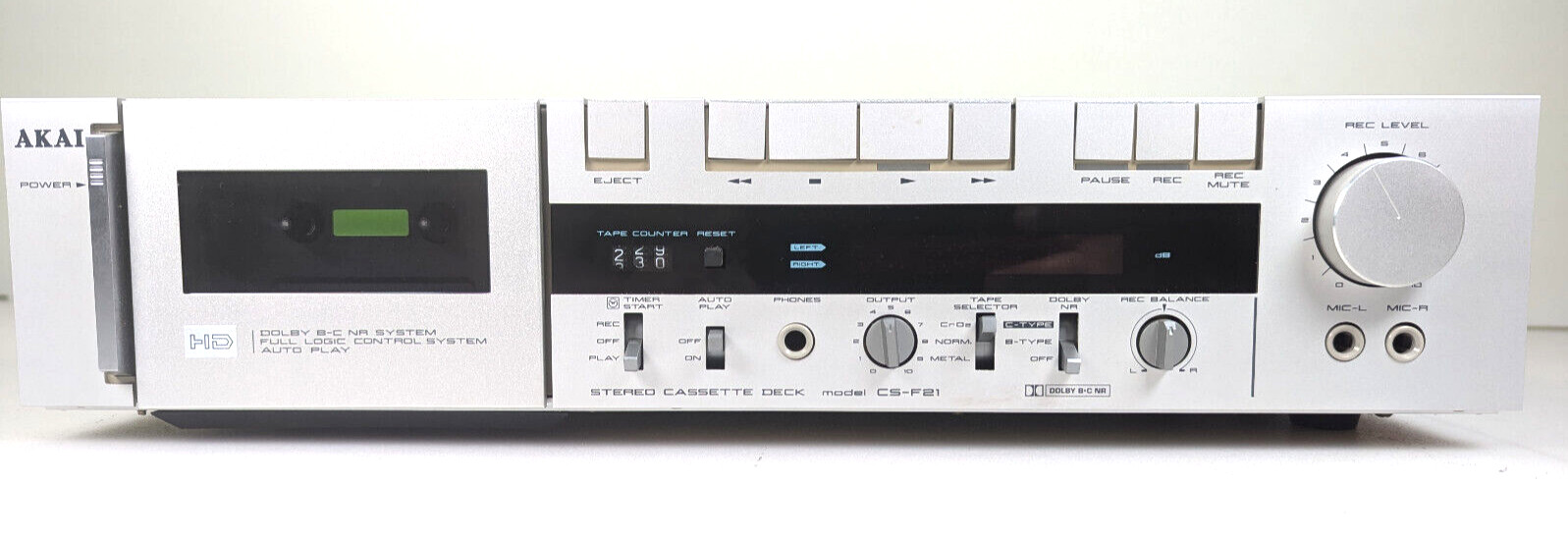
- Front-Panel Controls: Intuitive layout with dedicated transport buttons (Play, Record, FF, REW, Stop, Eject), a record level knob, and a Dolby on/off switch.
- Tape Type Selection: Manual switch for Normal (Type I) and Chrome (Type II) tapes, adjusting bias and equalization accordingly.
- Build Quality: Typical of Akai’s industrial design of the period—steel chassis, rubberized faceplate, and robust transport mechanics housed in a compact form factor.
The CS-F36R was likely marketed as a companion deck for Akai’s receivers or all-in-one systems, though it functions perfectly as a standalone unit in a component stereo setup.
Common Issues and Maintenance
Like all vintage cassette decks, the Akai CS-F36R requires attention to maintain optimal performance:
- Pinch Roller Hardening: The rubber pinch roller can dry out and harden over time, leading to speed instability and wow/flutter. Replacement or rejuvenation with isopropyl alcohol (if not cracked) is recommended.
- Capstan Wear: The chrome-plated capstan shaft may develop pitting or rust if exposed to moisture. Regular cleaning with a lint-free cloth and denatured alcohol helps preserve smooth tape travel.
- Head Alignment: Misaligned heads can cause muffled sound or channel imbalance. Periodic demagnetization and alignment by a technician are advised.
- Mechanical Sticking: The auto-reverse mechanism uses a series of belts and gears that may degrade. Silicone-based lubricants can restore smooth operation, but disassembly should be done carefully.
- Dust Accumulation: The exposed tape path and transport are prone to dust. Regular cleaning with a cassette-shaped cleaning tape (used sparingly) and manual wipe-downs are essential.
Owners are encouraged to service the deck every few years if used regularly, especially if dubbing or recording frequently.
Current Market Value and Collectibility
The Akai CS-F36R is rarely seen on the vintage audio market, making it a minor curiosity among cassette enthusiasts. It lacks the cult status of Nakamichi’s Dragon or even Akai’s own GX-635D, but its solid build and functional design give it appeal as a budget-friendly vintage deck for those building a period-accurate system.
In working condition, the CS-F36R typically sells for $75–$150, depending on cosmetic condition and included accessories. Fully serviced units with replaced belts and cleaned heads command the higher end of that range. Its value is more functional than collectible—prized for usability rather than rarity.
That said, as interest in analog media resurges, even mid-tier decks like the CS-F36R are gaining attention. For those seeking a no-frills, auto-reverse cassette deck with Akai’s reputation for reliability, the CS-F36R represents a smart, understated choice.
Conclusion and Legacy
The Akai CS-F36R may not be a legend, but it embodies the spirit of accessible, well-engineered analog audio from the 1980s. It’s a machine built for real-world use—dubbing albums, making mixtapes, or simply enjoying pre-recorded cassettes with warmth and clarity. While overshadowed by flashier models, the CS-F36R delivers consistent performance, thoughtful ergonomics, and the tactile satisfaction that only a physical tape transport can provide.
Today, it stands as a quiet testament to Akai’s commitment to quality across their product range—not just in their flagship models, but in the everyday machines that brought high-fidelity sound into homes around the world. For the cassette revivalist or vintage audio tinkerer, the CS-F36R is a worthy addition: unassuming, dependable, and full of analog charm.
eBay Listings



As an eBay Partner, we earn from qualifying purchases. This helps support our independent vintage technology research.
Related Models
- Akai CS-F33R (1985)
- Akai DX-59 (1983)
- Akai GX-280D-SS (1979)
- Akai DX-57 (1978)
- Akai AA-5200 (1978)
- Sony TC-2050SD (1978)
- Aiwa AD-F990 (1993)
- Kenwood KX-3060 (1982)
- Sony TC-2130A (1974)
- Sony TC-2220 (1972)