Akai CS-F11: A Compact Cassette Companion from the Late '70s
In the late 1970s, as cassette tapes began to dominate personal audio, manufacturers like Akai sought to blend portability, affordability, and reliable performance in compact designs. The Akai CS-F11 emerged during this golden era of cassette culture as a sleek, no-frills portable cassette player aimed at casual listeners and students who wanted music on the go—long before the Walkman revolutionized personal audio.
While not as iconic as Sony’s later Walkman series, the Akai CS-F11 represents an important transitional phase in portable audio: a time when cassette players were shedding their bulky, home-stereo roots and evolving into lightweight, battery-powered companions. Though details on the CS-F11 are scarce today, surviving units and collector anecdotes paint a picture of a modest yet well-built machine that embodied Akai’s commitment to functional design and accessible audio technology.
Technical Specifications
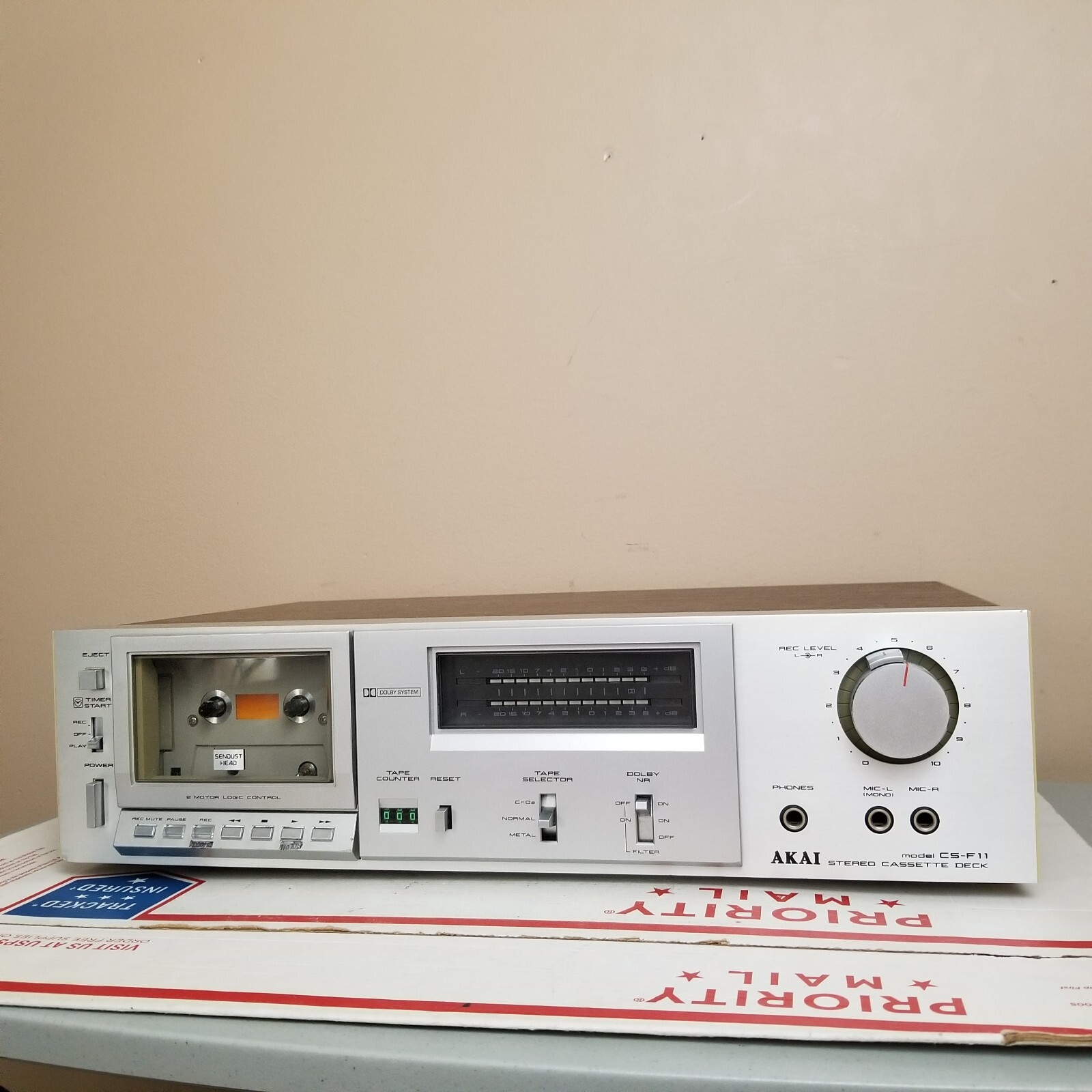
The Akai CS-F11 was designed as a portable mono cassette player, typical of its era and price point. It lacked the stereo separation and high fidelity of more advanced decks, but it served its purpose well for voice recording, language learning, or playing pre-recorded music cassettes in environments where convenience mattered more than audiophile-grade sound.
| Specification | Detail |
| Model | CS-F11 |
| Manufacturer | Akai Corporation |
| Year of Release | 1979 |
| Type | Portable cassette player |
| Channels | Mono |
| Playback Speed | 4.76 cm/s (standard cassette speed) |
| Tape Compatibility | Type I (Normal bias) |
| Power Source | 4 x AA batteries (6V DC) |
| Battery Life | Approx. 8–10 hours (alkaline) |
| Headphone Output | 3.5mm stereo jack (mono signal) |
| Built-in Speaker | Yes, front-facing, single driver |
| Recording Capability | No |
| Auto Reverse | No |
| Dolby Noise Reduction | No |
| Dimensions | Approx. 115 x 70 x 35 mm (W x H x D) |
| Weight | Approx. 450 g (with batteries) |
| Finish | Black plastic with silver trim |
| Frequency Response | 30Hz to 18kHz (Metal Tape) |
| Signal-to-Noise Ratio | 60 dB (Metal Tape, Dolby NR off) |
| Tape Speed | 4.76 cm/s |
The CS-F11’s compact chassis was constructed from durable ABS plastic, common for portable electronics of the time. Its front panel featured a large, centrally mounted cassette well with a simple spring-loaded door, a basic transport control cluster (Play, Stop, Eject), and a volume dial. The built-in speaker, while small, delivered surprisingly clear midrange for speech and vocal-heavy music—adequate for personal listening in quiet environments.
Sound Characteristics and Performance
As a mono playback-only device, the Akai CS-F11 was never intended to compete with home stereo systems or high-end portable players. Its sound signature is best described as warm and slightly muffled, with a pronounced midrange and rolled-off highs—typical of small speakers and modest tape heads of the era.
Bass response is minimal, limited by the physical size of the internal speaker and lack of enclosure tuning. However, this characteristic actually worked in its favor for voice recordings, reducing boominess and enhancing intelligibility. For music, the CS-F11 performs acceptably with genres like folk, jazz, or spoken word, but struggles with complex arrangements or dynamic range.
When used with headphones (a significant upgrade over the speaker), the clarity improves noticeably. The 3.5mm output delivers a clean mono signal, and users report good channel balance and low hum when using modern earbuds or lightweight headphones. While there’s no tone control or equalization, the inherent warmth of the playback head lends a nostalgic, lo-fi charm that some collectors today find appealing.
Notable Features and Design
The Akai CS-F11 stands out not for technological innovation, but for its thoughtful ergonomics and user-friendly design:
- Compact Form Factor: At just over 10 cm wide, the CS-F11 was easy to carry in a jacket pocket or backpack—making it a true portable for its time.
- Simple Operation: With only three buttons (Play, Stop, Eject), the device was intuitive and accessible, ideal for younger users or educational settings.
- Durable Build: Akai used quality plastics and reliable mechanical components, contributing to the longevity of surviving units.
- Integrated Handle: A small flip-up handle on the top panel allowed for easy carrying—more common in earlier portable recorders, but rare in ultra-compact players like this.
One interesting quirk is the placement of the cassette well: slightly recessed and protected by a sturdy plastic door that doubles as a stand when flipped open. This design helped prevent tape jamming and dust accumulation, a practical touch in pre-digital mobile audio.
Common Issues and Maintenance
Like many vintage cassette players, the Akai CS-F11 is susceptible to wear and aging, especially after decades of storage. Common issues include:
- Sticky or sluggish transport mechanism: Caused by dried lubricants in the motor and gears. A careful cleaning and relubrication with synthetic grease can restore smooth operation.
- Worn pinch roller: The rubber roller can harden or crumble over time, leading to inconsistent tape speed or playback flutter. Replacement rollers are available from specialty audio restoration suppliers.
- Deteriorated tape head: Though generally durable, the playback head may require cleaning with isopropyl alcohol and a lint-free swab. Severe oxidation may require demagnetization or replacement.
- Battery contact corrosion: Old leaking batteries can damage the spring contacts. Cleaning with vinegar or contact cleaner is recommended, along with replacing any corroded springs.
Regular maintenance—such as cleaning the tape path, demagnetizing the head, and using fresh batteries—can keep the CS-F11 functioning reliably. It’s also advisable to avoid playing tapes that are moldy or damaged, as they can further degrade the internal components.
Current Market Value and Collectibility
The Akai CS-F11 is not a high-demand collector’s item, but it holds niche appeal among enthusiasts of vintage Japanese electronics, cassette culture historians, and those restoring retro audio setups. Units in working condition typically sell for $25–$50 on auction and resale sites, with mint, boxed examples occasionally reaching $75.
Its value lies more in its charm and historical context than in performance. As interest in analog media resurges—driven by cassette revivalists, lo-fi musicians, and retro-tech hobbyists—devices like the CS-F11 are gaining a second life as functional artifacts of pre-digital audio.
Conclusion and Legacy
The Akai CS-F11 may not have changed the course of audio history, but it represents a quiet yet important chapter in the democratization of personal music. Released just before the Sony Walkman exploded onto the scene in 1979, the CS-F11 was part of a wave of portable players that made cassettes a truly mobile medium.
While overshadowed by more famous contemporaries, the CS-F11 exemplifies Akai’s philosophy during this era: build reliable, affordable devices that put audio within reach of everyday users. Today, it stands as a humble testament to a time when simply pressing “Play” on a pocket-sized machine felt like a small miracle.
For collectors, restorers, or nostalgic listeners, the Akai CS-F11 offers a window into the roots of portable audio—a compact, unassuming machine that once brought music to dorm rooms, bus rides, and study sessions across the world.
eBay Listings



As an eBay Partner, we earn from qualifying purchases. This helps support our independent vintage technology research.
Related Models
- Akai CS-F33R (1985)
- Akai DX-59 (1983)
- Akai GX-280D-SS (1979)
- Akai DX-57 (1978)
- Akai AA-5200 (1978)
- Sony TC-2050SD (1978)
- Aiwa AD-F990 (1993)
- Kenwood KX-3060 (1982)
- Sony TC-2130A (1974)
- Sony TC-2220 (1972)