Akai CS-702D: The Pinnacle of Dual Cassette Engineering
In the golden era of cassette audio during the mid-1980s, Akai stood out as a brand committed to innovation, precision, and value. Among its most sophisticated offerings was the Akai CS-702D, a dual cassette deck that blended consumer convenience with near-professional tape handling and recording capabilities. Released in 1985, the CS-702D was designed for serious audiophiles, home tapers, and music enthusiasts who demanded high fidelity, reliability, and advanced features in one sleek package.
While not as widely recognized as some of its contemporaries from Nakamichi or Sony, the Akai CS-702D carved a niche for itself as a versatile, feature-rich machine that delivered excellent performance at a competitive price. It represented the height of Akai’s cassette deck engineering, combining dual-deck functionality with advanced noise reduction, precise tape speed control, and a robust mechanical design.
Technical Specifications
The CS-702D was engineered with attention to detail, offering a full suite of features aimed at both casual users and audio purists. Below is a breakdown of its key specifications:
| Feature | Specification |
| Model | Akai CS-702D |
| Year Introduced | 1985 |
| Type | Dual cassette deck |
| Tape Speed | 4.76 cm/s (standard speed) |
| Recording System | 4-track, 2-channel stereo |
| Playback/Recording Modes | Type I (Normal), Type II (Chrome), Type IV (Metal) |
| Noise Reduction | dbx Type I and Type II, Dolby B |
| Wow and Flutter | < 0.08% (WRMS) |
| Frequency Response | 20Hz – 20kHz (Type IV, dbx on) |
| Signal-to-Noise Ratio | Up to 80 dB (with dbx) |
| Total Harmonic Distortion | < 1.0% |
| Head Configuration | Separate record/play heads per deck |
| Motor System | Direct-drive capstan with servo control |
| Auto-Reverse | Yes (mechanical flip system) |
| Copy Function | One-touch high-speed dubbing (Deck A to Deck B) |
| Display | Dual fluorescent VU meters, LED indicators |
| Inputs/Outputs | Line In (RCA), Line Out (RCA), Earphone (3.5mm) |
| Dimensions | 430 × 140 × 330 mm (W×H×D) |
| Weight | 9.8 kg |
Sound Characteristics and Performance
The Akai CS-702D was engineered for accurate sound reproduction and low noise, making it a favorite among users who valued clean, dynamic audio. Its use of dbx noise reduction was a major differentiator—unlike the more common Dolby B/C systems, dbx offered a wider dynamic range and significantly reduced tape hiss, especially when using high-bias tapes like Chrome or Metal. When properly calibrated, dbx could deliver near-vinyl levels of clarity and silence between tracks.
The dual independent tape heads (separate record and playback heads for each deck) ensured optimal alignment and minimized wear, resulting in consistent recording quality. The frequency response, particularly with Metal tapes and dbx enabled, approached the theoretical limits of the cassette format—offering tight bass, clear mids, and extended highs.
The servo-controlled direct-drive capstan provided exceptional speed stability, minimizing wow and flutter to levels typically seen in professional machines. This made the CS-702D suitable not only for music duplication but also for critical listening and archival transfers.
Notable Features and Innovations
The Akai CS-702D packed several advanced features that set it apart from typical dual cassette decks of the era:
- Dual dbx + Dolby B Support: Offering both dbx Type I/II and Dolby B gave users flexibility. dbx delivered superior noise reduction but required compatible playback systems, while Dolby B ensured broader compatibility.
- High-Speed Dubbing with Real-Time Monitoring: The one-touch copy function allowed seamless transfers from Deck A to Deck B at normal speed, with the ability to monitor the source or copy in real time.
- Auto-Reverse with Mechanical Flip: Unlike some auto-reverse decks that used complex dual-gap heads, the CS-702D physically flipped the tape mechanism, ensuring optimal head contact and alignment on both sides. This design, while mechanically more complex, preserved audio fidelity.
- Fluorescent VU Meters: The dual VU meters provided accurate visual feedback during recording, allowing users to optimize levels and avoid distortion.
- Metal Tape Compatibility: Supporting Type IV (Metal) tapes was a hallmark of high-end decks. The CS-702D included dedicated bias and EQ settings, unlocking the full potential of Metal tapes for superior dynamic range and frequency response.
Common Issues and Maintenance
Like all vintage cassette decks, the Akai CS-702D requires regular maintenance to perform at its best. Over time, several components may degrade:
- Rubber Components: The capstan tires, pinch rollers, and drive belts (if present in the mechanism) can harden or crack after decades. Replacement with fresh rubber parts is essential for proper tape transport.
- Head Alignment and Wear: The tape heads may become misaligned or worn. Professional demagnetization and alignment are recommended before extended use.
- dbx Circuitry Drift: The dbx noise reduction circuits can drift over time, leading to muffled or distorted playback. Calibration or component replacement by a technician familiar with dbx systems may be necessary.
- Mechanical Stiffness: The auto-reverse flip mechanism, while robust, can become sluggish due to dried lubricants. A full mechanical service often restores smooth operation.
Regular cleaning of the tape path with isopropyl alcohol and using demagnetizing tools can greatly extend the life and performance of the unit.
Current Market Value and Collectibility
The Akai CS-702D is not as commonly collected as flagship decks from Nakamichi or Revox, but it has developed a loyal following among cassette enthusiasts and vintage audio restorers. Its combination of dual-deck convenience, dbx support, and solid build quality makes it a practical and sonically rewarding machine.
In today’s market (as of 2024), a fully functional and serviced CS-702D typically sells for $150–$300, depending on condition, included accessories, and provenance. Units with working dbx circuits and clean heads command higher prices. While not a "blue chip" collector’s item, it offers excellent value for users seeking a high-performance cassette dubbing station or a reliable archive transfer tool.
It is particularly sought after by those digitizing cassette collections, thanks to its accurate playback, low noise, and convenient copy function.
Conclusion and Legacy
The Akai CS-702D stands as a testament to Akai’s engineering prowess during the cassette era. While overshadowed by more glamorous brands, it delivered a compelling mix of performance, features, and durability. It bridged the gap between home audio and semi-professional use, offering capabilities that rivaled more expensive single-deck recorders.
Today, the CS-702D is appreciated not just for its nostalgic appeal, but for its genuine audio quality and utility. In an age where analog revival meets digital archiving, machines like the CS-702D are more relevant than ever. Whether you're copying rare mixtapes, preserving old recordings, or simply enjoying the warm, analog character of cassette media, the Akai CS-702D remains a capable and rewarding companion.
For the discerning vintage audio enthusiast, the CS-702D is more than just a relic—it’s a functional masterpiece of 1980s tape technology.
eBay Listings


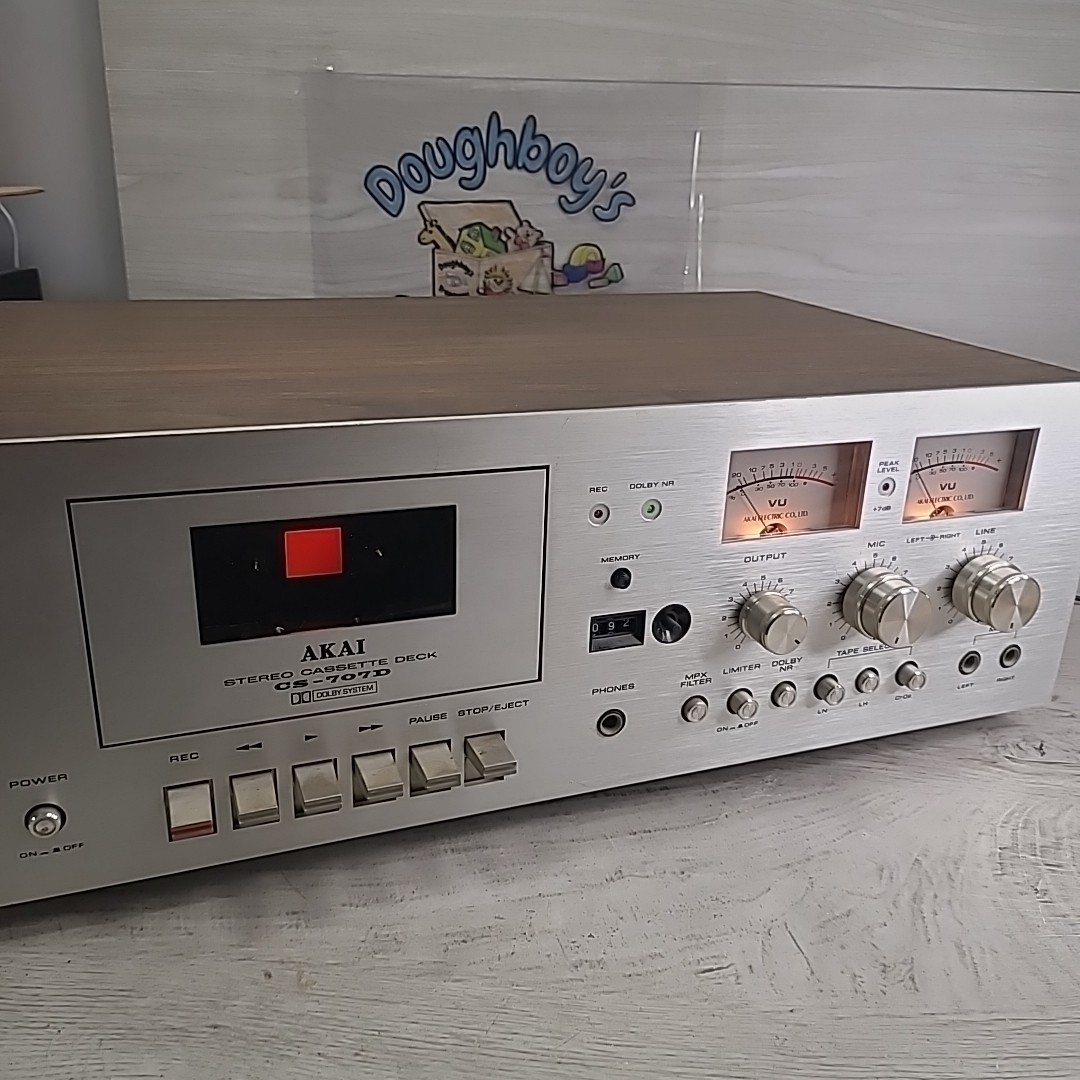
As an eBay Partner, we earn from qualifying purchases. This helps support our independent vintage technology research.
Related Models
- Akai CS-F33R (1985)
- Akai DX-59 (1983)
- Akai GX-280D-SS (1979)
- Akai DX-57 (1978)
- Akai AA-5200 (1978)
- Sony TC-2050SD (1978)
- Aiwa AD-F990 (1993)
- Kenwood KX-3060 (1982)
- Sony TC-2130A (1974)
- Sony TC-2220 (1972)