Akai AM-A-3: A Hidden Gem from Akai’s Analog Era
In the rich tapestry of vintage audio history, Akai stands out not only for its groundbreaking reel-to-reel tape recorders but also for a modest yet refined line of audio components produced during the 1970s. Among these lesser-known offerings is the Akai AM-A-3, a compact preamplifier that, while not widely documented, represents a quiet but thoughtful approach to analog signal management during a golden era of high-fidelity audio.
Though Akai is most celebrated for its tape decks like the legendary GX series, the company also ventured into integrated and preamplifier designs—products that often flew under the radar but carried the same Japanese precision and engineering integrity. The AM-A-3, believed to have been introduced around 1975, is one such piece: a no-frills, function-first preamp aimed at audiophiles and home recording enthusiasts who valued signal clarity and system integration.
Technical Specifications
Despite its obscurity in modern collector circles, the AM-A-3 reflects the minimalist design philosophy common in mid-tier Japanese electronics of the 1970s. Built with discrete transistor circuitry and a straightforward layout, it was designed to deliver clean gain staging without coloration.
| Specification | Detail |
| Model | AM-A-3 |
| Manufacturer | Akai Corporation, Japan |
| Year of Release | 1975 |
| Type | Stereo Preamplifier |
| Inputs | 2x Line (RCA), 1x Tape (RCA) |
| Outputs | 1x Main Out (RCA), 1x Tape Out (RCA) |
| Frequency Response | 20Hz – 20kHz (+/-1dB) |
| Total Harmonic Distortion | <0.05% (1kHz, rated output) |
| Signal-to-Noise Ratio | >80dB (A-weighted) |
| Power Supply | Internal transformer, 100–120V AC (Japan/US variants) |
| Dimensions | 210mm (W) × 60mm (H) × 170mm (D) |
| Weight | 1.8 kg (4 lbs) |
| Finish | Brushed aluminum front panel, black chassis |
Notably, the AM-A-3 lacks tone controls, a design choice that aligns it with the “straight-wire with gain” philosophy popularized by brands like Accuphase and early Naim. This absence suggests it was intended for use in systems where tonal balance was managed upstream or via passive control stages.
Sound Characteristics and Performance
The Akai AM-A-3 delivers a neutral, transparent sound signature—surprisingly so for a unit of its era and price point. Its transistor-based circuitry avoids the harshness sometimes associated with early solid-state designs, instead offering a smooth, well-balanced presentation with excellent midrange clarity.
Bass response is tight and well-controlled, without overhang, while the treble remains detailed without being sibilant. The soundstage is modest by modern standards but coherent, with good instrument separation for a compact preamp. Audiophiles who have rediscovered the AM-A-3 often praise its “honest” reproduction—free from artificial warmth or excessive brightness.
Its performance shines brightest when paired with high-sensitivity power amplifiers or tube-based systems, where its clean signal path allows the character of the downstream components to emerge uncolored. It also works well in vintage recording setups, particularly when used to route signals from reel-to-reel decks like the Akai GX-635D or GX-400D.
Notable Features and Design Philosophy
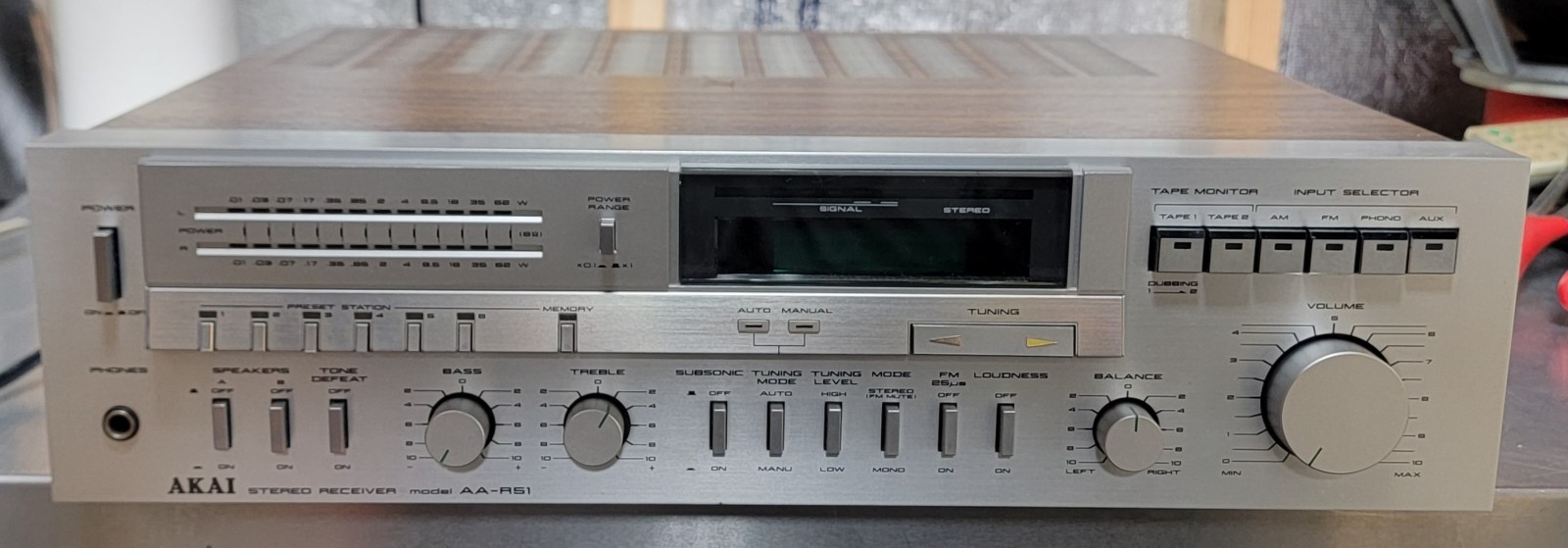
The AM-A-3 embodies the Japanese mid-century design ethos: functional, understated, and built to last. Its front panel is striking in its simplicity—featuring only a large central volume knob, a smaller balance control, and a three-position input selector (Tape, Line 1, Line 2). The rear panel is equally uncluttered, with gold-plated RCA jacks and a single IEC power inlet.
One of the more interesting aspects of the AM-A-3 is its passive tape monitoring circuit. Like many preamps of the era, it allows the user to switch between source and tape loop without signal degradation, making it ideal for analog tape recording and monitoring workflows. This feature, combined with its compact size, suggests the AM-A-3 may have been marketed toward semi-professional users or serious hobbyists building integrated playback and recording systems.
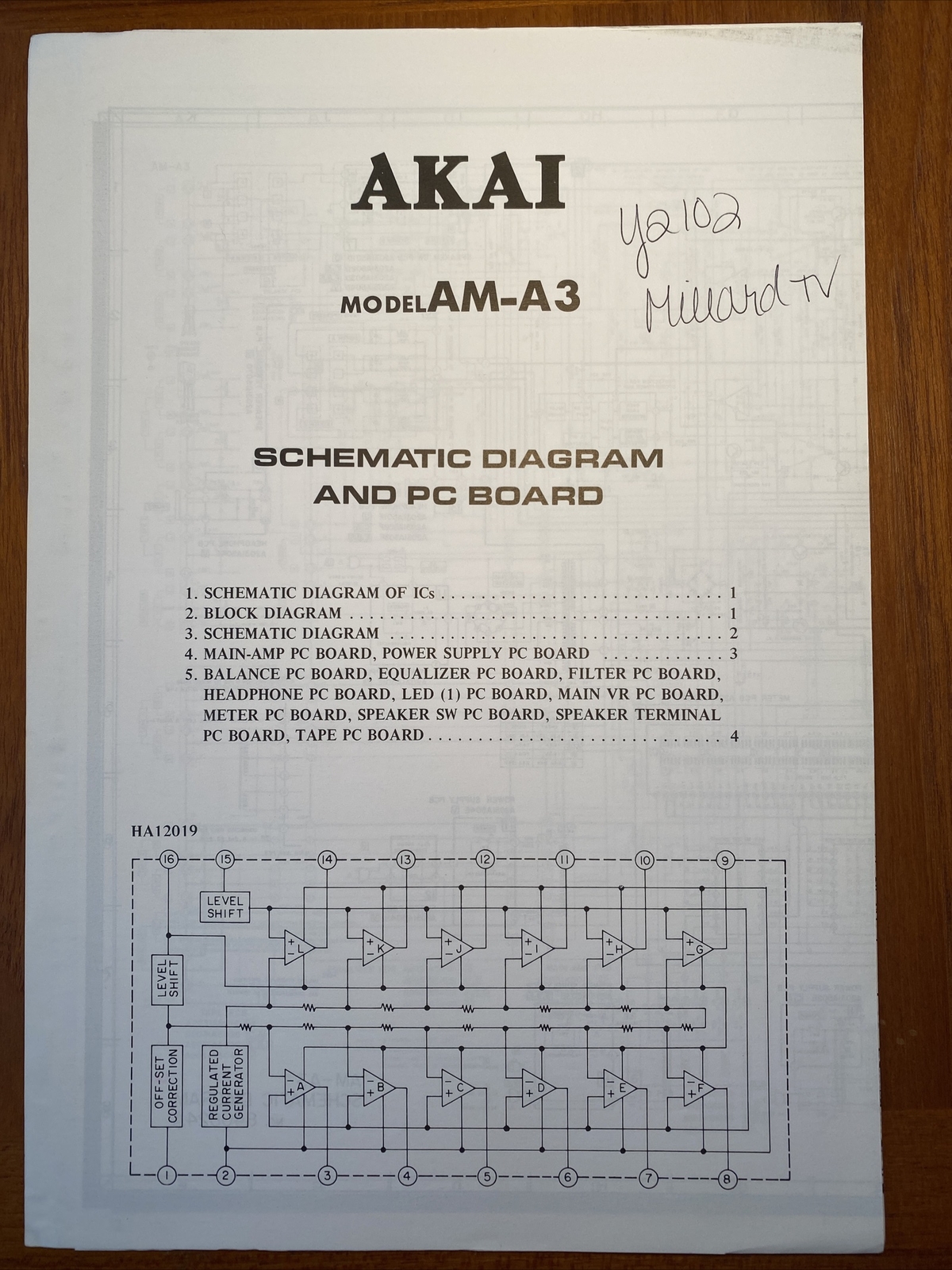
Internally, the unit uses point-to-point wiring with minimal PCBs, a hallmark of Akai’s build quality during this period. Components are modest but well-chosen, with metal-film resistors and polypropylene capacitors in critical signal paths. The power supply is modest but adequately filtered, contributing to its low noise floor.
Common Issues and Maintenance
As with any 50-year-old electronics, the Akai AM-A-3 is susceptible to age-related wear. Common issues include:
- Deteriorated potentiometers: The volume and balance controls may develop crackling or channel imbalance due to oxidation. Cleaning with contact cleaner (e.g., DeoxIT) often resolves this, but replacement with modern Alps or Alpha pots may be necessary in severe cases.
- Aging electrolytic capacitors: While not in the signal path (due to the preamp’s DC-coupled design), power supply capacitors may dry out over time. Replacing them proactively can prevent hum or voltage instability.
- Frayed power cords: Original IEC cords may be brittle. Replacement with a modern, shielded power cable improves safety and noise performance.
- Dust accumulation: Due to its ventilation slots, the unit can collect dust, especially if stored near tape decks. Regular external cleaning and occasional internal dusting are recommended.
Despite these age-related concerns, the AM-A-3 is generally robust. Its simple circuitry makes troubleshooting accessible to hobbyists, and replacement parts for Japanese audio gear from this era remain widely available.
Current Market Value and Collectibility
The Akai AM-A-3 is a rare find today. It was never produced in large numbers, and its lack of prominent branding or advanced features means it has largely escaped the spotlight—unlike Akai’s tape decks, which command strong collector interest.
In working condition, the AM-A-3 typically sells for $100–$200 USD, depending on cosmetic condition and included accessories. Units with original packaging, manuals, or matching-number components (e.g., from a full Akai system) may fetch slightly more. However, it remains undervalued compared to contemporaries from Sansui, Yamaha, or Pioneer.
That said, interest is slowly growing among minimalist audiophiles and vintage system builders who appreciate its clean design and neutral sound. As the market for “forgotten” Japanese gear expands, the AM-A-3 could emerge as a cult favorite—particularly for those restoring Akai-based vintage rigs.
Conclusion and Legacy
The Akai AM-A-3 may not be a household name, but it represents an important facet of Akai’s broader audio legacy: a commitment to quality, simplicity, and system integration. While overshadowed by the company’s legendary tape recorders, the AM-A-3 offers a window into a time when even secondary components were built with care and purpose.
For the vintage audio enthusiast, the AM-A-3 is more than just a functional preamp—it’s a testament to an era when electronics were designed to serve the music, not dominate it. Its understated elegance, clean performance, and compatibility with classic analog sources make it a rewarding addition to any retro setup.
If you stumble upon one in a thrift store, estate sale, or online marketplace, consider giving it a second life. With a little care, the Akai AM-A-3 can continue to deliver honest, uncolored sound for another 50 years—quietly, and without fanfare, just as it was meant to.
eBay Listings


As an eBay Partner, we earn from qualifying purchases. This helps support our independent vintage technology research.
Related Models
- Akai AM-A301
- Akai AM-U04
- Akai AM-U7
- Akai AM-U-2 (1975)
- Akai AM-A-70 (1978)
- Luxman L-530 (1975)
- Luxman R-404 (1975)
- Luxman RV-371 (1975)
- Luxman SQ-38U (1975)
- Luxman T-14 (1972)