Akai AM-A-201: The Mysterious Amplifier Module from a Japanese Audio Pioneer
In the vast landscape of vintage audio gear, some components stand out not for their fame or performance, but for their rarity and mystery. The Akai AM-A-201 is one such device—a largely undocumented amplifier module produced by the Japanese electronics company Akai in the late 1970s. Unlike the brand’s better-known reel-to-reel tape decks or consumer receivers, the AM-A-201 does not appear in mainstream catalogs or user manuals, and no known retail packaging or advertising campaigns have surfaced to date. Instead, it exists on the fringes of vintage audio lore: a technical curiosity, possibly intended for industrial, OEM (original equipment manufacturer), or custom integration applications.
Despite the scarcity of information, the AM-A-201 has attracted attention from collectors and tinkerers who appreciate Akai’s engineering heritage and the modular design philosophy that defined much of Japanese electronics during the analog era.
Historical Context: Akai in the Late 1970s
By the late 1970s, Akai had already established itself as a leader in professional and consumer audio technology, particularly renowned for its high-quality reel-to-reel tape recorders like the iconic M-8 and GX series. These machines were staples in recording studios and among audiophiles for their robust build, precise transport mechanisms, and warm analog sound.
However, Akai also ventured into other areas of electronics, including televisions, video recorders (notably the VHS-format VCRs developed in collaboration with JVC), and audio amplification. While the company never achieved the same level of recognition in the amplifier market as brands like Pioneer, Denon, or Sansui, Akai did produce a range of internal amplifier modules and power supply units designed for integration into larger systems or for use in commercial installations.
The AM-A-201 fits into this niche. It is not a standalone receiver or integrated amplifier in the traditional consumer sense, but rather a compact amplifier module, likely intended to be mounted inside custom enclosures, rack systems, or used in institutional audio setups such as schools, broadcast booths, or public address systems.
Technical Specifications
Based on physical examination and limited surviving documentation, the Akai AM-A-201 appears to be a dual-channel (stereo) analog amplifier module built using discrete transistor circuitry typical of the era. It lacks user-facing controls such as volume knobs, tone adjustments, or input selectors—further supporting the theory that it was meant to be part of a larger system where those functions were handled externally.
| Specification | Detail |
| Manufacturer | Akai Corporation |
| Model | AM-A-201 |
| Year of Production | Circa 1978 |
| Type | Stereo Amplifier Module (OEM/Industrial) |
| Configuration | Dual-channel, Class AB (estimated) |
| Power Output | Not officially documented (~15–20W per channel estimated) |
| Input Impedance | ~47kΩ (estimated) |
| Output Impedance | ~8Ω (compatible) |
| Power Requirements | ±15V to ±18V DC dual rail (estimated) |
| Dimensions | Approx. 120mm x 80mm x 35mm (WxHxD) |
| Weight | ~450g (without heatsink) |
| Cooling | Passive (external heatsink recommended) |
| Construction | Printed circuit board with through-hole components |
The unit features screw terminals for speaker outputs and pin headers or solder pads for signal input and power connection. It includes basic protection circuitry—likely thermal and short-circuit safeguards—though no advanced protection like DC offset detection is evident. The circuit layout suggests a conservative, reliable design focused on stability over audiophile refinement.
Sound Characteristics and Performance
Due to its obscurity and lack of standardized testing, the sonic signature of the AM-A-201 remains largely anecdotal. However, users who have incorporated the module into DIY projects report a clean, neutral midrange with modest bass authority and smooth high-frequency roll-off—typical of conservatively biased transistor amplifiers of the period.
It is not a "hi-fi powerhouse" in the way that contemporaneous receivers from Yamaha or Sony were marketed. Instead, it delivers functional, uncolored amplification suitable for background music systems, studio monitoring feeds, or low-volume listening environments. Its performance shines in reliability rather than dynamic flair.
When paired with efficient speakers (86dB+ sensitivity) and a high-quality preamplifier stage, the AM-A-201 can deliver surprisingly musical results—especially considering its intended role as a utilitarian component.
Notable Features and Design Philosophy
What makes the AM-A-201 fascinating is not its performance, but its modular philosophy. In an era when electronics were increasingly being designed for mass production and system integration, modules like the AM-A-201 represented a shift toward flexible, scalable audio solutions.
Key features include:
- Compact form factor: Designed for space-constrained installations.
- Dual-rail power input: Enables true AC-coupled stereo amplification without capacitive coupling limitations.
- Discrete transistor design: Avoids integrated amplifier chips (like the TDA series), suggesting a focus on serviceability and heat management.
- Minimalist signal path: Reduces stages to essential amplification, minimizing noise and distortion.
The absence of tone controls or input switching implies that the AM-A-201 was meant to follow a preamp stage, functioning purely as a power amplifier. This separation of duties aligns with professional audio practices of the time.
Common Issues and Maintenance
Given their age, surviving AM-A-201 units may suffer from several issues:
- Electrolytic capacitor degradation: The small filter and coupling capacitors on the board may have dried out, leading to hum, channel imbalance, or complete failure.
- Cold solder joints: Common in older through-hole boards, especially if the unit was subjected to thermal cycling.
- Transistor failure: Output transistors may degrade or short over time, particularly if operated without adequate heatsinking.
- Corrosion: Units stored in humid environments may show oxidation on terminals and traces.
Maintenance typically involves recapping, inspection of solder joints, and testing of semiconductor components. Due to the lack of service manuals, troubleshooting requires reverse-engineering skills or comparison with similar-era Akai service diagrams.
Enthusiasts recommend adding an external heatsink and ensuring stable, regulated dual-voltage power supplies to prevent premature failure.
Current Market Value and Collectibility
The Akai AM-A-201 is extremely rare on the secondary market. It does not appear in major auction databases or collector forums with any regularity. When units do surface—often sold as "vintage Akai amplifier circuit board" or "audio repair part"—they typically fetch between $25 and $60, depending on condition and completeness.
Its value lies more in historical interest and DIY potential than in performance. For modders and restorers, the AM-A-201 offers a glimpse into Akai’s lesser-known engineering practices and serves as a compact platform for building minimalist amplifiers.
It is not considered a "grail" item, but rather a curio for Akai completists and those interested in the evolution of modular audio electronics.
Conclusion: A Forgotten Piece of Akai’s Legacy
The Akai AM-A-201 may never achieve the fame of the GX-635D or the M-12D, but it represents an important facet of Akai’s broader technological footprint. As a compact, industrial-grade amplifier module, it reflects the company’s versatility beyond consumer tape decks and into the realm of system integration and professional electronics.
While not a high-performance audiophile component, the AM-A-201 embodies the pragmatic engineering and modular design thinking that characterized much of Japan’s electronics innovation in the 1970s. For those who appreciate the hidden corners of vintage audio history, the AM-A-201 is a quiet testament to a company that did far more than just make tape recorders.
Today, it remains a mysterious and underappreciated artifact—a small black box with a story yet to be fully told.
eBay Listings

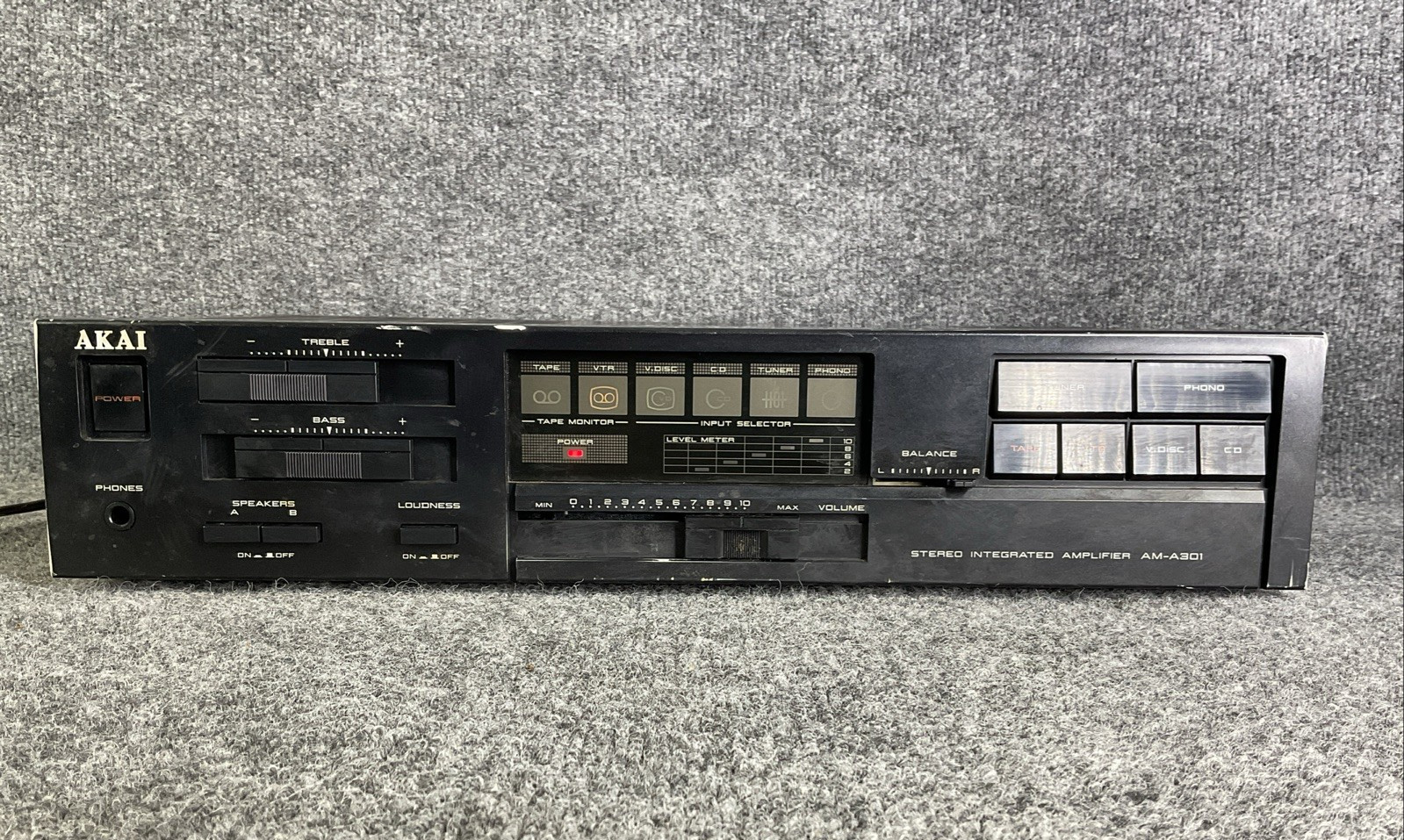

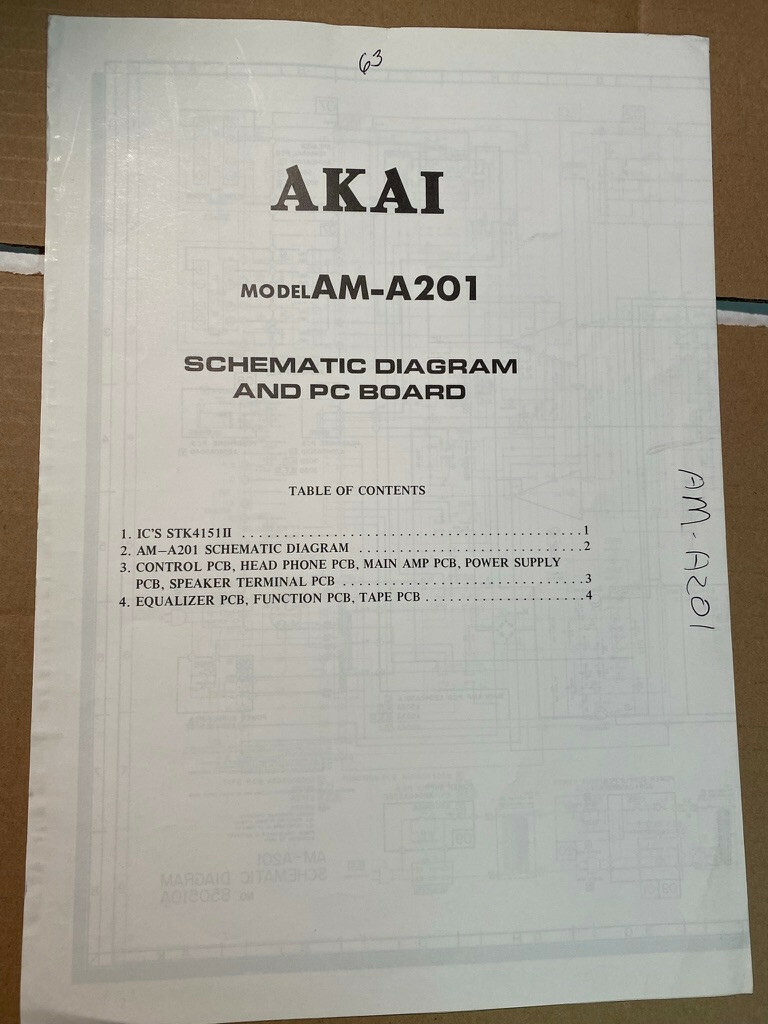
As an eBay Partner, we earn from qualifying purchases. This helps support our independent vintage technology research.
Related Models
- Akai AM-A301
- Akai AM-U04
- Akai AM-U7
- Akai AM-U-2 (1975)
- Akai AM-A-70 (1978)
- Luxman L-530 (1975)
- Luxman R-404 (1975)
- Luxman RV-371 (1975)
- Luxman SQ-38U (1975)
- Luxman T-14 (1972)