Akai AA-6000: The Forgotten Studio Workhorse of the 1970s
In the golden era of analog audio, when tape ruled recording and every piece of gear had a soul, Japanese electronics giant Akai carved out a niche not just in tape decks and reel-to-reel recorders, but also in professional studio equipment. Among their lesser-known but highly capable offerings was the Akai AA-6000, a standalone microphone preamplifier introduced in the mid-1970s. Though overshadowed by more famous contemporaries from Neve, API, or even Sony, the AA-6000 represents a quiet triumph of Japanese engineering—offering clean, transparent amplification with reliability and precision at a time when such performance was becoming essential in both broadcast and studio environments.
While Akai is best remembered today for its groundbreaking tape recorders like the GX-630D or the iconic GXC-65D cassette deck, the company also produced a range of supporting professional audio gear. The AA-6000 was part of this ecosystem, designed to pair seamlessly with Akai’s multitrack recorders and broadcast consoles. It served as a high-fidelity front-end solution for microphones, particularly dynamic and condenser types used in studio tracking, voiceover work, and field recording applications.
Technical Specifications
The AA-6000 was engineered with a no-nonsense, utilitarian philosophy—focused on delivering consistent performance without coloration. It featured discrete transistor circuitry (pre-dating the widespread use of op-amps in pro audio), carefully laid out to minimize noise and crosstalk. Despite its modest footprint, the unit packed a punch in terms of gain and headroom.
| Specification | Detail |
| Model | Akai AA-6000 |
| Year Introduced | 1975 |
| Type | Microphone Preamplifier |
| Channels | 1 (mono) |
| Gain Range | 40dB to 60dB (adjustable) |
| Frequency Response | 20Hz – 20kHz (+/-0.5dB) |
| Total Harmonic Distortion | < 0.05% (at full output) |
| Input Impedance | 1.2kΩ (balanced) |
| Output Impedance | 150Ω (balanced) |
| Input Connectors | XLR (female), 1/4" TRS (unbalanced) |
| Output Connectors | XLR (male), 1/4" TRS |
| Phantom Power | 48V (switchable) |
| Power Supply | External AC adapter (12V DC) |
| Dimensions (W×H×D) | 190 × 70 × 210 mm |
| Weight | 2.1 kg |
| Construction | Steel chassis, aluminum front panel |
The AA-6000 was typically housed in a compact, rack-mountable enclosure with a minimalist front panel: a large gain knob, a phase reverse switch, a phantom power toggle, and LED-level metering (three-segment). The rear panel provided both balanced XLR and unbalanced 1/4" inputs and outputs, offering flexibility for integration into various setups.
Sound Characteristics and Performance
The sonic signature of the Akai AA-6000 is best described as clean, neutral, and transparent. Unlike the harmonically rich coloration of vintage British preamps, the AA-6000 aimed for accuracy—making it ideal for applications where fidelity was paramount. Its low noise floor and wide dynamic range allowed engineers to capture subtle nuances without introducing hiss or distortion.
In practice, the AA-6000 excelled with ribbon and condenser microphones, providing ample gain while preserving transient detail. It was particularly favored in broadcast studios for voice applications, where clarity and intelligibility were critical. When paired with a high-quality microphone, the AA-6000 delivered a crisp, open top end and a tight, controlled low end—free from the muddiness that plagued some budget preamps of the era.
Though not "colored" in the way modern audiophiles might seek out for "vintage vibe," the AA-6000's transparency makes it a valuable tool today for those restoring period-correct signal chains or seeking a clean gain stage in a hybrid studio.
Notable Features and Innovations
While not flashy, the AA-6000 included several thoughtful design elements that reflected Akai’s attention to real-world usability:
- Switchable 48V Phantom Power: A notable feature for its time, especially in a standalone preamp at this price point.
- Phase Reverse Switch: Essential for multi-mic setups and phase alignment, particularly in drum or stereo recording.
- Dual Input Options: The ability to accept both XLR and 1/4" inputs made it adaptable to a range of microphones and line-level sources.
- External Power Supply: While often seen as a drawback today, this design choice reduced internal noise and heat buildup, contributing to the unit’s clean signal path.
- Robust Build Quality: With a steel chassis and high-quality potentiometers, the AA-6000 was built to withstand daily use in professional environments.
Akai also ensured that the AA-6000 could be daisy-chained or rack-mounted alongside other gear, making it a modular component in larger systems—particularly useful in radio stations or small recording studios operating on tight budgets.
Common Issues and Maintenance
As with any vintage electronic gear from the 1970s, the Akai AA-6000 is not immune to age-related issues. However, its relatively simple circuitry makes it more repairable than modern integrated designs.
Common problems include:
- Dried-up electrolytic capacitors: The most frequent issue, leading to hum, noise, or complete failure. A full recap is often recommended for units that have been dormant.
- Worn gain potentiometer: Can cause crackling or inconsistent gain. Cleaning with contact cleaner may help, but replacement is often necessary.
- Failing external power adapter: Original adapters are often lost or damaged. Modern regulated 12V DC replacements (with correct polarity) can be used safely.
- Oxidized XLR connectors: Regular cleaning with contact spray helps maintain reliable connections.
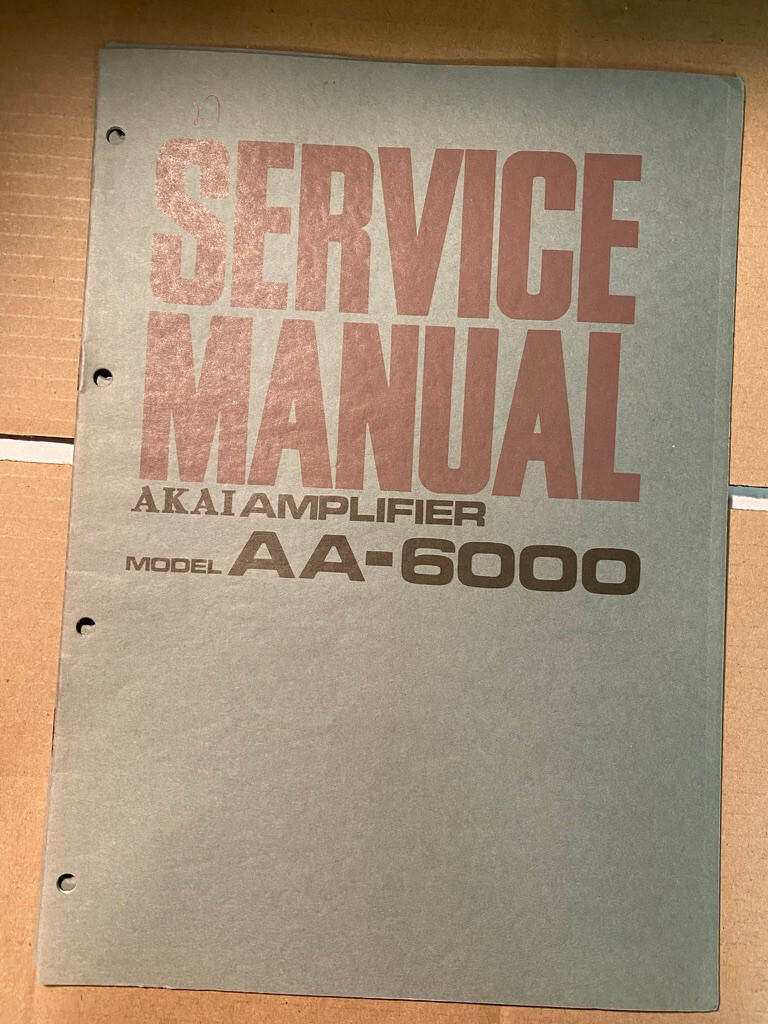
Because the AA-6000 uses discrete transistors rather than proprietary ICs, replacement parts are generally available or can be substituted with modern equivalents. Its service manual, though rare, occasionally surfaces in online collector forums and archives.
Current Market Value and Collectibility
The Akai AA-6000 remains a sleeper gem in the vintage audio market. It is not widely collected, nor does it command high prices—typically selling between $150 and $300 in working condition. However, this low profile makes it an excellent value for engineers and hobbyists seeking a clean, vintage preamp without the premium price tag of more famous brands.
Its collectibility is growing slowly among enthusiasts of Japanese pro audio gear, particularly those restoring Akai-based studios or focusing on period-accurate broadcast setups. Units in original condition with the power supply and documentation are increasingly rare and may fetch higher prices among purists.
While it may never achieve cult status like a Neve 1073, the AA-6000 is gaining recognition for its reliability, simplicity, and honest sound.
Conclusion and Legacy
The Akai AA-6000 may not have the fame of its British or American counterparts, but it embodies the quiet excellence of 1970s Japanese audio engineering. Designed for function over flair, it delivered professional-grade performance in an era when high-fidelity preamplification was becoming essential across broadcast, studio, and field recording.
Today, the AA-6000 stands as a testament to Akai’s broader contribution to professional audio—a company often remembered for tape machines, but which also produced capable, well-thought-out support gear. For the vintage audio enthusiast, the AA-6000 offers a chance to own a piece of studio history that’s both usable and affordable.
Whether you're building a minimalist analog chain, restoring a vintage setup, or simply appreciate the craftsmanship of a bygone era, the Akai AA-6000 deserves a second look. It may not shout, but it speaks with clarity—and sometimes, that’s exactly what you need.
eBay Listings

As an eBay Partner, we earn from qualifying purchases. This helps support our independent vintage technology research.
Related Models
- Akai AM-A301
- Akai AM-U04
- Akai AM-U7
- Akai AM-U-2 (1975)
- Akai AM-A-70 (1978)
- Luxman L-530 (1975)
- Luxman R-404 (1975)
- Luxman RV-371 (1975)
- Luxman SQ-38U (1975)
- Luxman T-14 (1972)