Aiwa AD-F90: The Pinnacle of Portable Cassette Excellence
In the late 1980s, as the cassette tape format reached its technical zenith, Japanese electronics manufacturer Aiwa stood at the forefront of innovation—particularly in the realm of portable high-fidelity audio. Among their most revered offerings was the Aiwa AD-F90, a compact yet remarkably sophisticated portable cassette deck that defied expectations for what a battery-powered, on-the-go recorder could achieve. Released in 1987, the AD-F90 was not just another Walkman competitor; it was a statement piece for audiophiles and professionals who demanded studio-grade tape performance in a truly portable form.
Though often overshadowed by more famous contemporaries like the Sony TCD-D3 or the Nakamichi CR-7, the AD-F90 carved out a loyal following among tape enthusiasts, field recordists, and collectors who appreciate its meticulous engineering, elegant design, and exceptional sound quality.
Technical Specifications
The AD-F90 was engineered with precision and built to deliver performance that rivaled much larger, home-based cassette decks. Aiwa leveraged advanced tape transport mechanics and high-quality electronics to create a device that balanced portability with fidelity.
| Specification | Detail |
| Model | Aiwa AD-F90 |
| Year of Release | 1987 |
| Type | Portable stereo cassette deck |
| Recording System | 4-track, 2-channel stereo |
| Tape Speed | 4.76 cm/s (1⅞ ips) |
| Wow and Flutter | < 0.075% (Dolby on) |
| Frequency Response | 20Hz – 18kHz (with CrO₂ tape, Dolby B) |
| Signal-to-Noise Ratio | > 68 dB (with Dolby B) |
| Head Configuration | Separate record/play, erase heads |
| Tape Compatibility | Type I (Normal), Type II (Chrome) |
| Power Supply | 6 × AA batteries or AC adapter (ADP-580) |
| Dimensions | 130 × 85 × 35 mm |
| Weight | 680 g (with batteries) |
| Inputs/Outputs | Mic In (mono), Line In, Line Out, Headphone Out |
| Noise Reduction | Dolby B |
| Auto Reverse | No |
| Display | Analog VU meters (twin) |
One of the AD-F90’s most striking features was its dual analog VU meters, a rarity in portable decks. These provided real-time visual feedback for recording levels—essential for achieving optimal signal without distortion or under-modulation. The use of separate record and playback heads further elevated its performance, allowing for precise calibration and minimizing wear on the playback head from recording duties.
Sound Characteristics and Performance
The AD-F90 was engineered for clarity, detail, and dynamic range. Its separate head design and precision tape path ensured minimal wow and flutter, while the high-quality playback electronics delivered a warm yet transparent sound signature—characteristic of the best Japanese cassette gear of the era.
When paired with chrome dioxide (Type II) tapes and Dolby B noise reduction, the AD-F90 could achieve a frequency response that extended well beyond what many assumed possible from a cassette. The midrange was particularly articulate, making it ideal for voice recording and acoustic music. Bass response was tight and controlled, while highs remained smooth and detailed without harshness.
Many users report that the AD-F90 excels in field recording applications, capturing ambient sounds, interviews, and live music with surprising realism. Its low self-noise and accurate level meters make it easy to capture clean recordings even in less-than-ideal environments.
Notable Features and Innovations
Aiwa packed the AD-F90 with thoughtful design elements that set it apart from typical portable cassette players:
- Dual Analog VU Meters: A standout feature rarely seen outside of professional or home decks. These allowed precise monitoring of input levels, crucial for high-fidelity recording.
- Separate Record and Playback Heads: This professional-grade design improved tracking accuracy and allowed for independent head alignment, enhancing both recording and playback fidelity.
- High-Quality Tape Transport: The capstan-driven mechanism used a rubber pinch roller and precision-guided tape path to ensure stable tape speed and minimal flutter.
- Balanced Input Options: While primarily designed for line and mic input, the AD-F90’s input circuitry was clean and quiet, suitable for connecting to mixers, microphones, or other audio sources.
- Compact, Rugged Chassis: Encased in a durable plastic shell with a brushed metal front panel, the AD-F90 felt substantial despite its small size. The layout was intuitive, with controls logically placed for ease of use.
The inclusion of an AC adapter option (ADP-580) made the AD-F90 suitable for semi-permanent setups, such as in a dorm room, studio, or office, while still maintaining full portability with batteries.
Common Issues and Maintenance
Like all vintage cassette equipment, the Aiwa AD-F90 requires some care to remain in optimal condition. While generally reliable, aging components can lead to performance issues:
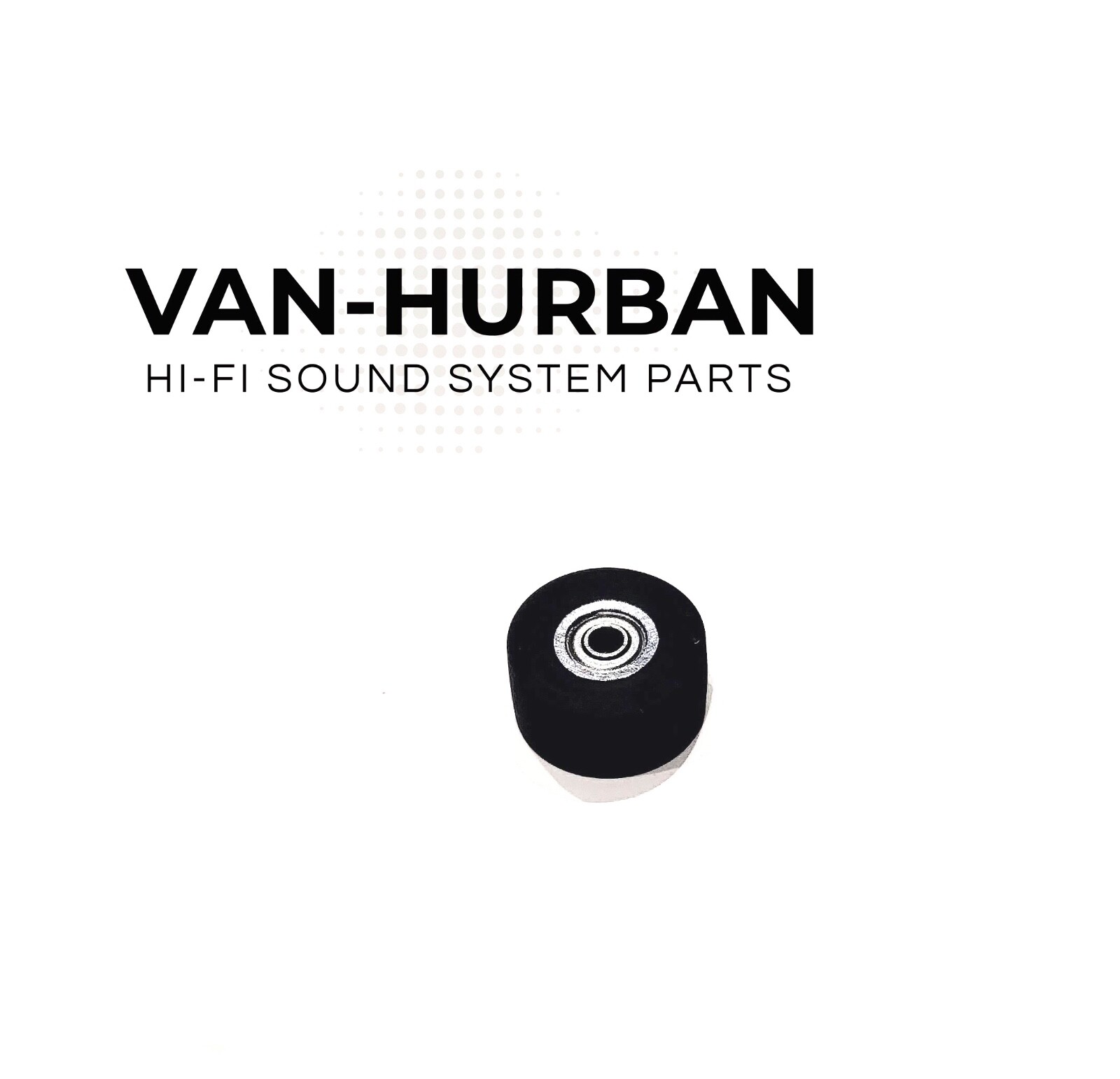
- Worn Pinch Roller: Over time, the rubber pinch roller can harden or become sticky, leading to speed instability or tape slippage. Replacement with a new roller or reconditioning with isopropyl alcohol is often necessary.
- Deteriorated Belts (if applicable): While the AD-F90 uses a direct-drive capstan system, some internal mechanisms may rely on small belts that can degrade. These should be inspected and replaced if cracked or stretched.
- Dirty or Oxidized Heads and Guides: Regular cleaning with 99% isopropyl alcohol and a lint-free swab is essential. Demagnetizing the heads periodically will preserve tape quality.
- Battery Corrosion: If stored with old batteries, the spring contacts can corrode. Clean with vinegar or baking soda solution and replace damaged contacts if needed.
- Capacitor Aging: Electrolytic capacitors in the power and audio circuits may dry out over time, leading to noise or power issues. A recapping by a qualified technician can restore full performance.
Despite these potential issues, the AD-F90 is known for its durability. Many units still function perfectly today, a testament to Aiwa’s build quality.
Current Market Value and Collectibility
The Aiwa AD-F90 is not as widely collected as some of its more famous counterparts, but it holds a special place among cassette connoisseurs and field recording enthusiasts. In recent years, interest in analog recording and vintage portables has surged, driving up demand for well-maintained units.
As of 2024, a fully functional Aiwa AD-F90 in good cosmetic condition typically sells for $150–$250 on secondary markets like eBay or dedicated audio forums. Units that come with the original case, cables, and AC adapter command higher prices. Fully restored models with new belts, cleaned heads, and recapped electronics may reach $300+.
Its collectibility is bolstered by its relative rarity outside Japan, where it was more commonly sold. Original packaging and manuals significantly increase value, especially for collectors focused on complete-in-box (CIB) items.
Conclusion and Legacy
The Aiwa AD-F90 represents the golden age of cassette technology, where portability no longer meant compromising on sound quality. It was a tool for musicians, journalists, and audiophiles who needed reliable, high-fidelity recording on the move. In an era increasingly obsessed with digital perfection, the AD-F90 reminds us of the warmth, charm, and tactile satisfaction of analog tape.
While it may not have achieved the mainstream fame of some of its peers, the AD-F90 remains a sleeper classic—a compact powerhouse that delivers performance far beyond its size. For those exploring vintage audio, restoring an AD-F90 is a rewarding project that opens the door to the rich world of analog recording.
Today, as cassette tapes enjoy a nostalgic resurgence, the Aiwa AD-F90 stands as a testament to Japanese engineering excellence and the enduring appeal of high-quality analog sound. Whether used for music, field recording, or simply as a display piece, the AD-F90 continues to earn admiration—quietly, elegantly, and with every turn of the tape.
eBay Listings



As an eBay Partner, we earn from qualifying purchases. This helps support our independent vintage technology research.
Related Models
- Aiwa AD-F990 (1993)
- Aiwa AA-8700 (1981)
- Aiwa AA-8900 (1982)
- Aiwa AD-1200 (1980)
- Aiwa AD-1250 (1982)
- Sony TC-2050SD (1978)
- Kenwood KX-3060 (1982)
- Sony TC-2130A (1974)
- Sony TC-2220 (1972)
- Sony TC-FX6 (1982)