Advent Loudspeaker (1969–1977)
A heavy, no-frills box that redefined what affordable hi-fi could sound like—and still punches above its weight today.
Overview
Open the back of an original Advent Loudspeaker and you’ll find a tangle of point-to-point wiring, iron-core inductors wrapped in wax, sandcast resistors, and electrolytic capacitors that have seen five decades of thermal cycling. It looks like something cobbled together in a MIT dorm room—and in a way, it was. This isn’t a speaker designed to impress at a trade show with sleek lines or exotic materials. It’s a speaker built to disappear into the music, to deliver deep, articulate bass and smooth midrange from a sealed box no audiophile in 1969 thought capable of such performance. And it did it for less than half the price of its competition.
When Henry Kloss left Acoustic Research and KLH to start Advent in 1967, he wasn’t trying to build another prestige brand. His goal was radical: bring true high-fidelity sound within reach of college students, teachers, and anyone else who loved music but couldn’t afford the $500+ price tags of the AR-3a or JBL L100. The Advent Loudspeaker, introduced in 1969, was his answer—a two-way acoustic suspension design that used a single 10-inch woofer and a 3-inch “fried egg” paper-cone tweeter. No fancy crossovers, no exotic cabinet bracing, no veneer overkill. Just honest, uncolored sound from a box that weighed more than it had any right to.
It worked. Critics were stunned. At a time when most affordable speakers either boomed in the bass or fizzled out below 60Hz, the Advent delivered usable output down to 33Hz—on vinyl, through tube amps, in real living rooms. It wasn’t the most sensitive speaker on the market (a modest 88dB/W), but what it lacked in volume it made up for in control. The sealed cabinet design meant tight, fast bass without the port noise or resonance of reflex systems. And because Kloss prioritized time-domain accuracy over flashy specs, the Advent imaged in a way that still surprises modern listeners—centered, stable, and free of the forwardness that plagued so many contemporaries.
There were two cabinet finishes: a walnut veneer with a distinctive bullnose front edge, and a more common “utility” version covered in textured vinyl. Acoustically, they were identical—Advent didn’t cut corners on internal construction to save money. Both versions used Masonite front baffles and dense particleboard cabinets, damped with layers of internal bituminous material that gave the enclosures a satisfying thud when tapped. The grilles were held on with plastic clips and featured a foam backing that, on surviving examples, is now brittle and disintegrated—though replacements are easy to fabricate.
Specifications
| Manufacturer | Advent Corporation |
| Production Years | 1969–1977 |
| Original Price | $116 each (walnut), $102 each (unfinished/utility) |
| Drive Units | 10-inch paper-cone woofer, 3-inch paper-cone “fried egg” tweeter |
| Crossover Frequency | 1kHz |
| Nominal Impedance | 8 ohms |
| Power Capacity | 100W program |
| Frequency Response | 33Hz–17kHz ±3dB |
| Sensitivity | 88dB/W at 1 meter |
| Cabinet Type | Acoustic suspension (sealed) |
| Balance Control | Tweeter level switch: flat, +3dB, –3dB |
| Dimensions | Not specified in available documentation |
| Weight | Approximately 45 lbs each (estimated from user reports) |
| Inputs/Outputs | Single pair of binding posts |
| Grille | Removable foam-backed fabric |
| Finish Options | Walnut veneer with bullnose front, vinyl-covered utility |
| Special Features | Steel connector plate (early models), Masonite woofer mounting ring |
Key Features
The Fried Egg Tweeter and Its Quirks
The 3-inch paper-cone tweeter—nicknamed the “fried egg” for its domed center and squarish magnet structure—was both a blessing and a liability. Unlike the metal domes that would dominate the 1980s, this driver had a soft roll-off and natural roll-on, avoiding the harshness that made so many vintage speakers fatiguing at volume. The +3dB/–3dB switch on the rear panel let users tailor the top end to their room or preference, a rare feature at this price point. But time has not been kind to these tweeters. The foam surrounds degrade, the adhesives weaken, and in some cases, the voice coils shift or burn out. Worse, when they fail, they sometimes leak ferrofluid (in later versions) or simply disintegrate into a pile of paper pulp. Replacements are available from specialty vendors, but original units in working condition are increasingly rare. Some owners bypass the switch entirely and hardwire the tweeter for reliability.
Acoustic Suspension Done Right
Kloss didn’t invent acoustic suspension—that credit goes to Edgar Villchur and AR—but he perfected its mass-market application. The Advent’s sealed cabinet, tuned with careful attention to internal damping and woofer compliance, delivered bass that was not just deep but articulate. Unlike ported designs that can sound “one-note” at certain frequencies, the Advent’s bass tightens up with the music, tracking kick drums and double bass with surprising agility. This came at the cost of efficiency, meaning the speaker demands a robust amplifier—especially in larger rooms. But paired with a solid 40–50 watts per channel (tube or solid-state), it reveals a neutrality that still holds up against modern bookshelf monitors. The crossover, while basic by today’s standards, uses high-quality components for its era, including air-core inductors in later revisions and carefully selected capacitors to manage phase coherence.
Built Like a Tank, Priced Like a Bargain
Advent didn’t skimp on build quality to hit its price point. The cabinet walls are thick, the baffles are rigid, and the internal bracing—while minimal—was strategically placed. The use of Masonite for the front baffle reduced resonance, and the bituminous damping pads on the inner walls absorbed standing waves without over-damping the sound. These speakers were meant to last, and many have. The vinyl-covered “utility” models, often dismissed as cheap, are acoustically identical to the walnut versions and were actually more common in the field. The steel terminal plate on early models (1969–1971) is a telltale sign of first-run production and highly sought after by collectors. Later models switched to plastic terminals, likely to cut costs as production scaled.
Historical Context
The late 1960s were a turning point for consumer audio. High fidelity was no longer just for the wealthy or the obsessive. Companies like AR, KLH, and Advent were racing to bring accurate sound reproduction to the middle class. But most still treated good speakers as luxury items. Kloss saw an opportunity: what if you could build a speaker that didn’t just compete with the AR-3a, but matched it in key areas while costing half as much? The Advent Loudspeaker was that answer. It wasn’t just a budget alternative—it was a philosophical statement. Accuracy, not hype. Substance, not showmanship.
At a time when three-way designs with complex crossovers were considered essential for “true” hi-fi, Kloss proved that two drivers, properly engineered, could deliver a balanced, lifelike sound. The Advent became a sleeper hit, selling hundreds of thousands of pairs and influencing a generation of speaker designers. It also overshadowed Advent’s other products, including the groundbreaking Advent 201 cassette deck and the short-lived VideoBeam projector. By the mid-1970s, “Advent speakers” were synonymous with smart, no-nonsense audio value—so much so that when the Smaller Advent launched in 1972, the original had to be retroactively renamed the “Larger Advent” to avoid confusion.
Competitors took notice. AR never directly responded with a lower-cost model, but JBL and KLH began refining their own entry-level lines. Still, none matched the Advent’s combination of deep bass, neutral midrange, and rock-solid imaging at that price. It was a speaker that rewarded careful setup—placement away from walls, proper toe-in, and a good amp—but punished lazy system matching. Pair it with a weak receiver or a bright tube amp, and the flaws showed. But get it right, and it revealed layers in recordings that many assumed were lost to time.
Collectibility & Value
Today, the Advent Loudspeaker occupies a curious space in the vintage market. It’s everywhere and nowhere—ubiquitous on eBay, Craigslist, and estate sales, yet often overlooked by collectors chasing flashier names. A pair in good condition typically sells for $200–$400, with walnut versions commanding a 20–30% premium. Fully restored pairs with replaced crossovers and drivers can fetch $600+, but purists argue that such modifications dilute the original experience.
The biggest threat to longevity isn’t cosmetic—it’s the crossover. Electrolytic capacitors from the 1970s rarely survive without reforming or replacement. Failed caps can cause muffled sound, tweeter burnout, or even complete failure. Recapping is strongly recommended for any pair that’s been sitting for decades. Similarly, the foam surrounds on the woofer and tweeter will eventually crumble. Replacement kits are available, but the process is labor-intensive and requires careful re-coning or adhesive work.
Buyers should check for cabinet integrity—water damage, warping, or repainted surfaces can affect resale value. The early steel terminal plates are a plus, as are original grilles (though rare). Be wary of “double-stacked” setups advertised as superior—while stacking two pairs vertically was a cult practice in the 1970s (aimed at improving stereo imaging and bass coupling), it places enormous strain on amplifiers and can lead to driver damage if not carefully managed.
For those seeking vintage sound without vintage fragility, the Advent is a strong contender. It’s not the easiest speaker to drive, nor the most detailed by modern standards, but its balance and musicality remain compelling. And unlike many classics, it doesn’t demand a six-figure system to shine. A modest tube amp or a solid vintage receiver—Pioneer, Sansui, Marantz—is all it needs to sing.
eBay Listings
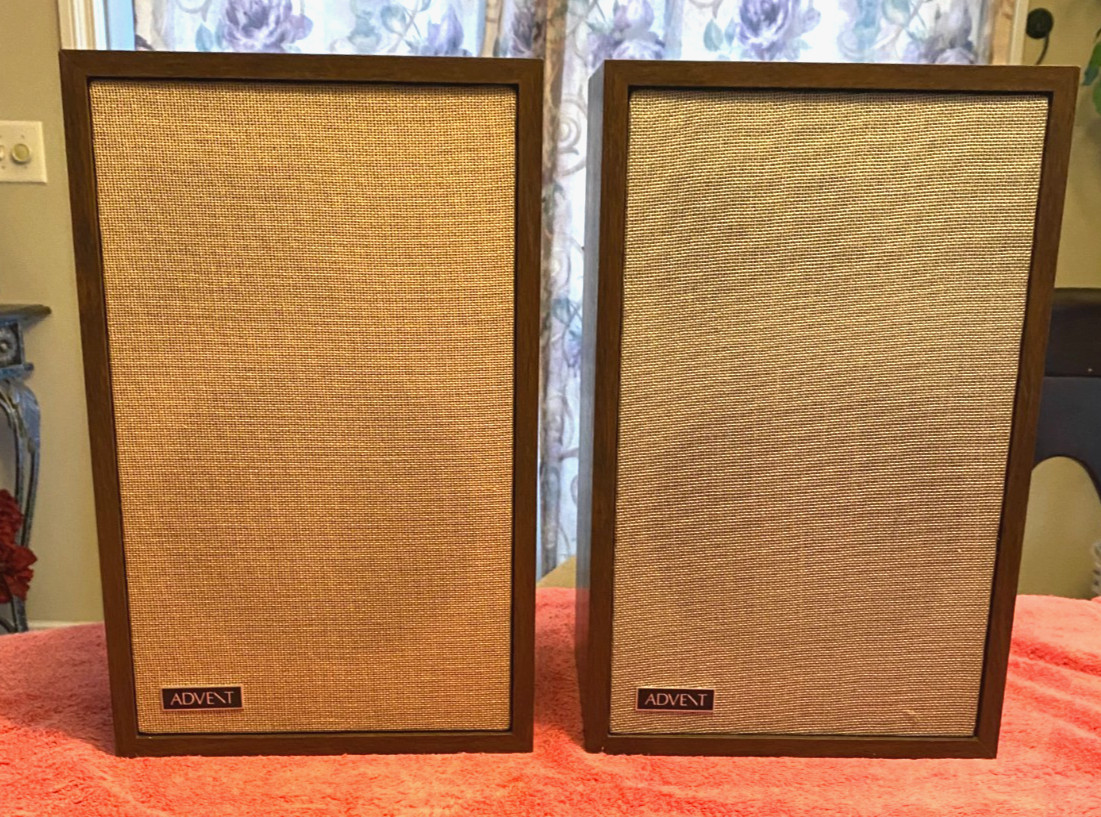
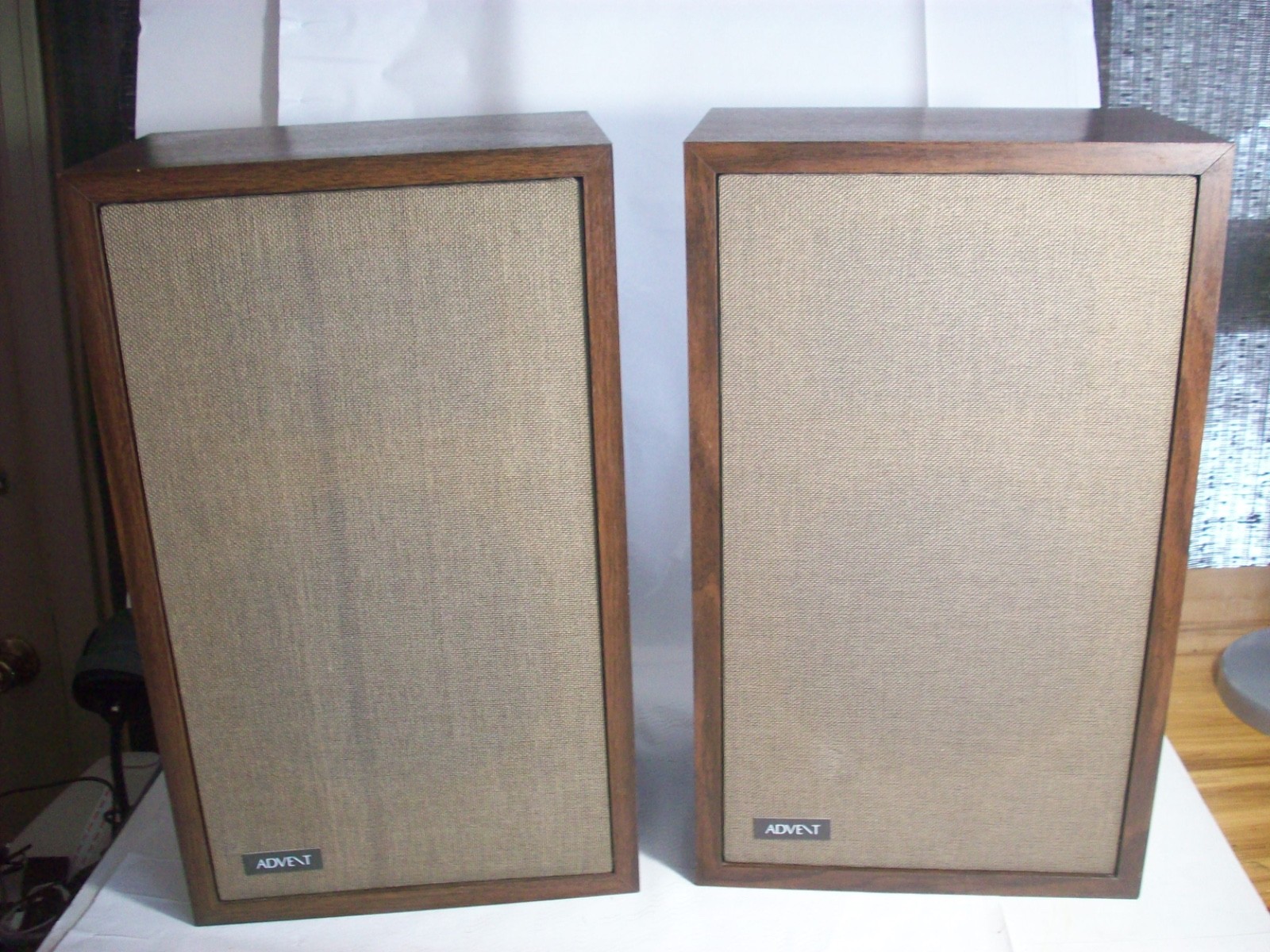
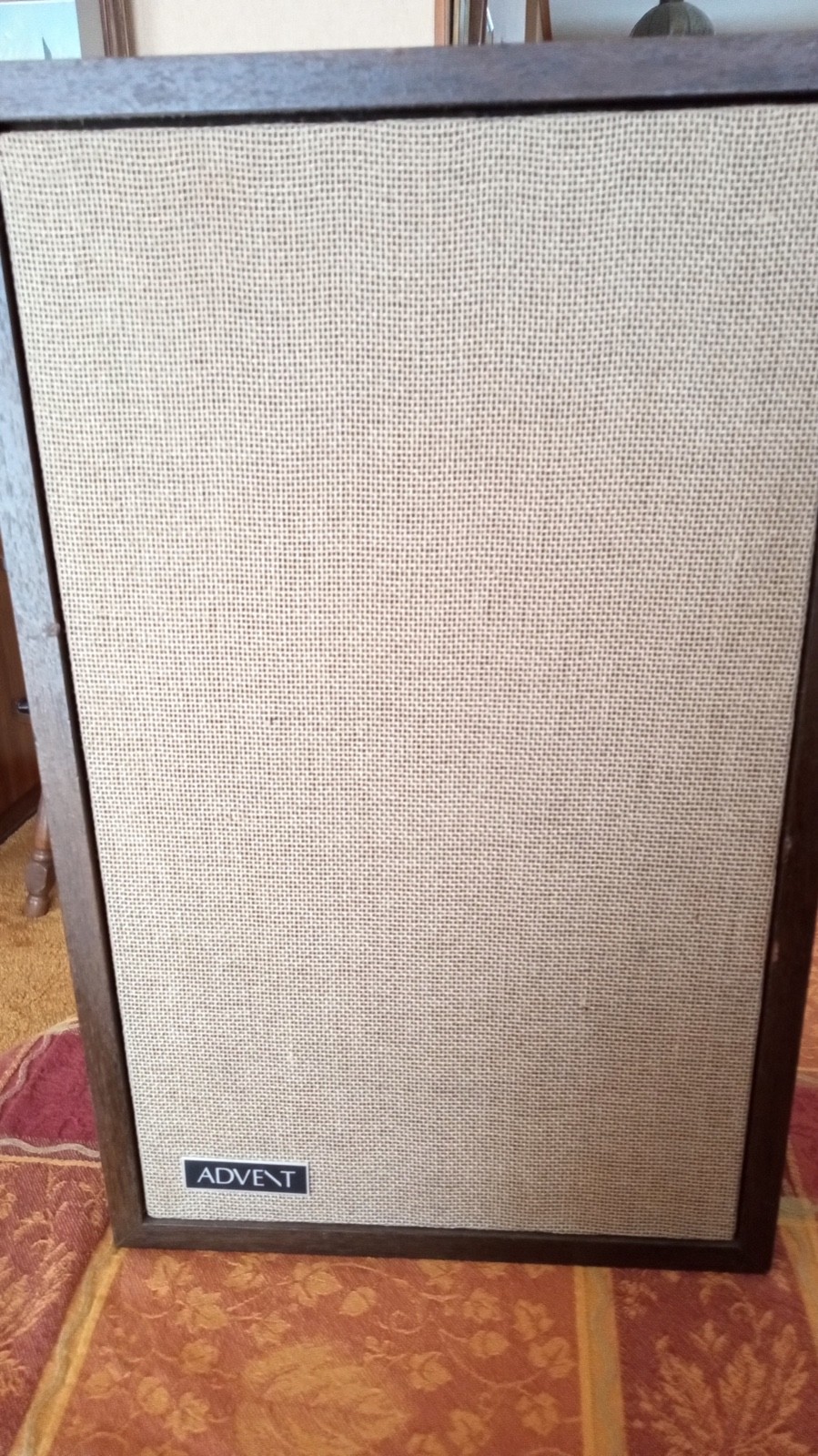

As an eBay Partner, we earn from qualifying purchases. This helps support our independent vintage technology research.