Advent Heritage (Late 1980s–Early 1990s)
One of the last great acoustic suspension floorstanders from a brand that helped define American hi-fi.
Overview
There’s a quiet dignity to a pair of Advent Heritage speakers standing in a corner, their pecan wood veneers catching the afternoon light, their clean lines and modest proportions betraying nothing of the sonic weight they’re about to drop. These aren’t flashy—no flared ports, no wild cabinet angles, no glowing badges—but they were built with purpose, a final statement from a company that had spent two decades perfecting the art of the sealed box. When you fire them up, the first thing that hits isn’t bass—it’s clarity. A taut, controlled midrange that doesn’t shout, doesn’t color, just lays things out like a well-organized desk. The bass comes next, not with a thump but a firm push, the kind that tells you the 8-inch woofers are working hard without breaking a sweat. They don’t try to impersonate a subwoofer, but they’ll go down to 42 Hz with authority, and they do it without the bloat that plagues so many ported designs from the same era.
Designed as the flagship replacement for the beloved Legacy line, the Heritage landed in the late 1980s, a time when many American speaker companies were chasing European trends—ribbon tweeters, complex crossovers, exotic cabinet materials. Advent stayed the course. Acoustic suspension. Butyl-rimmed woofers. A single dome tweeter. No passive radiators, no reflex tuning, no gimmicks. The result was a speaker that didn’t dazzle on paper but delivered a coherent, time-aligned sound that still holds up today—if you’re willing to do a little maintenance. At 37.75 inches tall and just over 40 pounds each, they’re substantial without being imposing, and their 10.75-inch width keeps them from dominating a room. They look like something your dad might have bought for his den, which is exactly the point: this was high-fidelity for real homes, not listening rooms with rugs laid over rugs.
Owners report a balanced, slightly warm character—never harsh, never dull. The tweeter, a 3/4-inch soft dome crossed over at 3,500 Hz, doesn’t scream into the upper registers like some of its contemporaries. Instead, it integrates smoothly, letting cymbals shimmer without sizzle. The two 8-inch woofers per cabinet work in a 2.5-way configuration, with the lower woofer handling the deepest bass and the upper one reinforcing the midbass. This isn’t a bi-ampable design, but the crossover is well-executed for its time, using modest slopes and quality components. Sensitivity sits at 89 dB/2.83 V/m—nothing extraordinary, but enough that they’ll play respectably loud with 50 watts. Impedance is a steady 6 ohms, though some units tested at 4 ohms under load, so pairing with an amp that can handle lower impedances is wise.
Specifications
| Manufacturer | Advent |
| Production Years | Late 1980s to early 1990s |
| Original Price | Not specified in research |
| Frequency Response | 42–23,000 Hz |
| Sensitivity | 89 dB/2.83 V/m |
| Impedance | 6 ohms (some reports of 4 ohms) |
| Crossover Frequency | 3,500 Hz |
| Driver Complement | (x2) 8-inch woofers, (x1) 3/4-inch soft dome tweeter per cabinet |
| Cabinet Type | Acoustic suspension (sealed) |
| Design Type | 2.5-way floorstanding |
| Dimensions (H×W×D) | 37.75 × 10.75 × 13 inches |
| Weight | 43 lbs per speaker |
| Grille | Fabric with wooden frame |
| Finish | Pecan wood veneer (front and top) |
| Inputs | Single pair of binding posts |
| Recommended Amplifier Power | 25–100 watts |
Key Features
Acoustic Suspension Done Right
Advent didn’t invent acoustic suspension, but they perfected it for the mass market. The Heritage continues that legacy with a sealed cabinet design that prioritizes transient accuracy over raw output. Unlike ported speakers that can sound “one note” in the bass, the Heritage delivers a tight, articulate low end that tracks kick drums and double bass with precision. The lack of a port means no chuffing, no phase issues, and no tuning compromises—just a clean, predictable roll-off below 42 Hz. This design also makes them more forgiving of room placement. They don’t demand to be in corners or against walls, though a few inches of breathing room helps. The cabinet is internally braced and well-damped for its era, avoiding the boxy resonance that plagues lesser sealed designs.
Driver Synergy Over Specs
Advent never chased paper wins. The 8-inch woofers aren’t the largest on the market, and the tweeter isn’t exotic—but they’re matched. The butyl foam surrounds (a known failure point, more on that later) were chosen for their long-term stability and linearity. The tweeter’s dispersion is wide enough to create a generous sweet spot but controlled enough to avoid fatigue. There’s no attempt to make these speakers “sound expensive” with exaggerated highs or boosted bass. Instead, they aim for neutrality, letting the recording—not the hardware—do the talking. This makes them excellent for critical listening, especially with well-recorded jazz, classical, and acoustic rock.
Understated Craftsmanship
The Heritage doesn’t scream “luxury,” but it doesn’t need to. The pecan veneer is warm and inviting, not garish. The front baffle is clean, with no visible screws or branding. The grilles attach magnetically or with plastic clips, depending on the production run, and remove cleanly to reveal the drivers. The binding posts are basic but functional—no bi-wiring, no gold plating, just solid connections. This isn’t a speaker designed to impress guests with its looks; it’s built to disappear sonically, letting the music take center stage.
Historical Context
The Advent Heritage arrived at a crossroads. By the late 1980s, the golden age of American speaker design was fading. Companies like AR, KLH, and Acoustic Research had either declined or been absorbed. Advent, once a pioneer under the direction of Henry Kloss, was now under Jensen ownership and shifting toward more conventional product lines. The Heritage wasn’t a revolution—it was a refinement. It took the acoustic suspension principles that made the original Large Advent legendary and updated them for a new decade. While competitors like Polk, Mirage, and Bose were experimenting with time-delay integration, bipolar dispersion, and digital crossovers, Advent stuck with what worked: a sealed box, quality drivers, and a simple crossover.
This wasn’t a budget speaker, but it wasn’t a luxury item either. It sat above the Prodigy and Laureate models in the Jensen-era Advent lineup, serving as the top-tier floorstander. It competed with the likes of the AR9, the KLH Model Eleven, and the Polk RTA A1—speakers that also favored measured neutrality over sonic theatrics. The Heritage didn’t win every shootout, but it earned respect for its consistency and lack of obvious flaws. In an era when many speakers were becoming more colored—either to sound “exciting” or to mask poor driver quality—the Heritage remained a voice of reason.
Collectibility & Value
Today, the Advent Heritage occupies a quiet corner of the vintage audio world. They’re not as cultishly revered as the original Large Advent, nor as rare as the New Advent /1, but they’re appreciated by those who value coherence over hype. On the used market, prices vary wildly based on condition—especially foam condition. Unrestored pairs with original, crumbling surrounds can be found for under $200. Refoamed and cleaned sets with intact grilles and veneer typically sell between $240 and $300. Exceptional examples—fully restored, with original documentation or rare finishes—might reach $400–$500, but that’s the ceiling.
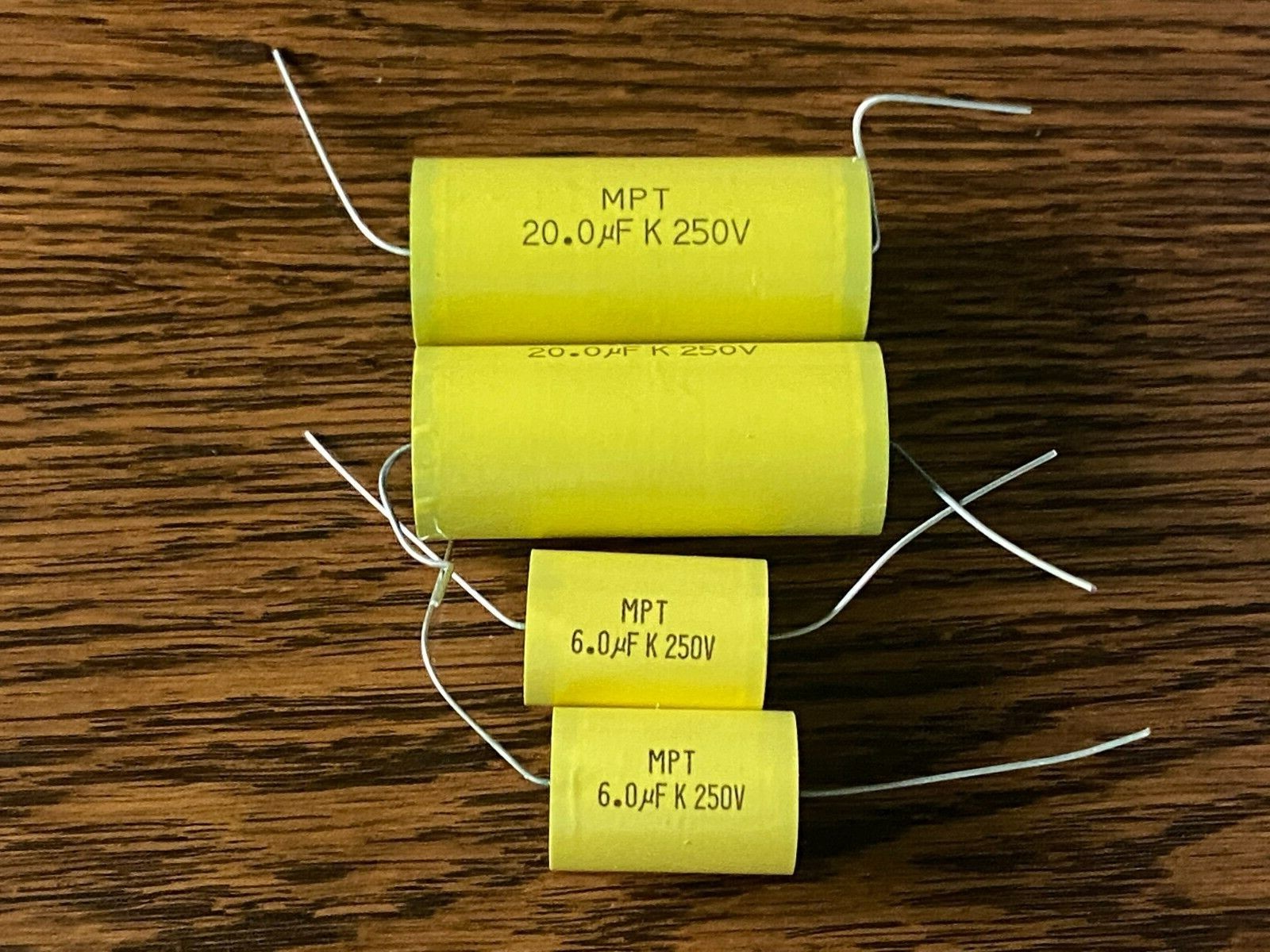
The biggest threat to longevity? The foam. Like nearly all speakers of this era, the Heritage used polyether foam surrounds that degrade over time. Exposure to humidity, ozone, and temperature swings accelerates the process. When the foam fails, the woofers lose alignment, produce distortion, and eventually seize. Refoaming is a must for any pair over 25 years old, and it’s a job best left to specialists. DIY kits are available, but the 2.5-way crossover means both woofers need to be matched in compliance and resonance. A mismatched refoam can ruin the balance. Beyond the foam, the tweeters are generally reliable, though some owners report failed crossovers—usually due to aging capacitors. The cabinets themselves are sturdy, but the veneer can chip at the edges, and the pecan finish is prone to water rings if not cared for.
Buying advice? Always ask for photos of the drivers without grilles. Check for crumbling foam, torn dust caps, or rattles. Power them up if possible—listen for buzzing, distortion, or weak bass. If the seller claims they’re “original and never touched,” be skeptical. These are 30+ year-old speakers. If they haven’t been serviced, they’re due. And don’t pair them with a weak amp. They’re not power-hungry, but they need a clean 50 watts to shine. Avoid bright-sounding electronics—these speakers don’t need more sparkle.
eBay Listings



As an eBay Partner, we earn from qualifying purchases. This helps support our independent vintage technology research.