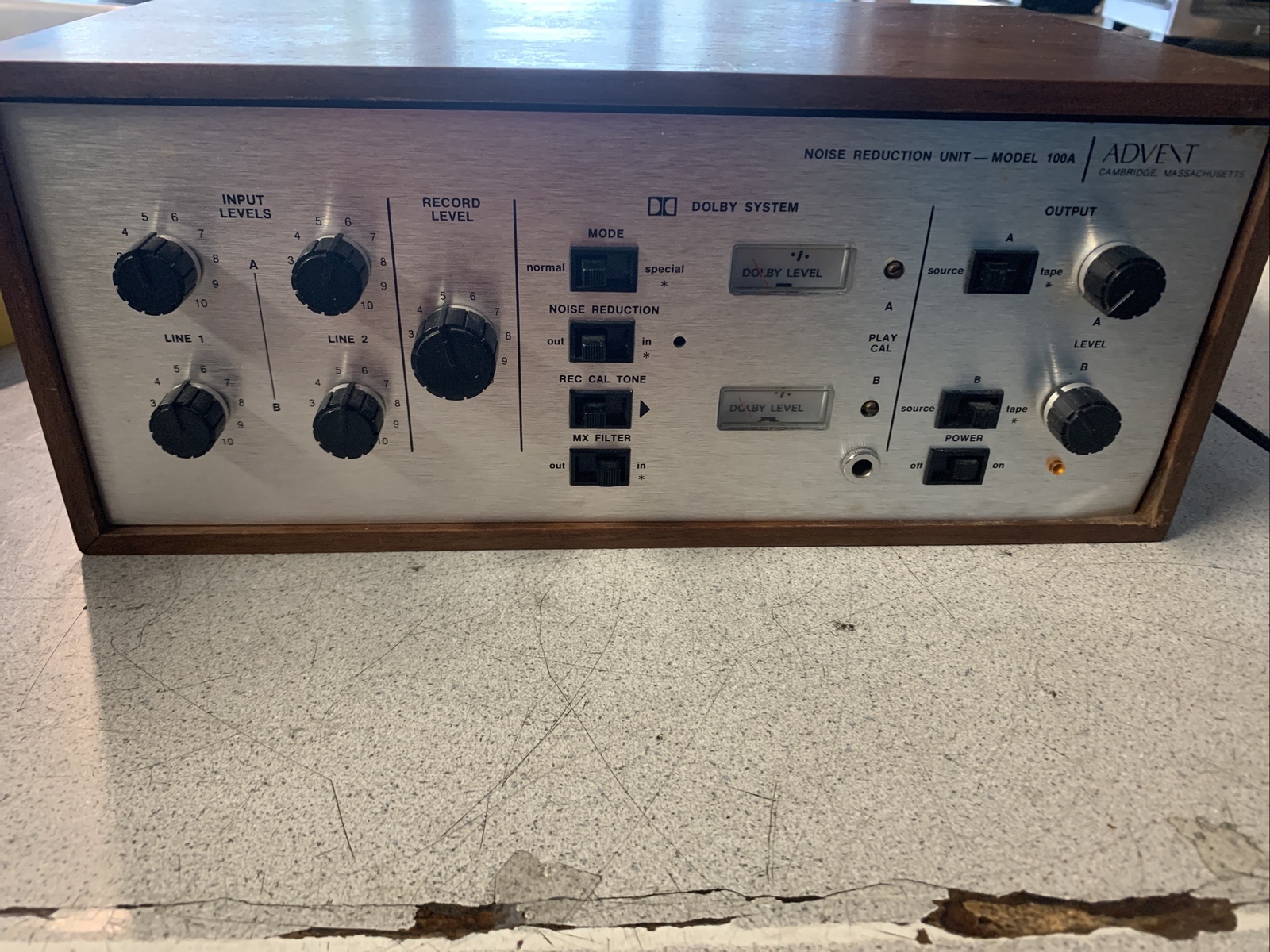
Advent Built-in Dolby B Noise Reduction in Model 201 Cassette Deck
The Advent Model 201, enhanced with built-in Dolby B noise reduction, marked a pivotal advancement in consumer audio during the mid-1970s. Released in 1974, this cassette deck brought professional-grade noise reduction technology into the home, significantly improving the listening experience and helping elevate the cassette tape from a portable recording medium to a serious format for high-fidelity music reproduction.
Key Specifications
| Feature | Specification |
| Brand | Advent |
| Model | Built-in Dolby B Noise Reduction in Model 201 |
| Category | Cassette Deck |
| Year of Production | 1974–1976 |
| Noise Reduction System | Dolby B |
| Noise Reduction Performance | Up to 10 dB reduction in tape hiss |
| Compatibility | Standard Dolby B pre-recorded and user-recorded tapes |
| Signal Type | Line-level signal processing |
| Impedance | N/A (line-level) |
| Sensitivity | N/A (line-level) |
| Power Specifications | Integrated into cassette deck electronics (exact voltage/current unknown) |
| Playback Modes | Playback with Dolby B decoding |
| Recording Modes | Standard cassette recording with Dolby B encoding |
| Dimensions | Varies by chassis (integrated into Model 201) |
| Weight | Integrated unit – weight depends on full deck configuration |
| Frequency Response | 35Hz to 15kHz (CrO2 tape) |
| Signal-to-Noise Ratio | 64dB (Dolby B) |
Historical Context
The Advent Model 201 was one of the first consumer cassette decks to feature built-in Dolby B noise reduction, a technology developed by Dolby Laboratories to combat the inherent high-frequency tape hiss of compact cassettes. Prior to this integration, cassette decks were often criticized for their lower audio fidelity compared to reel-to-reel tape or vinyl records. Advent's adoption of Dolby B in 1974 helped bridge that gap.
By reducing background noise by up to 10 dB during playback, the Model 201 delivered cleaner, more transparent sound—especially noticeable on softer passages and high-frequency content like cymbals and vocals. This innovation played a crucial role in legitimizing the cassette format for audiophiles and mainstream consumers alike, contributing to the cassette's rise in popularity throughout the 1970s and 1980s.
Advent, founded by audio pioneer Henry Kloss, was known for delivering high-performance audio equipment at accessible prices. The integration of Dolby B into the Model 201 exemplified this philosophy, bringing studio-quality noise reduction to the average household.
Sound Signature
The Dolby B system in the Model 201 focuses on reducing high-frequency noise without significantly altering the tonal balance of the audio. During recording, high frequencies are boosted (pre-emphasis), and during playback, they are attenuated along with the tape hiss. When properly calibrated, this process results in a cleaner, more natural sound.
Users report that tapes played on the Model 201 with Dolby B engaged sound noticeably quieter and more detailed, especially when compared to non-Dolby decks of the era. The system works best with chromium dioxide (CrO₂) or metal tapes but is also effective with standard ferric tapes.
Maintenance and Tips
Like all vintage electronics, the Advent Model 201 with Dolby B requires regular maintenance to perform optimally:
- Capacitor Replacement: Aging electrolytic capacitors can degrade over time, leading to power instability or audio distortion. Consider replacing them with modern equivalents.
- Belt Replacement: If the transport mechanism uses rubber belts, these may have hardened or cracked. Replace with OEM or compatible belts.
- Dolby Circuit Calibration: The Dolby B circuitry may drift over decades, causing muffled or overly bright playback. Professional alignment ensures accurate decoding.
- Cleaning and Deoxidation: Clean tape heads, capstan, and pinch roller with isopropyl alcohol. Use contact cleaner on switches and potentiometers to prevent crackling.
- Tape Path Alignment: Misalignment can cause poor tracking and reduced high-frequency response. Check azimuth and head alignment with a test tape.
- Use Proper Tapes: For best results, use tapes compatible with Dolby B (ferric or CrO₂). Avoid playing Type IV (metal) tapes unless the deck is specifically calibrated for them.
Collectibility and Market Value
The Advent Model 201 with built-in Dolby B is moderately collectible, rated around 6/10 due to its historical significance and early adoption of noise reduction technology. While not as rare as some high-end Japanese decks, it holds a special place in audio history.
- Market Value: $50–$150, depending on condition, functionality, and completeness.
- Factors Affecting Value: Fully operational units with clean heads, working Dolby switching, and original casing command higher prices. Cosmetic condition and service history also matter.
Enthusiasts and vintage audio collectors often seek this model for restoration or as a period-correct addition to classic stereo systems.
Conclusion
The Advent Model 201 with built-in Dolby B noise reduction was a trailblazer in consumer audio. By integrating advanced noise reduction into an affordable cassette deck, Advent helped redefine what was possible with the compact cassette. Today, it remains a respected piece of audio history—a testament to the era when magnetic tape met high fidelity.
eBay Listings



As an eBay Partner, we earn from qualifying purchases. This helps support our independent vintage technology research.
Related Models
- Advent MODEL 201 (1971, Improved Version with Dolby B) (1971)
- Advent 201 with Built-in Dolby B (1972)
- Advent Model 201 (1971) (1971)
- Sony TC-2050SD (1978)
- Aiwa AD-F990 (1993)
- Kenwood KX-3060 (1982)
- Sony TC-2130A (1974)
- Sony TC-2220 (1972)
- Sony TC-FX6 (1982)
- Sony TC-K96R (1986)