Advent AR9 (1978–1982)
A floor-standing monolith that demanded space, power, and patience—but repaid every watt with a window into the recording studio’s soul.
Overview
Standing in front of a pair of Advent AR9s feels like facing a sonic obelisk—tall, imposing, and radiating a quiet authority. These aren’t speakers you casually place in a room; they command it. At 134 cm tall and nearly 60 kg each, the AR9 is a physical presence, a statement in oiled walnut veneer that says you didn’t just buy speakers, you committed to a lifestyle. Designed during the twilight of Acoustic Research’s golden era—under Teledyne ownership but still bearing the engineering DNA of the brand’s founder, Edgar Villchur—the AR9 arrived in 1978 as a four-way, five-driver flagship meant to push the boundaries of extended frequency response and controlled dispersion. It wasn’t just another box with cones; it was an attempt to engineer room interaction out of the equation, or at least minimize its damage.
The sound? Transparent, revealing, and ruthlessly honest. If your amplifier isn’t up to the task or your room’s acoustics are untreated, the AR9 will let you know immediately. But in the right setup, it delivers a startlingly neutral balance—no artificial warmth to flatter bad recordings, no hyped highs to simulate detail. What you hear is what was captured, from the lowest synth drone down to 18 Hz (on paper, at least) all the way up to 30 kHz, far beyond what most ears can detect but contributing to an airy, unforced top end. The midrange is where it truly sings: voices emerge with lifelike presence, not pushed forward like some British monitors, nor recessed like certain Japanese designs, but placed exactly where they should be in the mix.
But make no mistake—this is not a forgiving speaker. With a nominal 4-ohm impedance that dips to 3.2 ohms and a sensitivity of just 87 dB, it’s a load that can make even well-regarded solid-state amps sweat. Tube lovers, beware: many classic tube amps from the era simply can’t supply the current needed to control the twin 30 cm woofers, especially in the bass region. The AR9 wants grip, authority, and headroom. Pair it with something underpowered or overly polite, and the result is flabby, disconnected bass and a collapsed soundstage. But feed it with a robust 150-watt-per-channel solid-state workhorse—something like a Harman Kardon Citation, a Marantz 2270, or a late-model Sansui—and the transformation is dramatic. Suddenly, the bass tightens, the imaging locks in, and the soundstage expands vertically and horizontally like a curtain lifting.
And then there’s the design quirk that defines its behavior: the dual side-mounted woofers. Unlike conventional front-firing bass drivers, the AR9’s 30 cm cones are placed on the left and right edges of the cabinet, firing into the room’s lateral boundaries. The idea was to reduce “wall dip”—that cancellation effect that occurs when front-firing bass interacts with reflections from nearby walls—by pushing the primary bass radiation above 200 Hz, where room modes are less destructive. It’s clever, but it demands space. These speakers need to breathe. You can’t cram them into a corner or push them against a wall without sabotaging their intended performance. They thrive in larger rooms with careful placement, ideally at least a meter from side walls and well away from the front boundary.
Owners report that the AR9 reveals flaws in recordings with almost clinical precision. A slightly off-center vocal, a muddy mix, a compressed dynamic range—all laid bare. That’s not a flaw in the speaker; it’s the point. This was never meant to be a “fun” speaker in the way that, say, a pair of JBL L100s might be. It’s analytical, precise, and at times, emotionally distant. But for critical listening, for audiophiles who wanted to hear past the gear and into the music, the AR9 offered a rare level of transparency for its time.
Specifications
| Manufacturer | Acoustic Research |
| Production Years | 1978–1982 |
| Original Price | Not specified in research |
| System Type | Floor-standing columnar 4-way system with five drivers and AR Acoustic Blanket |
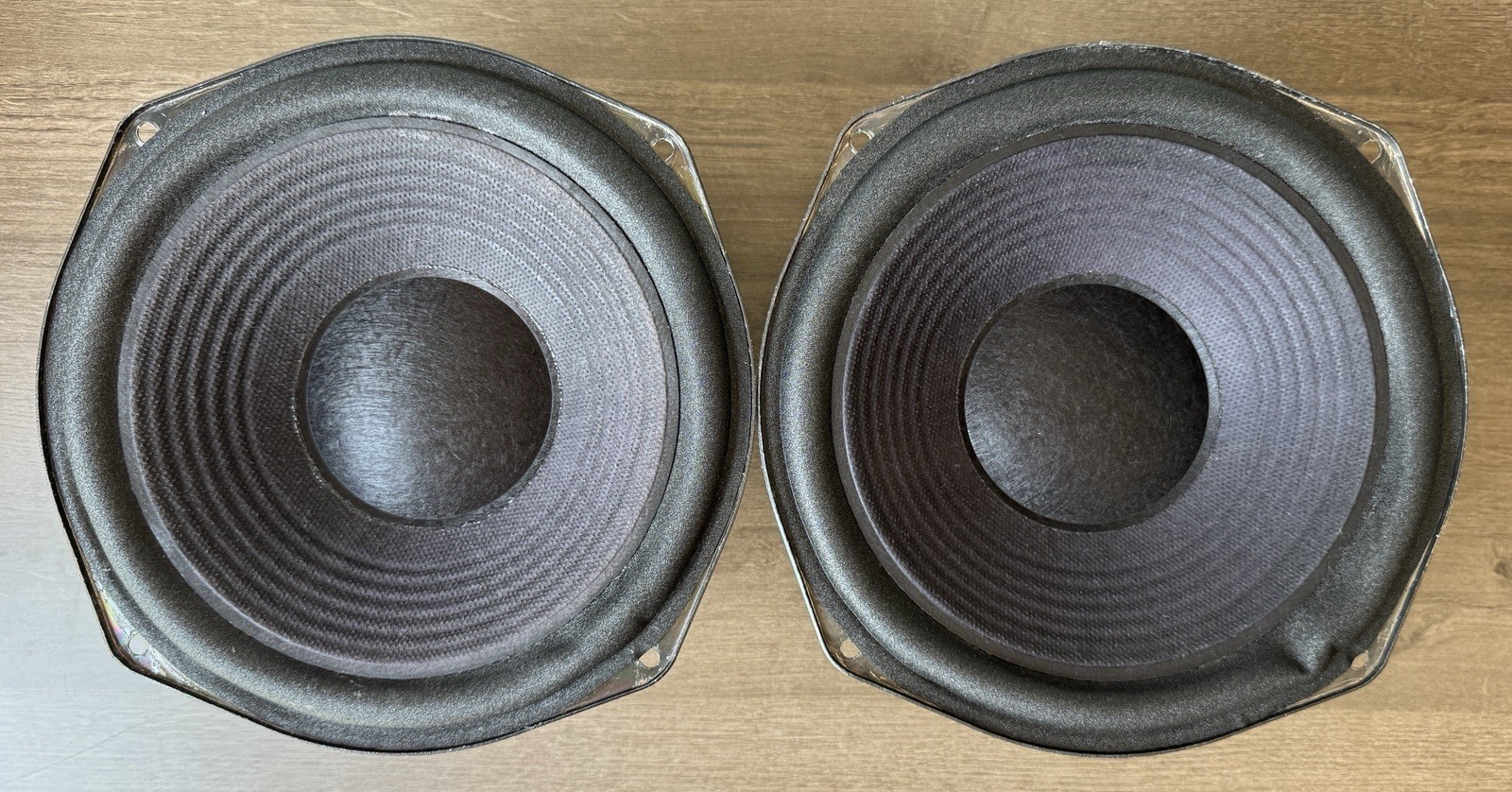
| Bass Drivers | 2x 30 cm cones |
| Low Midrange | 1x 20 cm cone in its own sub-enclosure |
| High Midrange | 1x 3.8 cm cone, liquid-cooled with semi horn-loading |
| Tweeter | 1x 1.9 cm dome, liquid-cooled |
| Frequency Range | 18 Hz – 30 kHz |
| Efficiency | 87 dB SPL at 1W and 1m on axis |
| Power Handling | Up to 400W continuous per channel (no more than 10% of the time on normal speech and music source in non-commercial applications) |
| DIN Nominal Power Handling | 175W |
| DIN Maximum Power Handling | 275W |
| System Low Frequency Response | -3 dB at 28 Hz |
| Effective System Q | 0.5 at resonance |
| Impedance | 4 Ohm nominal, 3.2 Ohm minimum |
| Controls | Three 3-position switches (resistor networks for front driver response tuning) |
| Crossover Frequencies | 200 Hz, 1200 Hz, 7000 Hz |
| Crossover Network | Half and quarter section LC networks on lower and upper midrange drivers; full section networks on woofer and highrange drivers; impedance-equalizing circuit on upper mid; bass extension and Q optimization on woofer; air-core chokes with #17 AWG solid conductor, computer-grade bipolar electrolytic caps, non-inductive high-power ceramic resistors |
| Cabinet Finish | Oiled walnut veneer |
| Cabinet Volume | 120L |
| Cabinet Dimensions | 134 x 38 x 40.2 cm |
| Weight | 59 kg |
Key Features
The Four-Way Architecture and Liquid-Cooled Drivers
Most high-end speakers of the late 1970s stuck to two or three drivers. The AR9 went further, splitting the audio spectrum into four distinct bands with five drivers. This wasn’t just overengineering for show—it was a deliberate strategy to minimize intermodulation distortion and keep each driver operating within its optimal range. The liquid-cooled tweeter and high-mid driver are particularly noteworthy. At a time when most dome tweeters relied on passive heat dissipation, AR implemented a fluid-based cooling system to handle high power levels without thermal compression or failure. It’s a feature more commonly seen in professional studio monitors, and its inclusion here speaks to the AR9’s serious engineering pedigree. The semi-horn-loaded high-mid driver adds directivity control, helping to focus the midrange energy and reduce early reflections that can blur imaging.
Side-Firing Woofers and Room Interaction
Mounting the two 30 cm woofers on the sides of the cabinet was a radical move. Conventional wisdom placed bass drivers on the front baffle, but AR’s research suggested that lateral bass radiation could reduce destructive interference from front-wall reflections. By elevating the primary bass output plane, the AR9 aims to maintain a smoother in-room response, especially in the critical 50–200 Hz range where room modes wreak havoc. It works—but only if the room cooperates. These speakers need lateral space, and they don’t respond well to being shoved into tight living rooms or bookshelves. The trade-off is real: you gain bass consistency across different room positions, but you lose the ability to tuck them into corners for extra boom. This is bass for accuracy, not for show.
The Acoustic Blanket and Cabinet Design
Inside the AR9’s tall cabinet lies a patented “acoustic blanket”—a dense, damping material surrounding the internal drivers to minimize cabinet resonance and internal reflections. This isn’t just foam padding; it’s a structured layer designed to absorb standing waves and prevent coloration. Combined with the 120-liter sealed enclosure and internal sub-enclosures for the midrange drivers, the result is a remarkably inert cabinet. Knock on it, and it doesn’t ring. That’s rare for a speaker of this era, where many high-end designs still suffered from boxy colorations. The oiled walnut veneer isn’t just for looks; it’s part of a rigid, non-resonant construction that prioritizes neutrality over aesthetics.
Adjustable Response and Precision Tuning
The three 3-position switches on the rear panel let users fine-tune the front driver response. These resistor networks allow for small adjustments in output level for the high-mid and tweeter sections, letting owners tailor the speaker to room acoustics or personal preference. It’s not a full parametric EQ, but it’s more flexibility than most passive speakers of the time offered. Savvy users can use these switches to compensate for overly reflective rooms or to tame a bright amplifier. Documentation shows that AR provided guidance on switch settings based on listening distance and room size, making the AR9 one of the more user-adjustable high-end speakers of its day.
Historical Context
The AR9 arrived in 1978, a time when high-fidelity audio was transitioning from the era of tube amps and horn speakers into the solid-state, sealed-enclosure mainstream. Competitors like JBL, Klipsch, and Bose were pushing different philosophies—JBL with its powerful, dynamic drivers; Klipsch with efficiency and horn loading; Bose with psychoacoustic tricks and diffuse radiation. Acoustic Research, once the pioneer of acoustic suspension with the AR3, was no longer the dominant force it had been in the 1960s. The AR9 was an attempt to reclaim that crown, to prove that AR could still innovate at the highest level. It did so not with marketing gimmicks, but with deep engineering: measured performance, controlled dispersion, and extended bandwidth.
Yet the timing was unfortunate. By the late 1970s, consumer tastes were shifting. The AR9’s tall, narrow profile didn’t fit well in the increasingly furniture-conscious living rooms of the era. Its demanding nature—both electrically and spatially—made it a hard sell compared to more forgiving, compact designs. And as Teledyne’s ownership of AR became less focused on innovation and more on cost-cutting, the AR9 stood as one of the last true engineering statements from the brand before its gradual decline. It was a speaker built for purists, not mass appeal.
Still, it had its admirers. Audiophiles who valued accuracy over excitement saw the AR9 as a reference tool. It wasn’t trying to make music sound “better”—it was trying to make it sound “true.” In an age when many high-end speakers still colored the sound with warmth or brightness, the AR9’s neutrality was radical. It was closer in philosophy to the BBC monitors of the time than to the typical American hi-fi speaker.
Collectibility & Value
Today, the AR9 is a rare sight. It was never produced in the numbers of the original Advent Loudspeaker, and its size and weight made it a difficult sell even in its prime. Finding a pair in good condition requires patience and a willingness to inspect carefully. Prices vary widely based on condition, with non-working or cosmetically damaged pairs selling for $200–$400, while fully restored, functioning sets can fetch $1,200–$2,000. However, true value depends on more than cosmetics.
The biggest concern for buyers is driver condition. The liquid-cooled tweeters and high-mid drivers are prone to fluid leakage over time, which can dry out and cause distortion or failure. Replacing these drivers is difficult—original parts are scarce, and modern equivalents require modification. The woofers, while robust, can suffer from foam surround deterioration, especially if the speakers were stored in damp environments. Recapping the crossover is almost mandatory; the original electrolytic capacitors from the late 1970s have likely degraded, leading to loss of bass control and increased distortion.
Service technicians observe that the AR9’s complex crossover—featuring air-core inductors and precision resistors—is both a strength and a vulnerability. While well-built, it’s susceptible to solder joint fatigue and component drift over decades. A full service can easily cost $400–$600 per pair, factoring in driver refurbishment, recapping, and alignment.
For collectors, the AR9 is not a “plug-and-play” vintage speaker. It’s a project, a restoration challenge, and a statement piece. But for those willing to invest the time and money, it offers a listening experience that few speakers of its era can match: a transparent, uncolored window into the recording that feels startlingly modern. It’s not the easiest vintage speaker to live with, but for the right owner, it’s one of the most rewarding.
eBay Listings


As an eBay Partner, we earn from qualifying purchases. This helps support our independent vintage technology research.