Advent AR-3a (1967–1975)
The speaker that redefined high fidelity for a generation—deep, clean bass in a box that didn’t dominate the room, and a sound so natural it once fooled listeners in blind tests against live music.
Overview
When you pull a pair of AR-3a speakers out of a basement or attic, you’re not just unearthing old wood and foam—you’re uncovering a seismic shift in how people experienced recorded sound. These weren’t just speakers; they were a promise kept. In the late 1960s, most high-end audio meant massive floorstanders that devoured living rooms and still struggled with muddy bass. The AR-3a flipped the script: a compact, walnut-clad bookshelf design that delivered tight, articulate low end down to 35Hz without equalization or a subwoofer. That wasn’t just impressive—it was revolutionary. And it wasn’t a fluke. The AR-3a was the culmination of Henry Kloss’s obsession with acoustic suspension technology, first perfected at Acoustic Research and carried into Advent with a clarity of purpose that few speaker lines have ever matched.
Let’s be clear: the AR-3a isn’t flashy. It doesn’t have a wild cabinet shape or a rainbow of finish options. What it has is balance. The midrange is transparent and neutral, the kind of vocal clarity that makes you forget you’re listening to speakers. The dome midrange and tweeter—innovations borrowed from AR’s earlier designs—spread sound evenly, avoiding the “hot spot” imaging of many contemporaries. You don’t have to sit in a single sweet spot; the sound fills the room like a live performance in a small hall. And the bass? It’s not just deep—it’s *controlled*. No one was building a sealed 10-inch woofer in a 1.8 cubic foot cabinet that could do that in 1967. The AR-3a didn’t just compete with the best—it defined what “best” meant for nearly a decade.
But this isn’t nostalgia talking. The AR-3a’s reputation wasn’t built on marketing or mystique. It was built on performance. In its day, it routinely outperformed far more expensive systems in controlled listening tests. There are documented accounts of listeners failing to distinguish between a live string quartet and a recording played through AR-3as. That kind of realism wasn’t just rare—it was unprecedented in consumer audio. And while later speakers would surpass it in raw specs, few have matched its tonal coherence, the way it renders acoustic instruments with weight, air, and presence. It’s the kind of speaker that makes you stop analyzing and just listen.
Specifications
| Manufacturer | Advent Corporation |
| Production Years | 1967–1975 |
| Original Price | $295 per pair (equivalent to ~$2,500 today) |
| Type | 2-way, sealed (acoustic suspension) |
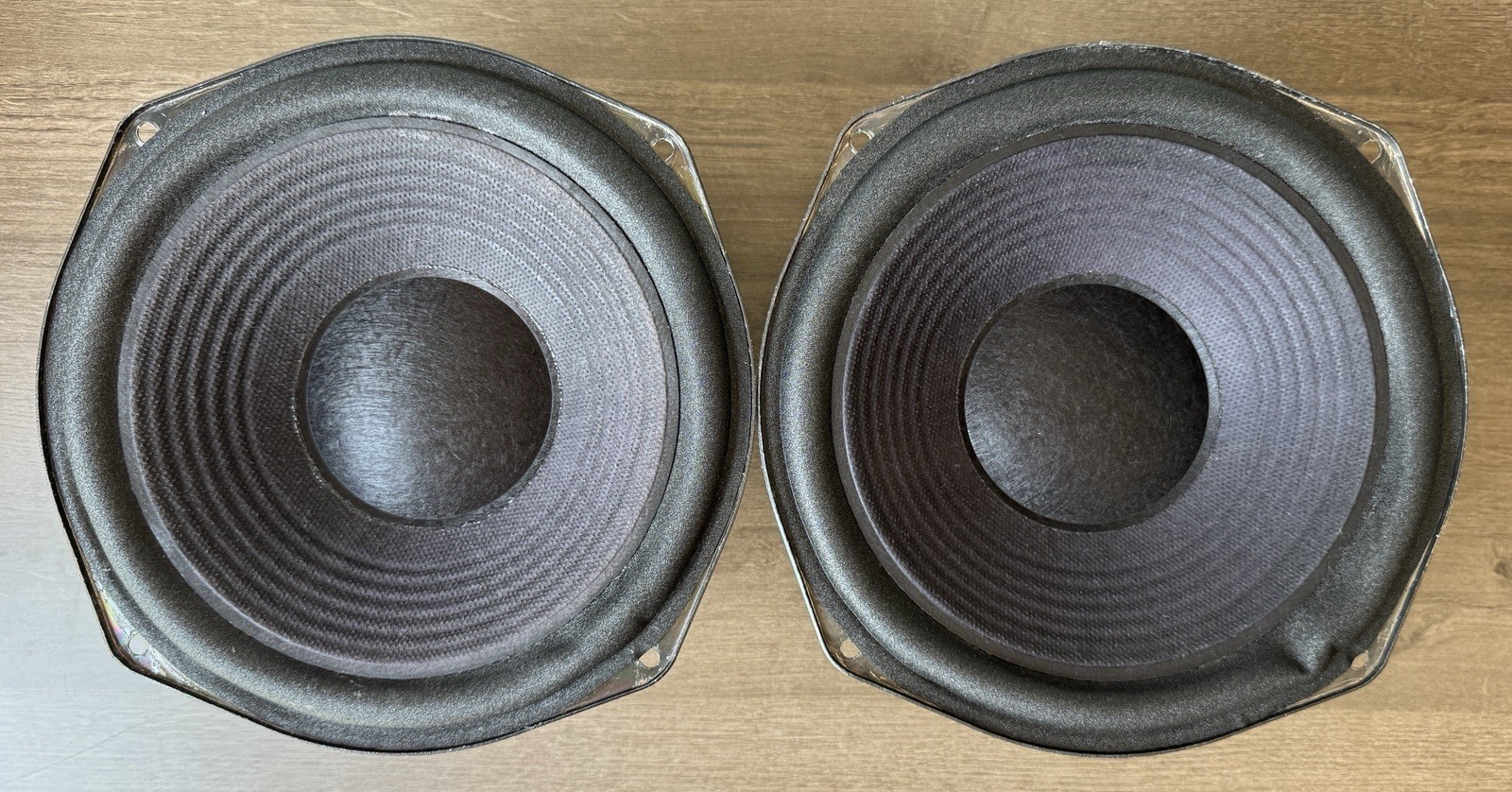
| Woofer | 10-inch doped paper cone with rubber surround |
| Midrange | 3.5-inch aluminum dome |
| Tweeter | 1-inch aluminum dome |
| Crossover Frequency | 3,200 Hz |
| Frequency Response | 35 Hz – 18,000 Hz (±3 dB) |
| Sensitivity | 86 dB (1W/1m) |
| Impedance | 8 ohms nominal |
| Power Handling | 75 watts continuous |
| Recommended Amplifier Power | 20–75 watts |
| Cabinet Volume | 1.8 cubic feet |
| Dimensions (H×W×D) | 18.5 × 12.5 × 10.5 inches |
| Weight | 42 pounds per speaker |
| Grille | Fabric-covered, removable, held by clips |
| Finish | Walnut veneer with solid wood trim |
Key Features
Acoustic Suspension Bass That Changed Everything
The AR-3a didn’t just use sealed-box design—it perfected it. While the original AR-3 pioneered this approach, the AR-3a refined it with a stiffer suspension and improved damping, resulting in bass that was not only deep but exceptionally linear. Unlike ported designs that can “overhang” or boom at certain frequencies, the AR-3a’s bass stops and starts on a dime. This made it ideal for both classical and rock—where timing and pitch accuracy matter. The 10-inch woofer, while modest by today’s standards, was engineered to move air efficiently within tight constraints, a hallmark of Kloss’s philosophy: do more with less. And it worked. Even in modest-sized rooms, the AR-3a delivers a sense of scale that belies its footprint. It won’t shake your walls like a modern sub, but it renders bass instruments with weight and texture, not just volume.
Dome Drivers for Smooth, Wide Dispersion
The use of aluminum dome midrange and tweeter drivers was still novel in the late 1960s. Most competitors relied on paper cones and horn-loaded tweeters that beamed sound forward, creating a narrow listening window. The AR-3a’s domes, by contrast, radiate sound broadly and evenly. This isn’t just about off-axis response—it’s about realism. When a violin plays in a room, you hear it from multiple angles. The AR-3a mimics that. The midrange dome, in particular, is a marvel: fast, low-mass, and free from the breakup modes that plague cone drivers. It’s why voices sound so natural, so uncolored. The tweeter, while not extended beyond 18kHz, avoids the harshness that plagued many early dome designs. Its output rolls off gently, contributing to the speaker’s relaxed, concert-hall-like presentation.
Passive Radiator-Free Simplicity
In an era when some manufacturers were chasing bass extension with complex porting or passive radiators, the AR-3a stuck to a sealed box. No tuning tubes, no flapping membranes, no phase anomalies. Just a solid, inert cabinet with a single active driver. This simplicity translated to reliability and predictability. The speaker behaves the same in different rooms, and it’s less sensitive to placement than many of its peers. While it benefits from being near a rear wall—like most sealed designs—it doesn’t demand it. And because there’s no port to chuff or resonate, the bass remains clean even at higher volumes. It’s a design that prioritizes accuracy over spectacle, and in doing so, it aged remarkably well.
Historical Context
The AR-3a arrived at a turning point. The 1960s saw a boom in stereo adoption, but high-fidelity gear was still largely the domain of hobbyists with big rooms and bigger budgets. The AR-3a changed that. Priced at $295 per pair—steep for the time, but far less than competing high-end systems—it brought reference-grade sound to serious listeners who didn’t have a dedicated listening room. It competed directly with the original Acoustic Research AR-3, which Henry Kloss had helped design before leaving to found Advent. The AR-3a wasn’t a clone; it was an evolution. Kloss took the strengths of the AR-3—its bass performance, its smooth mids—and improved upon them with better materials, tighter tolerances, and a more refined crossover. The result was a speaker that didn’t just match the AR-3—it surpassed it in many respects.
At the time, the competition was fragmented. Bozak and Klipsch offered large, efficient speakers that demanded powerful amplifiers and lots of space. EPI and JBL focused on ported designs that emphasized bass impact but often at the cost of timing and clarity. The AR-3a carved its own path: efficient enough to work with modest tube amps, compact enough to fit on a bookshelf, and accurate enough to satisfy critical listeners. It became the go-to choice for engineers, broadcasters, and audiophiles who valued truth over hype. Its influence extended beyond the living room—AR-3as were used in radio stations and recording studios as nearfield monitors, a testament to their neutrality.
Collectibility & Value
Today, the AR-3a occupies a sweet spot in the vintage audio market: iconic enough to be sought after, common enough to be affordable. Pairs in working condition typically sell for $300–$600, depending on cosmetics and driver condition. Fully restored units with new foam, reconed woofers, and cleaned grilles can fetch $800–$1,200. But caveat emptor: nearly every surviving pair needs restoration. The rubber surrounds on the woofers dry out and crumble after 50 years, and the foam on the midrange and tweeter is long gone. Refoaming is a standard first step, but it’s not just a rubber ring replacement. The original foam was part of the suspension system, and cheap replacements can ruin the speaker’s balance. Quality reconing services use butyl rubber or modern foam with matching compliance—expect to pay $100–$150 per woofer for a proper job.
The aluminum dome drivers are more durable, but they’re not immune. Corrosion on the voice coils or torn domes are rare but catastrophic. The crossovers, while simple, can suffer from aging capacitors, especially in humid environments. Electrolytic caps in the midrange and tweeter networks should be replaced during any serious restoration. Original grilles are often missing or damaged; replacements exist, but the correct light beige cloth with a subtle texture is hard to source. Walnut veneer holds up well, but scratches and water rings are common—light polishing can revive the luster without stripping the original finish.
One thing to watch: not all AR-3as are the same. Early models (1967–1970) used higher-quality components and are preferred by purists. Later models, produced as cost-cutting began, may have slightly different crossovers or cabinet bracing. Serial numbers can help date them, but there’s no official database. Owners report that early units have a slightly warmer, more “organic” sound. If you’re buying unrestored, prioritize units with intact foam and clean terminals. Avoid any with musty smells or warped cabinets—signs of water damage, which can delaminate the MDF over time.
eBay Listings



As an eBay Partner, we earn from qualifying purchases. This helps support our independent vintage technology research.