Advent /4 (1979–1983)
The bookshelf speaker that finally gave the classic Advent sound a fighting chance in real rooms—efficient, balanced, and built to last.
Overview
Plug in a pair of Advent /4s, fire up some Coltrane or The Band, and within seconds you’ll understand why this unassuming bookshelf speaker carved out a quiet legacy in the early '80s. It doesn’t shout like a JBL, nor does it whisper like an AR; instead, it just plays—with a grounded, natural tonality that feels more like listening to music than auditioning gear. These were the speakers you bought when you wanted something better than the plastic junk filling department store shelves but didn’t have the budget (or the wall space) for floor-standing beasts. The /4 wasn’t flashy, but it was smart: an 8-inch two-way that split the difference between the legendary Large Advents and the underpowered /3, delivering real bass weight without guzzling watts or dominating a room.
Introduced in 1979 as part of the “New Advent” line, the /4 was designed to fix what fans loved—and hated—about its predecessors. The earlier /3, while adored for its compact size and surprising bass, was notoriously inefficient at just 85 dB sensitivity, demanding serious amplifier muscle just to get loud. The /4 solved that with a revised crossover and a more responsive driver complement, nudging sensitivity into the low 90s—enough to breathe easily with modest receivers of the era. It also inherited the improved build quality of the late-era Advents: all-steel woofer baskets instead of the Masonite rings of the originals, flush-mounted “fried egg” tweeters (now only in red, as the green variant had been phased out), and a slightly larger cabinet volume for better bass tuning. It wasn’t a radical reinvention, but it was a necessary evolution—one that made the Advent sound accessible to a new generation of listeners who didn’t own a pair of 100-pound floorstanders.
What really sets the /4 apart is how it wears its age. Unlike some vintage speakers that sound “vintage” in a nostalgic, slightly veiled way, the /4 still holds up as a genuinely balanced monitor. The midrange is clear and present, vocals sit right in the room, and the bass—while not subwoofer deep—has a satisfying body that never feels bloated. It’s not clinical, but it’s not romanticized either. This is the kind of speaker that doesn’t draw attention to itself, which is exactly why so many people kept them around long after they should’ve been replaced.
Specifications
| Manufacturer | Advent Corporation |
| Production Years | 1979–1983 |
| Original Price | $179 per pair |
| Speaker Type | Two-way, bass-reflex bookshelf |
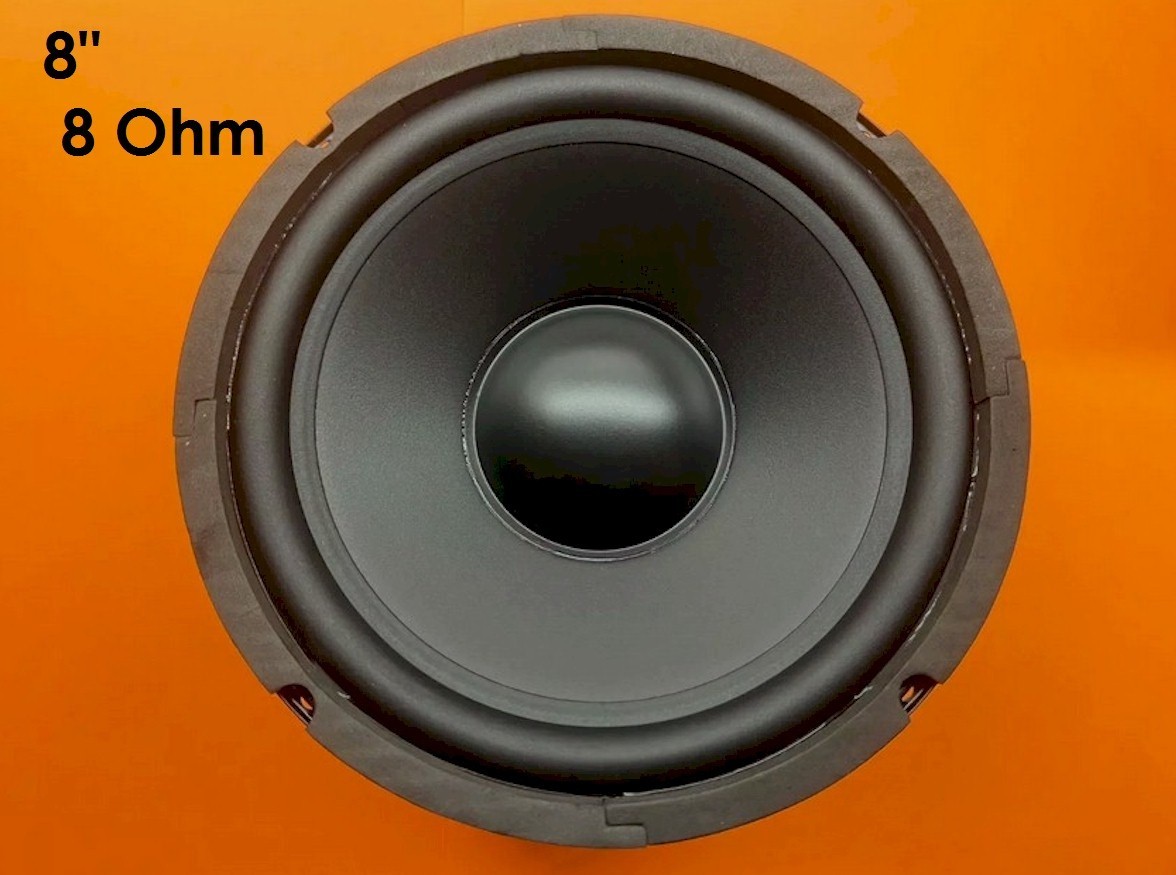
| Woofer | 8-inch, acoustic suspension, steel basket |
| Tweeter | 1-inch dome, “fried egg” style (red diaphragm) |
| Crossover Frequency | 3,500 Hz |
| Frequency Response | 45 Hz – 20,000 Hz (±3 dB) |
| Nominal Impedance | 6 ohms |
| Minimum Impedance | 4 ohms |
| Sensitivity | 91 dB (2.83V/1m) |
| Recommended Amplifier Power | 20–100 watts |
| Cabinet Volume | 0.85 cubic feet |
| Enclosure Type | Bass-reflex with rear port |
| Dimensions (H×W×D) | 18-5/8 × 11-1/8 × 8 inches |
| Weight | 22 lbs per speaker |
| Grill Options | Two versions: sharp-edged (early), rounded (late) |
| Terminal Type | Single binding posts (non-bi-wire) |
Key Features
Efficiency Meets Authority
Where the /3 asked for mercy from your amp, the /4 just gets on with it. With 91 dB sensitivity, it’s not exactly a horn, but it’s a world away from the /3’s 85 dB struggle. That extra 6 dB means it plays twice as loud with the same power—crucial in an era when many buyers were pairing speakers with mid-tier receivers putting out 40–60 watts. The 8-inch woofer, now with a full steel basket and improved surround, delivers a tighter, more controlled low end than the earlier models. It won’t shake drywall, but it does hit with a punch that belies its size. The bass rolls off gradually below 50 Hz, so while it won’t replace a sub, it handles acoustic bass, kick drum, and electric guitar with conviction. Paired with a decent turntable and a clean solid-state amp, the /4 creates a soundstage that feels wider and deeper than the cabinets suggest—especially when placed on sturdy stands and given a few inches from the wall.
Refined Crossover, Natural Tonality
The /4’s crossover might not win awards for complexity, but it does its job with unassuming competence. Tuned to 3.5 kHz, it hands off cleanly from the 8-inch woofer to the 1-inch “fried egg” tweeter—a design Advent carried over from the Large Advents but with updated materials and damping. The red-dome version (the only one used in the /4) is slightly more forward than the rarer green variant, giving the speaker a touch more sparkle without tipping into harshness. There’s no peaky upper-midrange glare like you get with some vintage tweeters; instead, cymbals shimmer, strings breathe, and sibilance stays under control. The crossover itself uses modest inductors and film capacitors—nothing exotic, but well laid out and securely mounted. Service technicians observe that these crossovers are generally reliable, though original capacitors from the early '80s should be checked if the speaker has been idle for decades.
Build That Lasts
Advent didn’t skimp on construction, and the /4 shows it. The cabinet is made of thick particleboard with a textured vinyl wrap—available only in the utilitarian “utility” finish, with no walnut or bullnose variants like the originals. It’s not glamorous, but it’s sturdy, and the lack of internal bracing hasn’t proven a weakness in practice. The rear port is a simple flared tube, and the single binding post, while not bi-wire capable, is robust and accepts bare wire, spades, or pins without issue. The grills changed mid-production: early models have a sharp-edged cloth cover attached with Velcro, while later versions use a softer, rounded grill secured with plastic “nipples.” Neither is particularly elegant, but both do their job. Collectors note that the later rounded grills are more common today, suggesting the early version may have been phased out quickly.
Historical Context
The /4 arrived at a turning point for Advent. By 1979, founder Henry Kloss had long since moved on (he’d relaunched KLH and later founded Tivoli and Cambridge SoundWorks), and the company was navigating life after its golden era. The original Large Advents—those hulking, bass-heavy floorstanders—had defined high-value performance in the late '60s and early '70s, but by the end of the decade, tastes were shifting. Consumers wanted smaller, more modern-looking speakers that fit in dens and bedrooms, not just dedicated listening rooms. The /4 was part of Advent’s response: a compact speaker that didn’t sacrifice the brand’s acoustic suspension DNA. It sat below the larger “New Advent” floorstander and the short-lived powered models, but above budget entries like the /2 and /2W, which were widely criticized for shrill highs and poor crossovers.
Competitors at the time included the AR-3b, the KLH Model Eight, and the more affordable Fisher and Sony bookshelf models. The /4 didn’t beat them all on specs, but it offered a rare balance: better bass than most 8-inch bookshelves, more neutrality than the colored ARs, and better build than the plastic-clad Japanese sets. It wasn’t a flagship, but it was the sweet spot—a speaker that delivered 90% of the Large Advent experience in half the footprint and at a third of the original price. The /9, introduced a year later, offered minor refinements (slightly larger cabinet, tamer upper mids), but the /4 remained the more common and more practical choice.
Collectibility & Value
Today, the /4 trades in a quiet but steady market. Unlike the Large Advents, which have cult status and command $500–$1,000 for good pairs, the /4 is still a bargain—typically selling for $150–$300 depending on condition. That makes it one of the most accessible vintage Advents for new collectors. However, “good condition” is key. These speakers are 40+ years old, and the most common failure points are the foam surrounds on the woofer and the tweeter’s aging diaphragm. Foam rot is nearly universal in unrecapped pairs, leading to flapping, distortion, and eventual cone misalignment. Re-coning is possible—specialists like Audio Classics and The Speaker Exchange offer rebuilds for $60–$80 per driver—but it’s not cheap. Some owners opt for modern foam replacement kits, but results vary.
The tweeter is generally more durable, but the red “fried egg” domes can become brittle or discolored over time. If the speaker has been exposed to sunlight, check for cracking or warping. The crossover is usually intact, but original capacitors should be replaced if the speaker hasn’t been serviced—electrolytics from this era dry out and can cause muffled highs or channel imbalance. Wiring terminals can corrode, especially if the speakers were used in humid environments.
When buying, look for clean cabinets with no major dents or peeling vinyl. The rear panels should be firmly attached, and the ports free of debris. Play them at moderate volume to check for rattles or distortion. If they sound dull or one-sided, it’s likely a crossover or driver issue. Avoid pairs advertised as “vintage working” without evidence—they often mean “they make noise.” A fully restored /4 with new surrounds and recapped crossover can sound as good as new, and in some cases better, thanks to modern repair materials.
Despite its relative obscurity, the /4 has quietly gained respect among vintage audio enthusiasts. It’s not rare, but it’s useful—a speaker that doesn’t need to be stacked, bi-wired, or fed by a $2,000 amp to shine. It’s the kind of gear that disappears into the music, which is, after all, the highest compliment a speaker can earn.
eBay Listings



As an eBay Partner, we earn from qualifying purchases. This helps support our independent vintage technology research.