Advent 3 (1973–1976)
A bookshelf speaker that punches way above its size—until you turn it up.
Overview
Pull one out of a forgotten cabinet in an attic or basement, and the first thing you notice is the smell—old wood, faintly musty, with a hint of rubber that hasn’t cracked (yet). The Advent 3 isn’t flashy. No glossy veneers, no flared ports, no exotic drivers. It’s a squat, utilitarian box that looks like it was built to survive a dorm room war zone. And in a way, it was. This was the speaker for the college kid who wanted something better than the plastic junk bundled with a receiver but couldn’t afford the flagship Large Advents. It delivered—just not without compromise.
The sound? When fed moderate levels, it’s disarmingly smooth, with a midrange that feels intimate, almost conversational. Vocals sit right in the room, not projected from behind a curtain. There’s a warmth here that doesn’t come from bloated bass or rolled-off highs, but from balance—a rare thing in a two-way under $100 when it launched. The 6-inch woofer, paired with a treated cloth or butyl surround (depending on production year), moves air with surprising authority for a sealed cabinet. It doesn’t shake walls, but it does fill a medium-sized room with a coherence that belies its size.
But here’s the catch: push it, and the Advent 3 lets you know. Not with distortion so much as a kind of mechanical protest—a low-frequency “blat” that creeps in when the woofer nears its excursion limits. It’s not graceful. It’s like the speaker is politely asking you to stop. And that’s because it’s not efficient. At 85 dB sensitivity, it demands power. Not just any power, either—clean, stable watts. Low-damped solid-state amps or weak receivers will make it sound thin and strained. It wants current, and it wants control.
Owners report that the tweeter—a single 2-inch unit, often mistaken for a cheap AM radio driver—punches well above its weight. It’s not silky or extended into the upper registers, but it’s honest. No harsh peaks, no sibilance avalanches. It’s rolled off gently, which helps smooth over recordings that would shred lesser bookshelf speakers. Some call it “recessed,” but that’s not quite right. It’s more like it knows its place—supporting, not dominating.
It’s also not the foam-surround disaster so many vintage speakers became. The rubber or treated cloth surrounds on the woofer are far more durable than the foam rings that disintegrated on AR and KLH models. That alone makes the Advent 3 a more viable survivor today—if you can find a pair with intact grilles and no cabinet damage.
Specifications
| Manufacturer | Advent Corporation |
| Production Years | 1973–1976 |
| Original Price | $99.95 per pair (1973) |
| Design Type | 2-way acoustic suspension (sealed box) |
| Woofer | 6-inch with butyl or treated cloth surround |
| Tweeter | 2-inch cone |
| Impedance | 8 ohms nominal |
| Sensitivity | 85 dB @ 1 watt/1 meter |
| Crossover Frequency | 2,500 Hz |
| Frequency Response | 55 Hz – 18,000 Hz (±3 dB) |
| Enclosure Volume | 0.6 cubic feet |
| Dimensions (H×W×D) | 15" × 9" × 7" |
| Weight | 14 lbs per speaker |
| Grille | Removable fabric-covered foam |
| Terminal Type | Single binding posts (banana plug compatible) |
| Cabinet Finish | Textured vinyl over MDF, black or walnut |
| Recommended Amplifier Power | 20–60 watts |
| Manufacturer Series | Original Advent Series |
Key Features
The Sealed Box That Plays Deep
Acoustic suspension wasn’t new when Advent introduced the Model 3, but it was still a selling point. Unlike ported designs that rely on resonance to extend bass, the Advent 3 uses air pressure inside the cabinet to control the woofer’s movement. The result? Tight, articulate low end that doesn’t boom or ring. It won’t rattle your floorboards, but it won’t muddy the mids either. For jazz trios, acoustic rock, or vocal recordings, that precision is a gift. It’s also why the speaker remains stable even at lower volumes—no need to crank it to “wake up” the bass.
But physics is physics. A 6-inch driver in a 0.6 cubic foot box can only go so low before it runs out of air. The rated 55 Hz is optimistic in real rooms. In practice, expect usable bass down to about 60–65 Hz, with a steep rolloff below that. It’s not a subwoofer, and it wasn’t meant to be. What it does deliver is integration—a seamless handoff between driver and cabinet that makes the speaker disappear sonically, even if its boxy shape doesn’t vanish visually.
A Tweeter That Doesn’t Try Too Hard
That 2-inch cone tweeter looks like it was salvaged from a 1950s console radio. And maybe it was designed with cost in mind. But it’s also a key reason the Advent 3 doesn’t fatigue. It doesn’t scream at 8 kHz like some metal domes, nor does it get lost in the mix. Its output rolls off gently above 10 kHz, which tames harsh recordings without making everything sound dull. It’s a compromise, yes—but one that favors listenability over analytical precision.
Some owners swap in modern tweeters for better extension, but that often unbalances the speaker. The original crossover was tuned to that specific driver. Change the tweeter, and you risk introducing peaks or dips that weren’t there before. For purists, the stock unit is part of the charm.
Build That Survives—Mostly
The cabinets are simple—MDF with a textured vinyl wrap. No fancy joints, no internal bracing. But they’re heavy for their size, which helps reduce cabinet resonance. The front baffles are recessed slightly, and the woofer surrounds are inverted (concave), a design Advent used to reduce edge diffraction. It’s not a magic bullet, but it helps keep the soundstage focused.
The real durability win is the woofer surround. Unlike the foam rings on AR and KLH speakers that turned to dust, the butyl or treated cloth surrounds on the Advent 3 can last decades if kept out of direct sunlight and extreme humidity. When they do fail, replacements are available—but recapping a pair isn’t trivial. It’s a two-hour job per speaker if you’re experienced, and alignment matters. Get it wrong, and you’ll hear buzzing or uneven response.
Historical Context
The early 1970s were a golden age for affordable high-fidelity. The Baby Boomer generation was discovering stereo, and companies like Advent, KLH, and AR were racing to deliver quality sound at mass-market prices. Henry Kloss, who had already revolutionized the field with Acoustic Research, founded Advent in 1967 with the mission of building “a great speaker for the people.” The Large Advent was the first hit, but it was big and expensive. The Advent 3 arrived in 1973 as a more accessible option—smaller, cheaper, but still engineered with care.
It wasn’t alone. Competitors like the KLH Model Five, AR-3a (a giant by comparison), and the JBL Century 100 were all vying for the same buyers. But the Advent 3 stood out by offering a balance of size, price, and sound that few could match. It wasn’t the most efficient, nor the loudest, but it was coherent—something that mattered more as stereo moved from novelty to serious listening.
The timing was perfect. College dorms, starter apartments, and second systems in offices all needed compact speakers that didn’t sound like afterthoughts. The Advent 3 fit that niche like a glove. It wasn’t flashy, but it was honest. And in an era when “hi-fi” was still a new concept for many, that honesty built loyalty.
Collectibility & Value
Today, the Advent 3 trades in a narrow band: $125 to $250 for a tested, working pair in decent condition. Untested pairs go for less—$75 to $150—but that’s a gamble. The real cost isn’t the purchase price; it’s the restoration. If the surrounds are gone, factor in $100–$150 per speaker for reconing or full driver replacement. That can double the total investment.
What breaks? Mostly the woofers, but slowly. Unlike foam, these surrounds don’t fail catastrophically. They degrade over decades, losing flexibility and eventually tearing. You’ll hear it as a low-frequency buzz or rattle, especially on bass-heavy material. The tweeters are more durable, but the foam backing can disintegrate, causing rattles or reduced damping.
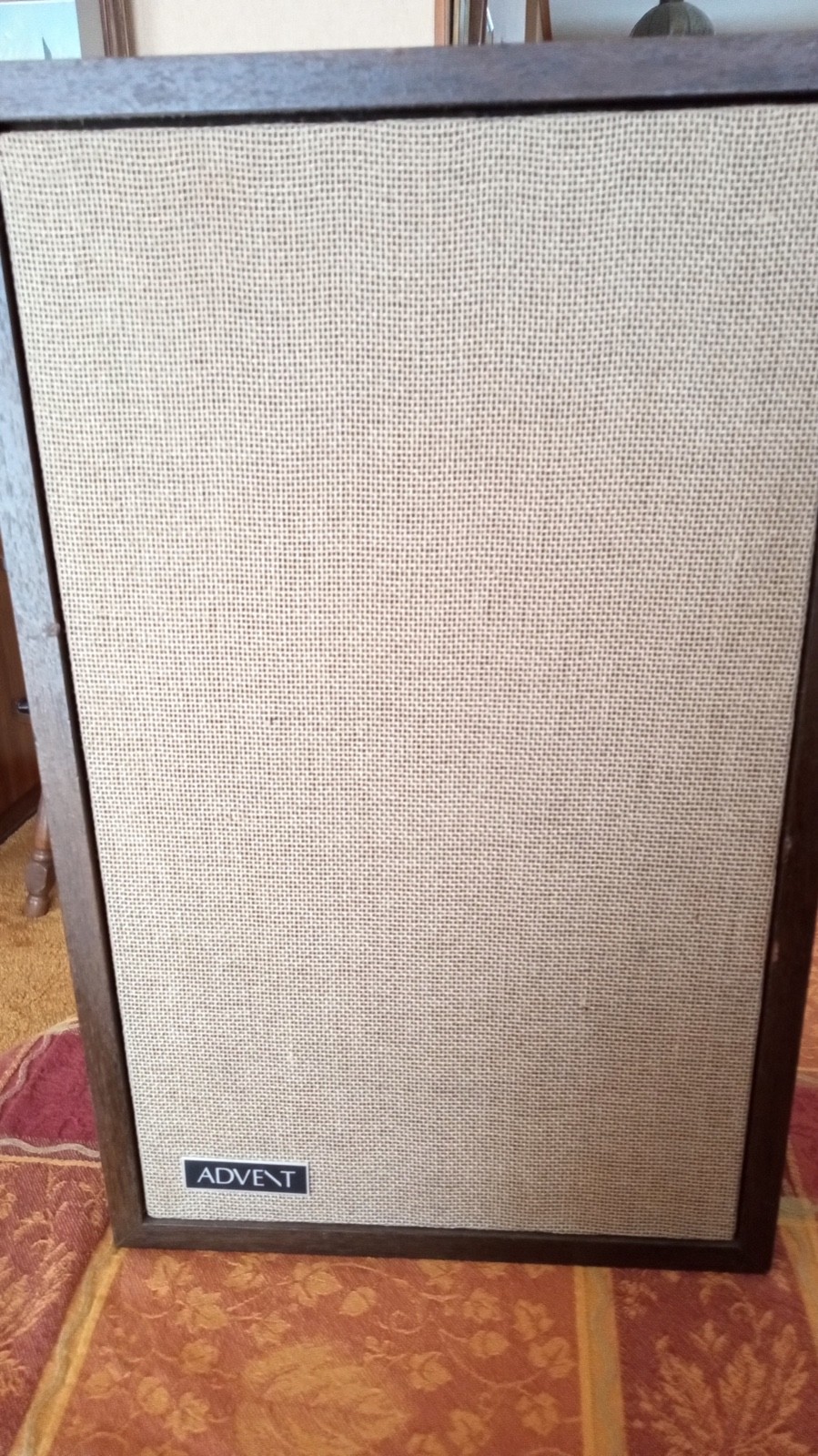
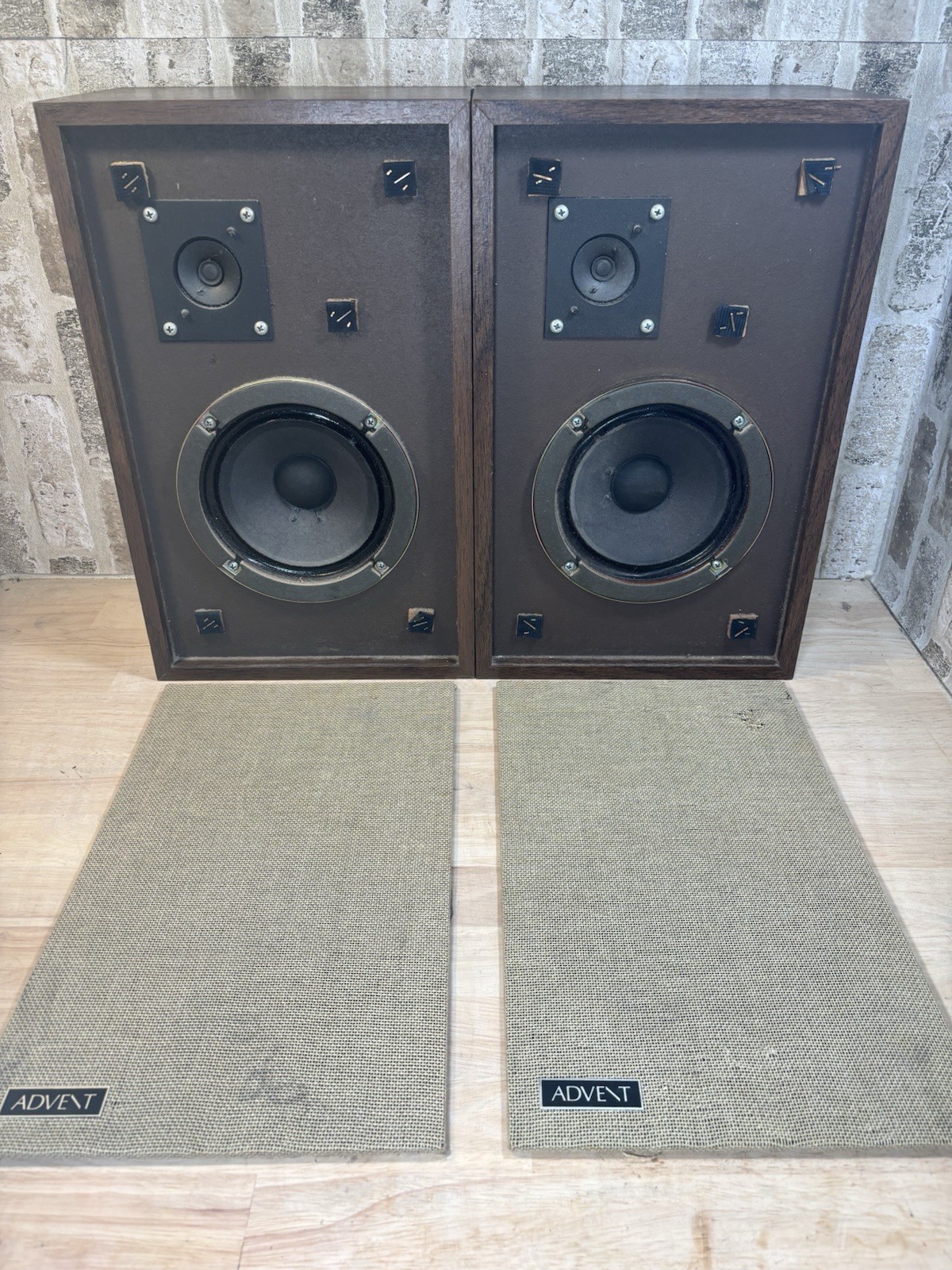
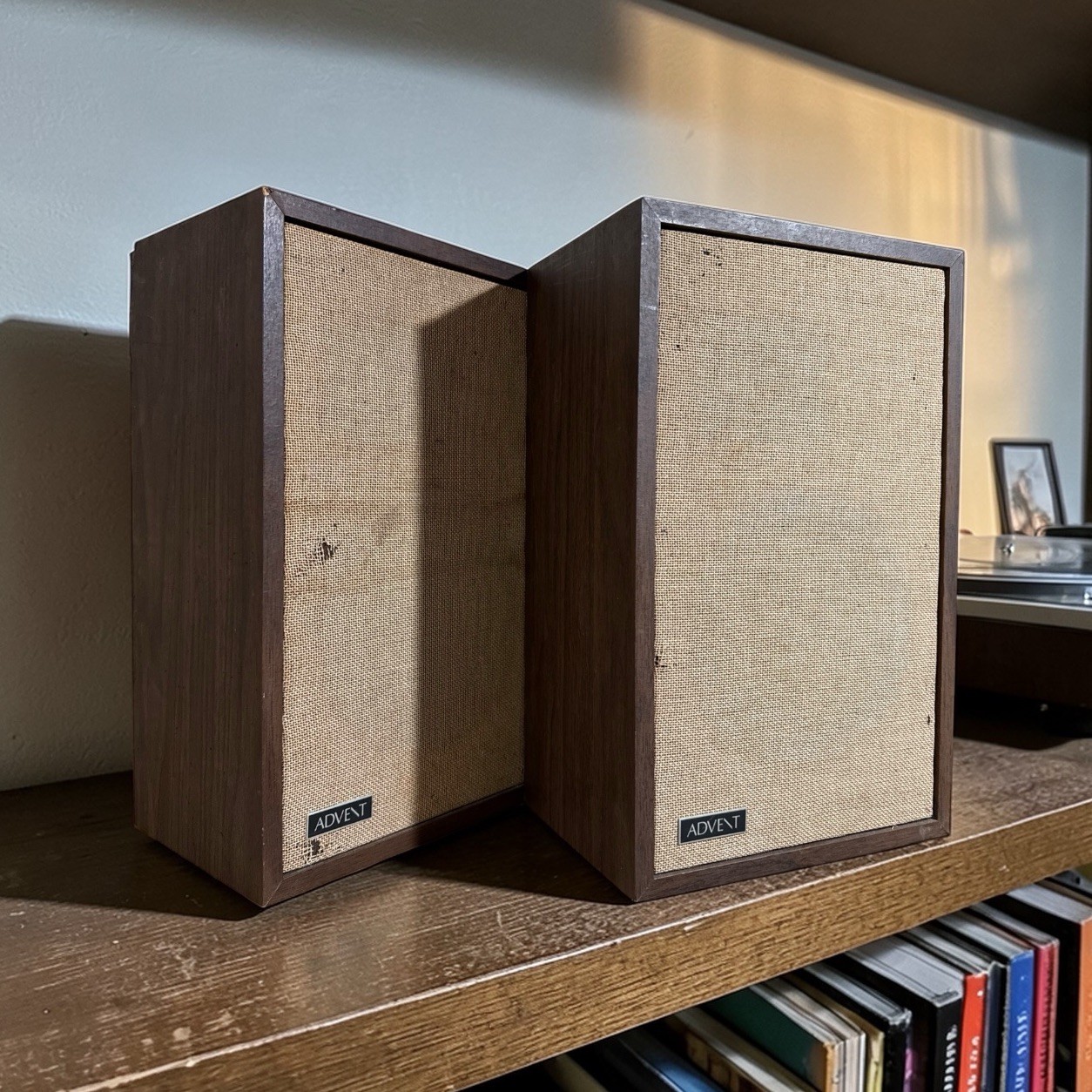
Check the grilles. They’re fragile, and replacements are hard to find. Missing or torn grilles knock $30–$50 off the value. Also inspect the binding posts—some models have corroded terminals, especially if stored in damp basements.
For buyers, the rule is simple: test before you buy. Listen at moderate levels first, then push them gently. If you hear bottoming or distortion below 75 dB, walk away. And avoid any pair labeled “Smaller Advent”—that’s a different, 4-ohm model with foam surrounds and a reputation for brightness.
Restored pairs in show condition can fetch up to $350, but that’s rare. Most people buy them to use, not display. And that’s the best compliment a vintage speaker can get.
eBay Listings

As an eBay Partner, we earn from qualifying purchases. This helps support our independent vintage technology research.