Advent Large Loudspeaker (1970–1981)
The speaker that made high-end sound affordable — deep, warm, and built like a bunker, but don’t expect sparkle on top.
Overview
Plug in a pair of original Advent Large Loudspeakers, fire up a well-worn vinyl pressing of Tapestry, and you’re not just hearing music — you’re stepping into a moment when audiophilia stopped being a rich man’s hobby. These aren’t flashy; they’re not sleek or minimalist. They’re heavy, boxy, and wrapped in thin walnut veneer or utilitarian vinyl, but inside beats the heart of a revolution. Henry Kloss didn’t set out to build a legend — he needed cash to fund a failing TV project — but in 1970, he dropped a bomb on the high-fidelity world: a speaker that could go toe-to-toe with the revered Acoustic Research AR-3a, yet cost less than half as much.
The original Advent Loudspeaker — later retroactively called the "Large" or "Larger Advent" after the 1972 release of the Smaller Advent — was a two-way acoustic suspension design featuring a 10-inch woofer and a 3-inch "domed" paper cone midrange-tweeter, often nicknamed the “fried egg” for its protruding dust cap and square magnet structure. It wasn’t the first acoustic suspension speaker — that honor goes to Edgar Villchur and AR — but Kloss refined the idea with a focus on value, durability, and a frequency response tailored for real rooms and real music. The result? A speaker that delivered deep, controlled bass from a relatively compact cabinet, something rare at this price point. It didn’t measure perfectly flat, and it certainly didn’t have the airy top end of electrostatics, but it had soul — a rich, slightly warm midrange that made vocals and acoustic instruments feel present and intimate.
Positioned as Advent’s flagship until the New Large Advent arrived in the late 1970s, the original Large Advent sat above the Smaller Advent and below the short-lived Advent/3. It was the sweet spot for buyers who wanted serious sound without the footprint or price of floor-standing three-ways. While later models would tweak the crossover and driver materials, the original Large Advent’s design remained refreshingly simple: paper-cone woofer with a foam surround, basic first-order crossover, and that idiosyncratic midrange-tweeter handling everything above 1 kHz. It wasn’t trying to be neutral; it was trying to be satisfying. And for thousands of first-time audiophiles, college professors, and music lovers with modest setups, it was more than satisfying — it was transformative.
Specifications
| Manufacturer | Advent Corporation |
| Production Years | 1970–1981 |
| Original Price | $116 each (walnut veneer), $102 each (unfinished), 1971 |
| Type | Two-way direct-radiator loudspeaker |
| Woofer | 10-inch (25 cm) paper cone with foam surround |
| Tweeter | 3-inch paper cone "domed" midrange-tweeter (dubbed "fried egg") |
| Crossover Frequency | 1 kHz |
| Crossover Type | First-order (6 dB/octave) |
| Balance Control | Tweeter level switch: flat, +3 dB, –3 dB |
| Nominal Impedance | 8 ohms |
| Power Handling | 100W program |
| Frequency Response | Not specified in research; estimated 43 Hz – 16 kHz (in-room) |
| Box Resonance (with woofer) | Approximately 43 Hz |
| Enclosure Type | Acoustic suspension (sealed) |
| Dimensions | Not specified in research; approximately 22" H × 12" W × 10" D (estimated) |
| Weight | Not specified in research; approximately 35 lbs each (estimated) |
| Finish Options | Walnut veneer, vinyl-covered "utility" cabinet, unfinished |
| Availability | Discontinued |
Key Features
The “Fried Egg” Tweeter: Quirky, Flawed, and Part of the Charm
The 3-inch paper cone midrange-tweeter is the most polarizing part of the Large Advent. It’s not a true tweeter — it’s a full-range dome-like driver handling everything from 1 kHz up, which means it’s working hard and operating far outside ideal dispersion characteristics. Highs are rolled off early, rarely exceeding 16 kHz, and the design lacks the speed and clarity of silk or metal dome tweeters. But that’s not the whole story. In the midrange, especially between 1–3 kHz, it has a natural, slightly forward character that brings voices and stringed instruments into focus. The +3 dB and –3 dB tweeter level switches on the rear panel aren’t gimmicks — they’re essential tools for tuning the speaker to your room and taste. In a bright space, dial it down. In a carpeted, soft-furnished den, boost it slightly. And while later models replaced the “fried egg” with a more conventional design, many purists argue the original has more character — even if it came with reliability issues. Ferrofluid wasn’t used here, but the voice coils could overheat, and failed tweeters were not uncommon after decades of use.
Acoustic Suspension Done Right — and Cheap
Kloss didn’t invent acoustic suspension, but he perfected its mass-market potential. By using a sealed cabinet with a woofer suspended in a compliant foam surround, the Large Advent achieved bass extension that belied its size. The in-box resonance of around 43 Hz meant it could deliver clean, non-boomy low end without needing a port or complex equalization. That’s why it pairs so well with modest tube amps or vintage solid-state receivers — it’s predictable, easy to drive, and doesn’t demand heroic amounts of power. The 8-ohm impedance is steady, and the 100W program rating gives it headroom for dynamic peaks. But there’s a trade-off: acoustic suspension designs require large cabinets for deep bass, and the foam surrounds degrade over time. Original units from the 1970s almost certainly need reconing or full driver replacement. Unlike ported designs that go “thud” when the foam fails, these just lose bottom end and sound thin — a quiet death that sneaks up on owners.
A Crossover That Values Simplicity Over Precision
The first-order crossover — a single capacitor on the tweeter and inductor on the woofer — is as basic as it gets. It doesn’t offer steep filtering or phase coherence, but it does preserve transient response and minimize coloration from complex networks. Kloss believed in “less is more,” and the crossover reflects that philosophy. However, the electrolytic capacitors and sandcast resistors used in the original design are now nearly 50 years old. Capacitors dry out, resistors drift, and inductors can corrode. A full recapping is not optional for critical listening — it’s mandatory. And while DIY recapping is common, it changes the sound. Original-spec replacements will get you close to vintage character; modern metal-film resistors and polypropylene caps tighten the bass and open the mids, but some argue they lose the original’s forgiving warmth.
Historical Context
The Large Advent didn’t emerge in a vacuum — it landed during a seismic shift in American audio. The late 1960s saw high-fidelity moving from the realm of engineers and hobbyists into middle-class living rooms. Companies like KLH (where Kloss worked before founding Advent) had already proven there was demand for well-engineered, affordable speakers. But the Acoustic Research AR-3a, the benchmark of the era, cost over $300 per pair in the mid-1960s — a significant sum. Kloss, fresh off a failed attempt to build a consumer projection TV, needed revenue fast. He turned to what he knew: speaker design. The result was a speaker that borrowed AR’s acoustic suspension principles but simplified the construction, used cost-effective drivers, and skipped the expensive fiberglass damping materials. The payoff was immediate: reviewers praised its bass performance and value, and consumers bought them by the tens of thousands.
By the mid-1970s, the Large Advent faced competition not just from AR, but from emerging Japanese brands like Pioneer, Sony, and Yamaha, which offered flashier designs and tighter manufacturing tolerances. Advent responded with the “New Large Advent” — a revised model with a more conventional tweeter and updated crossover — but the original had already cemented its legacy. It wasn’t just a product; it was a statement that great sound didn’t require great wealth. Its influence stretched beyond sales numbers — it inspired a generation of engineers and helped define the “American sound”: warm, full-bodied, and forgiving of lesser recordings. Even as Advent Corporation floundered in the 1980s — closing its Cambridge factory in 1979 and filing for bankruptcy in 1981 — the Large Advent remained a cult favorite, a symbol of a brief moment when innovation and accessibility collided.
Collectibility & Value
Today, the original Large Advent is a collector’s item, but not a uniformly valuable one. Condition is everything. A pair with original, working drivers, intact veneer, and clean grills might fetch $250–$400 on the open market — assuming they’ve been recapped. Unrestored pairs sell for $100–$200, often bought by DIYers planning full rebuilds. Beware of listings claiming “fully restored” for $600+ — those prices are aspirational, not reflective of actual sales data. Tracking completed eBay listings shows most pairs sell in the $150–$300 range, depending on condition and location.
The biggest red flag? Foam decay. The 10-inch woofer surrounds almost always need replacement after 50 years. Some sellers claim “original foam is intact,” but unless it’s been stored in climate-controlled conditions, that foam is likely crumbling. Re-coning costs $80–$120 per driver, and sourcing original-spec parts is tricky. The “fried egg” tweeters are another weak point — voice coils burn out, and replacements are scarce. While some companies offer modern equivalents, purists insist on NOS (new old stock) units, which can cost $100 or more each.
Before buying, inspect the cabinet for warping or water damage — these are heavy speakers, and poor storage leads to structural issues. Check the rear-panel switch for crackling; dirty switches can be cleaned, but broken ones are hard to replace. And always ask for photos of the crossover — original sandcast resistors and electrolytic caps are expected, but signs of prior repair (like modern wire or heat-shrink tubing) suggest previous work that may or may not have been done well. If you’re not planning a restoration, buy only from sellers who disclose all issues. These aren’t turnkey classics — they’re projects with history. But for the right buyer, that’s part of the appeal.
eBay Listings
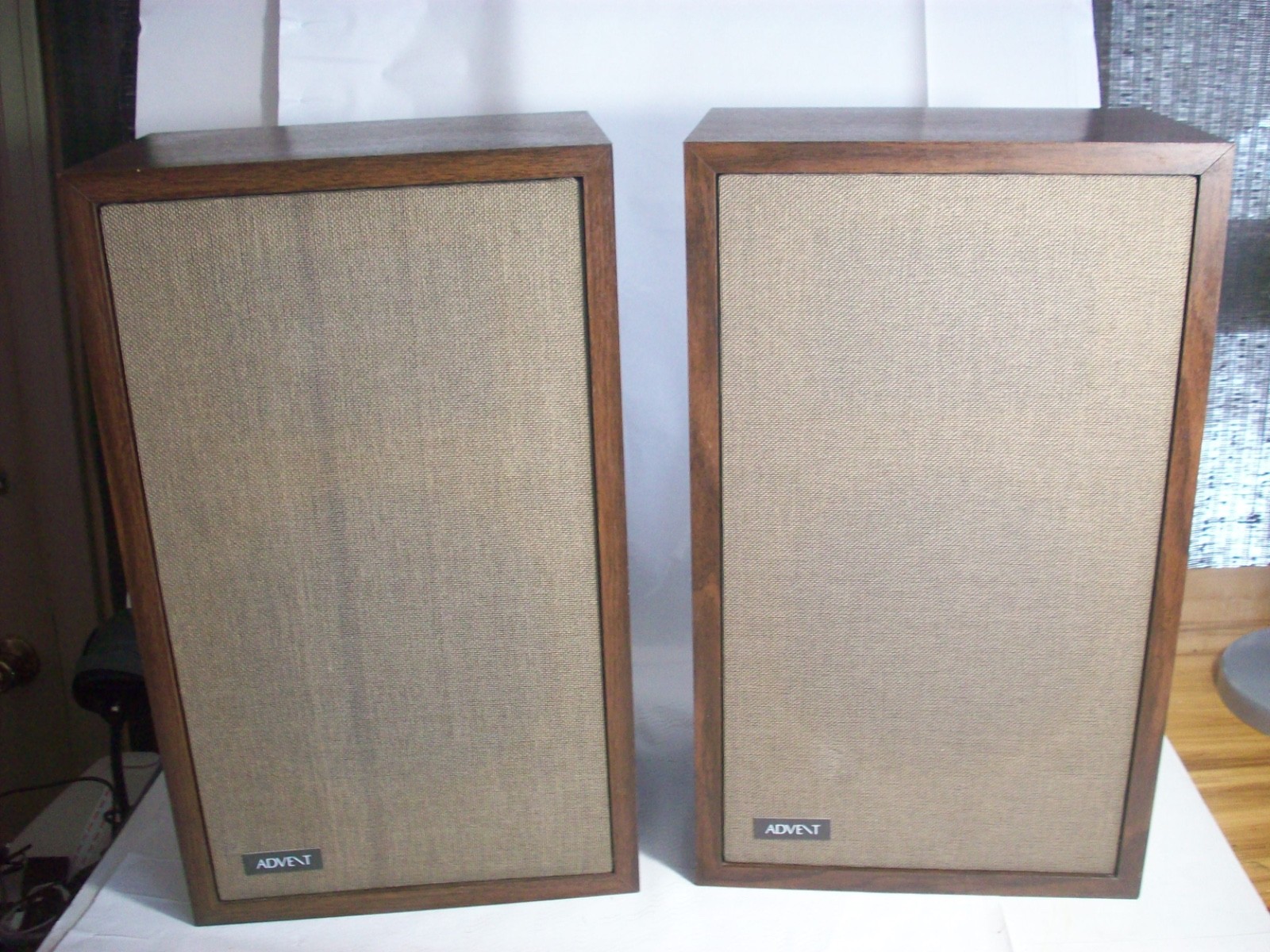

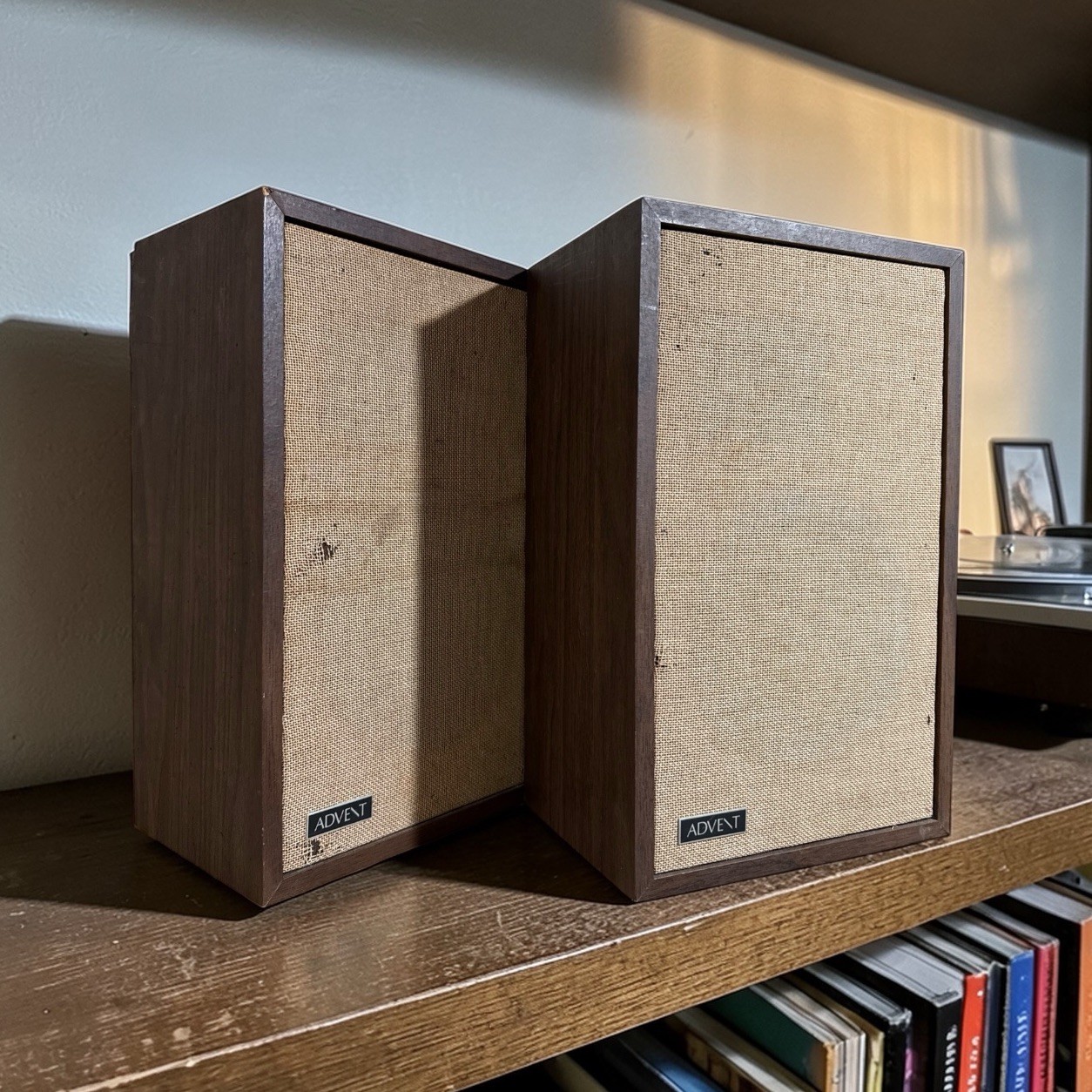

As an eBay Partner, we earn from qualifying purchases. This helps support our independent vintage technology research.