ADC XLM MkII Improved (1970s–1980s)
That first note hangs in the air like a struck bell—clean, complex, and utterly uncolored—as if the band were setting up right in your listening room.
Overview
There’s a reason old-timers still whisper the name “XLM MkII Improved” like it’s a secret handshake: this cartridge doesn’t just play records, it reveals them. Drop the needle on a well-cut pressing, and suddenly you’re hearing textures in the bass guitar you never noticed, the breath behind the vocalist’s phrasing, the spatial decay of a snare in the studio. It’s not about brightness or analytical harshness—this isn’t a cartridge that shouts its presence. Instead, it delivers a rare balance: neutrality so complete it borders on magic, wrapped in a soundstage so three-dimensional you’ll catch yourself glancing toward the corners of the room to see where that piano note came from.
Introduced during the golden age of moving magnet design, the XLM MkII Improved wasn’t ADC’s flagship—that honor went to the Astrion and later the ZLM—but it occupied a sweet spot that still resonates with collectors. It was the cartridge you bought when you wanted 90% of the top-tier performance without the fragility or price tag of the exotic line-contact models. With a nude elliptical stylus (often with the Diasa tip assembly), it tracked cleanly and revealed detail without mercilessly exposing every surface tick and groove scuff. The frequency response is ruler-flat on good pressings, and the channel separation—while not class-leading by modern specs—creates a stable, coherent image that never collapses under complex passages.
But make no mistake: this is not a plug-and-play modern cartridge. The XLM MkII Improved demands respect. Its high compliance means it won’t play nice with heavy, low-mass tonearms. Pair it with a Rega 3D or a SME IV, and it sings. Mount it on a stock Dual 1019 or a Technics SL-B2, and you’ll get distortion, mistracking, and a front-row seat to resonance hell. The compliance also makes it vulnerable to mishandling—drop the tonearm or bump the table during playback, and you risk bending the cantilever or collapsing the delicate suspension. It’s not delicate like glass, but it’s not rugged like a Shure M97xE either. This is high-performance analog, and it behaves accordingly.
Specifications
| Manufacturer | ADC (Audio Dynamics Corporation) |
| Production Years | 1970s–1980s |
| Original Price | $100 USD (approx., 1980) |
| Type | Moving Magnet |
| Output Voltage | 5.5 mV |
| Frequency Response | 15 Hz – 24 kHz |
| Tracking Force | 1.2 g – 1.5 g |
| Compliance | High (exact figure not specified in research) |
| Stylus Type | Nude Elliptical (Diasa tip common) |
| Cantilever | Aluminum Alloy |
| Channel Separation | 26 dB at 1 kHz |
| Channel Balance | Not specified |
| Inductance | Not specified |
| DC Resistance | Not specified |
| Recommended Load Impedance | 47 kΩ |
| Recommended Load Capacitance | 275 pF |
| Cartridge Mass | 5.75 g |
| Replacement Stylus | ADC XLM MkII Improved Stylus Assembly |
Key Features
A Design That Prioritized Signal Purity
ADC didn’t chase gimmicks with the XLM MkII Improved. The design philosophy was straightforward: minimize moving mass, eliminate adhesives in the signal path, and maximize compliance for low tracking force. The aluminum alloy cantilever—light and stiff—delivered fast transient response without ringing, while the nude elliptical stylus offered excellent high-frequency tracing without the fragility of line-contact profiles. The cartridge body, though unremarkable in appearance, was precision-machined to ensure perfect alignment and minimal resonance. There’s no fancy damping gel or exotic polymers here—just clean, purposeful engineering that reflects the era’s best analog thinking.
The Diasa Tip: A Clever Cost-Saver
One of the defining features of many XLM MkII Improved units is the use of the Diasa stylus assembly. Rather than a metal bushing between the diamond tip and the cantilever, ADC used a sapphire bushing—a cost-saving measure that also reduced mass. Some purists scoff at this as a “cheapskate” solution, but in practice, it worked remarkably well. The reduced mass improved high-frequency response and tracking, and many users report no audible degradation compared to more expensive alternatives. That said, NOS Diasa assemblies are now rare, and replacements are increasingly expensive or inconsistent in quality. Owners report that substituting a QLM or TLM stylus can work, but it alters the tonal balance—usually leaning brighter and more aggressive.
Low Tracking Force, High Reward
Tracking at 1.2 to 1.5 grams, the XLM MkII Improved was designed to be gentle on records—a major selling point in an era when many audiophiles were rotating their prized LPs like museum artifacts. At the lower end of that range, especially around 1.2g, the cartridge reveals its best: smoother highs, tighter bass, and a more stable soundstage. But that low tracking force demands a properly set-up arm. Vertical tracking angle (VTA) and azimuth need careful adjustment. Owners note that even a slight misalignment can cause premature wear or channel imbalance. The cartridge also benefits from a lightweight headshell—ADC’s own LMG-1 magnesium model (7.7g) was a favorite pairing, minimizing resonance and preserving transient detail.
Historical Context
The XLM MkII Improved arrived at a pivotal moment in analog playback. The early 1970s saw a surge in audiophile interest, fueled by better pressings, improved turntable designs, and a growing awareness of how much information vinyl could carry. ADC, based in the U.S., was one of the few domestic companies competing with Japanese giants like Denon, Shure, and Pickering. While Shure dominated the pro and budget markets, ADC carved a niche among serious listeners who wanted high compliance and neutral sound without stepping into the fragile, finicky world of moving coils.
The XLM series was positioned just below the legendary Astrion and ZLM models, which featured line-contact styli and were aimed at quadraphonic CD-4 playback. The MkII Improved, however, was the workhorse of the line—affordable enough for dedicated enthusiasts, yet capable of rivaling cartridges that cost twice as much. It competed directly with the Shure V15 Type III and the Pickering XV-15, though it offered a different sonic character: less aggressive in the upper mids, more natural in timbre, and with a wider, deeper soundstage. By the mid-1980s, as digital began to eclipse analog, ADC faded from the market—a quiet end for a company that had helped define high-end phono reproduction.
Collectibility & Value
Today, the ADC XLM MkII Improved is a sought-after relic, but not a museum piece. It’s still used, still loved, and still capable of outperforming many modern moving magnets under the right conditions. NOS (new old stock) units in original packaging command premium prices—often $300 to $500, depending on stylus condition and provenance. Used examples with original or well-maintained styli typically sell for $150 to $250. But here’s the catch: the stylus is the weak link. Even if the cartridge looks pristine, the elastomers in the suspension can degrade over time, leading to loss of compliance, increased distortion, or channel imbalance. A cartridge that hasn’t been tested or recapped may look great but sound dull or muddy.
Common failures include cantilever misalignment (often from mishandling), worn or damaged stylus tips (especially if played with excessive tracking force), and internal coil issues—though these are rare. Replacement styli are still available from specialty vendors like Musonic, but expect to pay $100 or more for a genuine ADC-compatible assembly. Recapping (replacing internal capacitors) is not typically required, as the design is passive and robust in that regard, but alignment and cleaning are essential.
Before buying, insist on a test record demonstration or a trusted dealer’s evaluation. Check for free movement of the cantilever, listen for channel imbalance or distortion on high-level passages, and verify that the stylus tip is clean and undamaged. If the seller can’t provide this, walk away. This isn’t a cartridge to gamble on—when it’s good, it’s transcendent; when it’s tired, it’s just another old MM with a nostalgic name.
eBay Listings
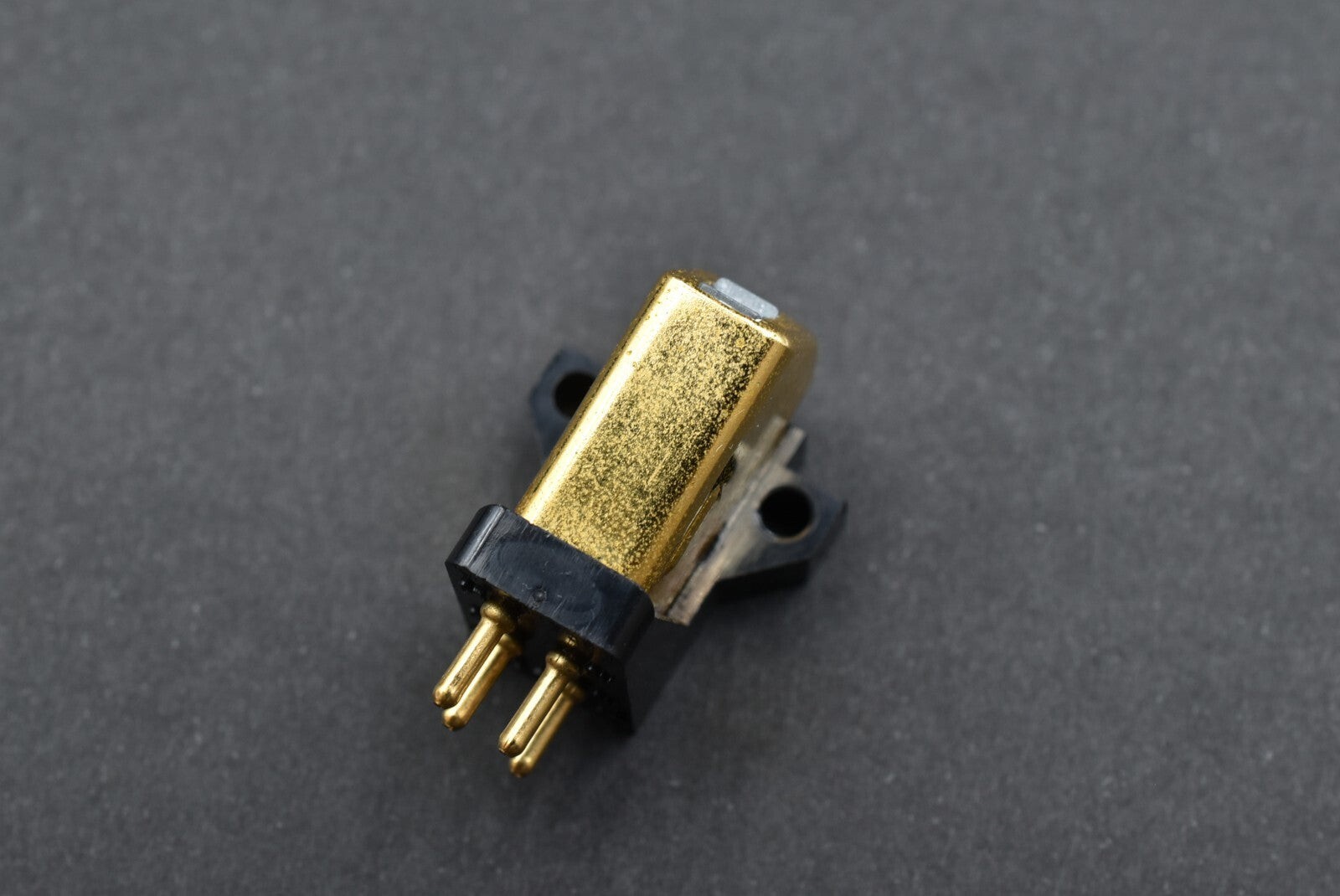

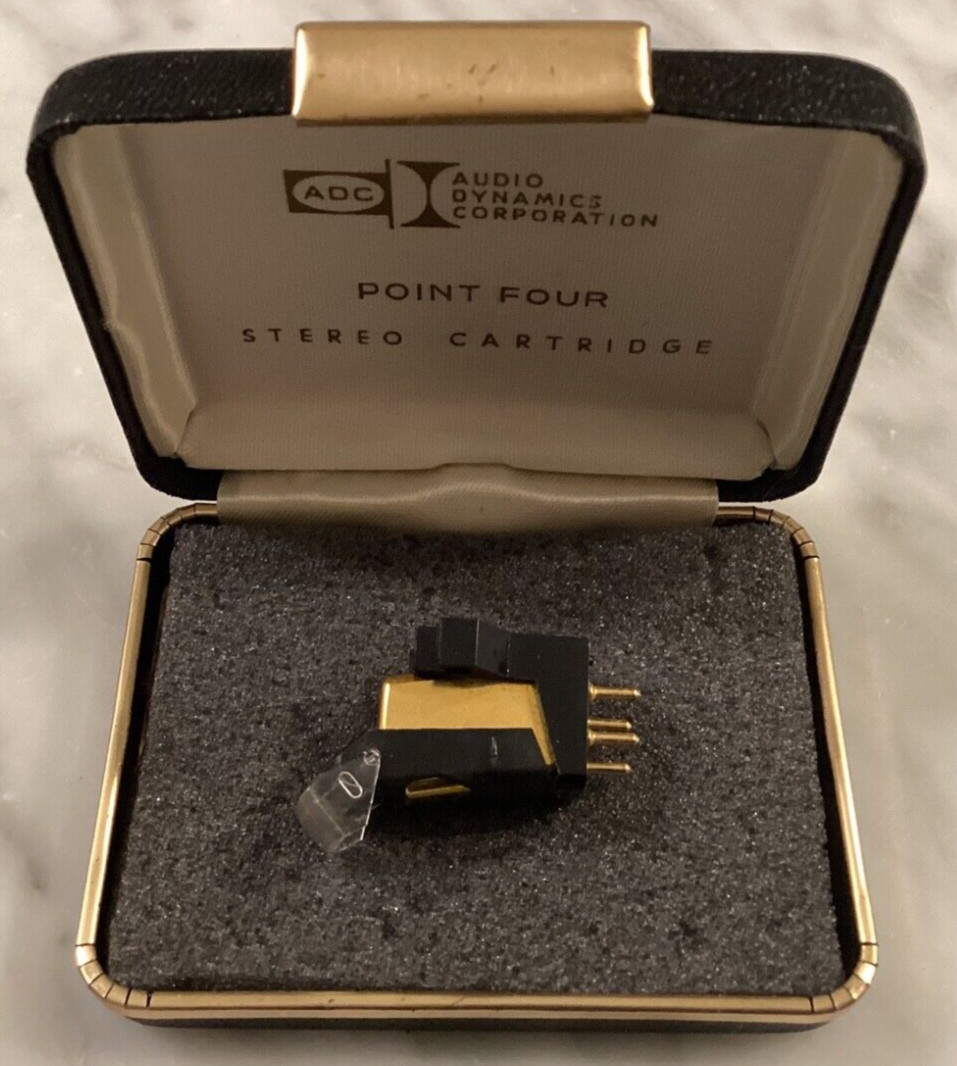

As an eBay Partner, we earn from qualifying purchases. This helps support our independent vintage technology research.