ADC XLM MKII (1970s–1980s)
That moment when a 40-year-old moving magnet cartridge makes your turntable sound like it’s whispering secrets from the mastering studio.
Overview
There’s a certain hush that falls over a room when the ADC XLM MKII hits the groove just right—like the stylus isn’t tracking vinyl so much as remembering it. This isn’t some fragile museum piece built for specs sheets; it’s a cartridge that was engineered to disappear, letting the music breathe with a clarity that still startles today. Born in the late 1970s at the peak of ADC’s reputation, the XLM MKII was the heir to a lineage shaped by Peter Pritchard, a designer whose obsession with low-mass, high-compliance moving magnet systems pushed boundaries when most competitors were still sanding down wooden bodies and calling it innovation. The MKII wasn’t the flagship—that honor went to the wideband ZLM series for CD-4 quad—but it was the sweet spot for audiophiles who wanted near-flagship performance without the finicky setup or astronomical price.
What separates the XLM MKII from the pack isn’t just its specification sheet, impressive as that is, but the way it renders music. It doesn’t shout about detail; it reveals it. Play a well-cut jazz record and you’ll hear the bow’s grit on a double bass string, the subtle shift in breath before a saxophone phrase, the space between the snare and the hi-hat like actual air. This isn’t analytical sterility—it’s organic, dynamic, and disarmingly present. Reviewers at the time noted its uncanny ability to project a stable soundstage without sounding artificially wide, and owners still report that quality today, provided the stylus is healthy and the arm compliance is properly matched.
But here’s the catch: the XLM MKII demands respect. It’s not a plug-and-play upgrade for your入门 turntable. With very high compliance—confirmed by user reports and consistent with its low tracking force requirements—it can be a nightmare in lightweight or high-impedance tonearms. Unipivots and low-mass linear trackers loved it, but many mass-market arms of the era simply couldn’t control it, leading to mistracking, resonance issues, or outright damage. And because it was built in an era when cartridges were expected to last a decade or more with minimal servicing, many surviving units today suffer from dried-out suspension, misaligned cantilevers, or stylus wear that dulls its famed transparency. A bad XLM MKII can sound dull and lifeless; a good one sounds like time travel.
Specifications
| Manufacturer | ADC (Audio Dynamics Corporation) |
| Production Years | 1970s–1980s |
| Original Price | Not specified in research |
| Type | Moving Magnet |
| Output Voltage | 5.5 mV |
| Frequency Response | 15 Hz – 24 kHz |
| Channel Separation | 26 dB at 1 kHz |
| Tracking Force | 1.2 g – 1.5 g |
| Compliance | High (qualitatively reported) |
| Coil Impedance | 650 ohms |
| Inductance | 350 mH |
| Stylus Type | Nude Elliptical |
| Mass | 5.75 g |
| Recommended Load Impedance | 47 kΩ |
| Recommended Load Capacitance | 100–200 pF (inferred from era standards) |
| Replacement Stylus | ADC XLM Improved MKII Stylus |
| Cartridge Body Material | Black or gold-plated metal (observed in listings) |
| Mounting | Standard 1/2-inch |
Key Features
The 650-Ohm, 350 mH Coil Body: A Rare Breed
Most moving magnet cartridges of the era hovered around 1000–1500 ohms impedance, making the XLM MKII’s 650-ohm coil a deliberate outlier. This lower impedance, paired with 350 mH inductance, was engineered to reduce high-frequency roll-off and improve transient response when paired with standard 47 kΩ phono inputs. The result? A cartridge that doesn’t need heroic equalization to sound natural. It’s a subtle but meaningful design choice that pays dividends in midband clarity and top-end extension, especially on complex orchestral or acoustic recordings. The coil assembly was also tightly potted to resist microphonics—a common flaw in cheaper MMs—and the body’s metal construction helped dissipate resonance, contributing to its stable imaging.
Nude Elliptical Stylus: Precision Without Pretense
While some high-end cartridges were already flirting with line-contact profiles by the late ’70s, the XLM MKII stuck with a high-quality nude elliptical stylus—and for good reason. It offered excellent traceability in the groove without the fragility or ultra-low tracking force demands of Shibata or line-contact types. The “nude” designation means the stylus tip wasn’t mounted in a metal shoe, reducing mass and improving high-frequency response. Combined with the cartridge’s low effective tip mass, this stylus could track inner grooves on worn records with less distortion than many contemporaries. Replacement styli are still available from specialists like Musonic, though NOS units command high prices due to demand from collectors and restorers.
High Compliance, High Stakes
The XLM MKII’s high compliance was both its superpower and its Achilles’ heel. Designed to work with low-mass tonearms—often in the 8–12 g range—it delivered a plush, forgiving ride over warped records and surface noise. But in heavier arms, or those with poor bearing design, that compliance turned into a liability. Owners report resonance peaks in the midbass, skating, and even permanent cantilever damage if the arm’s downforce isn’t dialed in perfectly. This isn’t a cartridge to slap on a stock AT-LP120 or a vintage Technics SL-D300 and expect magic. It wants a well-damped arm with adjustable bias and a stable vertical tracking angle. When matched correctly, though, the payoff is a liquidity of tone that few MMs ever achieved.
Historical Context
The XLM MKII arrived at a time when the moving magnet cartridge was reaching its technical zenith. The early 1970s had seen a boom in MM development as manufacturers sought to match the detail of moving coils without their cost and fragility. ADC, founded by former Shure engineer Peter Pritchard, was at the forefront, emphasizing low moving mass and high compliance to improve groove contact. While companies like Denon and Shure focused on ruggedness and mass-market appeal, ADC catered to the tweaker—those willing to match cartridges to arms with surgical precision. The XLM line sat just below the exotic ZLM series, which were tuned for CD-4 quadraphonic playback with extended high-frequency response and special stylus profiles. The MKII, by contrast, was a more practical choice for stereo enthusiasts, offering 90% of the performance at a more accessible price.
Competitors included the Shure V15 series, the ADC’s arch-rival in high-end MMs, and the Ortofon OM series, which favored a more neutral, less resonant character. The ADC stood out by prioritizing musical flow over absolute neutrality—a cartridge that didn’t just measure well but felt right. It was also used in OEM versions by companies like Integra, which rebadged ADC cartridges for their high-end tuners and turntable systems. By the mid-1980s, as digital audio rose and cartridge R&D slowed, the XLM MKII became a cult favorite among analog diehards, a status it retains today.
Collectibility & Value
The ADC XLM MKII is a collector’s cartridge with real-world performance to back up the nostalgia. Prices vary wildly depending on condition and whether it includes a working stylus. A body-only unit with untested or missing stylus typically sells for $50–$100, essentially a parts donor or project piece. A fully tested cartridge with a known-good or NOS stylus can fetch $150–$300, especially if mounted on a high-quality headshell. The most desirable listings—NOS in original box with tools and documentation—occasionally break $400, but these are rare and often snapped up by restorers.
Common failures include dried-out rubber suspension (leading to loss of compliance or channel imbalance), bent or worn cantilevers, and oxidized pins. The stylus is the most vulnerable part: elliptical tips can wear asymmetrically, and many surviving units have been played far beyond their lifespan. Before buying, insist on continuity testing for both channels, a clear photo of the stylus under magnification, and confirmation of tracking force calibration. Re-stylusing is possible but not trivial—specialists like Musonic offer rebuilt assemblies, but a full refurbishment can cost $120–$180, making it a significant investment.
For the hands-on owner, the XLM MKII is a rewarding project. It’s a chance to engage with analog at a mechanical level—balancing the arm, setting VTF to the gram, listening for that sweet spot where the bass tightens and the soundstage snaps into focus. But for the casual listener, it’s a minefield. If you’re not willing to invest time in setup and potential servicing, a modern Ortofon 2M or Audio-Technica VM95 might be a safer bet. The ADC isn’t better because it’s old; it’s better when it’s right—and getting it right is half the battle.
eBay Listings
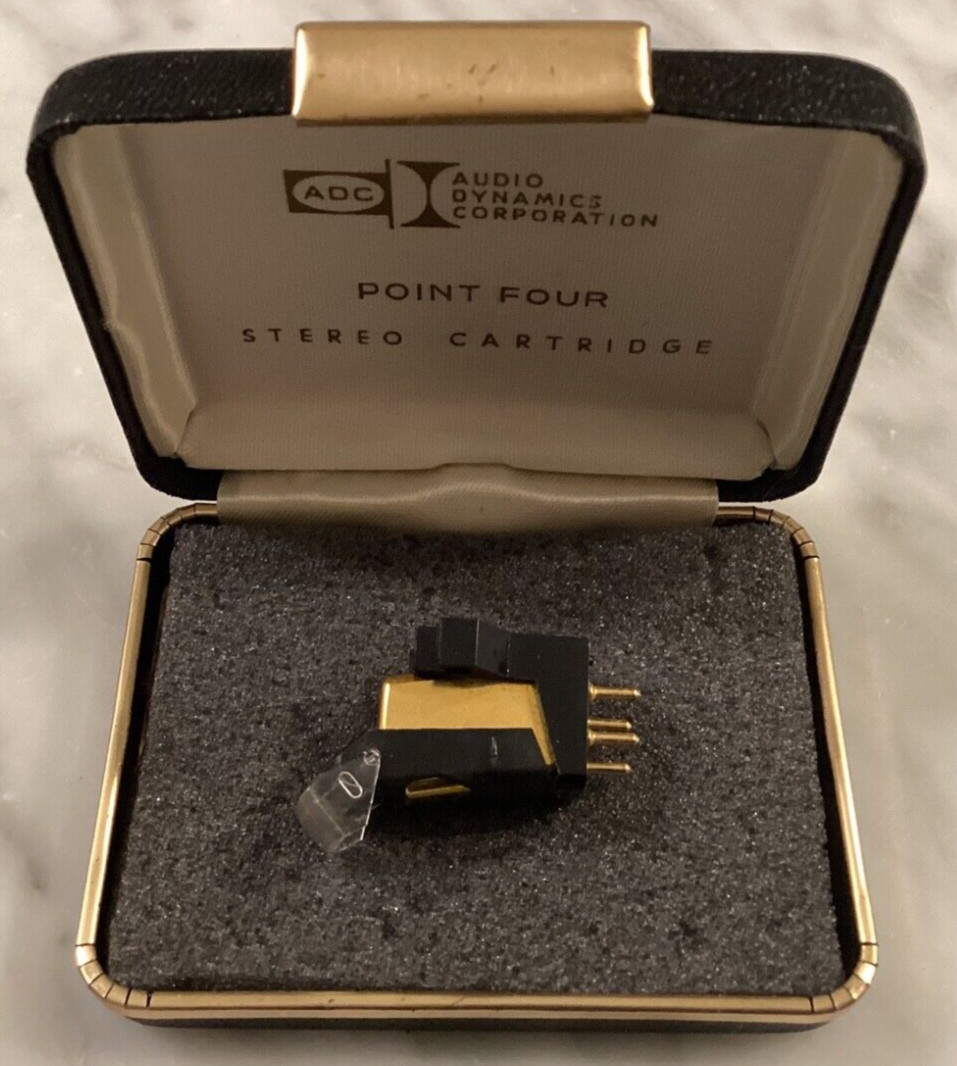


As an eBay Partner, we earn from qualifying purchases. This helps support our independent vintage technology research.