ADC XLM MK II Improved (1975–1978)
It hums with the promise of audiophile magic—until you realize it’s fighting its own physics.
Overview
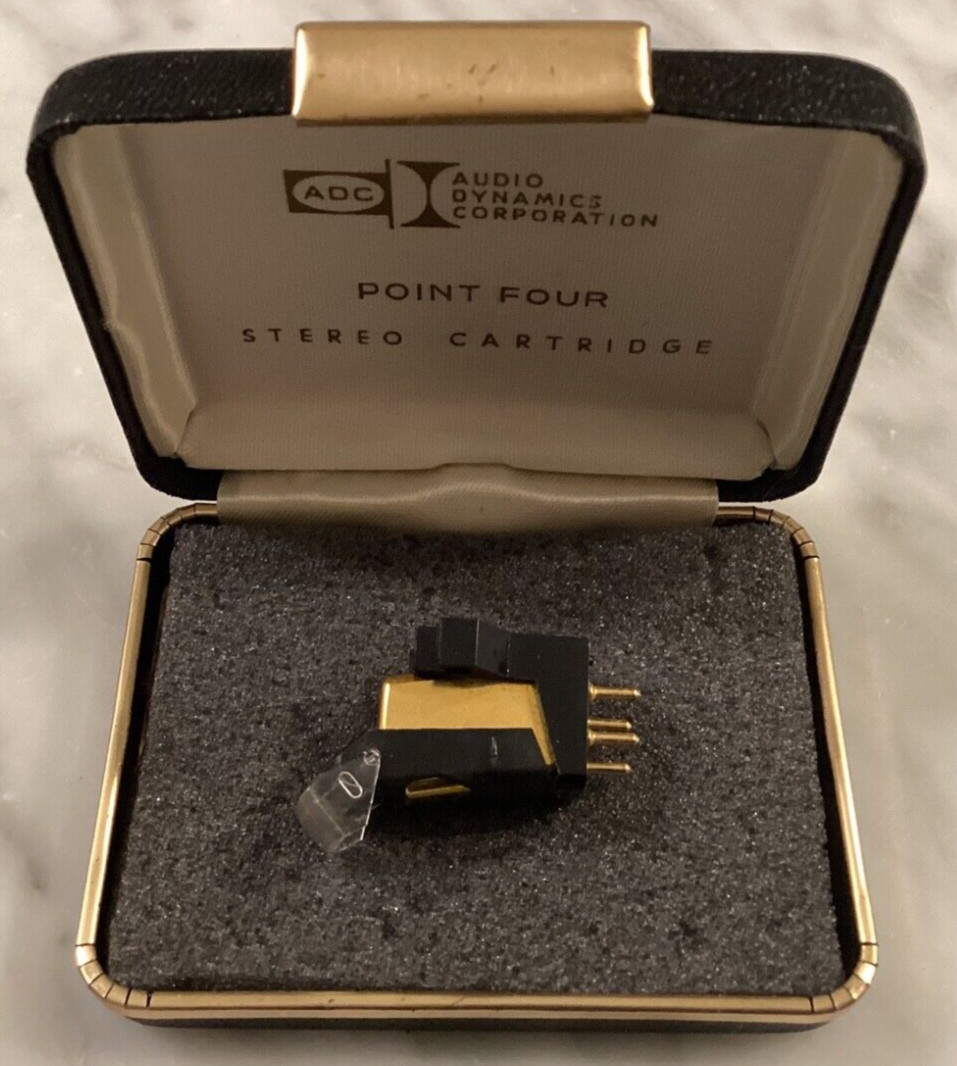
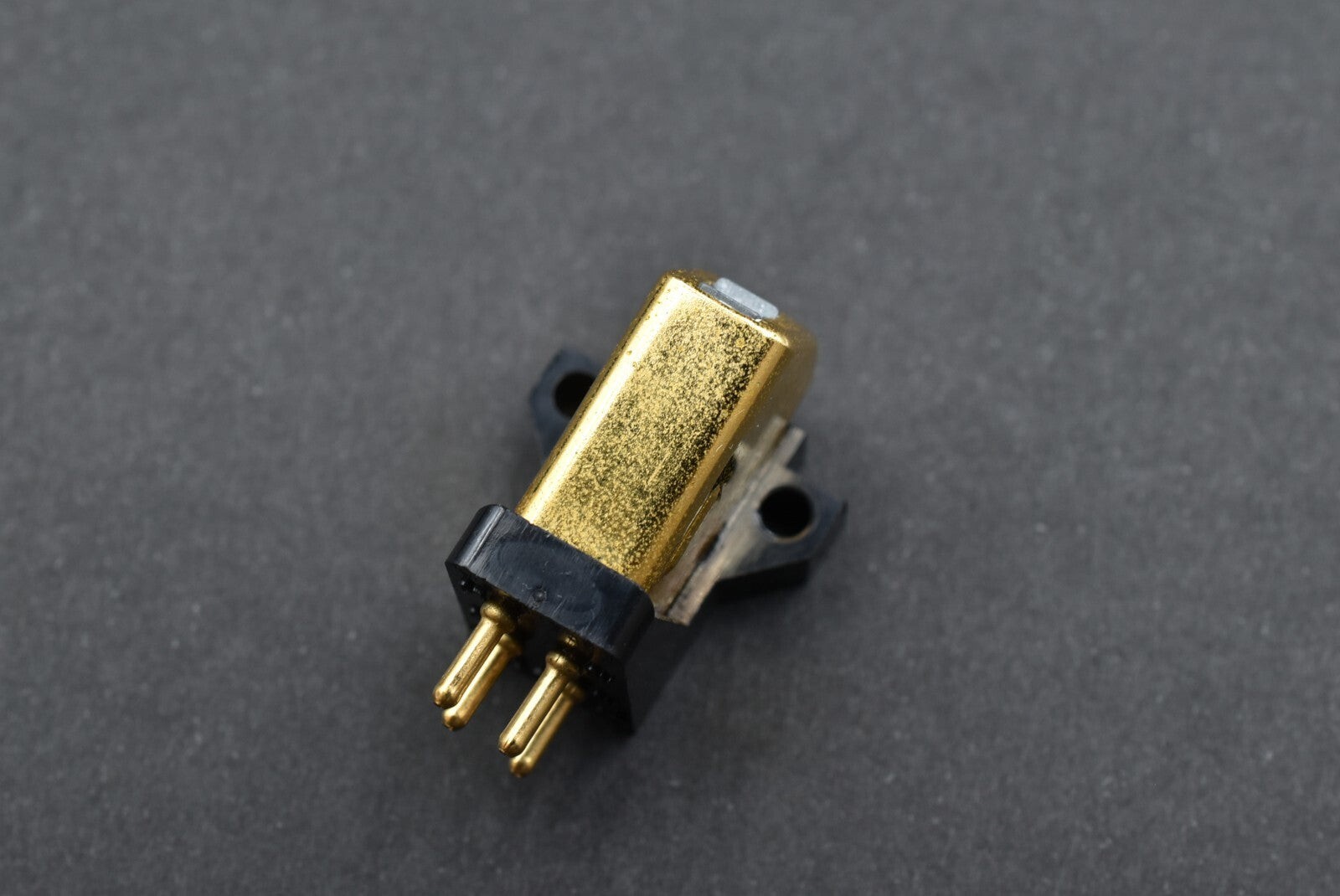
You pull this little black cartridge out of a foam-lined box from 1976, and it feels like holding a relic from the golden age of analog obsession—because it is. The ADC XLM MK II Improved isn’t just another moving magnet; it’s a statement piece from a company that tried to rewrite the rules of how a stylus should behave. Made in the USA by Audio Development Company (ADC), this thing was built during a narrow window—1975 to 1978—when high compliance and featherlight tracking were the holy grail. At just 5.75 grams, it’s light enough to make your tonearm twitch, and with a recommended tracking force of 1.2 grams (and a range from 0.75 to 1.5), it practically floats over vinyl. But don’t let its delicate specs fool you—this cartridge carries a legacy of controversy, not just nostalgia.
It’s not rare in the “only three exist” sense, but there’s a twist: some versions came with a “nude” stylus, a detail that sends ripples through collector circles. Not because it sounds better—nobody’s claiming that—but because it’s a subtle variation in a product line where even minor differences become lore. And make no mistake: this is a product of its time, born from ADC’s mission in the early 1960s to push ultra-compliant suspensions into the mainstream. The XLM series, including this MK II Improved, was part of that lineage, a follow-up to the original XLM that helped define what “high compliance” even meant back when turntables were still figuring themselves out.
But here’s the thing owners eventually learn: this cartridge doesn’t just play records—it negotiates with them. It’s not plug-and-play. It demands the right load capacitance, the right tonearm, the right mood. Get it wrong, and the highs turn into a jagged mess. Get it right? Well, even then, you’re not escaping its quirks. It’s not a neutral transducer. It’s a character actor in a world full of leading men.
Specifications
| Manufacturer | ADC (Audio Development Company) |
| Years of manufacture | 1975 - 1978 |
| Made in | USA |
| Type | Induced magnet cartridge |
| Weight | 5,75 g |
| Tracking force range | 0.75 to 1.5 grams |
| Optimum tracking force | 1.2 grams |
| Stylus tip | Diassa tip, a diamond bonded to sapphire |
| Compliance | 50Cu |
Key Features
The Induced Magnet Design: Less Mass, More Ambition
ADC didn’t just build another MM cartridge—they tried to outsmart the moving magnet paradigm. The MK II Improved uses what’s called an “induced magnet” design, a patented approach where the magnet itself isn’t part of the moving assembly. That’s significant. In traditional moving magnet cartridges, the magnet adds mass to the cantilever system, which can dull transient response and raise resonance issues. By removing that mass and inducing the magnetic field instead, ADC aimed for better tracking and lower inertia. On paper, it’s brilliant. In practice? It’s still a cartridge wrestling with its own design trade-offs.
High Inductance, High Demands
This thing has very high inductance—thanks to all those wire turns in the coil—and that’s not just a spec, it’s a warning label. High inductance means it interacts aggressively with the capacitance of your tonearm wiring and phono preamp. The result? It’s extremely sensitive to load capacitance. Owners report that only with the correct capacitive load will it deliver its intended frequency response. Get it wrong, and you’re not just losing bass or softening highs—you’re distorting the phase relationships in the music. And yes, that matters.
Stylus Resonance in the Wild
One of the more unsettling truths about the MK II Improved is that its stylus resonance sits right in the audible band—anywhere from 12 to 18 kHz. That’s not a typo. Most cartridges try to push resonance above 20 kHz so it’s out of hearing range. This one leaves it in the upper treble, where it can ring, color, and generally misbehave. And here’s the kicker: frequencies above that resonance point are 180 degrees out of phase. That’s not a subtle coloration—it’s a fundamental inversion of the signal. Reviewer Dan Bonhomme didn’t mince words: this leads to “rough, peaky treble and significant phase problems.” So if your system already leans bright, this cartridge might make you reconsider your life choices.
Two Versions, One Mystery
There’s a quiet debate among collectors about two versions of the MK II Improved. One is referred to as the “nude version,” likely meaning a stylus assembly without a protective shank or housing. The other? Unclear, but implied to be a bonded or shrouded design. The manuals differ between versions, suggesting ADC tweaked something mid-run. Was it the stylus? The suspension? Nobody’s saying. But the nude version’s rarity is enough to spark interest—enough that collectors notice, even if it doesn’t change the sound.
Historical Context
ADC began in the early 1960s in Connecticut, founded to serve a growing appetite for high-compliance, low-tracking-force cartridges. The original XLM was a pioneer in that movement, and by the time the MK II Improved arrived in 1975, the company was deep into refining its philosophy. This model sits in a family that includes the mkI, mkIII, and other “Improved” variants—though exactly where it fits in the hierarchy isn’t spelled out in the documentation. What is clear is that ADC saw itself as pushing boundaries, not just following trends. The induced magnet design wasn’t a gimmick; it was a real engineering attempt to reduce moving mass. But by the late 1970s, the market was shifting toward moving coil designs and more predictable MM cartridges. The MK II Improved arrived just as the tide was turning.
Collectibility & Value
If you’re hunting for an ADC XLM MK II Improved, know this: the cartridge often shows up without a stylus. Multiple listings explicitly state “Stylus Not Included,” so assume it’s missing unless proven otherwise. That’s not just inconvenient—it’s expensive. A new original RXL Improved stylus costs €169. An aftermarket hyperelliptical runs €119, a Shibata €159. Even a generic replacement hits $150. So buying one “as-is” could end up costing more than the listed price.
On the market, prices vary wildly. A bare cartridge has sold for as little as €35 on OLX Portugal, while others go for €100–€123, especially if paired with a replacement stylus. On Yahoo Auctions, a used MK II Improved went for ¥6,750 (~€42). With a headshell, it’s listed at $110 on Reverb. But if you want one with a new genuine stylus, be ready to pay $243.74—or more. The “nude version” isn’t priced differently in listings, but its rarity means it might fetch a premium in niche circles. Still, this isn’t a blue-chip collectible like a Denon 103 or an Ortofon SPU. It’s a cult item, valued more for its engineering curiosity than its sonic perfection.
eBay Listings


As an eBay Partner, we earn from qualifying purchases. This helps support our independent vintage technology research.