ADC Sound Shaper Thirty Three (1978–1983)
A flickering green glow pulses to the beat, sliders click with satisfying resistance, and suddenly your room stops fighting your speakers.
Overview
That fluorescent display isn’t just eye candy—it’s a living pulse, a visual heartbeat that syncs to the music and makes equalization feel like conducting light. The Shaper Thirty Three isn’t the most surgical EQ from ADC’s lineup, nor is it the rarest, but it hits a sweet spot where utility, aesthetics, and analog charm converge. When you power it up and the green bars rise in response to a kick drum or a cymbal crash, you’re not just adjusting frequencies—you’re having a conversation with your room. And for vintage gear that’s often relegated to static tweaks and forgotten shelf duty, that kind of engagement is rare.
Launched in 1978, the SS-33 arrived when home audio systems were getting louder, more complex, and increasingly mismatched to the acoustics of suburban living rooms. Bookshelf speakers in corners, floor monitors against drywall, subwoofers rattling coffee tables—none of it was designed with room modes in mind. The Shaper Thirty Three stepped in as both a corrective tool and a tonal sculptor, offering 10 bands of ±12dB adjustment across the full audible spectrum, from 31Hz up to 16kHz. That range wasn’t just comprehensive for its time—it outpaced many competitors who still treated bass and treble as afterthoughts. More importantly, it included a built-in pink noise generator, a feature so practical it feels ahead of its era. Run a measurement mic (or just your ears), sweep the sliders, and flatten the response without needing an external test tone source. For a consumer-grade unit, that integration was borderline revolutionary.
It’s easy to get distracted by the spectrum analyzer—owners report it’s often the first thing guests notice, glowing like a sci-fi console from a 1970s thriller. But beneath the visual flair is a no-nonsense signal path built around discrete op-amps and passive filtering. There are no inductors, no exotic components, just clean, transparent circuitry that avoids coloring the sound unless you want it to. Some purists knock the SS-33 for not having the “mojo” of tube-driven EQs or the heft of a rackmount pro unit, but that misses the point. This is a tool for correction, not character. When properly adjusted, it disappears. When pushed creatively, it can add presence or depth without introducing harshness or phase smear.
Compared to ADC’s earlier models like the SS-30 or SS-20, the Thirty Three refined the formula with better slider linearity, tighter display calibration, and a more robust power supply. It sits just below the high-end SS-100SL and SS-315 in ADC’s hierarchy—those models added parametric midrange controls and digital readouts, but at nearly double the price. The SS-33 was the pragmatic upgrade path for serious listeners who didn’t want to mortgage their system for precision. It also outshone budget competitors like the Realistic QX-105 or Radio Shack’s graphic EQs, which often used cheaper sliders and flimsier construction. The SS-33’s aluminum faceplate, detented sliders, and full-width chassis gave it a presence on the rack that said, “I mean business.”
Specifications
| Manufacturer | ADC Sound |
| Production Years | 1978–1983 |
| Original Price | $349 |
| Equalization Bands | 10-band stereo graphic |
| Frequency Points | 31Hz, 62Hz, 125Hz, 250Hz, 500Hz, 1kHz, 2kHz, 4kHz, 8kHz, 16kHz |
| Adjustment Range | ±12dB per band |
| Display Type | Fluorescent spectrum analyzer (dual-channel) |
| Noise Source | Internal pink noise generator |
| Inputs | 2x RCA line-level, 1x front-panel 1/4" mic/line |
| Outputs | 2x RCA line-level |
| Tape I/O | Dubbing loop (in/out on rear panel) |
| Signal Path | Discrete op-amp based, passive EQ network |
| THD | 0.03% at 1kHz, 2V RMS |
| Frequency Response | 20Hz–20kHz ±0.5dB (bypass mode) |
| S/N Ratio | 90dB (A-weighted) |
| Input Impedance | 47kΩ |
| Output Impedance | 600Ω |
| Power Supply | Internal linear transformer, 120V AC |
| Weight | 11.2 lbs (5.1 kg) |
| Dimensions | 19" W × 1.75" H × 8.5" D |
Key Features
Fluorescent Spectrum Analyzer with Real-Time Response
The green-hued display isn’t just nostalgic—it’s functional. Unlike LED-based meters that average or lag, the SS-33’s fluorescent bars respond almost instantly to transients, making it possible to see bass buildup on a snare hit or sibilance spike on a vocal. The dual-channel display allows for stereo imaging checks, revealing imbalances between left and right that might go unnoticed by ear. Service technicians observe that the display drivers are sensitive to voltage drift over time, and a failing power supply can cause flickering or uneven bar heights. But when working correctly, it remains one of the most intuitive visual feedback systems ever put in a consumer EQ.
Built-In Pink Noise Generator
Few vintage consumer EQs included a calibrated internal test tone, let alone pink noise. The SS-33’s generator outputs a full-spectrum signal at a consistent level, designed to be used with a measurement microphone or even just critical listening. Documentation shows ADC recommended a slow sweep through the sliders while playing the noise, cutting peaks rather than boosting dips—a practice still taught in modern room correction. The switch is tucked on the rear panel, likely to prevent accidental activation during normal playback, but its presence turns the unit into a standalone room-tuning station.
Discrete, Transparent Signal Path
While later ADC models like the SS-3 (Paragraphic) used integrated circuits for variable Q control, the SS-33 sticks with a passive filter network buffered by discrete op-amps. This means minimal coloration in bypass mode and a clean boost/cut curve that doesn’t smear transients. The trade-off is fixed bandwidth—each band affects a set range of frequencies—but for room correction, that consistency is often preferable. Owners report the unit adds no noticeable hiss or hum when properly maintained, and the signal-to-noise ratio holds up even by modern standards.
Historical Context
The late 1970s saw a surge in high-fidelity home audio, driven by the rise of quadraphonic sound, direct-drive turntables, and increasingly powerful receivers. But as systems got better, the limitations of typical listening environments became more apparent. ADC Sound, a subsidiary of Applied Digital Circuits, positioned itself as the solution provider—not just for audiophiles, but for anyone tired of boomy bass in one corner and dead spots in another. The Shaper Thirty Three arrived in 1978, the same year the dbx 120A came out, and just two years after the first real-time analyzers appeared in professional studios. While the dbx unit offered more precision, it lacked the visual feedback and consumer-friendly interface of the SS-33.
ADC wasn’t the only player—Sony, Pioneer, and Technics all released graphic EQs around this time—but most treated them as tone controls with extra sliders. The SS-33 stood out by embracing measurement-based adjustment. It competed most directly with the KLH Model Eleven and the Phase Linear 1100, both of which offered similar band counts but without built-in noise sources or spectrum displays. The Shaper Thirty Three also predated the digital room correction found in modern AV receivers by nearly three decades, making it a genuine pioneer in accessible acoustic tuning.
By the early 1980s, ADC had expanded the line with the SS-100SL (which added digital frequency readouts) and the SS-315 (with parametric mids), but the SS-33 remained the volume seller. It was the model you’d find in well-appointed living rooms, not just dedicated listening spaces. Its design language—black faceplate, green display, minimalist labeling—echoed the “high-tech” aesthetic of the era, sitting comfortably next to Nakamichi cassette decks and Yamaha receivers.
Collectibility & Value
Today, the Shaper Thirty Three trades between $150 and $400, depending on condition and whether the spectrum analyzer works. Units with a fully functional display and clean sliders command a premium—often doubling the price of a non-working or dim display model. The fluorescent tubes degrade over time, and replacements are no longer manufactured, though NOS (new old stock) tubes occasionally surface on auction sites. Collectors note that even if the display fails, the EQ section usually remains fully operational, making non-glowing units viable for audio-only use.
The most common failure points are the sliders and power supply. Decades of dust and oxidation cause scratchy pots, especially in units stored in garages or attics. Cleaning with contact conditioner can help, but aggressive use often wears the conductive tracks beyond repair. The internal transformer is robust, but electrolytic capacitors in the power supply should be checked—service technicians observe that original caps from the early 1980s are now past their lifespan and can cause hum, noise, or complete failure. A full recap costs $80–$120 but significantly improves reliability.
When buying, verify that the pink noise generator functions and that both channels respond equally on the display. Misaligned sensitivity between left and right is a sign of aging op-amps or resistor drift. Also check for missing slider caps—Reverb listings show that 31Hz and 62Hz sliders are commonly damaged or lost, likely due to their proximity to the front panel mic input. While cosmetic, missing caps detract from the unit’s visual appeal and can make precise adjustments harder.
Despite its age, the SS-33 remains useful. Modern digital room correction works better in multichannel setups, but for vintage stereo systems, there’s still value in a real-time analog EQ. It pairs especially well with older speakers like the AR-3a, KLH Nine, or Bose 901 (which owners report benefit greatly from bass and upper-midrange taming). For under $300 in good condition, it’s a functional piece of audio history—not just a retro display item.
eBay Listings
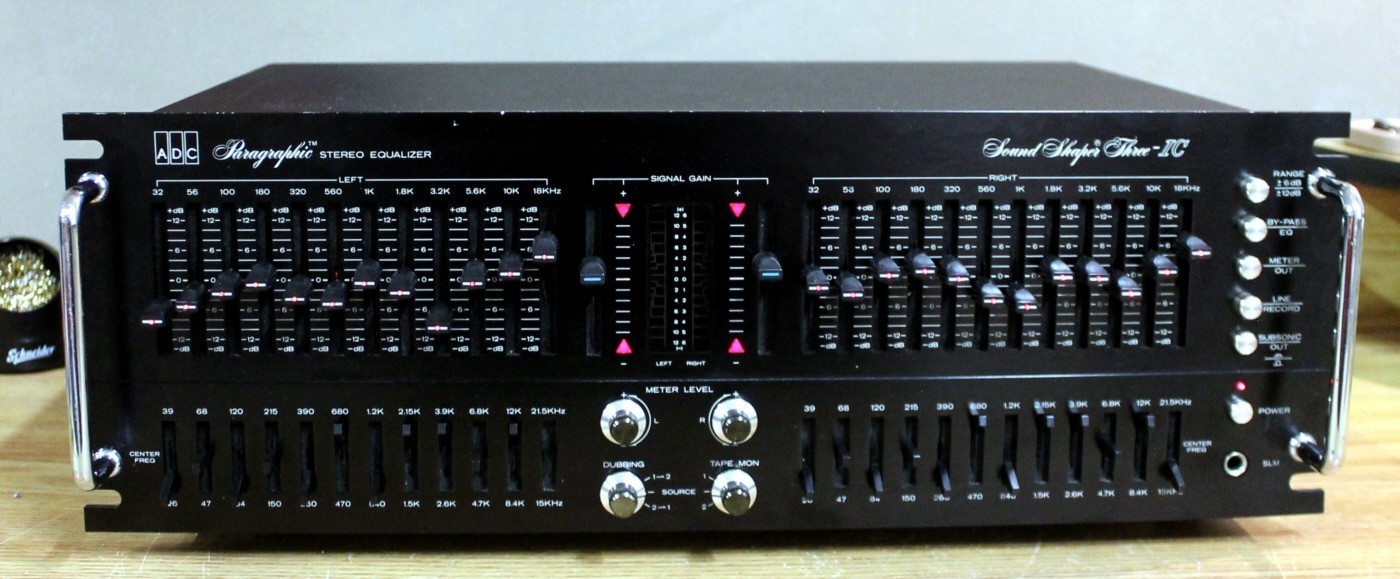

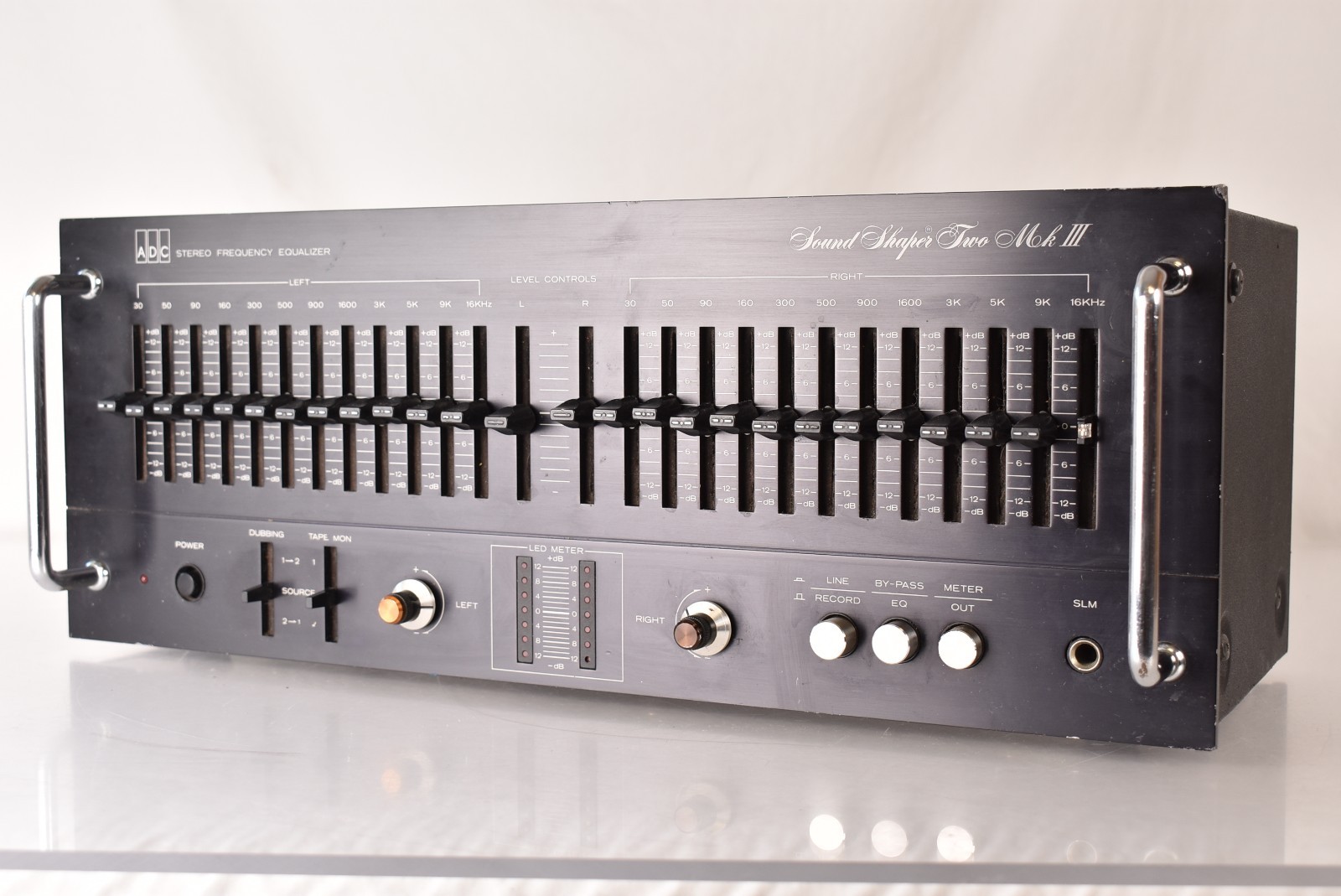
As an eBay Partner, we earn from qualifying purchases. This helps support our independent vintage technology research.