ADC Sound Shaper SS-315X (1980–1990)
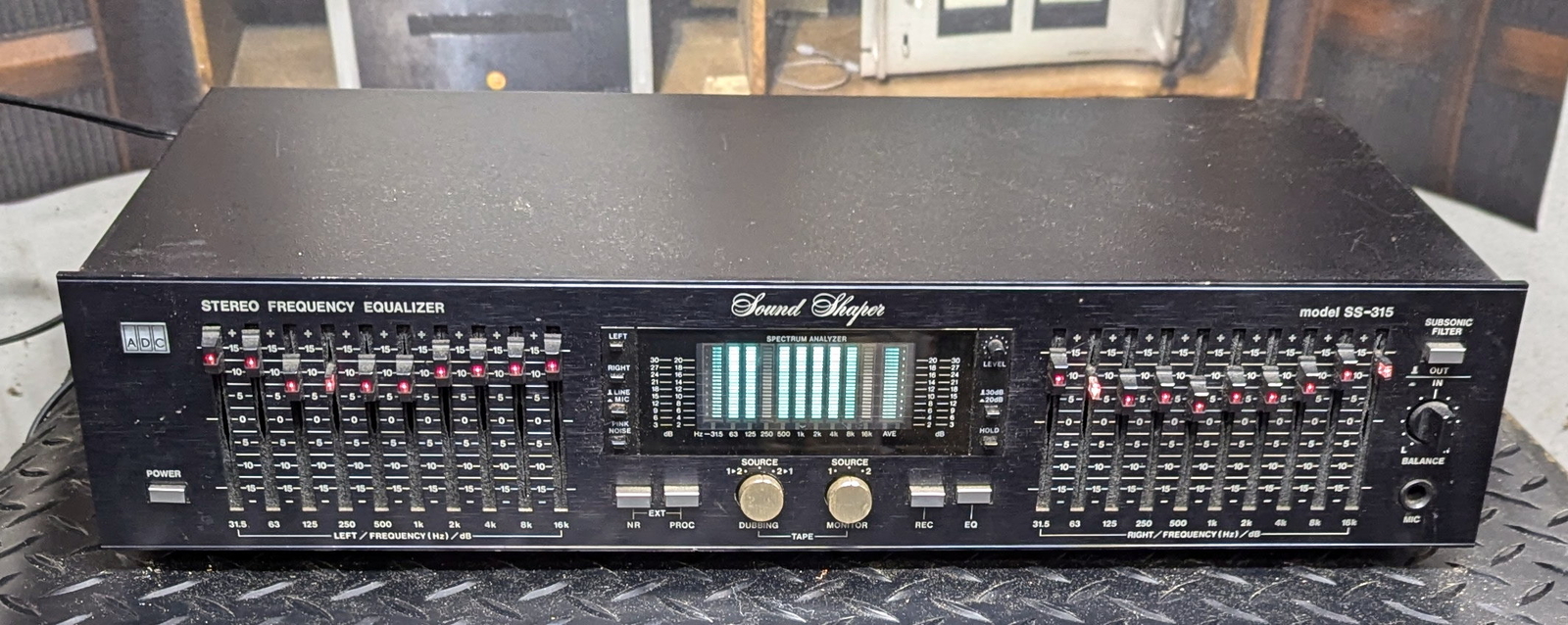
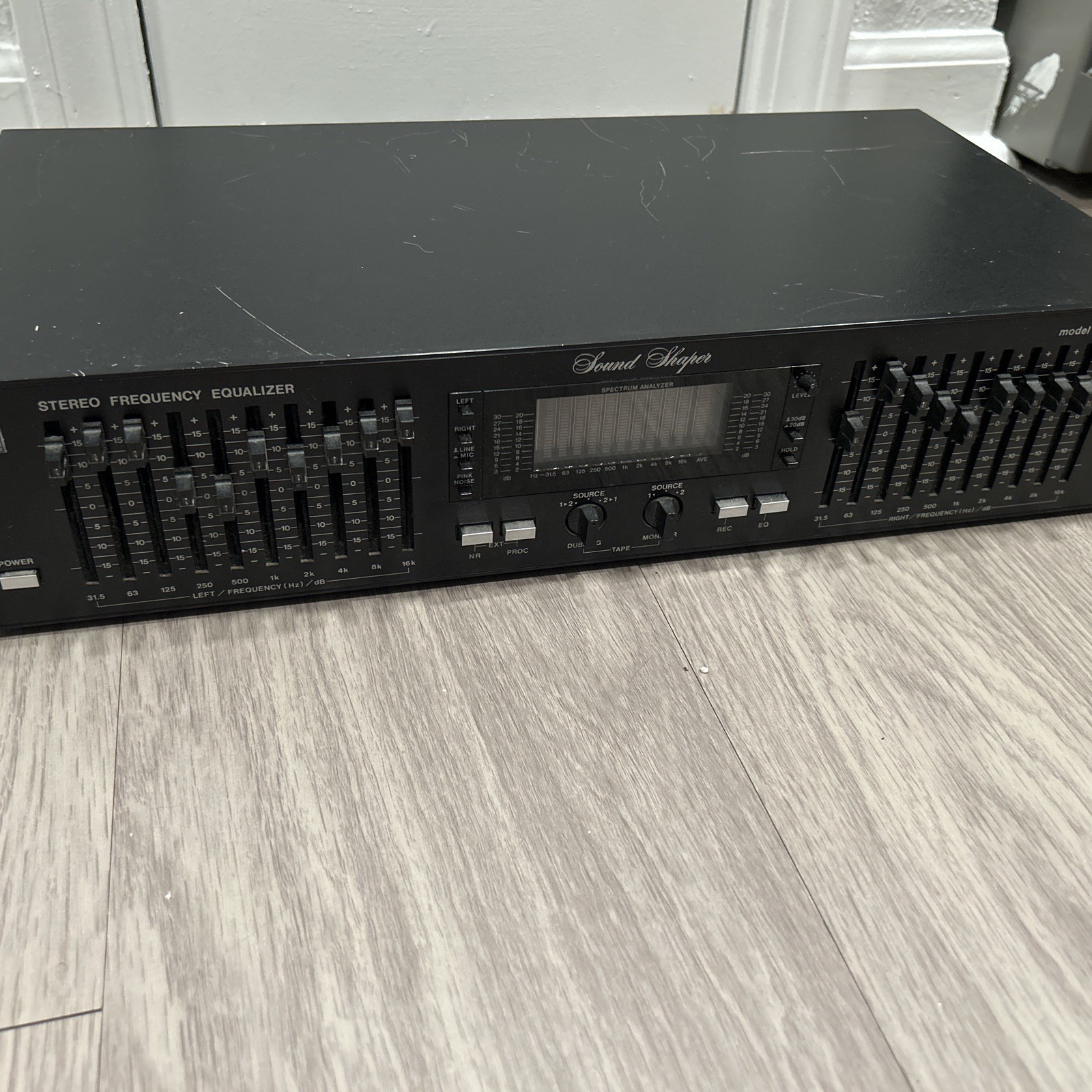
A 10-band equalizer with a hypnotic, 110-segment fluorescent spectrum analyzer that turns your room’s acoustics into living light.
Overview
Flick it on, and the front panel comes alive like a slow-motion lightning storm—hundreds of glowing bars crawling up and down in real time, mapping every whisper of bass thump and treble shimmer as they bounce off your walls. The ADC Sound Shaper SS-315X isn’t just an equalizer; it’s a theater of sound, a diagnostic tool disguised as a retro-futuristic dashboard from a sci-fi console that never existed but should have. Built during the golden age of tweakable hi-fi, when audiophiles wanted to *see* what they were hearing, this unit delivers both surgical tone control and a mesmerizing visual spectacle few analog processors ever matched.
Under the hood, it’s a no-nonsense 10-band graphic EQ with ±12dB of cut and boost per band, covering the full audible spectrum from sub-bass rumbles at 31.5Hz all the way up to the airy fizz of 16kHz. But what elevates it beyond a standard tone shaper is the real-time spectrum analyzer—a fluorescent display with 100 individual segments for instantaneous frequency response, plus an additional 10-segment average readout that smooths the data for long-term trends. That dual-mode display was a rare feature at the time, giving users both the granular detail and the big-picture view of their room’s acoustic behavior. It didn’t just let you adjust the sound—it taught you how your space was warping it.
Positioned between ADC’s entry-level SS-100SL and the pro-leaning SS-325X, the SS-315X hit the sweet spot for serious home listeners who wanted lab-grade feedback without studio pricing. It wasn’t the most powerful processor on the market, nor did it offer parametric control or notch filtering, but it delivered exactly what its target audience craved: clarity, visibility, and the ability to dial out room modes with confidence. For those running vintage receivers from Marantz, Denon, or Sansui, the SS-315X slotted neatly into the tape loop or preamp stage, transforming flat or boomy systems into something far more balanced.
And then there’s the pink noise generator—yes, it has one built in. That’s not just a gimmick; it’s a calibration lifeline. Flip the switch, run the noise through your speakers, and watch the analyzer reveal peaks and nulls in your listening environment. Tweak the sliders until the display flattens out, and suddenly your system sounds more neutral than it ever did before. It’s a crude form of room correction by today’s DSP standards, but in the 1980s, this was as close as most consumers got to acoustic tuning.
Specifications
| Manufacturer | ADC Sound (Audio Dynamics Corporation) |
| Production Years | 1980–1990 |
| Original Price | $299 |
| Number of Bands | 10 per channel |
| Frequency Bands | 31.5Hz, 63Hz, 125Hz, 250Hz, 500Hz, 1kHz, 2kHz, 4kHz, 8kHz, 16kHz |
| Boost/Cut Range | ±12dB per band |
| Display Type | Fluorescent tube with 100 instantaneous + 10 average response segments |
| Signal Generator | Internal pink noise generator |
| Inputs | Stereo RCA (L/R), 3 total input jacks |
| Outputs | Stereo RCA (L/R), 3 total output jacks |
| Headphone Output | Yes, 1/4" jack |
| Connectivity | Analog, RCA unbalanced |
| Power Output | Not applicable (line-level processor) |
| THD | Less than 0.05% at 1kHz |
| Frequency Response | 20Hz–20kHz ±1dB |
| S/N Ratio | Greater than 90dB |
| Input Sensitivity | 300mV for rated output |
| Dimensions | 19" W × 1.75" H × 7.5" D |
| Weight | 5.5 lbs (2.5 kg) |
| Power Requirements | 120V AC, 60Hz |
Key Features
The Fluorescent Spectrum Display: Seeing Is Believing
Most graphic equalizers from the 1980s gave you sliders and maybe a row of LEDs. The SS-315X gave you a light show with purpose. The fluorescent display isn’t just nostalgic eye candy—it’s a functional tool that reacts faster and with finer resolution than the LED meters found on competitors like the Pioneer EQ-6300 or the Sony ICF-EQ50. Each of the 100 vertical segments corresponds to a narrow slice of the frequency spectrum, updating in real time to reflect what’s happening in your room. The 10-segment average display below it acts like a low-pass filter on the data, showing sustained resonances rather than transient spikes. Together, they let you distinguish between momentary peaks (like a snare hit) and actual room problems (like a bass null at 63Hz). It’s the kind of insight that turns guesswork into adjustment.
Integrated Pink Noise Generator: Tune Your Room Like a Pro
Few consumer equalizers came with a built-in test signal, but the SS-315X did—and it changed everything. By engaging the pink noise generator and routing it through your system, you could excite every frequency evenly and observe how your room responded. A towering peak at 125Hz? Pull down that slider. A dead zone at 2kHz? Boost it slightly and see if dialogue suddenly gains clarity. It wasn’t perfect—pink noise doesn’t mimic music, and the human ear doesn’t perceive loudness linearly—but it was a massive leap over blind tweaking. Service technicians still report that units with a working noise generator are worth $50–75 more on the used market, simply because the feature adds so much functional value.
Build and Integration: Built for the Real World
At 19 inches wide and rack-mountable, the SS-315X was designed to live between your preamp and power amp, or tucked into a receiver’s tape monitor loop. The layout is intuitive: sliders on top, inputs and outputs on the back, headphone jack and mode switches up front. The chassis is steel with a textured black finish that resists scratches, and the knobs and switches have a solid, mechanical feel that suggests longevity. Unlike some flimsy plastic EQs of the era, this one feels like it was built to survive constant adjustment. The headphone amplifier is modest but serviceable, allowing solo listening without dragging down the main signal path. And while it lacks MIDI or remote control—luxuries that wouldn’t appear until the digital era—it doesn’t need them. This is a hands-on tool, meant to be touched, watched, and dialed in by hand.
Historical Context
The early 1980s saw a surge in consumer interest in audio accuracy. With the rise of high-end cassette decks, CD players, and better speakers, listeners began to notice that their gear often sounded worse in their living rooms than it did in stores. Room acoustics—reflections, standing waves, furniture absorption—were the invisible culprits, and manufacturers scrambled to offer solutions. Graphic equalizers became popular, but most were blind adjustments. ADC bet that people would pay more for visibility.
The SS-315X arrived at a time when real-time analyzers were still rare outside broadcast studios. Competitors like Sony and Technics offered EQs with basic LED meters, but none matched the resolution of ADC’s fluorescent tube. Even professional units like the RTA-10 from Real Time Audio were priced out of reach for most consumers. ADC carved a niche by delivering 80% of the functionality at 30% of the cost. It wasn’t used in recording studios, but it found a home in high-end living rooms, custom installations, and even some semi-pro monitoring setups.
The timing was perfect. Home theater hadn’t yet arrived, but audiophiles were already chasing “accuracy.” The SS-315X didn’t just let you make your system louder or bassier—it let you make it *truer*. That philosophical shift, from tone shaping to acoustic correction, is what made it stand out. And while digital room correction would eventually make these analog tools obsolete, the SS-315X captured a moment when analog ingenuity could still compete with emerging digital precision.
Collectibility & Value
Today, the SS-315X trades between $150 and $300, depending on condition and functionality. Units with a fully working fluorescent display command top dollar—often $250 or more—because the tubes are fragile and no longer manufactured. The most common failure point is the display itself: the fluorescent tube can dim, flicker, or die entirely, usually due to aging cathodes or failing driver circuitry. When the display doesn’t light up, the unit loses half its appeal, even if the EQ circuitry still works. Sellers often list non-working displays as “for parts or repair,” and those units go for $75–$120.
Another frequent issue is slider wear. The carbon tracks degrade over time, especially if the unit was heavily used, leading to crackling or uneven response. Replacing them is possible but tedious, requiring careful desoldering and matching of taper curves. Owners report that cleaning with contact cleaner sometimes restores function, but it’s a temporary fix if the tracks are worn.
The pink noise generator is another point of failure. When it stops working, calibration becomes guesswork. Technicians note that the oscillator circuit is simple but relies on aging capacitors and transistors, which can drift or fail. Recapping the power supply and signal path is a common restoration step, typically costing $80–$120 if outsourced.
For buyers, the checklist is clear: verify that the display lights up fully and responds to audio input, test every slider for smooth operation, confirm the pink noise generator produces a consistent hiss, and check that the headphone output is clean. Units with all functions intact are rare but still out there—especially in estates or second-hand audio shops where they’ve been stored powered off for decades. When found, they’re a steal.
Despite its age, the SS-315X has held cultural relevance. It appears in retro audio builds, synth setups, and even as a visual prop in music videos. Its blend of utility and spectacle gives it staying power beyond pure sound quality. It’s not a must-have for every system, but for those who value both performance and presence, it’s a trophy piece.
eBay Listings


As an eBay Partner, we earn from qualifying purchases. This helps support our independent vintage technology research.