ADC Sound Shaper SS-300SL (1980–1989)
A glowing green spectrum display dances across warm walnut sides, and suddenly your living room feels like a control room from a 1980s studio session.
Overview
Flick it on, and the first thing you notice isn’t the sound—it’s the light. Twin rows of emerald LEDs climb and fall in real time, tracing the music’s contours like a heartbeat made visible. The ADC Sound Shaper SS-300SL doesn’t just tweak your tone; it performs for you. This is a 10-band stereo graphic equalizer from the golden era of audiophile tweaking, when people still believed they could sculpt perfection out of vinyl crackle and tape hiss. And while it’s technically a passive unit—meaning no internal amplification—it doesn’t play small. Its presence in a signal chain is undeniable, not because it adds color, but because it reveals what was already there, just buried under room modes and speaker quirks.
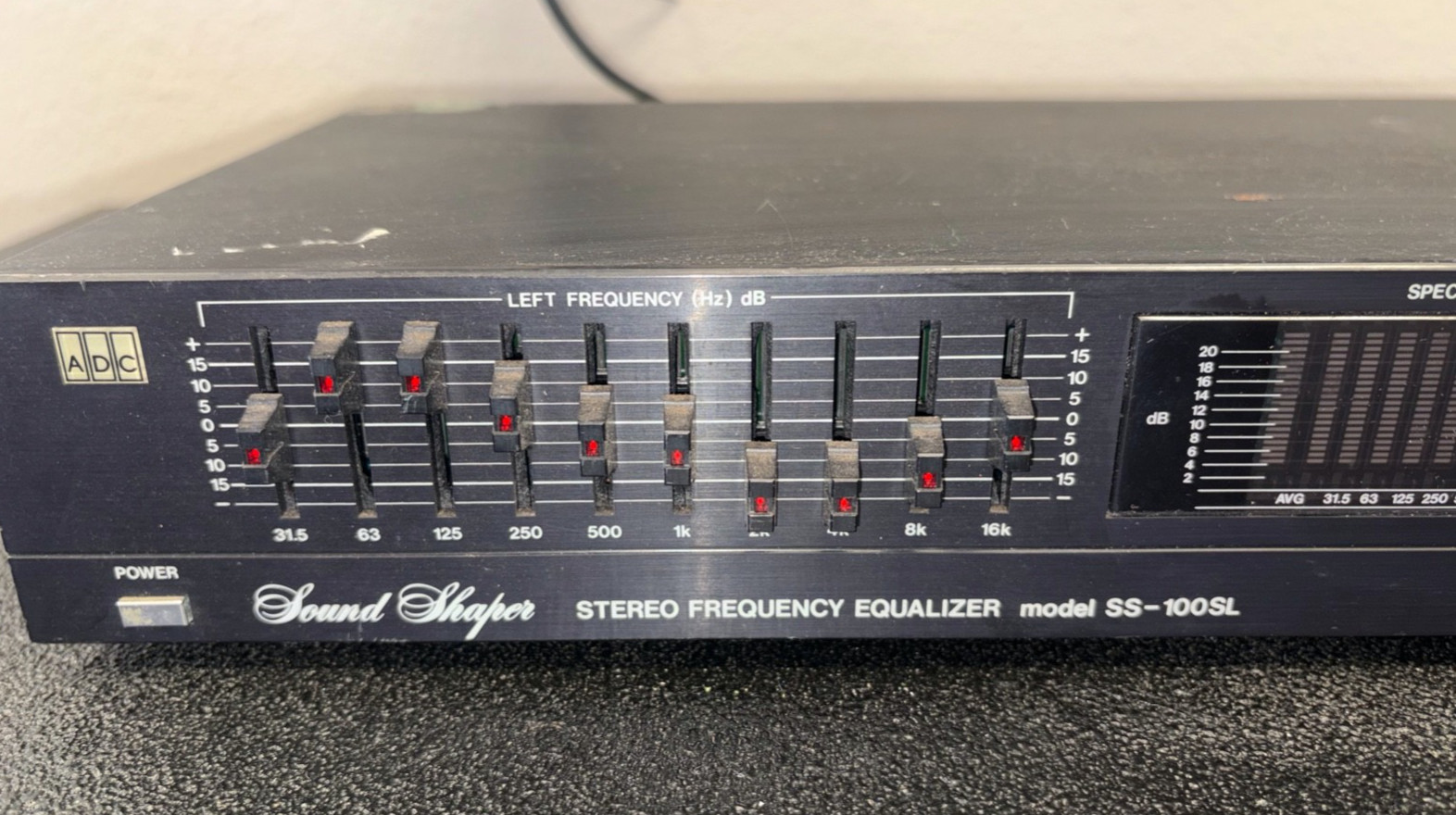
Positioned in the middle of ADC’s Sound Shaper lineup, the SS-300SL wasn’t the entry-level toy nor the flagship beast. It sat just below the SS-315X and SS-33, offering a balanced mix of surgical control and visual flair. With 10 sliders per channel spaced at octave intervals from 31.5Hz to 16kHz, it gave serious listeners enough resolution to dial out boominess or brighten dull recordings without tipping into the obsessive tweaking that plagued some of its more granular siblings. It wasn’t designed for the casual listener who just wanted a “loudness” button—it was for the guy who spent weekends repositioning speakers and arguing about damping factors at parties.
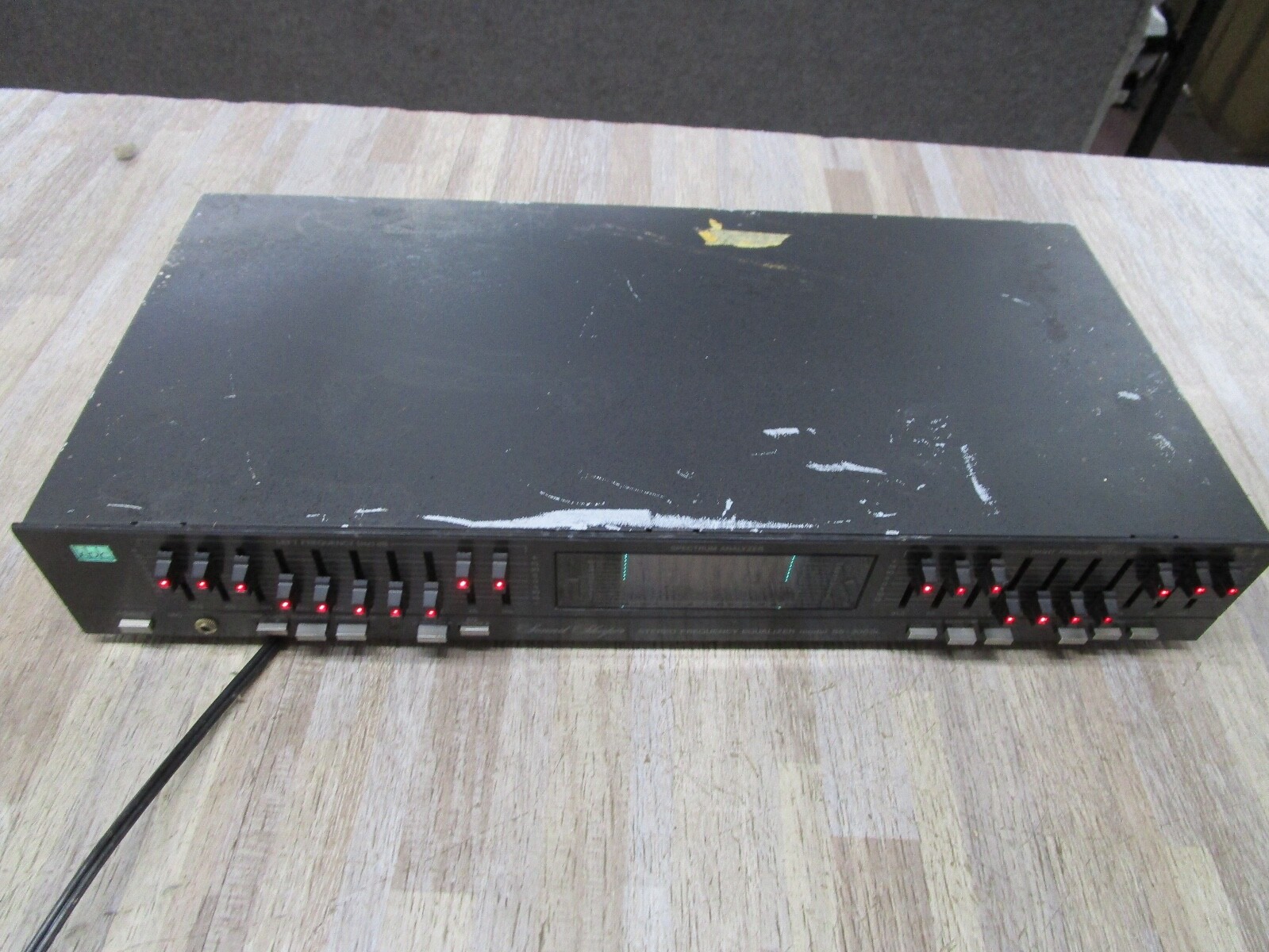
And yet, despite its precision, it never feels clinical. The build is solid but not heavy-handed: a brushed aluminum front panel, chunky rubberized sliders with satisfying resistance, and those iconic side panels in real walnut veneer that aged beautifully if kept out of direct sunlight. It powered up with a soft thump through the system—no relay clatter, no dramatic surge—just a quiet acknowledgment that it was now part of the circuit. Owners report that it imparts no sonic signature of its own when flat, which is exactly what you want from a tool meant to correct, not decorate.
Specifications
| Manufacturer | ADC Sound |
| Production Years | 1980–1989 |
| Original Price | $395 (1985 USD) |
| Type | Passive Stereo Graphic Equalizer |
| Number of Bands | 10 per channel |
| Frequency Bands | 31.5Hz, 63Hz, 125Hz, 250Hz, 500Hz, 1kHz, 2kHz, 4kHz, 8kHz, 16kHz |
| Control Range | ±12dB per band |
| Input Sensitivity | 1V |
| Output Level | 1V |
| Frequency Response | 20Hz – 20kHz |
| Total Harmonic Distortion | 0.1% |
| Signal to Noise Ratio | 100dB |
| Inputs | 2 x RCA (Main In), 2 x RCA (Tape In) |
| Outputs | 2 x RCA (Main Out), 2 x RCA (Tape Out) |
| Tape Monitor Loop | Yes |
| Spectrum Analyzer | Yes, dual 10-segment LED display |
| Power Supply | Internal 12V AC adapter (wall-wart) |
| Weight | 4.8 lbs (2.2 kg) |
| Dimensions | 17.25" W × 4.5" H × 10.5" D (43.8 × 11.4 × 26.7 cm) |
| Country of Origin | Taiwan |
Key Features
The Spectrum Display That Stole the Show
More than just a gimmick, the dual 10-segment LED spectrum analyzer was a functional tuning aid, letting users see frequency imbalances before they heard them. Unlike later digital analyzers, this one responded with analog warmth—peaks bloomed gradually, valleys receded with a soft fade. It didn’t sample at 48kHz; it felt like music. In dim lighting, the green glow cast a hypnotic rhythm across the room, turning listening sessions into minor events. Some owners admit they left it on even when bypassed, just to watch the dance. But it wasn’t purely decorative: aligning speaker response or identifying resonant frequencies in a room became intuitive when you could see the 125Hz hump building up in the corner.
Passive Design, Active Results
The SS-300SL’s passive circuitry means no internal gain stage—just precision resistors and capacitors shaping the signal path. This avoids the noise floor elevation common in active EQs of the era, but it also means insertion loss. Systems with low preamp output or long cable runs sometimes struggled to drive it cleanly, especially when multiple bands were boosted. The lack of amplification also meant it couldn’t “push” the signal, so it worked best downstream of a robust preamp. But when matched properly, the transparency was remarkable. Compared to contemporary active EQs like the BSR 997 or the GEQ-215, the SS-300SL didn’t add grain or phase shift, making it a favorite among purists who wanted correction without compromise.
Tactile Sliders with Real Feedback
Each of the 20 sliders (10 per channel) moves with a deliberate, slightly damped action—no flimsy wobble, no sticky resistance. They’re not motorized, but their physicality encourages hands-on adjustment. The ±12dB range is wide enough to correct serious room issues but not so extreme that it invites abuse. Over-boosting high frequencies doesn’t lead to harshness as quickly as on cheaper units, thanks to well-matched potentiometers and shielding. And because the sliders are discrete components, individual ones can be replaced if they develop scratchiness—a rarity in an age when most manufacturers glued everything in place.
Historical Context
The early 1980s were peak years for the “high-end” home audio arms race. Loudspeakers got bigger, receivers more crowded with features, and listeners increasingly aware of how room acoustics affected sound. The SS-300SL arrived when graphic equalizers transitioned from pro-audio curiosities to living-room fixtures. Competitors like BSR, Rane, and RadioShack’s Realistic brand offered similar tools, but few combined the ADC’s blend of aesthetics, usability, and measured performance. While the BSR units often felt industrial and the Realistic models plasticky, the SS-300SL split the difference—serious enough for an engineer, handsome enough for a designer.
It also benefited from the rise of high-resolution source material. As CD players entered the market and turntable tracking improved, listeners could hear flaws they hadn’t noticed before—resonances, dull midranges, boomy bass—and they wanted tools to fix them. The SS-300SL wasn’t a magic bullet, but it gave users agency. Magazines like Stereo Review and Audio ran articles on room correction using EQ, often featuring ADC units in test setups. It wasn’t just a tone shaper; it was a diagnostic instrument.
Collectibility & Value
Today, the SS-300SL trades between $150 and $400, depending on condition and whether it includes the original power supply and cables. Units described as “new in box” or “mint with paperwork” occasionally hit $500, but they’re rare. The most common flaw isn’t electronic—it’s cosmetic. The walnut side panels, while beautiful, are prone to fading if exposed to sunlight, and the finish can develop a cloudy haze from improper cleaning. Replacing them isn’t practical; the wood was custom-cut and matched at the factory, so restorers often hunt for donor units just for the sides.
Electrically, the SS-300SL is robust, but the wall-wart power supply is a known failure point. The original 12V AC adapter often dies or leaks current, which can damage the internal circuitry. Replacement units are available, but buyers should verify the polarity and voltage before plugging in an unknown adapter. The sliders themselves can develop noise after decades of use, especially if the unit was frequently adjusted. Cleaning with contact spray helps, but worn pots may need replacement—a tedious job given the density of the panel.
When buying, check that the spectrum analyzer responds evenly across channels and that there’s no DC offset at the outputs. A unit that hums when inserted into the loop likely has a failing cap in the power regulation stage, though these are usually accessible and replaceable. Despite its age, the SS-300SL remains a functional piece of gear, not just a retro decoration. Audiophiles still use it to tame problematic speakers or balance vintage systems where modern DSP isn’t an option.
eBay Listings

As an eBay Partner, we earn from qualifying purchases. This helps support our independent vintage technology research.