ADC Sound Shaper 315 (1980s–1990s)
A box of glowing sliders and flickering lights that promised scientific precision—and delivered more headaches than flat response.
Overview
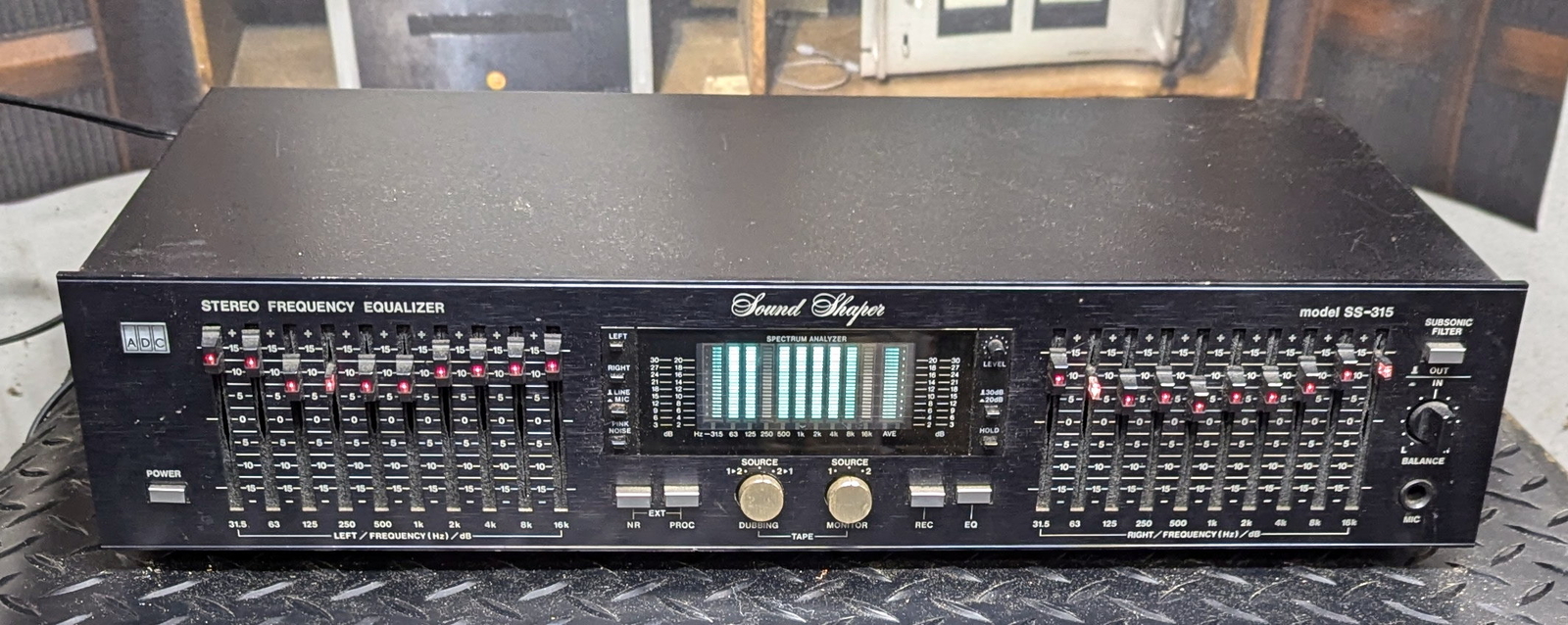
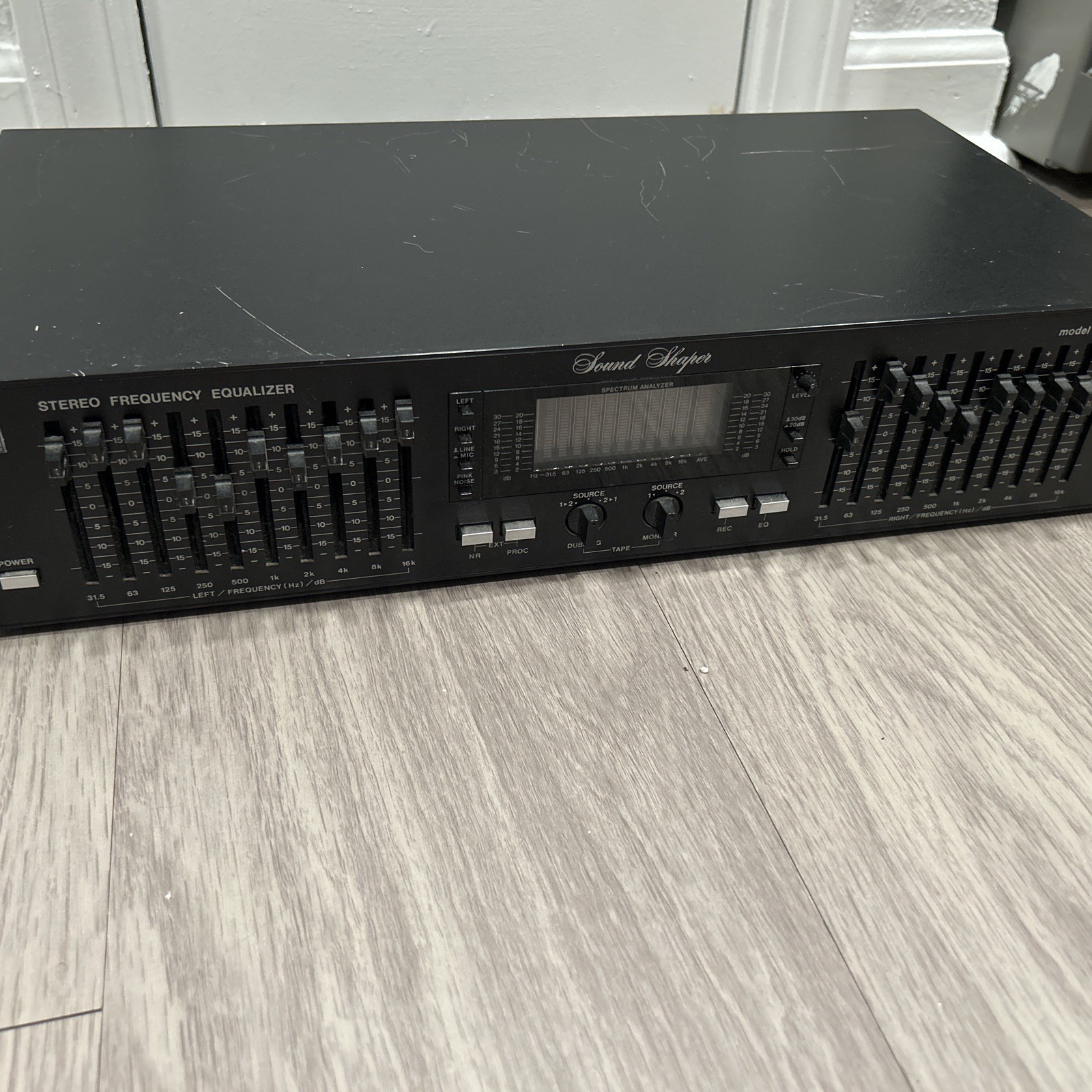
You unbox it and feel like you’ve stumbled onto a piece of lab equipment from a 1980s hi-fi dream: ten chunky sliders per channel, a fluorescent bar-graph spectrum analyzer that dances like a disco heartbeat, and a bright orange power switch that clicks with satisfying finality. The ADC Sound Shaper 315 isn’t subtle. It doesn’t whisper; it announces itself with the visual drama of a mixing console and the promise of sonic perfection. But behind that retro-futuristic glow lies a machine that split opinions—some swear by its corrective power, while others quietly unplugged it after a week of ear-bleeding pink noise.
This was one of the first consumer-grade graphic equalizers to come packed with a built-in pink noise generator and real-time analyzer, aimed at the DIY audiophile who wanted to “tune” their room like an engineer. That alone made it revolutionary in the early '80s, when most listeners accepted their speakers’ flaws as gospel. The Shaper 315 said: *No. You can fix this.* And so began the ritual—microphone on a tripod, sliders flat, the room filled with that maddening, brain-piercing hiss, eyes locked on the dancing green bars, hands twitching sliders in search of a flat line. But here’s the thing: flat on paper rarely sounds flat to the ear. And the microphone that came with it? More on that later.
It wasn’t a preamp, not really—it was a line-level processor, meant to sit between your source and amplifier. Passive tone controls had long been the norm, but this was different: surgical, obsessive, almost clinical. And while it could smooth out a boomy bass or harsh treble, it could just as easily turn a warm system into something cold and overcorrected. The EQ curve you dialed in wasn’t always the one you heard. Phase shifts, interaction between bands, and the inherent limitations of 1/3-octave spacing meant that chasing perfection could lead you further from good sound. Still, for those willing to experiment, it offered a level of control that felt like holding the reins of your listening room for the first time.
Specifications
| Manufacturer | ADC Sound (Audio Dynamics Corporation) |
| Production Years | Early 1980s – Early 1990s |
| Original Price | $249 (circa 1990) |
| Type | Stereo Graphic Equalizer with Spectrum Analyzer |
| Frequency Bands | 10-band per channel (31.5Hz, 63Hz, 125Hz, 250Hz, 500Hz, 1kHz, 2kHz, 4kHz, 8kHz, 16kHz) |
| Adjustment Range | ±15 dB per band |
| Inputs | 1 pair RCA (unbalanced) |
| Outputs | 1 pair RCA (unbalanced) |
| Microphone Input | 3.5mm jack for electret condenser microphone |
| Signal Generator | Built-in pink noise generator |
| Display | Fluorescent dual-column bar graph spectrum analyzer (10-segment per channel) |
| Power Supply | Internal linear transformer, 120V AC |
| Dimensions | 19" (width) × 5.5" (height) × 10" (depth) |
| Weight | 12 lbs (5.4 kg) |
| Color | Black metal chassis with silver faceplate accents |
| Compatibility | Universal line-level analog audio systems |
Key Features
The All-in-One Tuning Station
What set the Shaper 315 apart from cheaper EQs wasn’t just the sliders—it was the whole tuning ecosystem. The built-in pink noise generator and spectrum analyzer turned it into a self-contained measurement rig. No need for external test gear or guesswork; in theory, you could achieve a flat frequency response just by following the lights. The fluorescent display, while primitive by modern standards, was mesmerizing—each band lit up in real time, responding to the room’s acoustics with eerie precision. It made you feel like you were doing science, not just listening. And for a certain kind of tinkerer, that was half the appeal.
But the system had a fatal flaw: the stock electret condenser microphone. Multiple owner reports describe it as severely rolled-off at both extremes, with a pronounced dip in the midrange—basically, a smile-shaped response curve. That meant the analyzer was lying to you. You’d boost the bass and treble to make the display flat, only to end up with a bloated, harsh sound. It wasn’t until users started swapping in better measurement mics—like the RCA clip-on models—that the system began to deliver on its promise. The lesson? The Shaper 315 was only as good as the mic you fed it.
Build and Layout: Built Like a Tank, Wired Like a Compromise
The chassis is heavy, all-metal, and built for rack mounting—no flimsy plastic here. The sliders are smooth but not silky, with a slight resistance that makes fine adjustments possible. The layout is logical: input and output on the back, mic input and power on the front, with the analyzer display dominating the center. But the internal wiring and circuit design reveal cost-cutting. While the signal path is straightforward, the power supply is a known weak point. Service technicians observe that the internal transformer, especially in units from the late '80s, is prone to overheating and failure. When it goes, it often takes the rectifier and filter caps with it. And because replacement transformers are no longer made to spec, repairs can be a scavenger hunt.
Still, the simplicity of the design means that, when working, it’s reliable. No microprocessors, no digital logic—just op-amps, resistors, and capacitors doing their job. That also means no presets, no memory, no remote. What you see is what you get. And if you want to switch between “flat” and “rock & roll,” you’d better remember your settings or write them down.
Historical Context
The Shaper 315 emerged at a time when home audio was becoming both more sophisticated and more accessible. The late '70s and early '80s saw a boom in component stereo systems, and with it, a growing awareness of room acoustics. Audiophiles were no longer satisfied with just better speakers—they wanted better sound *in their rooms*. Graphic equalizers had existed in pro audio for years, but they were expensive, bulky, and intimidating. ADC, originally known for its phonograph cartridges and the short-lived Accutrac turntable, saw an opportunity: bring pro-style correction to the living room.
They weren’t the only ones—Peavey, Rane, and even RadioShack dabbled in consumer EQs—but ADC was among the first to package it with a real-time analyzer. That made it a favorite in both home and semi-pro circles. It was widely advertised through DAK Industries, a mail-order catalog that specialized in audio tweaks and budget upgrades. For a generation of DIYers, the Shaper 315 was the gateway to room correction.
By the late '80s, ADC had been acquired by BSR, the British turntable manufacturer, and the Shaper line continued under that branding. The BSR-branded SS-315 units are functionally identical but lack the spectrum analyzer and noise generator—stripped-down versions for a more price-sensitive market. The original ADC version, with the full suite of tools, became the collector’s choice, even if its reputation was mixed.
Collectibility & Value
Today, the ADC Sound Shaper 315 is a cult oddity—a conversation piece as much as a functional tool. On the used market, prices are low, typically between $50 and $150, depending on condition and whether it includes the original microphone. But here’s the catch: most units sold online are untested. And given the age of the electrolytic capacitors and the strain on the power transformer, that’s a gamble.
Common failures include dead power supplies (the transformer hums then cuts out), intermittent sliders (due to dust and oxidation), and failed fluorescent displays (dim or flickering bars). The pink noise generator can also drift or cut out, rendering the analyzer useless. A full service—recapping, cleaning controls, checking the transformer—can easily cost $100–$150, which may exceed the value of the unit. That makes it a project for the patient hobbyist, not the plug-and-play buyer.
If you’re considering one, test it thoroughly: listen for hum, check that all sliders move smoothly, verify the analyzer responds to input, and confirm the noise generator produces a steady tone. And if the seller claims the original mic is included, treat it as a bonus, not a feature—plan to replace it anyway. For under $100, it’s a fun experiment. For more, you’re paying for nostalgia, not performance.
Still, there’s a quiet resurgence of interest. Some modern digital room correction systems feel too clinical, too automated. The Shaper 315, with its hands-on approach and analog quirks, offers a tactile alternative. It won’t replace a MiniDSP or Dirac, but it might just teach you more about your room than any software ever could.
eBay Listings


As an eBay Partner, we earn from qualifying purchases. This helps support our independent vintage technology research.