ADC RSQ30 (c. ?)
A high-polished diamond stylus crafted in Japan, built for precision tracking and long life on 33 and 45 RPM vinyl
Overview
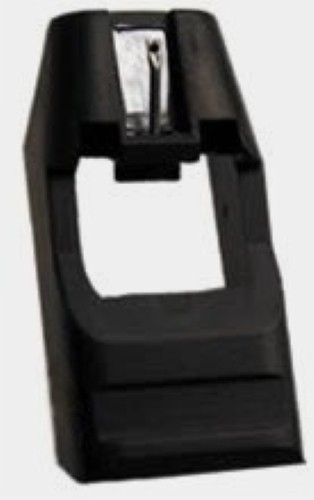
If you’ve ever winced at the sound of a worn needle dragging across a favorite LP, you know why the ADC RSQ30 matters. It’s not a cartridge, not a turntable—just a tiny, meticulously engineered piece of the playback chain: the stylus. But within that sliver of diamond and metal lies the difference between music and noise. The RSQ30 is a replacement needle designed for a specific generation of ADC cartridges, most notably the QLM-30 series, and it’s built to deliver what audiophiles from the analog era demanded—detail, clarity, and a lifespan that justifies the care. This isn’t a mass-market stylus slapped together overseas; it’s a component made in Japan by master artisans, or *shokunin*, a term that carries weight when applied to audio parts. These are the people who understand that a micron here or a curve there can change how a cello breathes or a snare drum cracks.
The RSQ30 fits a family of ADC cartridges including the QLM-30 Mk 2, Mk 3, and MK III, as well as the K8, RSQ31, RSQ32, and RSQ33. That kind of cross-compatibility suggests ADC had a modular design philosophy—build a solid cartridge platform and let users swap styli as needed. Smart, practical, and very much in line with how serious listeners maintained their gear. The stylus itself uses a special elliptical tip profile, which means it makes more precise contact with the record groove than a conical tip, translating to better high-frequency response and reduced distortion. It’s designed to track the groove almost exactly like the cutting stylus that made the original master disc—a claim often made, but one that carries more credibility when the tip is hand-assembled by specialists in Japan.
And yes, you can still get one. Not the original ADC-branded unit necessarily, but a “brand new special production” replacement stylus that carries the same specs and intent. That’s no small thing. Many vintage styli are long out of production, their replacements either poor copies or nonexistent. The fact that the RSQ30 lives on in fresh production—offered by specialists like LP Gear and others—speaks to its reputation and the enduring demand for quality analog playback parts.
Specifications
| Manufacturer | ADC |
| Product type | Replacement stylus (needle) for a phono cartridge |
| Stylus tip shape | Special elliptical |
| Stylus tip radii | .0003 x .0007 inch |
| Stylus tip material | High polished diamond, titanium bonded |
| Stylus tip size | 7 MIL |
| Cantilever description | Custom thin-wall cantilever |
| Tracking force range | 3-5g |
| Compatible record speeds | Plays 33 and 45 RPM records |
| Compatible cartridges | ADC QLM-30 Mk 2, ADC QLM-30 Mk 3, ADC QLM 30 MK III, ADC K8, ADC RSQ31, ADC RSQ32, ADC RSQ33 cartridges |
| Manufacturer reference (for replacement stylus) | 1229-D |
| Replacement stylus part number | Stylus 111-D7C |
| Country of manufacture (for replacement stylus) | Made in Japan |
Key Features
Japanese Craftsmanship, Precision Engineering
The ADC RSQ30 isn’t stamped out by the thousands in an anonymous factory. It’s made in Japan by master artisans—*shokunin*—a term that implies not just skill but dedication to the craft. This isn’t marketing fluff; it’s a nod to the level of care that goes into assembling a stylus where tolerances are measured in microns. These are the people who know how to bond a diamond tip to a cantilever without compromising resonance or alignment. The result is a stylus that’s not just durable but sonically transparent, letting the record speak for itself.
Titanium-Bonded Diamond Tip
At the heart of the RSQ30 is its high-polished diamond tip, bonded to the cantilever with titanium. This isn’t just about durability—though that’s a big part of it. Titanium bonding helps maintain rigidity and reduce energy loss at the tip-cantilever junction, which can smear transients and blur detail. The tip itself is shaped to a precise .0003 x .0007 inch radius, forming a special elliptical profile that fits deeper into the groove walls. That means it tracks high-frequency modulations more accurately than a conical tip, especially on older or heavily played records where groove wear is a factor.
Optimized for Analog Fidelity
The elliptical profile isn’t just a spec—it’s a philosophy. As one supplier puts it, advanced stylus profiles like this one “offer much improved sound quality, extended stylus life, extended HF response & tracking almost exactly duplicates the shape of the cutting stylus used to produce the original master disc.” That’s the goal, isn’t it? To get as close as possible to what the engineer heard in the studio. The RSQ30’s design suggests ADC was chasing that ideal, building a stylus that doesn’t just play records but respects them.
Custom Thin-Wall Cantilever
While the fact sheet doesn’t specify the cantilever material, it does describe it as a “custom thin-wall cantilever,” which implies a design focused on low mass and high rigidity. A lighter cantilever can respond faster to groove modulations, improving transient response and reducing tracking error. Whether it’s aluminum, boron, or another material isn’t confirmed—but the emphasis on “custom” suggests it wasn’t an off-the-shelf component. Paired with the titanium-bonded diamond tip, it forms a system engineered for accuracy, not just longevity.
Collectibility & Value
The ADC RSQ30 stylus remains available as a new replacement part, priced around $32.94 from specialty retailers. On eBay, listings have appeared around €32.59 (approximately US $34.83), while Amazon.co.uk shows a price of £40.54—suggesting some variance based on region and brand. The replacement stylus is sold under multiple part numbers, including 1229-D (Tonar), 111-D7C (turntableneedles.com), and AD105-7D (Astatic packaging), indicating it’s been rebranded across suppliers. This kind of after-market support is a quiet win for vintage audio owners—no scavenging through dead-stock bins or paying collector premiums for NOS (new old stock) parts.
Customer ratings for replacement versions are mixed but limited: a 2.0 out of 5 stars on Amazon.fr based on a single review, versus a 5.0 out of 5 stars from two reviewers on Amazon.co.uk, one of whom called it a “Top Quality Replacement needle.” With such a small sample size, it’s hard to draw conclusions—especially since the rating may reflect the rebranded product (like Tonar) rather than the original ADC spec. Still, the fact that it’s still being produced and sold as a “brand new special production” item speaks volumes. It’s not a relic; it’s a working part for people who still care about how their records sound.
Original pricing, production years, and detailed performance specs for the ADC RSQ30 cartridge or stylus have not been confirmed. There’s also no data on common failures or long-term maintenance issues with the original units. But given that replacement styli are still being made and used, it’s safe to assume the design was robust enough to earn a lasting place in the analog ecosystem.
eBay Listings


As an eBay Partner, we earn from qualifying purchases. This helps support our independent vintage technology research.