ADC RLMA-3 (1970s–1980s)
A whisper-light stylus that danced across grooves with surgical precision—when you could keep it from skipping warp after warp.
Overview
Pull the dust cover off an ADC LMA-3 cartridge, and there it is: the RLMA-3 stylus, a fragile-looking needle assembly that somehow managed to extract more musical detail from vinyl than almost anything else in its price bracket. This wasn’t a cartridge for the casual listener stacking records on a console; it was gear for the tweaker, the tonearm tinkerer, the person who spent Saturday morning balancing VTF with a digital scale. The RLMA-3 stylus paired with the ADC LMA-3 moving magnet cartridge to deliver a rare combination of high compliance and low tracking force—just 0.75 to 1.0 grams, depending on alignment—which meant it floated over the groove like a leaf on water. That light touch spared records, yes, but it also made the setup unforgiving. A warped LP? That stylus would launch into orbit. A slightly unlevel turntable? Cue the mistracking on inner grooves. Yet when everything was dialed in—arm mass matched, azimuth perfect, anti-skate calibrated—the sound was revelatory: airy highs, a midrange that didn’t shout or recess, and bass that felt present without bloat.
ADC, or Audio Dynamics Corporation, built its reputation in the 1970s on compliance. While many manufacturers chased output voltage or ruggedness, ADC went the opposite direction—building cartridges that moved easily, with suspension systems that responded to the tiniest groove modulation. The LMA-3 was part of that philosophy, and the RLMA-3 stylus was its business end: an elliptical nude diamond mounted on a lightweight aluminum cantilever. It wasn’t the most exotic profile by today’s standards, but in its era, it offered a significant leap over the spherical tips found on budget cartridges. The elliptical tip had a narrower contact radius, allowing it to trace high-frequency modulations more accurately and dig deeper into groove walls where stereo information hides. It wasn’t a Shibata or a line contact—those came later and cost twice as much—but for under $150 new, it punched well above its weight.
And punch it did, especially in the upper mids and treble. There was a clarity to cymbals, strings, and vocal sibilance that bordered on clinical if mismatched, but in the right system—paired with a warm tube preamp or a slightly forgiving arm—it sang. The trade-off was fragility. The RLMA-3 stylus wasn’t just delicate in use; it was delicate in handling. A stray brush from a carbon fiber brush, a clumsy alignment protractor, or even improper cartridge removal could misalign the cantilever. Once bent, the stylus was done—no user-serviceable parts here. And because ADC vanished from the market in the late '80s, there’s no factory support, no warranty replacements, no second chances. Each RLMA-3 stylus you find today is a finite resource, pulled from old stock or salvaged from a forgotten cartridge.
Specifications
| Manufacturer | ADC (Audio Dynamics Corporation) |
| Production Years | 1970s–1980s |
| Original Price | $119.99 (as replacement stylus) |
| Stylus Type | Elliptical Nude Diamond |
| Cantilever | Aluminum |
| Tracking Force | 0.75–1.0 grams |
| Compliance | High (exact figure not specified in research) |
| Tip Radius | 0.5 x 0.2 mil (elliptical) |
| Mounting | ½-inch |
| Used With | ADC LMA-3, ADC LMA-1 phono cartridges |
| Replacement For | ADC LMA-3 cartridge stylus assembly |
| Weight | Not specified (stylus assembly only) |
| Output Voltage | Not applicable (stylus only) |
| Frequency Response | Dependent on host cartridge (LMA-3) |
| Channel Separation | Dependent on host cartridge |
| THD | Dependent on host cartridge |
| Recommended Load Impedance | 47kΩ (via LMA-3 cartridge specs) |
| Recommended Load Capacitance | 100–200 pF (via LMA-3 cartridge specs) |
Key Features
Elliptical Nude Diamond for Precision Tracking
The RLMA-3’s elliptical nude diamond tip was a step up from the bonded spherical styli common in mid-tier cartridges of the 1970s. By shaping the diamond from a solid piece and mounting it directly to the cantilever—rather than bonding a small diamond chip to a metal shank—ADC reduced tip mass significantly. Lower mass meant faster transient response and less inertia, allowing the stylus to follow rapid groove modulations without smearing. The elliptical profile, with its dual-radius geometry, contacted the groove wall more like the original cutting stylus used in lacquer mastering, improving stereo separation and high-frequency retrieval. It wasn’t immune to wear—nude diamonds still degrade—but it lasted longer than bonded equivalents and sounded better throughout its life.
Designed for High-Compliance Systems
The RLMA-3 wasn’t a universal upgrade. It demanded a tonearm with low effective mass to avoid resonance issues. Pair it with a heavy SME or Rega arm without recalculating compliance, and the system would boom in the bass or skip at the slightest warp. But on low-mass arms like the Grace 707 or ADC’s own Infinity Black Widow, it was magic. The high compliance allowed the suspension to absorb low-frequency vibrations, reducing feedback and improving tracking on warped records—provided the warp wasn’t too severe. This made the RLMA-3 a favorite among audiophiles who valued detail over durability, and who were willing to invest time in setup.
Part of the ADC Accutrac Line
The RLMA-3 stylus was a key component of ADC’s Accutrac series, a family of cartridges and styli designed around low tracking force and high compliance. The “Accutrac” name wasn’t just marketing—it reflected a design philosophy rooted in Peter Pritchard’s earlier work at General Electric on variable reluctance cartridges. ADC’s designs, including the LMA-3, used a magnetically induced system that differed from both traditional moving magnet and moving coil topologies. The result was a cartridge that offered MC-like detail with MM-level output and easier loading. The RLMA-3 stylus was the final link in that chain, translating groove motion into electrical signal with minimal loss.
Historical Context
The 1970s were a golden age for phono cartridge innovation. With vinyl at its commercial peak, manufacturers raced to improve fidelity, tracking ability, and channel separation. ADC entered this arena not as a mass-market player but as a specialist. While Shure and Audio-Technica dominated with rugged, reliable designs for the home user, and Ortofon and Denon catered to the high-end moving coil crowd, ADC carved out a niche with ultra-compliant, low-mass cartridges aimed at the critical listener. The LMA-3, fitted with the RLMA-3 stylus, was positioned just below the flagship ZLM III—ADC’s most exotic design, built for ultra-low-mass arms and prone to skipping if mishandled. The RLMA-3 offered most of that performance at a lower price, making it a sweet spot for enthusiasts who wanted high-end tracking without the fragility of the ZLM line.
ADC’s founder, Peter Pritchard, had worked at General Electric on early variable reluctance designs, and that legacy lived on in the “Induced Magnet” technology used in ADC cartridges. It wasn’t a pure moving magnet system; instead, it used a fixed coil and a moving magnet assembly, with magnetic flux variation induced by the stylus motion. The result was a design that combined the robust output of MM cartridges with the low moving mass often associated with MCs. When the RLMA-3 stylus was paired with this system, the cartridge could resolve fine detail without requiring a high-gain, noisy MC preamp. That made it appealing in an era when many audiophiles still used integrated amps with built-in phono stages.
By the 1980s, however, the rise of the CD and the consolidation of the hi-fi industry began to squeeze out niche players like ADC. The company was sold in the late '70s, and Pritchard went on to form Sonus, where he continued developing high-end cartridges. ADC’s product line slowly faded, and by the end of the decade, replacements for the RLMA-3 stylus became scarce. Today, it exists only as a replacement part—no new production, no official support.
Collectibility & Value
Finding a genuine ADC RLMA-3 stylus in NOS (new old stock) condition is like spotting a unicorn at a garage sale—possible, but increasingly rare. Most surviving units are either already mounted or have been sitting in drawers for decades, their rubber suspension potentially hardened or degraded. On the open market, prices range from $100 to $150 for a new-in-box unit, with some sellers asking more if the original packaging and foam insert are intact. Used but functional styli go for $60–$90, but buyers should be cautious: there’s no way to verify wear without mounting and testing, and a misaligned cantilever can ruin both the stylus and your records.
The biggest risk isn’t just age—it’s compatibility. The RLMA-3 stylus was designed specifically for the LMA-3 and LMA-1 cartridges. While some third-party vendors offer “compatible” replacements, they often use bonded tips or different cantilever materials, sacrificing the low mass and precision of the original. Jico, LP Gear, and SNVinyl offer aftermarket versions, but none are exact clones. Jico’s version, for example, uses a nude diamond but may differ in tip geometry. If you’re restoring an LMA-3 cartridge, sticking with a genuine ADC RLMA-3 is the only way to preserve original performance.
For collectors, the RLMA-3 stylus is a footnote in the larger story of ADC’s engineering legacy. It’s not a standalone collectible like a Denon DL-103 or a Koetsu, but it’s essential for anyone maintaining or restoring an LMA-3 cartridge. Because the stylus is the wear item, its availability directly affects the usability of the parent cartridge. As NOS supplies dwindle, the RLMA-3 may become a bottleneck for vintage ADC ownership—making unmounted, well-preserved units quietly valuable.
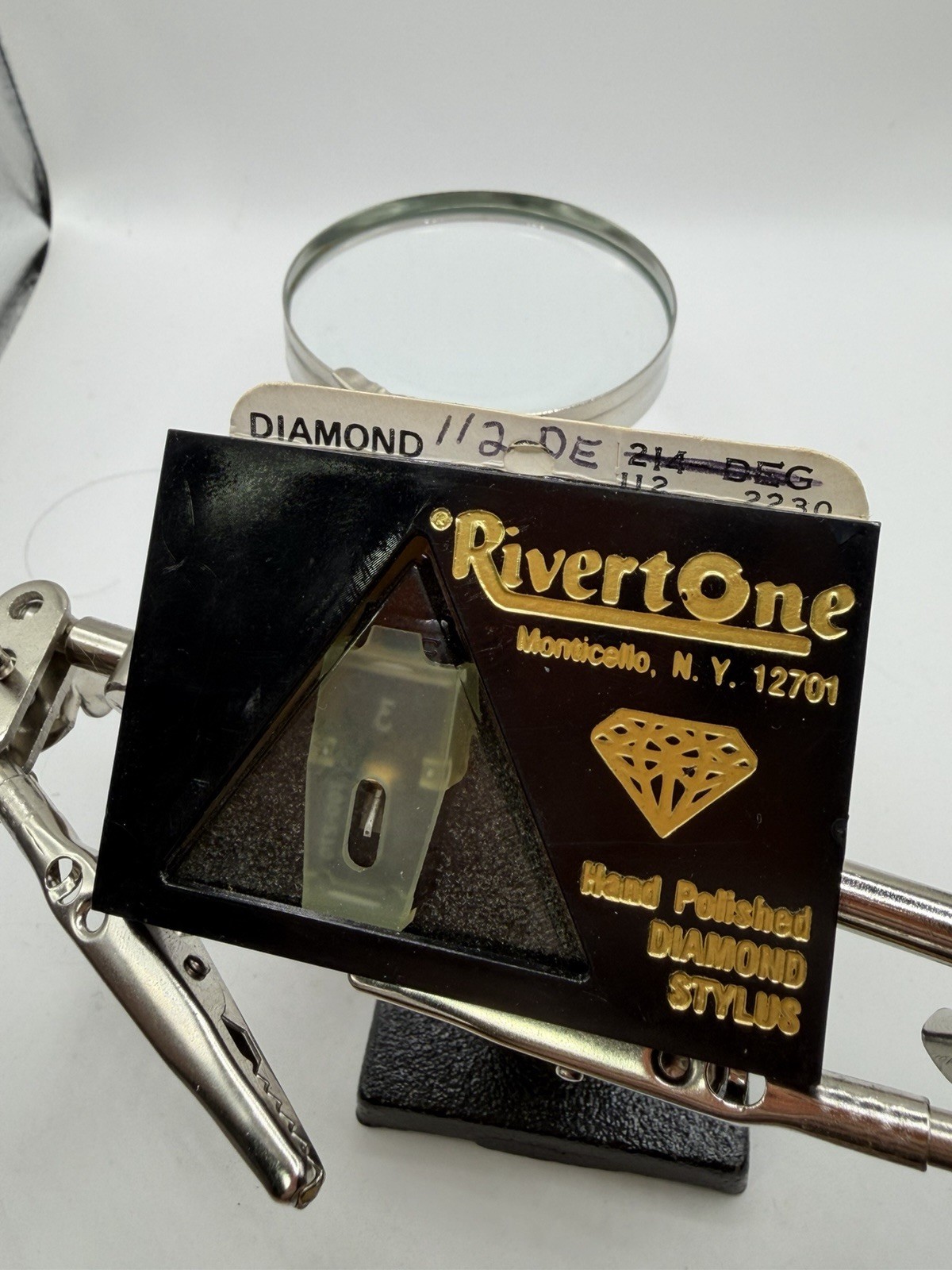
When buying, inspect the stylus under magnification. Look for chipped or worn diamond tips, bent cantilevers, or debris in the mounting slot. Never touch the diamond tip with anything but a carbon fiber brush, and store the stylus in its protective cap. And if you’re using one: recalibrate tracking force every few months. These things don’t forgive sloppiness.
eBay Listings

As an eBay Partner, we earn from qualifying purchases. This helps support our independent vintage technology research.