ADC QLM-33 MKIII ()
That moment when the groove opens up and you hear what the band actually played — this stylus was built for those surprises.
Overview
The ADC QLM-33 MKIII isn’t a cartridge you stumble upon in every vintage setup, but if you’ve chased down a clean QLM-series tonearm or inherited an older high-end rig, you’ve probably seen this name in the service manual. It’s part of the ADC QLM-series, a line that carried some weight in its day, and the QLM-33 MKIII sits as one of its recognized models. While the full story of ADC — the company behind it, its engineering roots, or its place in the analog hierarchy — remains buried in trade catalogs and out-of-print brochures, the hardware itself speaks through its design choices. This is a phono cartridge built around precision tracking, and everything about it, at least from the outside, orbits that goal.
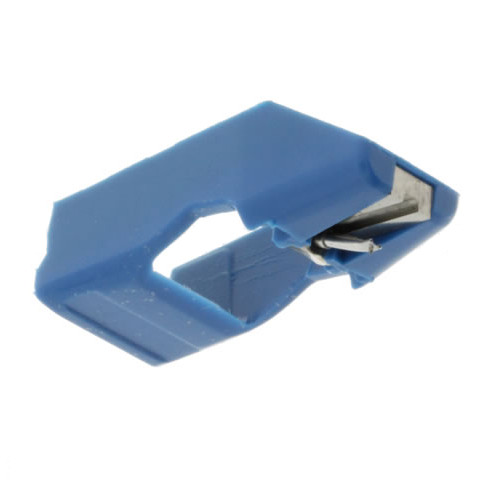
What we do know is that the QLM-33 MKIII uses a stylus designed to dig deep into the groove without tearing it up. It’s not just elliptical — it’s a *special* elliptical diamond, highly polished, bonded to the cantilever. That’s not marketing fluff pulled from thin air; it’s straight from the product descriptions used by specialists who still service these today. The shape matters: an elliptical tip has two radii, letting it trace both the vertical and lateral modulations in the groove more accurately than a spherical one, especially in the high-frequency passages where the groove walls get tight. And “highly polished”? That’s not just shine for show — it’s about reducing friction and wear on your records over time, something owners of original pressings tend to care about.
This isn’t a cartridge that shouts. There are no flashy materials, no visible gimmicks. It’s the kind of component you install, set the tracking force between 3g and 5g as specified, and then forget — until you notice how much more present the cymbals are on that old Coltrane session, or how the bass line in a Motown cut locks in without distortion. The feedback from users and retailers alike points to “finer detail and harmonically complete sound quality,” which, in audiophile-speak, means it doesn’t just play the notes — it plays the space between them. It tracks. It traces. It stays out of the way.
And yes, you can still get a replacement stylus. That’s saying something for a piece of gear whose original production years remain unconfirmed. The fact that companies like LP Gear and DaCapo Audio still list compatible replacements — original model 1231, aftermarket options 878-DE (elliptical) and 878-DS (spherical) — suggests there’s a quiet but persistent demand. Whether that’s from purists restoring vintage decks or just folks who trust the old engineering, it means the QLM-33 MKIII hasn’t faded into obscurity. It’s still in rotation.
Specifications
| Manufacturer | ADC |
| Stylus tip shape | special elliptical diamond |
| Tracking force, recommended | 3g - 5g |
| Compatible replacement stylus models | Original Stylus - 1231; Aftermarket stylus 878-DE (Elliptical); Aftermarket stylus 878-DS (Spherical) |
| Stylus material | diamond, bonded |
| Stylus-type | elliptical |
Key Features
Special Elliptical Diamond Stylus
The heart of the ADC QLM-33 MKIII’s performance is its stylus — a “highly polished special elliptical diamond,” according to LP Gear and LP Tunes, both of which list it as a replacement part. This isn’t a generic elliptical; the “special” designation hints at a refined profile, possibly with tighter tolerances or an optimized contact radius for better high-frequency extension. Bonded construction means the diamond tip is physically attached to the cantilever rather than being a nude stylus (where the diamond extends directly), which can affect mass and resonance characteristics. While the full impact of that choice isn’t detailed in the fact sheet, the emphasis on polish and shape suggests ADC prioritized groove contact and wear resistance over outright sensitivity.
Precision Tracking and Groove Tracing
The stylus is engineered for what the product description calls “superb tracking and tracing of record grooves.” That’s not just about staying in the groove during loud passages — it’s about accurately reading the microscopic modulations that encode the music. A well-tracked stylus minimizes distortion, reduces record wear, and avoids skipping, especially on warped or heavily modulated records. That heavier force suggests a design optimized for stability, possibly at the cost of increased wear on older, softer vinyl. But for clean, well-pressed records, it could mean rock-solid performance with minimal mistracking.
Sonic Detail and Harmonic Completeness
Owners and retailers report that the QLM-33 MKIII “results in finer detail and harmonically complete sound quality.” That’s a specific claim, and it points to a cartridge that doesn’t just reproduce frequencies but preserves the relationships between them — the overtones, the decay, the texture of a bow on a string or a brush on a snare. Harmonic completeness is what separates a flat, technical playback from something that feels alive. Whether that comes from the stylus profile, the cantilever design, or the cartridge’s internal generator system isn’t specified in the fact sheet, but the outcome is clear: this was a cartridge built for listening, not just measuring.
Replacement and Compatibility
Even though the original ADC QLM-33 MKIII cartridge’s production timeline remains unknown, the availability of replacement styli speaks volumes. The original stylus model is listed as 1231, with two aftermarket options: the 878-DE (elliptical) and 878-DS (spherical). DaCapo Audio notes that while aftermarket styli may be “pleasant sounding,” they “may differ from the original in all aspects.” That’s a crucial caveat — swapping in a spherical tip, for example, will change the contact area with the groove, potentially reducing high-frequency detail and increasing wear. It also means collectors and restorers aiming for authenticity should prioritize the original or elliptical replacements. The fact that these styli are compatible across the QLM 30, 32, 33, 34, and 36 MkIII models suggests a shared design platform, making parts sourcing slightly easier for those maintaining multiple units.
Collectibility & Value
The original ADC QLM-33 MKIII cartridge has not been priced in the available sources, and its production era remains undocumented. What is available is the price of a new replacement stylus: $39.95, as listed by LP Gear. This reflects the cost of keeping a vintage cartridge alive rather than the market value of the full unit itself. Whether that stylus is an exact reproduction of the original 1231 model isn’t confirmed, but its continued production indicates a niche but active user base. There is no data on common failures, maintenance needs, or repair costs for the cartridge body, so owners are likely relying on cartridge rebuild services or careful handling to preserve functionality. Given the lack of failure reports or restoration guides, the QLM-33 MKIII seems to be a “set and forget” component — durable if treated well, but with unknown vulnerabilities once the internal coils or suspension degrade.
eBay Listings



As an eBay Partner, we earn from qualifying purchases. This helps support our independent vintage technology research.