ADC PSX-40 (1970s–1980s)
A cartridge that doesn’t shout, but whispers secrets from the groove—smooth, detailed, and disarmingly natural.
Overview
There’s a moment when you first drop the needle with an ADC PSX-40 that feels less like playback and more like eavesdropping. It’s not flashy or hyper-detailed in the clinical sense—this isn’t a cartridge trying to impress with analytical precision. Instead, it renders music with a liquidity that borders on analog sorcery, especially on vocals and acoustic instruments. The midrange blooms with a warmth that never tips into syrup, and the highs shimmer without etch. It’s the kind of phono cartridge that makes you forget you’re listening to a turntable, pulling you into the performance instead of pointing at the technology.
Manufactured by Audio Dynamics Corporation during the golden era of high-end moving magnet cartridges, the PSX-40 occupies a quiet but respected corner of the analog pantheon. It wasn’t the flagship—ADC’s XLM and ZLM lines held that honor—but it was the sweet spot for many: a cartridge that delivered 90% of the top-tier performance at a fraction of the cost. Built around ADC’s proprietary “Induced Magnet” design, a variation on the variable reluctance principle pioneered under General Electric patents and refined by ADC founder Peter Pritchard, the PSX-40 benefits from high compliance and low moving mass. This translates to excellent groove tracking with minimal wear, even on well-played records, provided it’s set up correctly.
The original stylus is a nude elliptical diamond with a 0.2 x 0.7 mil profile, polished to a mirror finish for optimal high-frequency retrieval. Paired with its 5.5 mV output—slightly higher than many of its contemporaries—it drives most MM inputs without strain, though some users report a 3.5 mV figure in older brochures, suggesting minor production variances over time. The recommended tracking force sits at a featherlight 1.75 grams, with a usable range from 1.25 to 2.5 grams, making it gentle on vintage vinyl. Its compliance of around 20–25 cm/N (implied by user reports and design lineage, though not explicitly stated in surviving specs) means it pairs best with medium- to low-mass tonearms; pairing it with a heavy SME or older AR arm can lead to resonance issues.
Specifications
| Manufacturer | ADC (Audio Dynamics Corporation) |
| Production Years | 1970s–1980s |
| Original Price | $149 (cartridge with half-inch mount adaptor) |
| Type | Moving Magnet (Induced Magnet design) |
| Output Voltage | 5.5 mV per channel at 1 kHz, 5 cm/sec |
| Channel Balance | 2.0 dB at 1 kHz |
| Channel Separation | 24 dB at 1 kHz |
| Frequency Response | 15–22,000 Hz ± 2 dB |
| Stylus Type | Nude Elliptical Diamond |
| Stylus Tip Radius | 0.2 mil x 0.7 mil |
| Tracking Force Range | 1.25–2.5 grams |
| Recommended Tracking Force | 1.75 grams |
| Tracking Angle | 20° |
| Optimum Load | 47,000 ohms resistance, 275 pF capacitance |
| Cartridge Weight | 5.75 g |
| Mounting | Standard ½-inch (12.7 mm) |
| Replacement Stylus | RPSX-40 |
| Compliance | High (estimated 20–25 cm/N) |
Key Features
The Induced Magnet Advantage
ADC’s “Induced Magnet” system isn’t just marketing jargon—it’s a thoughtful evolution of the variable reluctance concept. Unlike traditional moving magnet designs where tiny magnets move within fixed coils, ADC’s approach uses a stationary magnet and moving iron elements to modulate flux in fixed coils. The result is lower moving mass and improved transient response. The PSX-40 benefits from this with a nimble, dynamic presentation that avoids the slight sluggishness some MM cartridges exhibit on fast transients. It tracks complex passages with ease, and its elliptical stylus digs into inner grooves without excessive distortion, making it a solid choice for dense orchestral works or jazz with layered percussion.
High Compliance, Low Tracking Force
The PSX-40’s high compliance is one of its defining traits. This means the cantilever system is forgiving of minor record warps and arm resonances, absorbing small tracking errors rather than reflecting them as distortion. But this benefit comes with a caveat: it demands careful tonearm matching. Pair it with a high-mass arm, and you’ll likely encounter a resonance peak in the upper bass or lower midrange, muddying the very clarity the cartridge is capable of. The ideal partner is a medium-mass tonearm like the SME 3009, Rega RB300, or even a well-damped Technics EPA-100. When properly matched, the bass tightens up, the soundstage opens, and the midrange gains focus.
Build and Longevity
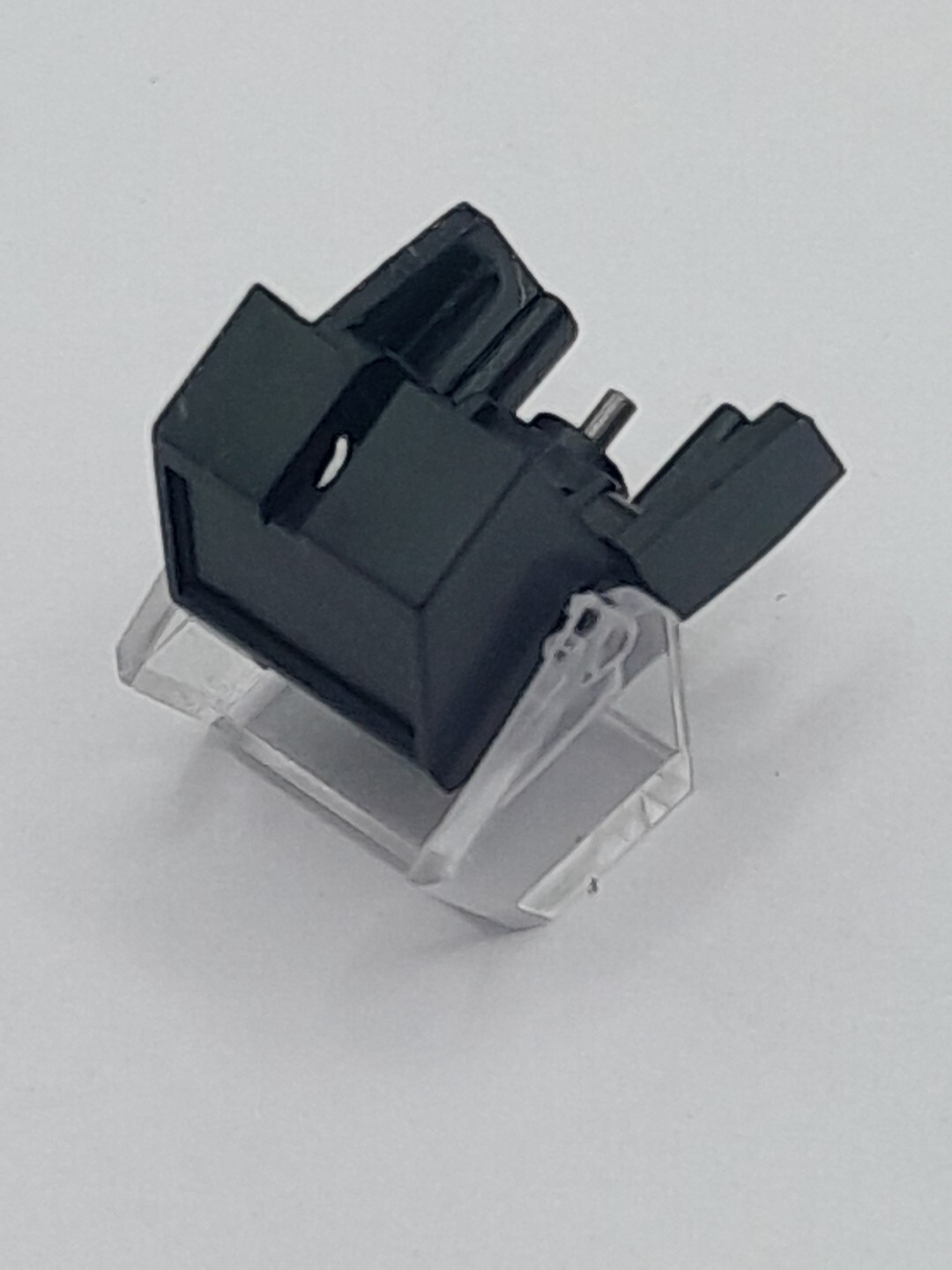
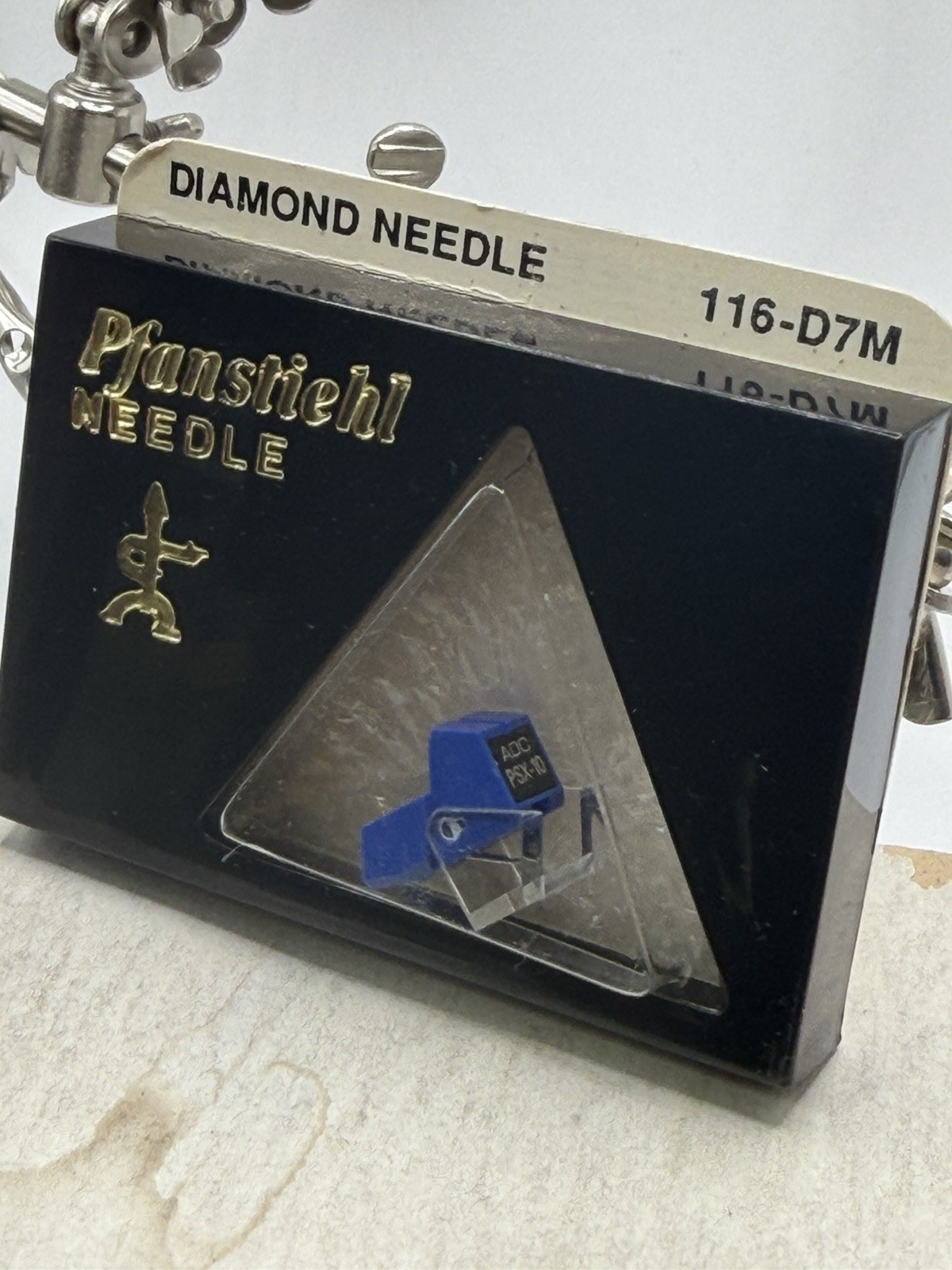
Housed in a compact gold or black metal body—Series III and IV models are noted for their gold finish—the PSX-40 exudes understated quality. There are no flashy finishes or exotic materials, just precision machining and careful assembly. The half-inch mount is standard, and the cartridge ships with an adaptor, suggesting ADC anticipated use on a wide range of turntables. While the body is robust, the real wear point is the stylus. The original RPSX-40 stylus is discontinued, but compatible replacements like the Jico SA-708 or LP Gear’s equivalent are available. Some owners swear by the Jico upgrade, citing improved clarity and reduced sibilance, though purists argue the original nude elliptical had a more balanced character.
Historical Context
The PSX-40 emerged during a boom in high-fidelity phono cartridge development—the late 1970s to early 1980s—when audiophiles were rapidly upgrading from basic ceramic cartridges to high-compliance moving magnet and moving coil designs. ADC was already a respected name, thanks to the legendary XLM series, which Harry Pearson of The Absolute Sound once called “the reference standard.” The PSX-40 was positioned as a more accessible alternative, offering much of the XLM’s smoothness and detail without the $300+ price tag. It competed directly with the Shure V15 series, the Audio-Technica AT-12E, and the Pickering XV-15, all of which emphasized high tracking ability and ruggedness. ADC, however, leaned into musicality over specs. While it didn’t boast the highest channel separation or the widest frequency response on paper, it won listeners over with its natural timbre and lack of listener fatigue.
ADC’s eventual decline mirrored that of many American high-end audio brands of the era. After Peter Pritchard sold the company in the 1970s, he went on to form Sonus, where he continued refining the induced magnet concept. ADC continued producing cartridges under new ownership, but innovation slowed. By the mid-1980s, the brand had faded from the high-end spotlight, though its products remained popular with second-hand buyers and analog loyalists. The PSX-40, never a mass-market item, survived as a cult favorite—affordable enough for enthusiasts, refined enough for critical listening.
Collectibility & Value
Today, the ADC PSX-40 trades in a quiet but steady niche. It’s not a trophy cartridge like the ZLM or XLM, but it’s far from forgotten. On the used market, a complete PSX-40 in good condition—original stylus, no cracks, clean body—typically sells for $75 to $125. Units with worn or missing styli go for $40 to $60, often snapped up by DIYers planning a Jico or LP Gear replacement. The original RPSX-40 stylus, if found NOS (new old stock), can command $50 to $80, though most buyers opt for modern equivalents.
Common failures are few but critical. The most serious is a demagnetized or degraded generator coil, which results in low output or channel imbalance. This is rare but irreversible without factory-level repair—essentially a death sentence for the cartridge. More common is stylus wear, which degrades high-frequency response and increases record wear. Owners report that the original stylus lasts around 800–1,000 hours, which is respectable but not exceptional. Another issue is loose mounting screws or worn headshell pins, especially on older examples that have been swapped between arms. Before buying, check for free play in the stylus assembly, test output with a multimeter if possible, and inspect the cantilever for straightness.
For restorers, the PSX-40 is a low-risk project. It doesn’t require exotic tools or alignment jigs, and the ½-inch mount makes it easy to install. The main cost is the stylus—budget $40–$60 for a quality replacement. Given its performance-to-price ratio, it remains one of the smarter vintage cartridge upgrades for mid-tier turntables like the Technics SL-1200, Thorens TD-160, or Dual 1219. It won’t out-resolve a modern high-end cartridge, but it delivers a distinctly vintage flavor—organic, forgiving, and deeply musical—that many find more engaging than today’s hyper-accurate but sometimes sterile designs.
eBay Listings


As an eBay Partner, we earn from qualifying purchases. This helps support our independent vintage technology research.
Service Manuals, Schematics & Catalogs
- Catalog — archive.org
- Catalog (1989) — archive.org
- Catalog — archive.org