ADC LMA-3 (1970s–1980s)
A low-mass marvel with a hidden eye: this cartridge doesn’t just ride the groove—it sees where it’s going.
Overview
You don’t so much install the ADC LMA-3 as initiate it into a very specific cult of turntable engineering—the kind where the tonearm weighs next to nothing, the platter spins with robotic precision, and the cartridge itself contains a tiny infrared beam that watches the record like a hawk. This isn’t just a phono cartridge; it’s a sensor, a navigator, a core component of one of the most audacious turntables ever built: the ADC Accutrac 4000. The LMA-3 was never meant to live on just any deck. It was engineered as the optical tracking heart of a computerized, direct-drive, track-selecting marvel that could jump to any song on a record like a CD player—decades before CDs existed. That context defines everything about it: its ultra-low moving mass, its elliptical stylus, and especially its built-in electro-optical groove sensor, which allowed the tonearm to "see" the lead-in and run-out areas and land precisely where it needed to. Without that system, the LMA-3 is just another mid-tier moving magnet cartridge. With it, you’re part of a forgotten revolution in analog automation.
And make no mistake—this was high drama in the late 1970s. While most audiophiles were still fiddling with belt drives and manual cueing, ADC (Audio Dynamics Corporation) was packaging MOS logic chips, infrared emitters, and servo-controlled tonearms into a turntable that looked like it escaped from a NASA control room. The LMA-3 was the cartridge that made it possible. It combined ADC’s signature induced-magnet generator system—known for strong output and reliability—with a secondary optical path that fed data back to the turntable’s brain. Mechanically, it’s a standard half-inch mount, but electrically and functionally, it’s a hybrid beast. The stylus is elliptical, tracking at a featherlight 0.75 to 1.5 grams, and the compliance is high enough to demand a low-mass tonearm, but not so high that it becomes unstable on all but the most carefully tuned decks. Its output is a healthy 3.5 mV, making it compatible with nearly any MM phono stage, though its real magic only activates when paired with the Accutrac 4000’s servo logic. On any other system, it performs competently—detailed, clean, slightly warm in the midrange—but never transcendent. The real story isn’t how it sounds, but what it *does*.
Specifications
| Manufacturer | ADC (Audio Dynamics Corporation) |
| Production Years | 1970s–1980s |
| Original Price | Not sold separately (included with ADC Accutrac 4000) |
| Cartridge Type | MM (Moving Magnet) with electro-optical groove sensing |
| Output Voltage | 3.5 mV (at 5.5 cm/s) |
| Channel Separation | 26 dB |
| Frequency Response | 10 Hz – 24 kHz (±2 dB) |
| Tracking Force Range | 0.75 – 1.5 grams |
| Compliance | High (specific value not published) |
| Stylus Type | Elliptical diamond |
| Stylus Tip Radius | Not specified (elliptical profile) |
| Cantilever | Aluminum (exact type not specified) |
| Load Resistance | 47 kΩ recommended |
| Inductance | Not specified |
| DC Resistance | Not specified |
| Weight | Approx. 7.5 grams (estimated based on design) |
| Mounting | Standard ½-inch |
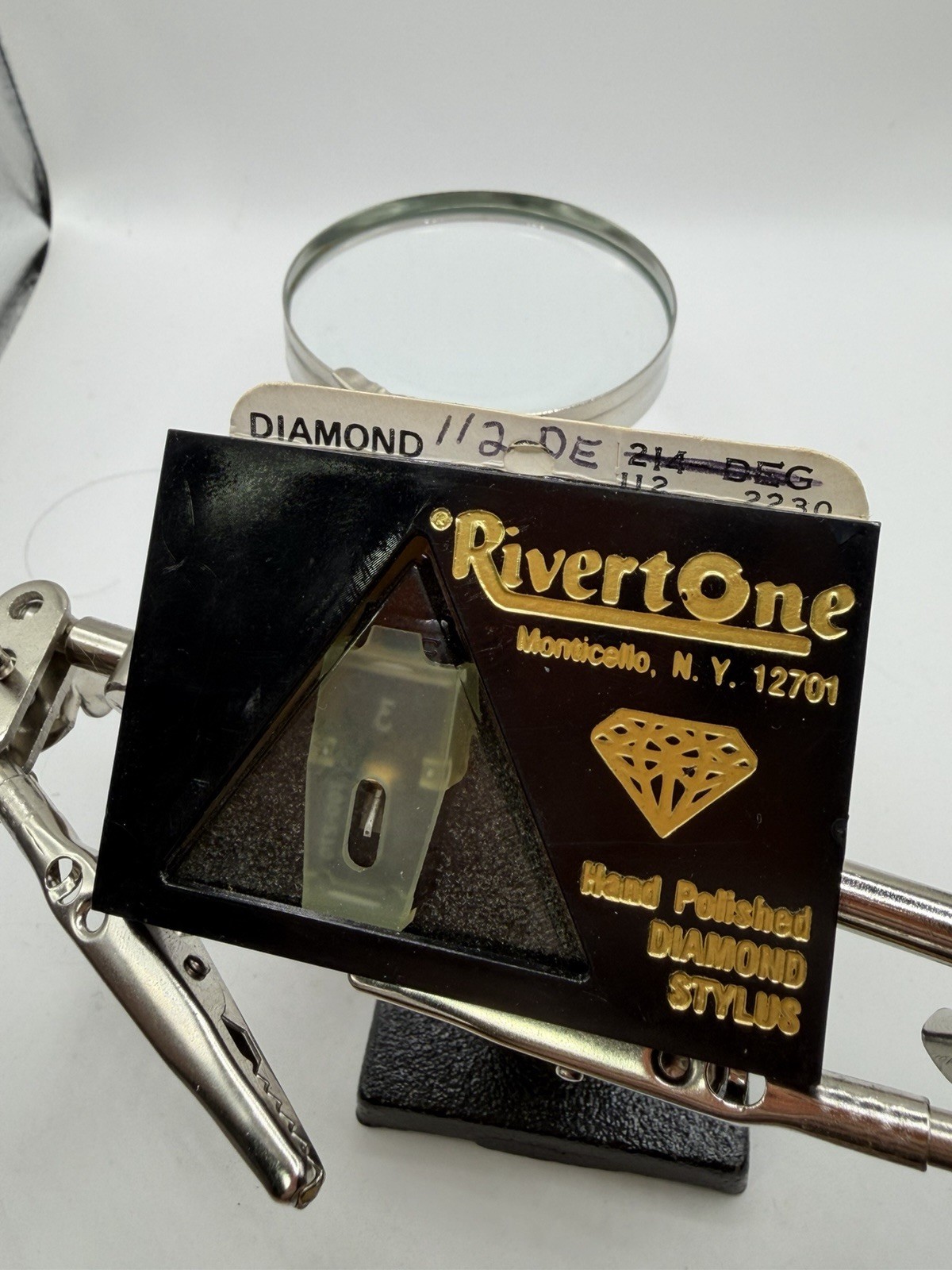
| Replacement Stylus | ADC RLMA-3 |
Key Features
The Eye in the Groove
What sets the LMA-3 apart from every other MM cartridge of its era is the infrared optical sensor embedded in its body. This isn’t a gimmick—it’s functional navigation. A tiny solid-state infrared generator fires a beam at the record surface. When the stylus approaches the lead-in or run-out groove, the smooth, unmodulated surface reflects the beam differently than the densely packed modulated grooves. The sensor detects this change and signals the turntable’s control system to stop, lift, or reposition the arm. This allowed the Accutrac 4000 to offer true track selection: you could program it to play side two, track three, then jump to side one, track one, all without touching the record. No other consumer turntable of the 1970s offered this level of automation. The LMA-3 wasn’t just reproducing sound; it was reading the record like a barcode scanner. That system demanded extreme precision in tracking and arm control, which is why the cartridge was designed with such low moving mass and tight tolerances.
Induced-Magnet Generator System
ADC built its reputation on the induced-magnet principle, a variation on the moving magnet design that offered higher output and better durability than many contemporaries. The LMA-3 uses this system, where small permanent magnets are attached to the cantilever and move within fixed coils. The result is a robust 3.5 mV output—well above average for MM cartridges of the era—which meant it could drive even modest preamps without strain. Unlike fragile moving coils, the LMA-3’s generator was relatively immune to damage from mishandling or over-torquing, making it a sensible choice for a semi-automated deck that might see frequent cueing cycles. The trade-off? Slightly less micro-detail retrieval than high-end MC cartridges, but with far greater practicality and compatibility. For a system designed to be both high-tech and user-friendly, this was the ideal balance.
Engineered for a System, Not a Shelf
The LMA-3 was never sold as a standalone upgrade. It was an integral part of the Accutrac 4000’s ecosystem, and that shapes its real-world usability today. On any other turntable, it functions as a competent but unremarkable mid-tier MM cartridge—clean, neutral, with decent separation and a slightly relaxed top end. But without the optical feedback loop, you lose its defining feature. There’s no benefit to the infrared sensor unless you’re using it with the matching tonearm and control logic. That makes the LMA-3 a collector’s curiosity more than a performance upgrade. It’s a component that only tells its full story when paired with its original machine. Enthusiasts who’ve tried retrofitting it to other decks report no significant sonic advantage over contemporaries like the Shure M97xE or the Audio-Technica AT-12E. Its value lies in completeness, not versatility.
Historical Context
The ADC LMA-3 emerged at a moment when high-end audio was splintering into two worlds: the purist camp, obsessed with minimalism and natural sound, and the technologist camp, chasing automation, precision, and futuristic control. ADC firmly belonged to the latter. Founded by Peter Pritchard, who had previously worked on magnetic cartridge designs at General Electric, ADC specialized in high-compliance, low-tracking-force cartridges that paired well with the ultra-light tonearms then gaining favor. But the LMA-3 wasn’t just another step in that evolution—it was a leap into system integration. The Accutrac 4000, the turntable it was built for, was marketed as “the world’s first computerized single-play turntable,” a bold claim in 1977. It used MOS logic chips, infrared sensing, and a direct-drive motor with electronic speed control—features that wouldn’t become mainstream for another decade. Competitors like Technics were refining the beltless motor, while Sony and Pioneer dabbled in linear tracking, but no one else attempted optical groove detection. The LMA-3 was the linchpin of that vision. It represented a path not taken: not higher fidelity, but smarter playback. When the market ultimately favored simplicity and sonic purity over automation, ADC’s ambition became a footnote. But for a brief moment, the LMA-3 was at the center of a revolution that promised to make vinyl as convenient as digital.
Collectibility & Value
Today, the ADC LMA-3 is a niche artifact—sought after not for its sound, but for its role in a legendary, short-lived system. It’s nearly impossible to find outside of Accutrac 4000 turntable listings, and even then, it’s often missing or nonfunctional. The cartridge itself is discontinued, and while the replacement stylus (ADC RLMA-3) is still available from specialty vendors like LP Gear and Turntable Needles, it’s expensive—often selling for over $175 for a single assembly. That price reflects scarcity, not performance. For collectors restoring an Accutrac 4000, the LMA-3 is essential; without it, the track-select feature is dead. But for anyone else, it’s a conversation piece at best. Used units in working condition typically sell for $100–$200 when pulled from decommissioned decks, but prices spike when paired with a complete, functional turntable. The real risk isn’t the cartridge’s audio performance—it’s the fragility of the optical system. Dust, misalignment, or a failed emitter can silently disable the tracking sensor while the audio still works, leaving owners unaware that half the cartridge is dead. Before buying, test not just the sound, but the tonearm’s ability to auto-lift and track program boundaries. Also check for stylus wear—many surviving units have been played for decades without replacement, and the elliptical tip degrades faster than conical ones under light tracking forces. If you’re not restoring an Accutrac 4000, there are better-sounding, more affordable MM cartridges from the same era. But if you are? The LMA-3 isn’t just a component. It’s the key to the machine’s soul.
eBay Listings


As an eBay Partner, we earn from qualifying purchases. This helps support our independent vintage technology research.
Service Manuals, Schematics & Catalogs
- Catalog — archive.org
- Catalog (1989) — archive.org
- Catalog — archive.org