ADC LM (1980s?)
Not one thing, but several—carbon-fiber tonearms that vanished too soon, and cartridges with a cult following that outlived their company.
Overview
Let’s clear the air first: there’s no single “ADC LM.” That name floats around forums like a ghost, but what people actually mean are two very different things—either the ADC LMF-1 or LMF-2 tonearm, or one of the high-compliance cartridges like the LM-100 MKIII. All share the “LM” badge—Low Mass, presumably—but they’re not the same product, and they weren’t even made at the same time. If you’re hunting for one, you need to know exactly which beast you’re after, because the parts don’t mix, and the market’s full of confusion.
The ADC LMF-1 and LMF-2 are tonearms—the kind of component most people overlook until they realize how much the arm affects sound. These weren’t mass-market plastic jobs. They were precision instruments made from carbon fiber, which in the early '80s was still exotic in turntables. The LMF-1, with its integrated head, was built for minimal mass—just 5.5 grams effective arm mass—making it a match for high-compliance cartridges that demand a light touch. The LMF-2 followed with a removable headshell, trading a bit of rigidity for convenience, and bumping the effective mass to 8 grams. Both used stainless steel instrument bearings, hand-matched for smoothness, and featured viscous oil damping on the cueing mechanism—something you don’t see much outside high-end arms. Owners report it tracks with authority, especially in the bass, and delivers a neutral midrange with sharp imaging. One reviewer from 1983 put it plainly: “firm, extended low frequency range, complemented by a neutral mid-band plus precise stereo imaging.” For £70 at the time, that was serious value.
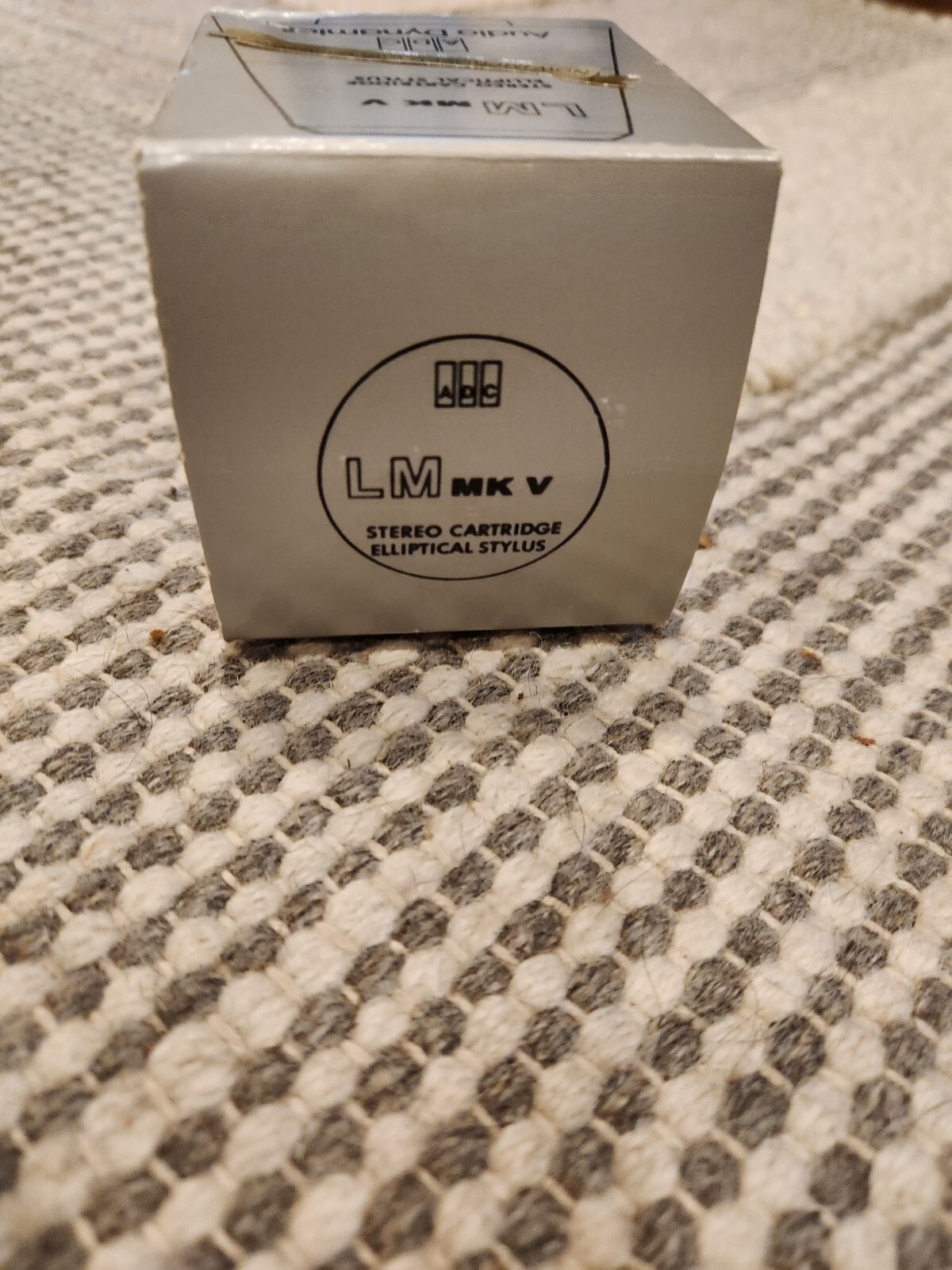
Then there’s the ADC LM-100 MKIII—a phono cartridge, not an arm. This is where the “M” compliance rating comes in, meaning it’s designed for manual tracking force adjustment and high compliance, the kind of cartridge that dances lightly in the groove. It uses a bonded elliptical 'Diasa' diamond tip—0.3 x 0.7 mil—mounted on a thin-wall aluminum alloy cantilever. The tracking force range is .75 to 1.5 grams, which fits perfectly with arms like the LMF-1. Retailers describe the sound as “superbly detailed, full-bodied, harmoniously excellent,” and one user claims to have used theirs for over 35 years. That’s not just longevity—that’s devotion.
But here’s the catch: ADC, or Audio Dynamics Corporation, didn’t last. And while their tonearms were praised in their day, and their cartridges still have loyal users, finding replacements now is a chore. Genuine ADC styli are scarce. One Reddit user put it bluntly: “You're going to be hard pressed to find a genuine ADC replacement.” That’s why third-party vendors like LP Tunes now sell compatible styli—like the $29.95 replacement for the LM-100 MKIII—keeping these old cartridges alive by substitution, not supply.
Specifications
| Manufacturer | ADC (Audio Dynamics Corporation) |
| Tonearm Length | 237 mm (9.33") |
| Pivot to Stylus Tip Head Offset Angle | 20 ° |
| Stylus Tip Overhang | 15 mm (.590") |
| Tracking Angle Error | Zero error at 82 mmR (3.2"R) |
| Anti-Skate Adjustment | 0 to 2 grams |
| Height Adjustment Range | 35 mm (1 ¾") to 80 mm (3 ⅛") from base to cartridge mounting surface |
| Rear Clearance Radius | 76 mm (3") |
| Tonearm Overall Length | 313 mm (12.33") rear to stylus Tip |
| Cartridge Weight Range [LMF-1 / LMF-2] | 4 - 11 grams / 3 - 11 grams |
| Zero Balance Weights [LMF-1 / LMF-2] | 7, 15 and 30 gram / 15, 30 and 45 gram |
| Stylus Force Range | Calibrated 0 to 1.5 gram in 0.1 steps |
| Effective Arm Mass [LMF-1 / LMF-2] | 5.5 grams / 8 grams |
| Arm Wiring | 18 pF per channel |
| Lead Wires (stereo) | 220 pF per channel (normal) |
| Lead Wires (CD-4) | 100 pF per channel (available accessory) |
| Arm and Head Material | Non-resonant Carbon Fibre molding |
| Counterweight Assembly | Elastometric mounting |
| Arm-Cartridge Resonance | Nominal 10 Hz with typical high-compliance cartridges |
| Tonearm Lifter Cue Control | Lever Control |
| Damping | Viscous oil damped in both Up and Down directions |
| Height Adjustment | Factory adjusted; adjustable if required |
| Stylus tip | 0.3 x 0.7 mil bonded elliptical 'Diasa' diamond tip |
| Tracking pressure range | .75 - 1.5 grams |
| Internal compliance specification | "M" = manual professional type (highest internal compliance specifications) |
| Cantilever material | thin-wall aluminum alloy |
Key Features
Carbon Fiber Construction: Light, Rigid, and Damped
The LMF-1 and LMF-2 tonearms were built from carbon fiber molding, a material chosen not just for its strength-to-weight ratio but for its “inherent properties of the material are antiresonant.” That’s a bold claim, but in practice, it meant less coloration from the arm itself. The fully tapered profile—no straight tubes here—was designed to shed mass where it wasn’t needed, resulting in an effective arm mass of just 5.5 grams for the LMF-1. That’s light enough to pair with high-compliance cartridges without tipping the resonance balance into the audible range. The LMF-2, with its removable headshell, added a bit of mass (8 grams) but offered flexibility for users who wanted to swap cartridges without re-balancing the entire system.
Precision Bearings and Damping
The pivot system used instrument-grade stainless steel ball bearings, hand-picked and matched to both inner and outer races for minimal friction and maximum stability. This wasn’t off-the-shelf hardware—it was over-engineered for angular contact performance. Combined with viscous oil damping on the cueing mechanism, it made for a smooth, controlled lift and drop. No jerky movements, no bounce. The cueing lever felt deliberate, almost surgical. And because the damping worked in both up and down directions, it protected both stylus and record.
Micro-Adjustable Tracking and Anti-Skate
Tracking force was set via a precision click-stop dial, calibrated in 0.1-gram increments from 0 to 1.5 grams. That level of granularity mattered—especially when you’re working with cartridges that demand exact setup. The anti-skate adjustment was infinitely variable up to 2 grams, letting users fine-tune for their specific record wear and groove condition. No presets, no guesswork—just direct control.
Modular Counterweights and Balance
ADC included three cylindrical counterweights (7, 15, and 30 grams for the LMF-1; 15, 30, and 45 for the LMF-2) to achieve zero balance with minimal added mass. The counterweight assembly used elastometric mounting, which helped isolate vibrations from traveling up the arm. It’s a small detail, but one that paid off in lower noise and better focus.
LM-100 MKIII Stylus: A Legacy in a Diamond Tip
The ADC LM-100 MKIII cartridge’s stylus is a bonded elliptical diamond, precision-profiled and highly polished. Mounted on a thin-wall aluminum alloy cantilever, it’s built for accuracy and durability. The “M” compliance rating means it’s designed for manual setup—no auto-return arms here. It’s the kind of cartridge that rewards careful alignment and proper VTF. And while original output specs are missing from the record, users report it delivers a full-bodied, detailed sound that holds up decades later. The fact that someone’s still using one after 35 years—“Ottimo!”—says more than any spec sheet could.
Collectibility & Value
The ADC LMF-1 carried an original price of £70 in 1983—roughly $100 at the time—which positioned it as a high-value option in the mid-tier market. Today, the LMF-2 is reportedly trading around 1200 euro, though no recent sales data confirms this. That kind of markup suggests rarity, not necessarily demand. The real bottleneck is parts: genuine ADC replacement styli are nearly impossible to find. Third-party vendors like LP Tunes now sell compatible styli for the LM-100 MKIII at $29.95, but these are reproductions, not originals. If you own an ADC cartridge, you’re likely already protecting that stylus like a museum piece. And if you’re looking to buy an LMF arm, condition is everything—especially the bearings and damping fluid. There’s no documented history of common failures, but oil drying out or contamination in the pivot could be silent killers. No service manuals or factory guides have surfaced, so repairs are a matter of skill and patience.
eBay Listings



As an eBay Partner, we earn from qualifying purchases. This helps support our independent vintage technology research.