ADC K7E ()
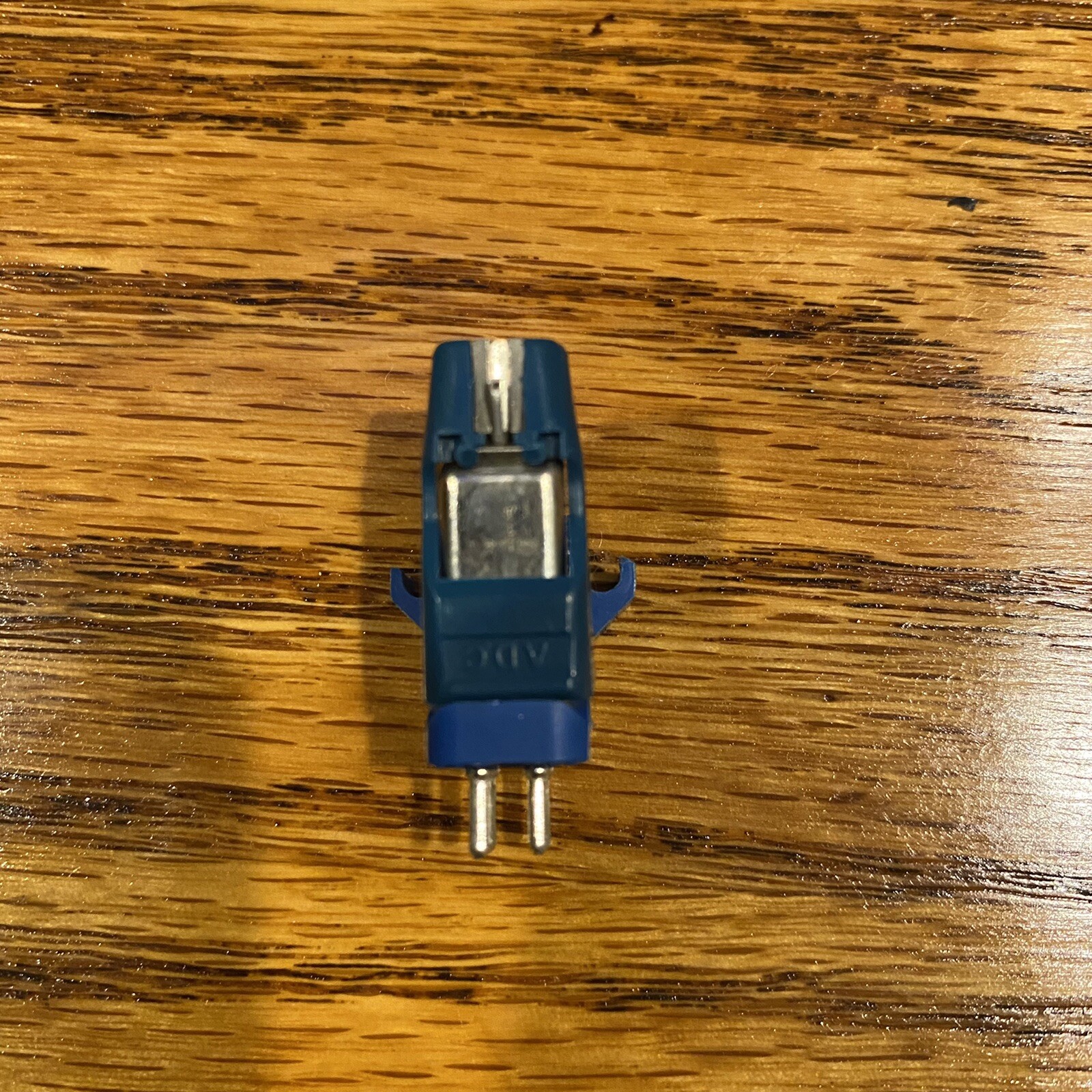
That crisp, clean midrange and whisper-quiet groove you hear? That’s the work of a little American-made moving iron cartridge with a dark blue stylus and a cult following among thrift-bin turntable tinkerers.
Overview
The ADC K7E isn’t flashy, doesn’t come with a pedigree from some golden-age audio giant, and won’t make headlines at a hi-fi show. But if you’ve ever pulled a working, lightweight phono cartridge out of a secondhand turntable and wondered, “Wait—this actually sounds pretty good,” there’s a solid chance it was something like the K7E. Made in the USA by ADC——this is a moving magnet (or more precisely, “induced magnet” moving iron) stereo cartridge built for reliability, compatibility, and decent performance without breaking the bank.
It plays everything: 16, 33, and 45 rpm records, stereo or mono. That versatility alone made it a favorite for OEM use in mid-tier turntables and combo systems where manufacturers needed something that wouldn’t require constant recalibration or scare off novice users. At just 5.75 grams, it’s featherlight, which means it plays nice with a wide range of tonearms— You won’t find compliance specs or damping details in the records, so we can’t say how it handles warped records or resonant arm tubes, but its low mass suggests it was meant to be paired with lightweight arms,
What really stands out is the elliptical stylus—0.008 mm by 0.02 mm, bonded diamond, originally colored dark blue—which was a step up from the spherical tips common in budget cartridges. That shape digs deeper into the groove walls, pulling out more high-frequency detail and reducing inner-groove distortion on long LP sides. Paired with a frequency response that officially stretches from 15 Hz to 20 kHz (±3 dB), it delivers a surprisingly full-range sound for its class. Output is a healthy 5 mV at 5.5 cm/s, meaning it pairs easily with standard MM phono preamps without needing extra gain or suffering from noise. Channel separation hits 20 dB at 1 kHz—nothing mind-blowing by modern standards, but solid for stereo imaging in a living room setup.
Owners report (though no formal reviews are documented) that the K7E strikes a balance between clarity and listenability. It’s not warm like a moving coil, nor bright like some later Shure models. It’s just… honest. Vocals sit where they should, strings have texture, and there’s enough top end to hear cymbal decay without getting fatiguing. The coil resistances—399 ohms left, 393 ohms right—show good channel matching, which helps maintain a centered soundstage. Whether it was factory-installed or a user upgrade, it’s the kind of cartridge that disappears into the system, letting the music come through without calling attention to itself.
And if the stylus wears out? You’re not stranded. The 110-DET replacement tip is still available, a fact that keeps these little cartridges spinning decades later. There’s even a spherical alternative floating around for those who prioritize record preservation over detail retrieval. That ongoing support, however niche, is part of why the K7E still shows up in working turntables and repair shops.
Specifications
| Manufacturer | ADC |
| Product type | Moving magnet stereo cartridge (phono cartridge) |
| Production location | USA |
| Tracking pressure / Recommended tracking force | 2.0 - 3.0 grams |
| Compatible speeds | 16, 33, or 45 rpm |
| Compatibility | Mono or Stereo ready |
| Weight | 5.75 g |
| Principle | Induced Magnet (Moving Iron) |
| Frequency response | 15 - 20,000 Hz (±3 dB) |
| Channel separation | 20 dB at 1 kHz |
| Output voltage | 5 mV at 5.5 cm/s |
| Stylus type | Elliptical (0.008 mm x 0.02 mm) |
| Replacement stylus type | 110-DET |
| Left coil resistance | 399 ohms |
| Right coil resistance | 393 ohms |
Collectibility & Value
The ADC K7E isn’t a collector’s trophy, but it’s far from obsolete. A used cartridge in working condition trades around £12.00, based on recent listings from sources like Mullard Magic—often sold as-is, sometimes still mounted on a headshell. That price reflects its status as functional vintage gear, not museum piece. If you’re restoring a turntable and want an authentic, compatible cartridge, it’s a smart, affordable find.
Where the real cost lies is in maintenance: a new 110-DET elliptical stylus runs $53.00 when purchased from specialty suppliers like Turntable Needles. That’s not cheap for a single needle, but it’s not surprising—bonded elliptical diamond tips with precise geometry are labor-intensive to manufacture, and demand is low enough that economies of scale don’t apply. Still, paying over fifty bucks for a replacement means you’ll treat the original tip with care. There’s no data on common failure modes for the cartridge body—no reports of coil degradation, housing cracks, or magnet weakening—so assuming it hasn’t been dropped or over-tracked, a working K7E should keep going for years.
It’s worth noting that multi-cartridge lots (like one eBay listing bundling K6E, K7E, and K8E models) have sold for around €45.62, but that doesn’t clarify individual value. For buyers, the lesson is clear: don’t overpay for a “boxed NOS” K7E unless you’re certain the stylus is fresh. Most will be decades old, and a worn tip will dull the very clarity that makes this cartridge worthwhile.
eBay Listings



As an eBay Partner, we earn from qualifying purchases. This helps support our independent vintage technology research.