ADC K8 (1973)
That satisfying click when the tonearm drops and the groove pulls you in—this is the cartridge that made budget changers sing.
Overview
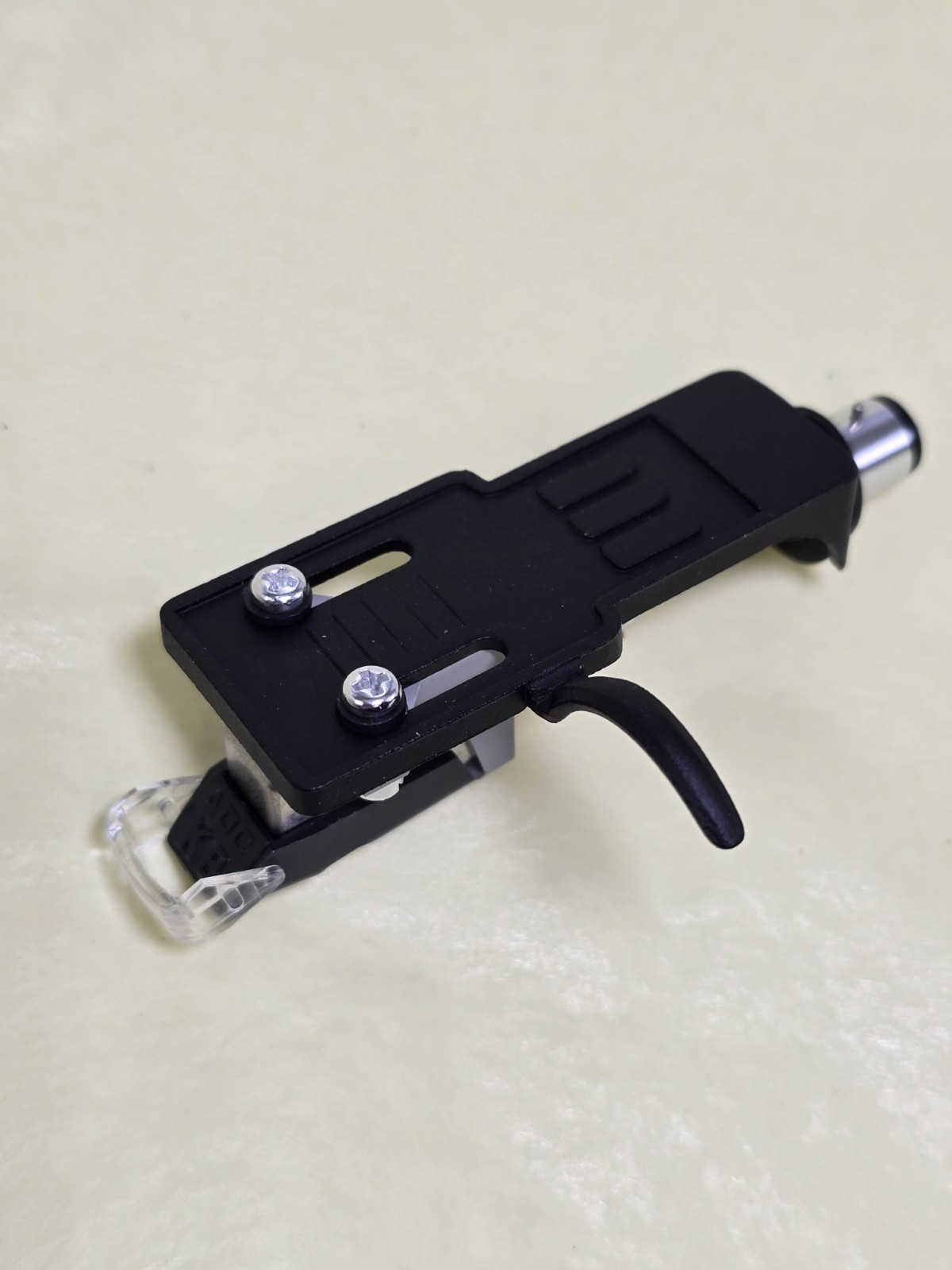
You know that feeling when you drop the needle on a record and the music just lands? Not flashy, not hyped, but solid, honest playback that makes you forget you're listening to a 50-year-old piece of plastic and wire? That’s the ADC K8. It wasn’t built for audiophiles with isolation platforms and anti-static brushes—it was built for people who wanted their record player to work, and work well. This is a stereo phono cartridge from the era when ADC was under BSR ownership and production had shifted to Japan, a time when mass-market turntables needed reliable, affordable cartridges that didn’t embarrass themselves. And the K8 delivered.
It’s not a star. It doesn’t have the pedigree of an ADC XLM or the cult status of a Shure V15. But if you’ve ever fired up an old console stereo or a budget changer from the '70s and thought, “Huh, that actually sounds pretty good,” there’s a decent chance an ADC K8 was doing the heavy lifting. Owners report it tracks well—even in older changers with wonky mechanisms—and while no one’s calling it revelatory, the sound quality is consistently described as “as good as I could expect” for the gear it typically lives in. That’s not faint praise. In the world of vintage playback, reliability and competence are rare enough to be virtues.
The K8 uses an “Improved Conical” stylus with a 0.7 mil bonded diamond tip, a design that walks the line between durability and decent high-frequency response. It’s not going to dig out hidden reverb tails or expose microdynamics, but it won’t skip, it won’t mistrack on warped records, and it won’t wear your vinyl into oblivion. That’s the whole point. This cartridge was engineered for longevity and compatibility, not sonic fireworks. And if you’re the kind of person who still uses a record changer—maybe because it belonged to your dad, or because you like the ritual of stacking six albums and letting them drop one by one—you don’t want fireworks. You want something that just works. The K8 is that thing.
Specifications
| Manufacturer | ADC (Audio Dynamics Corp.) |
| Product type | Stereo phono cartridge |
| Weight | 5.75 g |
| Frequency response | 20 Hz- 20 kHz ± 2 dB |
| Output voltage | 5.8 mV per channel at 1 kHz |
| Channel separation | 20 dB / 1 kHz |
| Principle | Induced Magnet (Moving Iron, connection as MM) |
| Vertical tracking force | 1.0-2.0 grams |
| Recommended load impedance | 47k ohms |
| Mounting | Standard ½" (12.7mm) Mounting Centers |
| Stylus tip | Diamond 0.7 mil bonded conical tip |
| Stylus type | Improved Conical |
Historical Context
The ADC K8 appeared during a transitional period for the company—after ADC had been acquired by BSR and manufacturing moved to Japan. This shift aligned with broader industry trends of the early 1970s, where American audio brands increasingly outsourced production to cut costs and meet demand for affordable home audio. The K series is documented in a 1973 product specification sheet, placing its release firmly in that window. However, there’s some ambiguity: one source claims the K series emerged right after the 1975 buyout, which conflicts with the 1973 documentation. Given the existence of a manufacturer spec sheet from that year, 1973 is the more authoritative marker. Whether the K8 was a stopgap or a strategic move into budget-friendly cartridges isn’t stated, but its design and deployment suggest it was meant to be a reliable workhorse for OEM turntable manufacturers.
Collectibility & Value
The ADC K8 isn’t a trophy piece, but it’s not forgotten either. On the secondary market, a genuine ADC RK8 replacement stylus—specifically for the K8—lists at $69.00, which feels steep for a conical needle unless you're restoring a system to original spec. However, aftermarket options range from €23 for basic conical replacements up to €159 for high-end Shibata profiles, showing there’s room to upgrade if you’re willing to modify. Complete K8 cartridges with stylus have sold for as little as €27, suggesting they’re still findable but not exactly common. One listing boldly labeled the item “RARE!!”—a claim that might overstate its scarcity but hints at growing collector awareness. Owners note it tracks well in older changers, and while no one’s writing sonnets about its soundstage, the consensus is clear: it performs reliably within its intended context. If you’re maintaining a vintage system, the K8 or its RK8 stylus is a legitimate, functional choice—not a nostalgic compromise.
eBay Listings


As an eBay Partner, we earn from qualifying purchases. This helps support our independent vintage technology research.