ADC ALT-1 (1982–1984)
A no-frills, low-mass tonearm that punches above its price with precision bearings and a design ethos borrowed from high-end siblings—just don’t expect carbon fiber or magic.
Overview
It’s easy to overlook the ADC ALT-1 at first glance—a black anodized aluminum tube, unadorned and utilitarian, mounted on a simple slide base. But spend time with it, and you start noticing the quiet confidence in its engineering. This isn’t some budget afterthought slapped together for a mass-market turntable; it’s a deliberate, stripped-down version of ADC’s more exotic LMF series, built during that brief window in the early '80s when British turntable design was chasing precision like a religion. The ALT-1 lands right at the intersection of affordability and performance, offering 90% of the LMF-1’s bearing quality and rigidity for less than half the cost. That makes it a rare find: a tonearm that doesn’t try to be luxurious, but still feels like it belongs on a serious deck.
Designed specifically for high-compliance moving magnet cartridges—like ADC’s own XLM series—it’s a low-mass solution (7.0 grams effective with counterweight set for the XLM) meant to avoid damping the delicate suspension of those cartridges. That tuning choice matters: pair it with a low-compliance MC, and the system resonance will plunge into the problematic sub-10Hz range, inviting record warp tracking issues and inner-groove distortion. But get the match right—say, an Ortofon OM 10 or a reconditioned ADC XLM—and the ALT-1 reveals its strength: neutrality with a slight warmth, excellent channel separation, and a surprising lack of coloration for a budget arm. It won’t conjure soundstage holography like a contemporary SME 3009, but it won’t get in the way either.
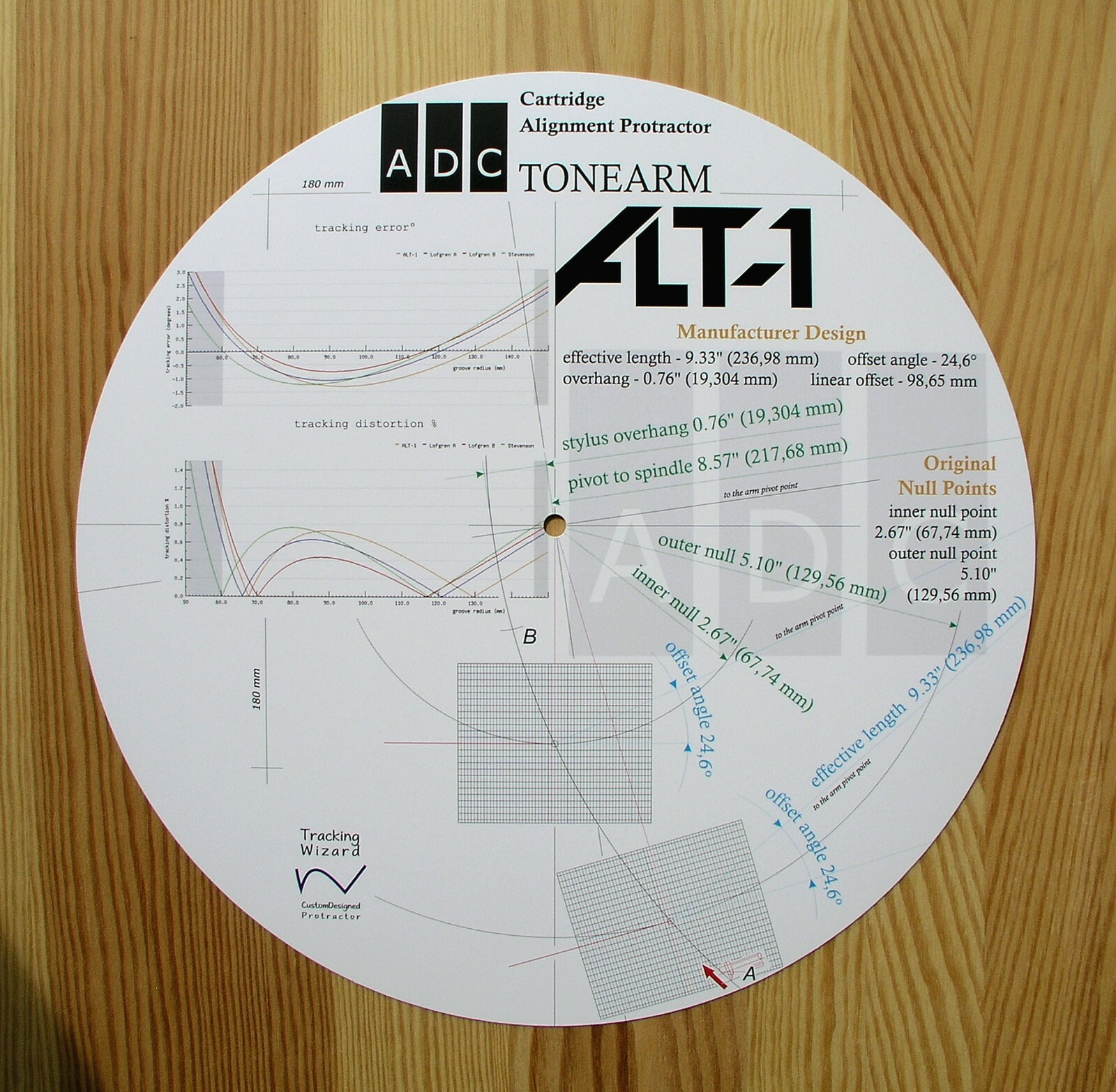
Where it parts ways with its more prestigious siblings is in the materials and modularity. The LMF-1 used a carbon fiber arm tube and a fixed headshell, aimed at purists who valued rigidity and minimal resonance. The ALT-1 swaps in aluminum and adds a detachable headshell—a practical upgrade for anyone swapping cartridges regularly, though some argue it introduces microphony and mechanical slop. Still, the headshell itself is no slouch: it’s made from carbon fiber, a rare touch at this price point, and the lead-out wires are shielded to 220 pF per channel, which is on the higher side but manageable with most modern MM carts. The anti-skate runs from 0 to 4 grams, smooth and incremental, and vertical tracking angle (VTA) is adjustable via the base, though not as finely as on higher-end arms.
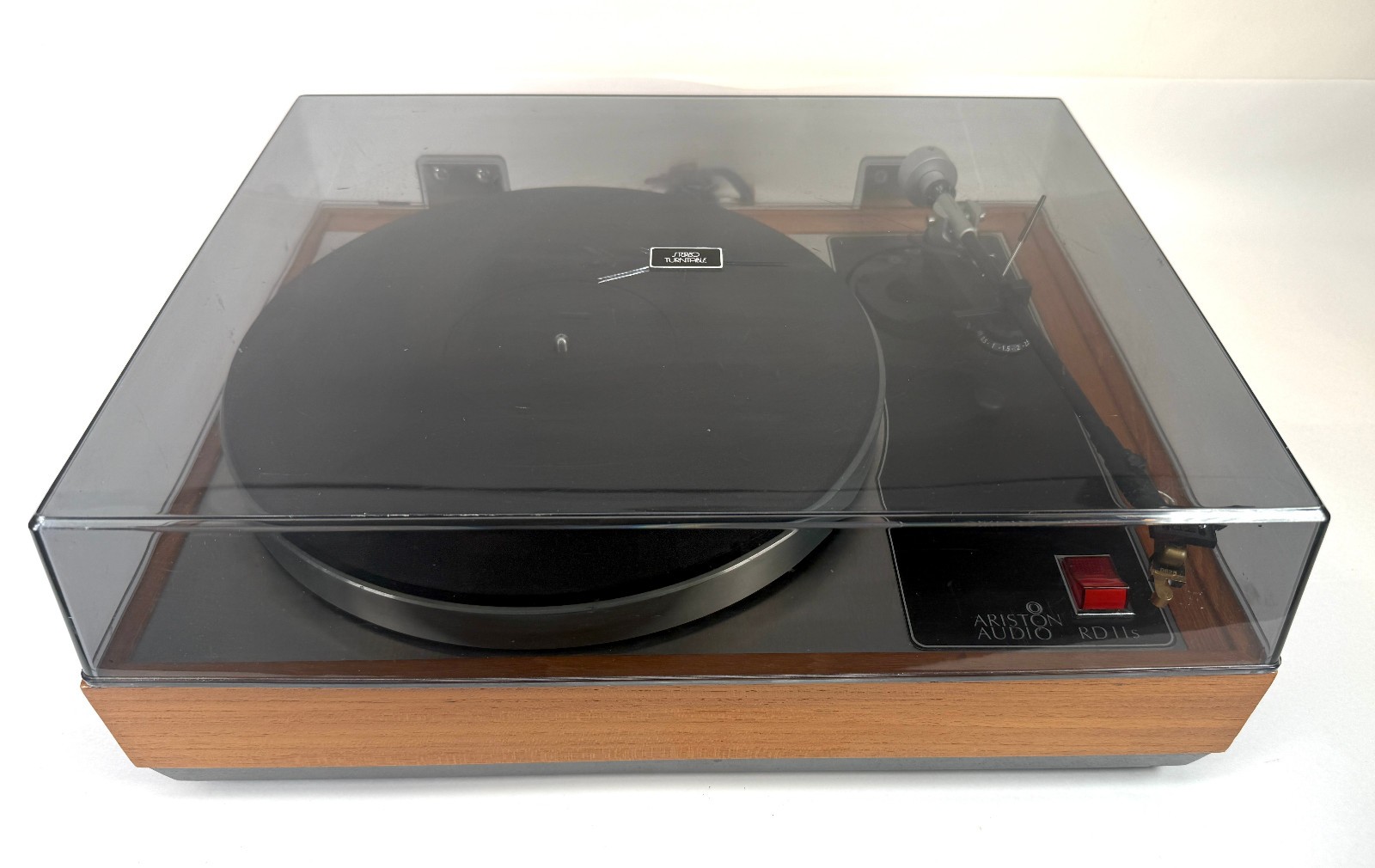
It’s also worth noting that the ALT-1 wasn’t sold as a standalone halo product. It typically appeared on mid-tier turntables like the ADC 1600 and 1700—decks that were more about clean looks and quartz-locked speed stability than deep musical insight. That context matters: the ALT-1 was never meant to be the star of the show. It was the sensible, competent co-pilot, letting the cartridge do the talking. And in that role, it excels.
Specifications
| Manufacturer | ADC (Audio Dynamics Corporation) |
| Production Years | 1982–1984 |
| Model | ALT-1 |
| Type | Linear tonearm with slide base mount |
| Effective Arm Mass | 7.0 grams (with counterweight set for ADC XLM cartridge) |
| Arm Tube Material | Black anodized aluminum |
| Headshell | Detachable, carbon fiber |
| Bearings | Micron-polished ball race lateral instrument bearings |
| Suspension | Open cradle suspension |
| Anti-Skate Range | 0 to 4 grams |
| VTA Adjustment | Yes, via base height adjustment |
| Counterweight | Decoupled construction |
| Lead Capacitance | 180 pF |
| Arm Wiring | 18 pF per channel (internal), 220 pF per channel (lead wires, stereo) |
| CD-4 Compatibility | Yes, with optional 100 pF per channel lead wires |
| Mounting | Slide base (compatible with ASL-1 stabilizer base) |
| Color | Black |
| Country of Manufacture | Japan |
| Original Price | Approx. 278 DM (West Germany) |
| Compatible Cartridges | High-compliance MM (e.g., ADC XLM, Ortofon OM10) |
Key Features
Detachable Carbon Fiber Headshell: Practicality Meets Performance
Most tonearms at this price point in the early '80s used plastic or basic aluminum headshells—if they were detachable at all. The ALT-1 bucks that trend with a full carbon fiber headshell, which does more than just look exotic. Carbon fiber’s high stiffness-to-mass ratio helps prevent energy storage and resonance buildup, especially in the upper mids and treble. The detachable design, while a slight compromise in rigidity compared to fixed headshells like the LMF-1, is a godsend for tinkerers and multi-cartridge users. Swapping between a vintage ADC XLM and a modern Ortofon OM 30? No rewiring, no recalibration beyond VTF and alignment. The connection uses standard 0.7mm pins, and while the locking mechanism isn’t as tight as a Rega or SME, it’s secure enough for daily use. Just don’t crank the locking screw too hard—stripping is possible with overzealous tightening.
Low-Mass Aluminum Arm Tube: A Smart Compromise
The switch from carbon fiber (LMF-1) to aluminum might sound like a downgrade, but in practice, it’s a calculated trade-off. Aluminum is heavier and less damped than carbon fiber, yes, but ADC’s choice of a thick-walled, anodized tube helps mitigate ringing. More importantly, the 7.0-gram effective mass hits a sweet spot for high-compliance cartridges, keeping system resonance in the ideal 9–12Hz range when paired with a typical 12–15cu compliance cart. The arm tube also features a decoupled counterweight—a small but meaningful detail. Unlike solid-mounted weights that can transmit microvibrations back into the arm, this design uses a rubber-isolated ring to damp resonance from the counterweight itself. It’s not foolproof, but it’s a thoughtful touch that reflects ADC’s attention to real-world performance, not just spec-sheet wins.
Precision Bearings and Open Cradle Design
Beneath the modest exterior lies one of the ALT-1’s strongest assets: its bearings. Borrowed directly from the LMF series, these are micron-polished ball race lateral instrument bearings—industrial-grade components usually reserved for lab equipment or high-end audio arms. They’re housed in an open cradle suspension system, which minimizes contact points and reduces the chance of binding or stiction. The result is a remarkably fluid, low-friction movement that translates into stable azimuth and smooth tracking, even on warped records. Lateral stability is excellent, and users report minimal bearing wear even on examples approaching 40 years old—provided they’ve been kept clean and dry. There’s no unipivot or gimbal gimmickry here, just solid engineering executed with care.
Historical Context
The early 1980s were a turbulent time for turntable design. Vinyl was still dominant, but the CD loomed on the horizon, forcing manufacturers to either double down on analog refinement or pivot toward digital. ADC, a U.S.-based company founded by Peter Earnest Prichard in the 1960s, had built its reputation on innovative magnetic cartridges and high-performance tonearms. By the late '70s, it had been acquired by BSR—a British manufacturer better known for budget record changers than high-fidelity components. The ADC brand was repurposed as BSR’s premium line, a move that gave ADC-designed arms like the ALT-1 a wider distribution than they might have otherwise achieved.
The ALT-1 arrived in 1982 as a cost-reduced alternative to the LMF-1 and LMF-2, which were priced closer to SME and Grace offerings. At a time when the Grace G-707 and Linn LVX were setting benchmarks for mid-tier tonearms, the ALT-1 offered a compelling alternative: similar bearing quality and adjustability, but with a detachable headshell and a price that undercut the competition by 30–50%. It wasn’t marketed as a flagship, but as a sensible upgrade path for owners of mid-range turntables who wanted better tracking and lower distortion without selling a kidney. Its appearance on the ADC 1600 and 1700 decks—machines that emphasized quartz-locked speed accuracy and clean aesthetics—cemented its role as a workhorse arm for listeners who valued consistency over sonic drama.
Competitors like the Rega RB250 and the SME Series II were either not yet available or significantly more expensive. The ALT-1 filled a niche: it wasn’t exotic, but it was honest, well-made, and compatible with a wide range of high-compliance cartridges that were still dominant in the early '80s. When the market eventually shifted toward low-compliance MC cartridges, the ALT-1’s relevance waned—but not before earning a quiet reputation among those who knew where to look.
Collectibility & Value
Today, the ADC ALT-1 is a quiet sleeper in the vintage tonearm market—undervalued, underappreciated, and often overlooked in favor of flashier names. That’s good news for buyers: a fully functional ALT-1 in decent condition typically sells for £100–£175 on the used market, with prices creeping toward £200 if it includes the optional ASL-1 stabilizer base or comes from a well-maintained deck. Brand-new old stock (NOS) examples occasionally surface through UK dealers like Vickers Hi-Fi, still listed at around £179—a price that, while not exactly a steal, undercuts new arms in the Rega RB330 class.
The biggest risk when buying an ALT-1 isn’t the arm itself, but its installation history. Many were mounted on lower-tier decks with flimsy plinths, leading to base warping or misalignment. Check that the slide base moves smoothly and that the arm doesn’t rock when pressure is applied to the headshell. The bearings are generally robust, but if the arm feels gritty or sticky, it may need cleaning or repivoting—service technicians observe that dried lubricant is the most common culprit, not worn races.
Wiring is another concern. The arm uses an unconventional male pin arrangement on the headshell connector, unlike the more common female sockets found on Rega or SME arms. While this isn’t a dealbreaker, it means standard aftermarket cables won’t fit without an adapter. Also, the 180 pF lead capacitance is on the high side; pairing it with a cartridge that already has high internal capacitance (like some vintage ADC models) can roll off treble. A rewiring with lower-capacitance cable (e.g., 100 pF) is a common and worthwhile mod.
Restoration is straightforward. The counterweight can be disassembled and cleaned, and the VTA adjustment screw responds well to a drop of light oil. The carbon fiber headshell is durable, but check for hairline cracks near the mounting holes—these can develop from overtightening. Overall, the ALT-1 is a low-maintenance arm if treated with basic care. It won’t appreciate like a vintage SME, but it will perform reliably for decades, making it one of the best value propositions in vintage tonearm ownership.
eBay Listings
As an eBay Partner, we earn from qualifying purchases. This helps support our independent vintage technology research.