ADC Accutrac 4000 (1976–1979)
The turntable with a glowing orb that could “see” your records—and the remote control to prove it.
Overview
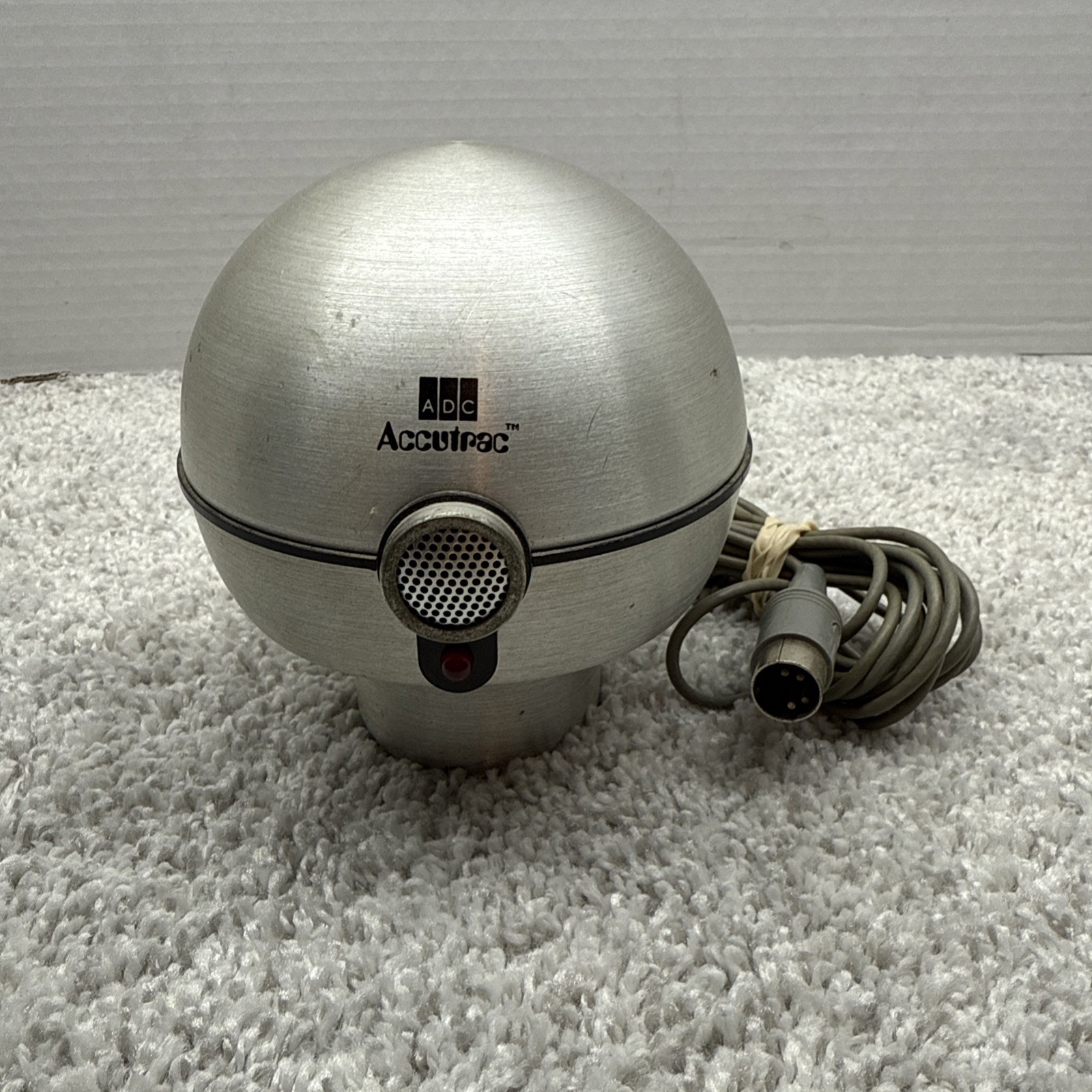
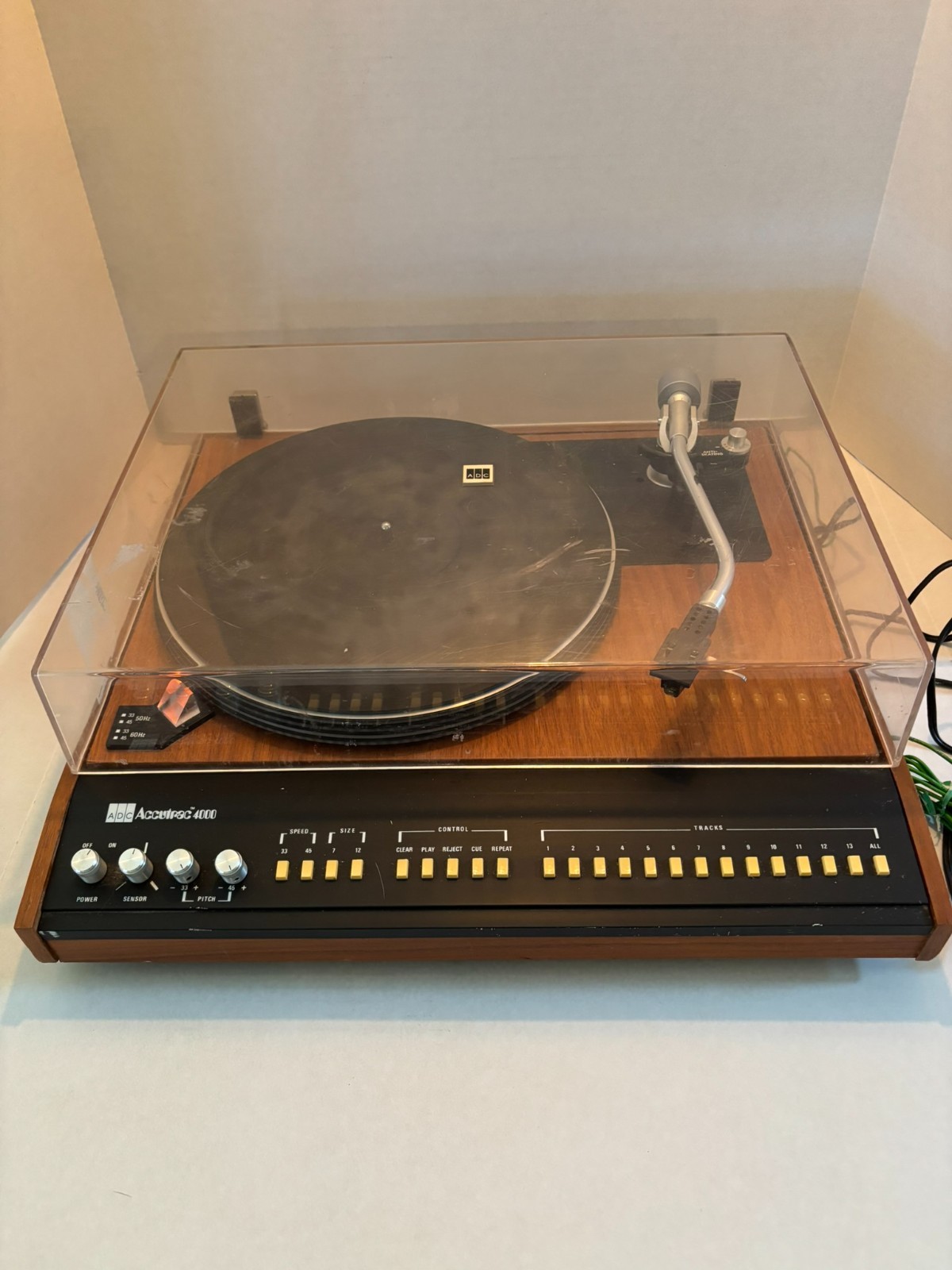
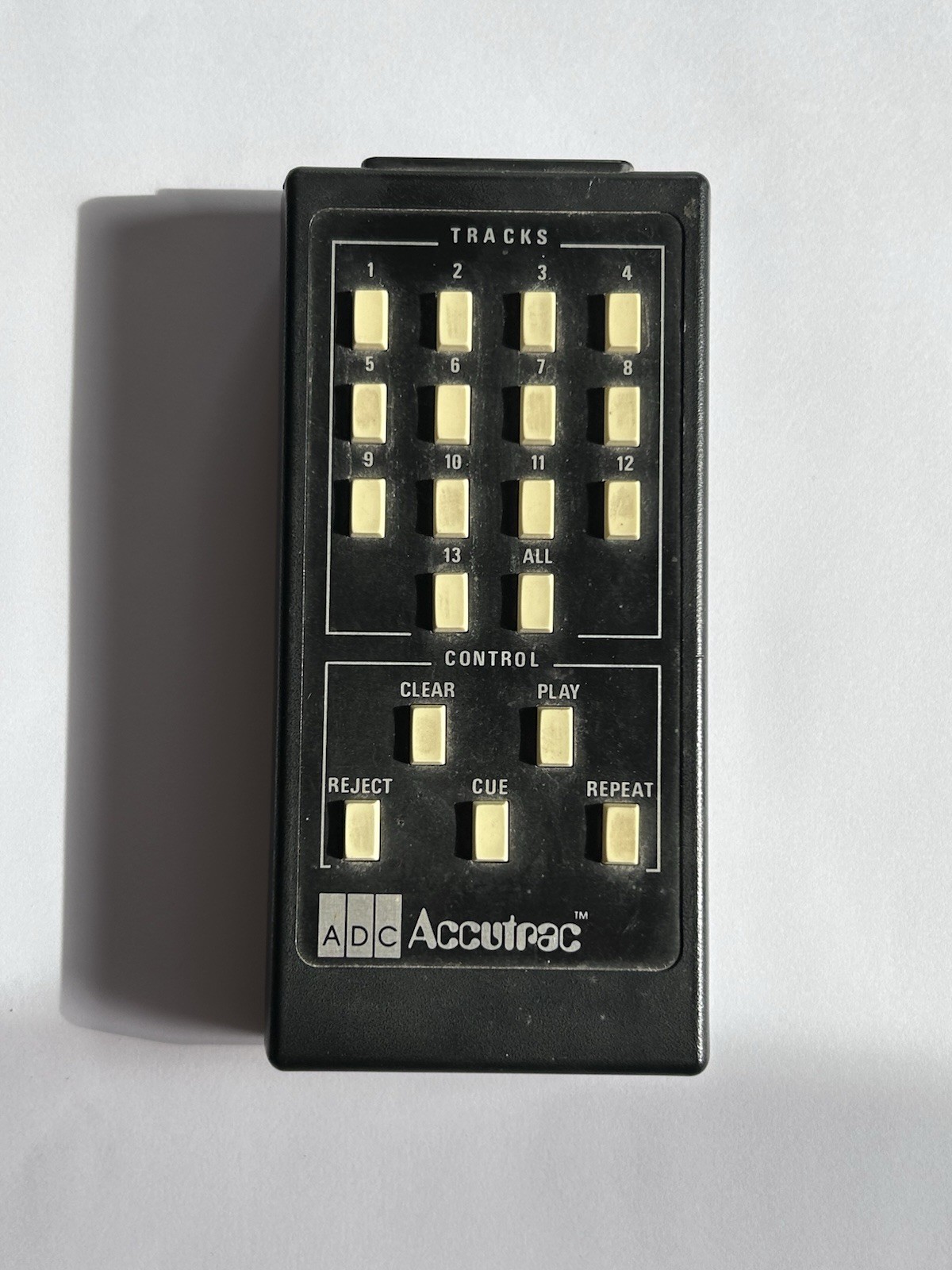
It hums to life with a soft click, the platter spinning up in two seconds flat, and then—silence, except for the faint whir of electronics doing something no one else was doing in 1976. The ADC Accutrac 4000 doesn’t just play records; it reads them. Its cartridge peers into the grooves with electro-optical sensors, detecting the silent gaps between tracks like a robot librarian scanning a shelf. Press a button on the wireless infrared remote, and the tonearm lifts, scans forward, and lands on the next song—all without touching the record. That’s the magic. And then there’s the orb: a bulbous, translucent mushroom sitting off to the side, glowing faintly when it receives a signal from the remote. It looks like something lifted from a sci-fi prop room, and it’s unforgettable.
This wasn’t just another turntable with a fancy arm. The Accutrac 4000 was a full-on automation suite wrapped in a heavy wooden cabinet that weighed nearly 20 pounds. It was sold during the golden age of “set it and forget it” hi-fi, when manufacturers were racing to make gear that required less human intervention. ADC, backed by British giant BSR (Birmingham Sound Reproducers), wasn’t the first to dream of a thinking turntable—Toshiba had dabbled in optical track detection earlier—but the Accutrac 4000 was the first to bring it to a broad Western market with actual marketing muscle. Ads proclaimed, “Its mother was a turntable, its father was a computer,” and honestly, that line still lands. It wasn’t entirely accurate—there was no microprocessor in the modern sense—but the system used analog logic and memory banks to store track positions, giving it a kind of primitive intelligence.
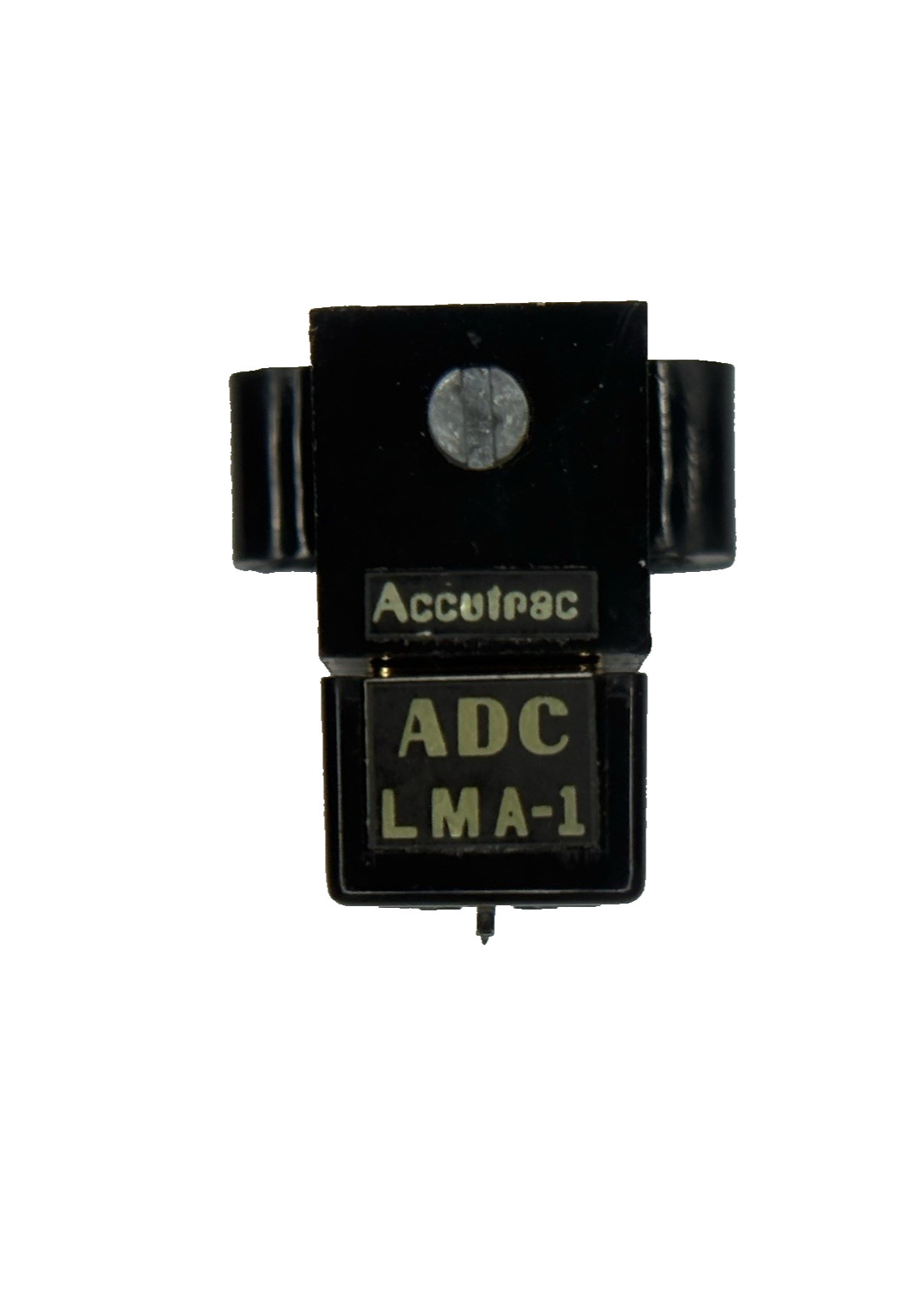
Under the hood, it’s a direct-drive machine with a dynamically balanced aluminum platter, low wow and flutter (<0.03%), and a custom LMA1 cartridge with an elliptical diamond stylus. The tonearm is an S-shaped design with static counterweight compensation, and it moves with a deliberate, almost ceremonial precision. You can program up to 13 tracks in memory—no more, no less, which some collectors still joke about as a quirky design limit. The remote lets you play, pause, skip, and even adjust pitch by ±5%, all from across the room. It was, for its time, a marvel of electromechanical theater.
Specifications
| Manufacturer | ADC (Audio Dynamis Corp.) |
| Production Years | 1976–1979 |
| Original Price | 140,000 ¥ (Japan, 1976) |
| Motor Drive System | Low-speed, brushless direct drive |
| Speeds | 33 1/3 rpm, 45 rpm |
| Start-up Time | 2 seconds |
| Pitch Adjustment | ±5% |
| Platter Diameter | 30.64 cm |
| Platter Weight | 1.4 kg |
| Wow & Flutter | < 0.03% (DIN 45507), ±0.042% (weighted) |
| Rumble | –70 dB (DIN 45539B), –50 dB (DIN 45539A) |
| Tonearm Type | “S” shaped, static compensation, decoupled counterweight |
| Effective Length | 237 mm |
| Overhang | 15 mm |
| Offset Angle | 21° |
| Tracking Force Range | 0–4 g |
| Cartridge Type | LMA1, low-weight, high-energy induction magnet with electro-optical groove detection |
| Cartridge Output | 3.5 mV (at 5.5 cm/s) |
| Frequency Response | 10 Hz – 24 kHz (±2 dB) |
| Channel Separation | 28 dB |
| Needle Type | Elliptical diamond (0.0003" × 0.0007") |
| Remote Control | Wireless infrared with mushroom-shaped receptor |
| Dimensions | 47 × 44.1 × 15.2 cm |
| Weight | 9 kg |
Key Features
Electro-Optical Track Sensing
The LMA1 cartridge isn’t just a stylus—it’s a sensor. While the needle tracks the groove, a built-in optical system detects the quiet spaces between tracks by monitoring the absence of groove modulation. This signal is sent to the control circuitry, which logs the position. Once you’ve played a side, the Accutrac “knows” where each track starts and can jump to it on command. It’s not perfect—deeply modulated passages or long instrumental breaks can confuse it—but when it works, it feels like witchcraft. No other consumer turntable of the era offered this level of automation without a record changer mechanism.
Direct-Drive Precision
Beneath the platter lies a brushless DC motor with exceptional speed stability. Unlike belt-drive systems that can stretch or slip, the direct-drive setup ensures rock-solid rotation, contributing to the remarkably low wow and flutter. The motor reaches full speed in just two seconds, a selling point in an era when many turntables took five or more to stabilize. The platter itself is a thick, die-cast aluminum alloy, damped to reduce resonance and paired with a rubber mat that helps grip records without marring them.
Infrared Remote Control System
The mushroom-shaped IR receptor isn’t just a design flourish—it’s the brain’s antenna. The wireless remote (a rare feature in 1976) communicates via infrared pulses, and the orb lights up with a soft red glow when it receives a command. This visual feedback was part of the experience, making the interaction feel futuristic. The remote allows full control: play, stop, track advance, pitch adjustment, and even manual arm lift. It’s fragile by today’s standards—early IR systems were line-of-sight and prone to interference—but it’s also part of what makes the Accutrac so memorable.
Historical Context
The mid-1970s were a battleground for automation in hi-fi. Consumers wanted convenience without sacrificing fidelity, and manufacturers scrambled to deliver. The Accutrac 4000 arrived just as stereo systems were moving from component racks to all-in-one consoles, and ADC positioned it as the thinking person’s turntable—smart, precise, and forward-thinking. It competed not just with high-end manual decks from Technics or Thorens, but with record changers from RCA and Voice of Music that stacked LPs and dropped them one by one. The Accutrac offered a middle path: single-play precision with robotic control.
ADC, though American in branding, was owned by BSR, the UK-based giant known more for budget changers than high-end audio. This partnership gave ADC access to manufacturing scale but also tied it to BSR’s reputation for cost-cutting. The Accutrac 4000 was an attempt to break that mold—a premium product with real engineering behind it. It was heavily advertised in magazines like Stereo Review and even marketed in Japan, a sign of its global ambitions. But despite the splash, it never became a mainstream hit. Distributors reported backorders and reliability concerns, and many dealers who tried to carry it ended up dropping it. By 1979, it was gone, succeeded by the Accutrac +6, a version with a record changer and more subdued styling.
Collectibility & Value
Today, the ADC Accutrac 4000 is a cult object—a conversation starter, a museum piece, a relic of analog futurism. It’s not the most musical turntable ever made, but it’s one of the most interesting. In excellent working condition, it fetches between $400 and $700, depending on completeness (original remote, demo LP, and packaging add value). Non-working units sell for $150–$250, often to tinkerers or display collectors.
Common failures center on the electronics. The IR receiver circuit is prone to decay, and the remote batteries can leak and damage the transmitter. The electro-optical sensors in the cartridge can become misaligned or coated with dust, causing tracking errors. Capacitors in the power supply and logic boards dry out over time, leading to erratic behavior or complete failure. Recapping is almost always necessary in unrestored units. The motor is generally robust, but the tonearm lift solenoid can wear out, leaving the arm stuck in the up or down position.
When buying, test the remote first—many units are sold with dead or missing remotes. Check that the track memory functions and that the arm moves smoothly. Listen for motor noise or rumble, and inspect the platter for warping. The wooden cabinet is usually solid, but the finish can crack or fade with sun exposure. Replacement parts are scarce; the LMA1 cartridge is no longer manufactured, and the IR system is proprietary. However, dedicated forums and the Vinyl Engine community have documented repair guides, and some technicians still service these units.
eBay Listings
As an eBay Partner, we earn from qualifying purchases. This helps support our independent vintage technology research.
Service Manuals, Schematics & Catalogs
- Catalog — archive.org
- Catalog (1989) — archive.org