Acoustic Research TSW-910
A four-way floor-standing column that AR built to disappear into a room and reappear as music.
Overview
The TSW-910 is a floor-standing, columnar acoustic-suspension speaker — a four-way design built around AR's Tetra-Helix tweeter mounting plate. In the 1989 HiFI-Stereo directory listing (HiFI-Stereo, February 1989, p.116), it's catalogued at $800 per pair, with a solid walnut or oak top and bottom, a black-vinyl-veneer cabinet, and a black cloth grille. The dimensions are 30.13 x 14.06 x 13.31 inches, and it weighs 49 pounds. That's a substantial piece of furniture by bookshelf standards, but by floor-standing column standards it's manageable — one person can move it without a dolly, which is more than can be said for a lot of the competition from the same period.
The four-way topology is the interesting part. The 1989 directory entry describes the 910 as a "4-way speaker" and notes the Tetra-Helix tweeter mounting plate as a defining feature. By the 1991 directory (HiFI-Stereo, February 1991, p.97), AR had revised the model to the TSW-910-A, still a four-way floor-standing acoustic-suspension column. The TSW-910-A is the version that shows up most often on the secondhand market, and it's the one most collectors actually mean when they say "TSW-910."
The cabinet is the giveaway that this is late-AR rather than classic-AR. Solid walnut or oak caps on a vinyl-veneer box is a cost-conscious construction choice, and it's a fair criticism of the TSW line generally — the AR-3a and LST of the previous generation were built like laboratory instruments, and the TSW series traded some of that for volume production. That doesn't make the 910 a bad speaker, but anyone expecting AR-3a build quality in a TSW cabinet will be disappointed. The grille cloth is black, the finish options are limited, and the vinyl veneer is the part that ages worst — corners lift, edges scuff, and there's no refinishing a vinyl wrap the way you can oil a walnut cap.
The acoustic-suspension loading is the through-line to AR's heritage. The 910 is a sealed-box design, not a ported one, which means it trades some efficiency for bass extension and a gentler rolloff. The 1991 directory entry lists sensitivity at 89 dB and impedance at 6 ohms, with crossover points at 1,800 and 4,500 Hz. That 89 dB figure is on the low side of average for a floor-stander of this size, and it's worth understanding what that means in practice: the 910 wants a competent amplifier, not a 15-watt chip amp. A 50-watt-per-channel integrated will drive it, but it won't have much headroom left over. Something in the 100-watt range is a better match, and the 6-ohm nominal impedance is friendly enough that most solid-state amps will handle it without complaint.
The crossover points tell you something about how the drivers divide up the work. At 1,800 Hz and 4,500 Hz, the midrange is covering a relatively narrow band, which usually means the designer was trying to keep the midrange driver away from the extremes of its range where distortion rises. The Tetra-Helix tweeter mounting plate is AR's answer to the diffraction problem — mounting the tweeter in a shaped plate rather than flush on a flat baffle — and it's the kind of detail that separates a serious design from a box with drivers screwed into it.
Where the 910 sits in the TSW family is worth noting for anyone trying to place it. The TSW series ran from the smaller bookshelf models up through the floor-standing columns, and the 910 was near the top of the range. The TSW-610, listed in the same 1988 directory (HiFI-Stereo, February 1988, p.141), is a three-way floor-standing acoustic-suspension speaker with a 12-inch woofer, a 6.5-inch midrange, and a 0.75-inch titanium-dome liquid-cooled tweeter. The 910 is the four-way step up from that. If you're shopping the TSW line, the 910 is the one to look for if you want the fullest expression of what AR was doing with the series; the 610 is the more common and more affordable entry point.
The four-way configuration in the 910 means separate drivers for bass, lower-mid, upper-mid, and treble. That's a lot of crossover complexity for a speaker at this price point, and crossover complexity is where budget speakers often go wrong — more drivers means more chances for the crossover to introduce its own coloration. AR's engineers knew what they were doing, but the 910 is not a simple two-way with a single capacitor on the tweeter. Anyone repairing one should expect to find a proper crossover network with multiple inductors and capacitors, and should replace like-for-like rather than improvising.
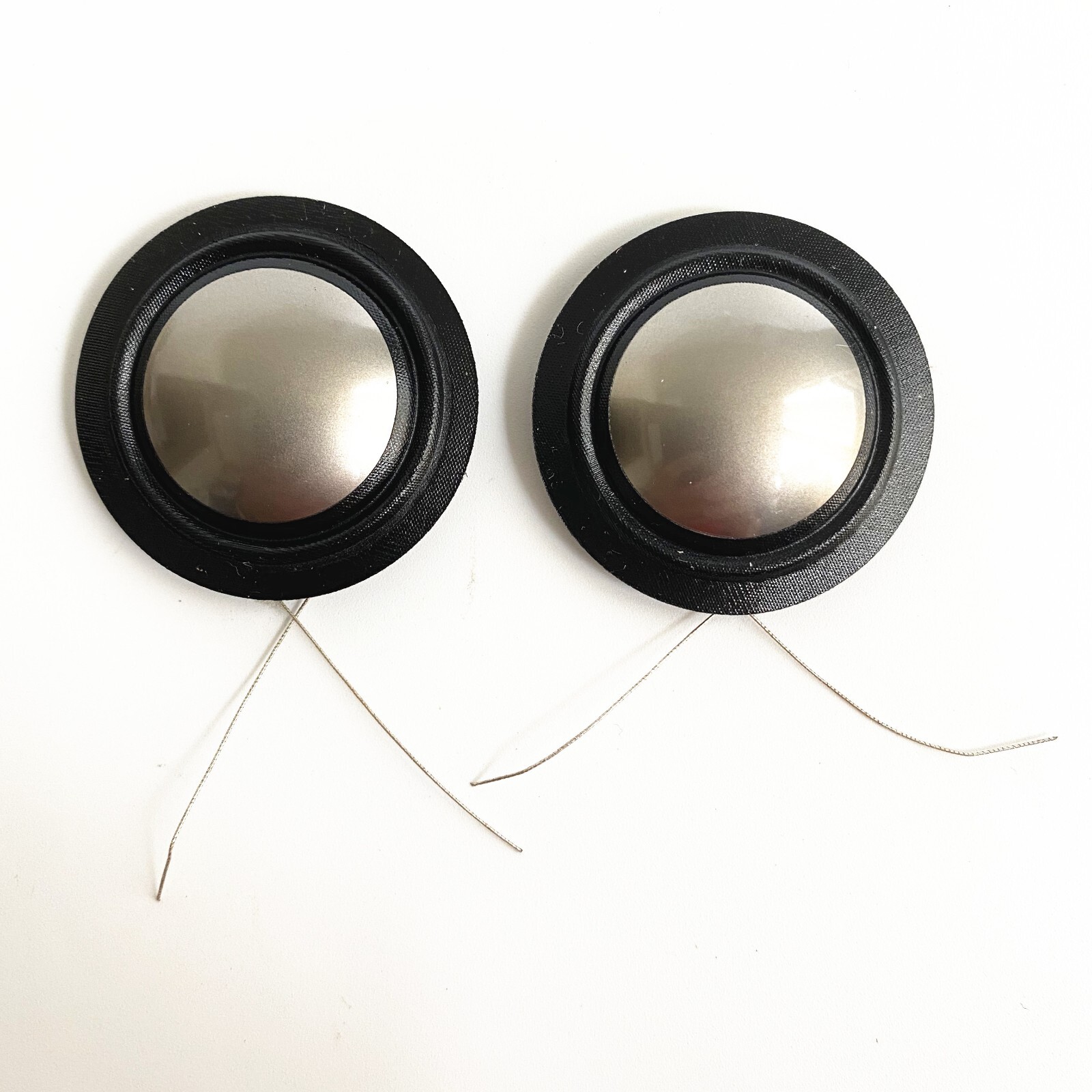
The Tetra-Helix plate is the detail that gets the most attention from AR enthusiasts, and it's the one feature that most clearly identifies the TSW-910 as a product of its specific moment in AR's history. It's a mounting plate, not a driver, so it doesn't wear out — but it does mean the tweeter is not a drop-in replacement from a generic parts bin. If a tweeter fails, the correct replacement is another AR tweeter from the same series, and those are not being manufactured. This is the single biggest practical risk of owning a TSW-910 in the present day: the drivers are proprietary, the supply is finite, and a blown tweeter can turn a working speaker into a parts donor.
The 49-pound weight and 30-inch height make the 910 a genuinely floor-standing speaker rather than a large bookshelf. It wants to sit on the floor, ideally on spikes or a solid base, and it wants some space behind it — acoustic-suspension designs are less fussy about wall proximity than ported ones, but no floor-stander sounds its best jammed into a corner. The columnar proportions mean it doesn't dominate a room the way a wide-baffle monitor does, which is part of the appeal: it's a speaker you can live with in a normal-sized room without it becoming the visual centerpiece.
What the 910 is not is a collector's item in the way the AR-3a or the LST are. Those speakers have a cult following, documented history, and a reputation that has survived decades. The TSW-910 is a good speaker from a transitional period in AR's history, and it's priced accordingly on the used market — typically well under what a comparable AR-3a would cost, and often under what the parts alone would be worth if you parted one out. That's the strange economics of late-AR gear: the whole speaker is worth less than its drivers, which means working examples get bought and dismantled. Every year there are fewer intact pairs.
For anyone considering one, the calculus is straightforward. If you find a pair with all drivers working and cabinets in reasonable shape, you're getting a competent four-way floor-stander for modest money, and you're getting AR's house sound — neutral, uncolored, more interested in accuracy than excitement. If you find a pair with a dead tweeter, walk away unless you have a source for the correct replacement, because there isn't one. The vinyl veneer will have lifted somewhere; that's cosmetic and can be lived with. The walnut or oak caps can be refinished. The drivers cannot be replaced.
The 910 is a speaker that rewards a patient owner with a decent amplifier and a room it can breathe in. It doesn't have the romance of AR's classic era, and it doesn't have the resale value, but it does have the acoustic-suspension bass and the neutral voicing that made AR's reputation in the first place. That's not nothing. That's the whole point.
eBay Listings


As an eBay Partner, we earn from qualifying purchases. This helps support our independent vintage technology research.