Acoustic Research TSW-410
A 90-pound tower speaker with a 19-inch woofer and a fuse block that sets a hard limit on how much abuse it will take.
Overview
Ninety pounds. That is the first number that matters here. The TSW-410 is a floor-standing acoustic-suspension column. The cabinet measures roughly 27⅜ inches wide by 20 inches high by 9¾ inches deep - a wide, squat, heavy box. The manufacturer's own warning calls it "very heavy for its size" and says it must travel in a carton designed for it or the cabinet will take damage in shipment. Anyone who has carried a pair up a flight of stairs knows why.
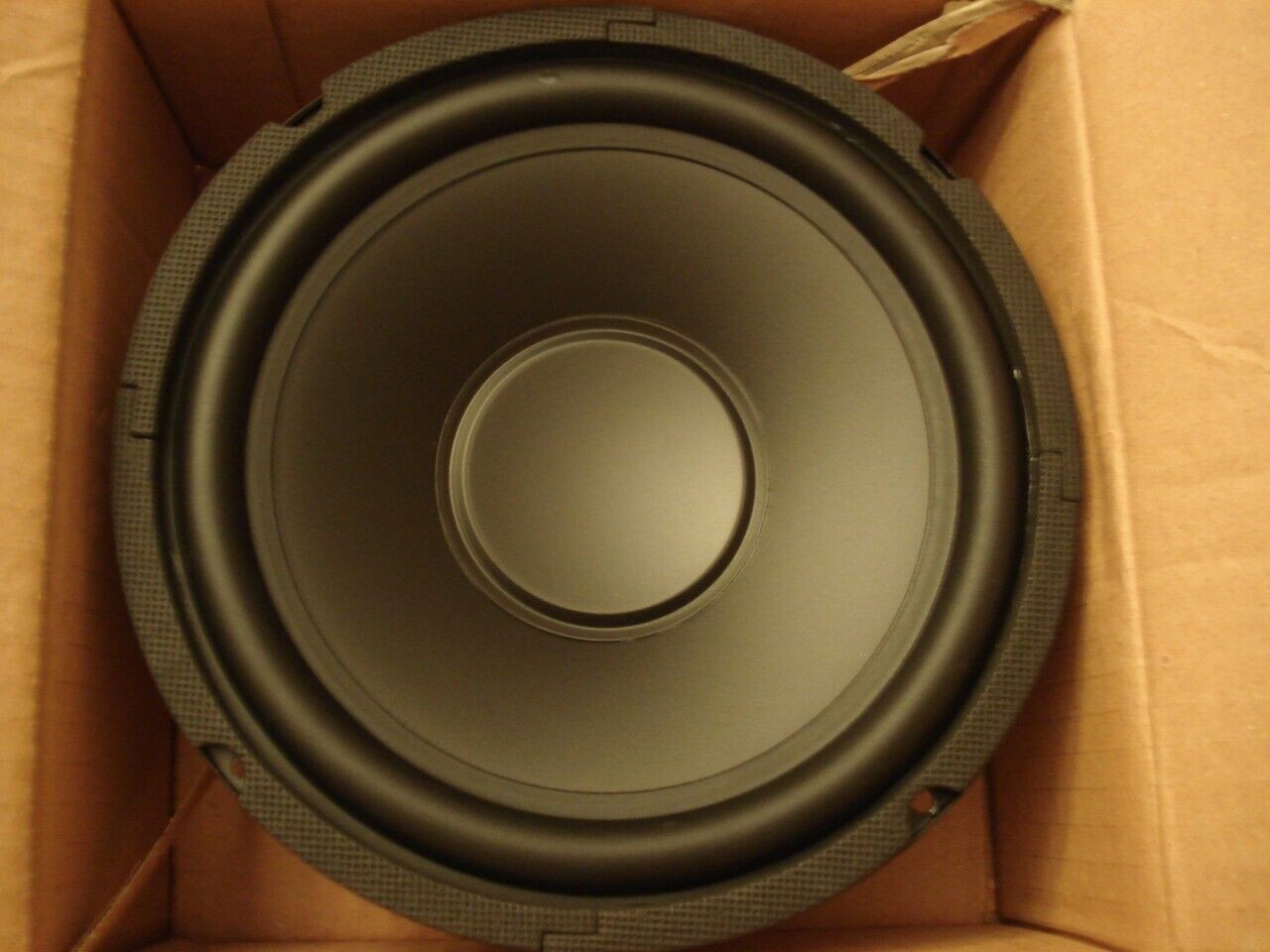
The drivers are the reason for the mass. AR packed a 19-inch woofer into the TSW-410 along with four 1½-inch mid-range hemispherical radiators and four ¾-inch hemispherical tweeters. That is nine drivers per cabinet. The four-and-four arrangement on the mid and high sections is there for power handling. Spreading high-frequency energy across several units lets the system absorb input that would cook a single tweeter. AR's own documentation for the period is blunt about the trade-off. With the balance switch set at low numbers, the tweeters see substantially more high-frequency power than a single-tweeter design would at the same loudness. The manual warns owners to take care against excessive high-frequency output even with the load divided four ways.
Sensitivity is quoted at 89.5 dB SPL average, ±1 dB, measured with the back of the cabinet against a rigid wall. This is an acoustic-suspension design, and the room is meant to reinforce the low end. Efficiency works out to 0.8% average. Impedance is not a single number. It depends on the balance switch position, and AR published separate impedance curves for each of the six settings rather than pretend the speaker had one fixed load. Frequency response is specified at ±2 dB, with total acoustic power output plotted above 500 Hz and the woofer's anechoic curve applying below that for a 2π radiation angle.
Power handling is published as a sliding scale rather than a single figure. With the correct FNM 2 fuse installed, the system is rated for 180 watts for 10 seconds, 64 watts for 30 seconds, and 23 watts long-term average, all based on current into an assumed nominal impedance of 4 ohms. The long-term number is 23 watts. This is not a speaker that wants a continuous 200-watt feed. It will survive a brief 180-watt transient and then expects you to back off. Owners who understand the difference between peak and average get years of service. Owners who don't get to know the fuse block.
The fuse block is not optional. AR's documentation carries an explicit warning that the fuse terminals must never be bypassed and that no fuse other than the FNM 2 should be used. Speaker damage from excessive power input is not covered by the guarantee. The guarantee is otherwise generous. It runs five years from purchase and covers parts, repair labor, and freight both ways to the factory or nearest authorized service station, plus new packaging if needed. The phrase "normal use" in that guarantee explicitly excludes power input sufficient to cause thermal damage to the voice coils.
Phasing follows the AR house convention: positive voltage on input terminal No. 2 moves the woofer diaphragm forward, out of the cabinet. That is the detail to check when wiring a pair, so both cabinets move together.
The period literature AR circulated with the system quoted praise from several publications. High Fidelity (as quoted in AR's own materials) called the frequency response among the most linear the publication had measured for a loudspeaker. It noted that practically no directionality or coloration could be detected across the range, and reported that the speaker handled short peaks up to 553.8 watts without distortion, with momentary sound pressure levels reaching 112 dB. Stereo described the speakers as establishing a reference standard against which other loudspeakers could be judged. These quotes come through AR's promotional document rather than from independent archive copies, so weigh them accordingly.
One caution for anyone comparing the TSW-410 against AR's own AR-LST. The two share a design philosophy but not a parts bin, whatever some sellers assume. The AR-LST used a 12-inch acoustic-suspension woofer with crossover points at 575 and 5,000 Hz. Its mid-range and tweeter complement was also four-and-four, but it was a different driver set. The TSW-410's 19-inch woofer and its own hemispherical radiator array make it a distinct system. Buyers who see "same as LST" in a listing should ask for the model number on the back panel.
The 89.5 dB sensitivity means the TSW-410 does not demand a monster amplifier, and the multi-driver array means it will play loudly without strain, up to the point the fuse says otherwise. The 90-pound cabinet and 19-inch woofer move more air than small towers can.
eBay Listings


As an eBay Partner, we earn from qualifying purchases. This helps support our independent vintage technology research.