Acoustic Research Edge Sequel
The Acoustic Research Edge Sequel is a bookshelf loudspeaker released in 1988 as part of Acoustic Research’s EDGE (Efficient Design for Greater Enjoyment) series. Designed for budget-conscious audiophiles, the Edge Sequel delivered a compelling mix of accuracy, build quality, and value during a transitional period for the brand. While not as legendary as AR’s earlier acoustic suspension models, the Edge Sequel remains a respected performer among vintage audio enthusiasts seeking neutral, fatigue-free sound.
Specifications
| Feature | Specification |
| Years of Production | 1988–1991 |
| Type | 2-way bookshelf speaker |
| Power Handling | 100W RMS, 2 channels |
| Nominal Impedance | 8 Ω |
| Sensitivity | 89 dB (1W/1m) |
| Frequency Response | 120-20,000 Hz (±3dB) |
| Woofer | 4-1/2" (11.4 cm) mid/woofer with rubber surround |
| Tweeter | 1" polycarbonate dome tweeter |
| Crossover | Phase-coherent 2nd-order network |
| Cabinet Design | Non-parallel walls to reduce internal standing waves |
| Internal Damping | Acoustic Blanket material |
| Dimensions (H×W×D) | 7-1/2"H x 5-1/2"W x 4-13/16"D |
| Weight | 1.5 kg (approx. 3.3 lbs) per speaker |
Key Features
- Acoustic Blanket Internal Damping: Minimizes cabinet resonance for cleaner sound reproduction.
- Phase-Coherent Crossover: Designed to preserve time alignment between drivers for a more natural soundstage.
- Non-Parallel Cabinet Walls: Reduces internal standing waves and coloration, contributing to a more accurate tonal balance.
Sound Signature
The Edge Sequel delivers a neutral and balanced sound profile, marking a departure from the warmer tonality of classic AR models like the AR-3a. Its tight bass, clear midrange, and smooth highs make it well-suited for extended listening without fatigue. The speaker excels with acoustic, jazz, and vocal recordings, offering precise imaging and a spacious presentation for its size and price point. While not overly analytical, it reveals more detail than earlier AR designs, reflecting the late-1980s shift toward transparency in speaker engineering.
Historical Context
Introduced in 1988, the Edge Sequel was part of Acoustic Research’s effort to remain competitive in a rapidly evolving market. The EDGE series targeted audiophiles who wanted high fidelity without a high price tag. By this time, AR had moved beyond its iconic acoustic suspension designs and embraced more conventional vented and transmission-line cabinet approaches. The Edge Sequel represented a pragmatic blend of performance and affordability, though it lacked the cult status of AR’s 1960s and 1970s classics. Still, it stands as a testament to AR’s enduring commitment to measured, listener-friendly sound during a challenging era for the brand.
Maintenance and Restoration Tips
Due to its age, the Edge Sequel may require some maintenance to perform optimally:
- Ferrofluid in Tweeters: Over time, the ferrofluid can dry out, leading to reduced high-frequency output or tweeter failure. Re-fluiding or replacing the tweeters with modern equivalents (e.g., from Hiquphon or OEM sources) can restore clarity.
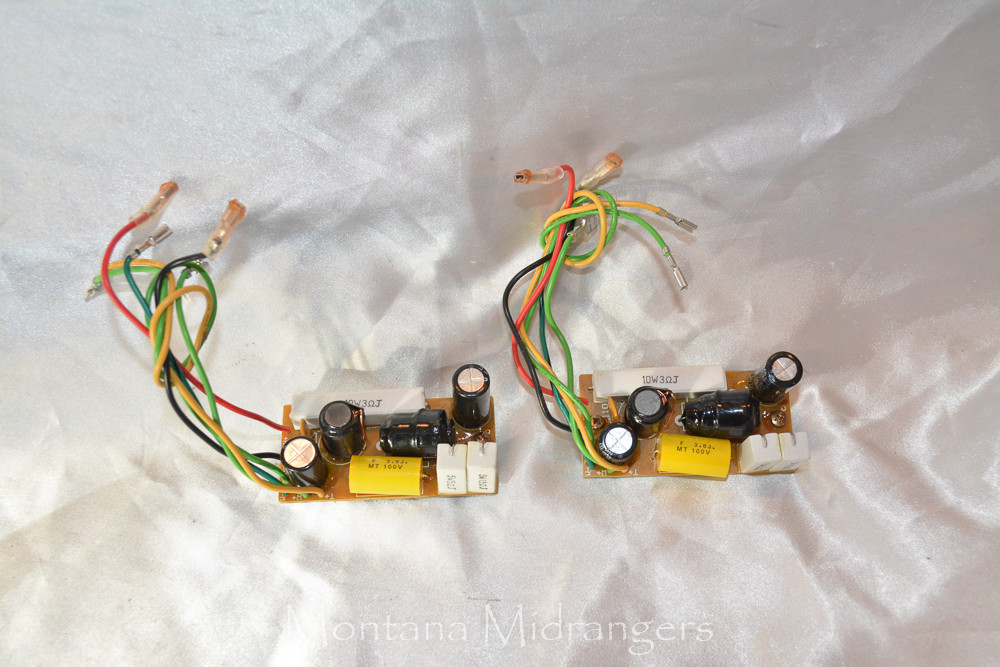
- Crossover Components: Electrolytic capacitors in the crossover may degrade after 30+ years. Replacing them with modern film capacitors can improve reliability and sound quality.
- Grilles: Original foam grilles are prone to disintegration. Replacement fabric grilles or custom mesh covers are recommended to preserve aesthetics and protect drivers.
- Binding Posts: Check for corrosion or loose connections. Upgrading to modern 5-way binding posts improves connectivity and appearance.
- Cabinet Care: Clean with a soft, dry cloth. Avoid harsh polishes; the original finish is typically a textured vinyl wrap that can be delicate.
Market Value and Collectibility
The Acoustic Research Edge Sequel is moderately collectible, rated 4/10 on the vintage audio scale. It appeals primarily to AR enthusiasts and those seeking affordable vintage speakers with solid engineering. In working condition, a pair typically sells for $100–$250, depending on cosmetic state and whether restoration has been performed. Fully restored units with upgraded tweeters and crossovers may command slightly higher prices, especially in regions with active vintage audio communities.
While not a blue-chip collectible, the Edge Sequel remains a smart choice for listeners who value accuracy, build quality, and the legacy of a pioneering audio brand.
eBay Listings
As an eBay Partner, we earn from qualifying purchases. This helps support our independent vintage technology research.
Service Manuals, Schematics & Catalogs
- Catalog — archive.org
- Catalog (1968) — archive.org
Related Models
- Acoustic Research research-ar-17 (1978)
- Acoustic Research AR-19 (1994)
- Acoustic Research AR-1W (1954)
- Acoustic Research AR-28S (1992)
- Acoustic Research AR-303a (1994)
- Akai AM-2850 (1975)
- Akai AP-206 (1975)
- Nakamichi BX-1 (1985)
- Acoustic Research AR-8BX (1983)
- Acoustic Research AR-915 (1985)