Acoustic Research AR-3a
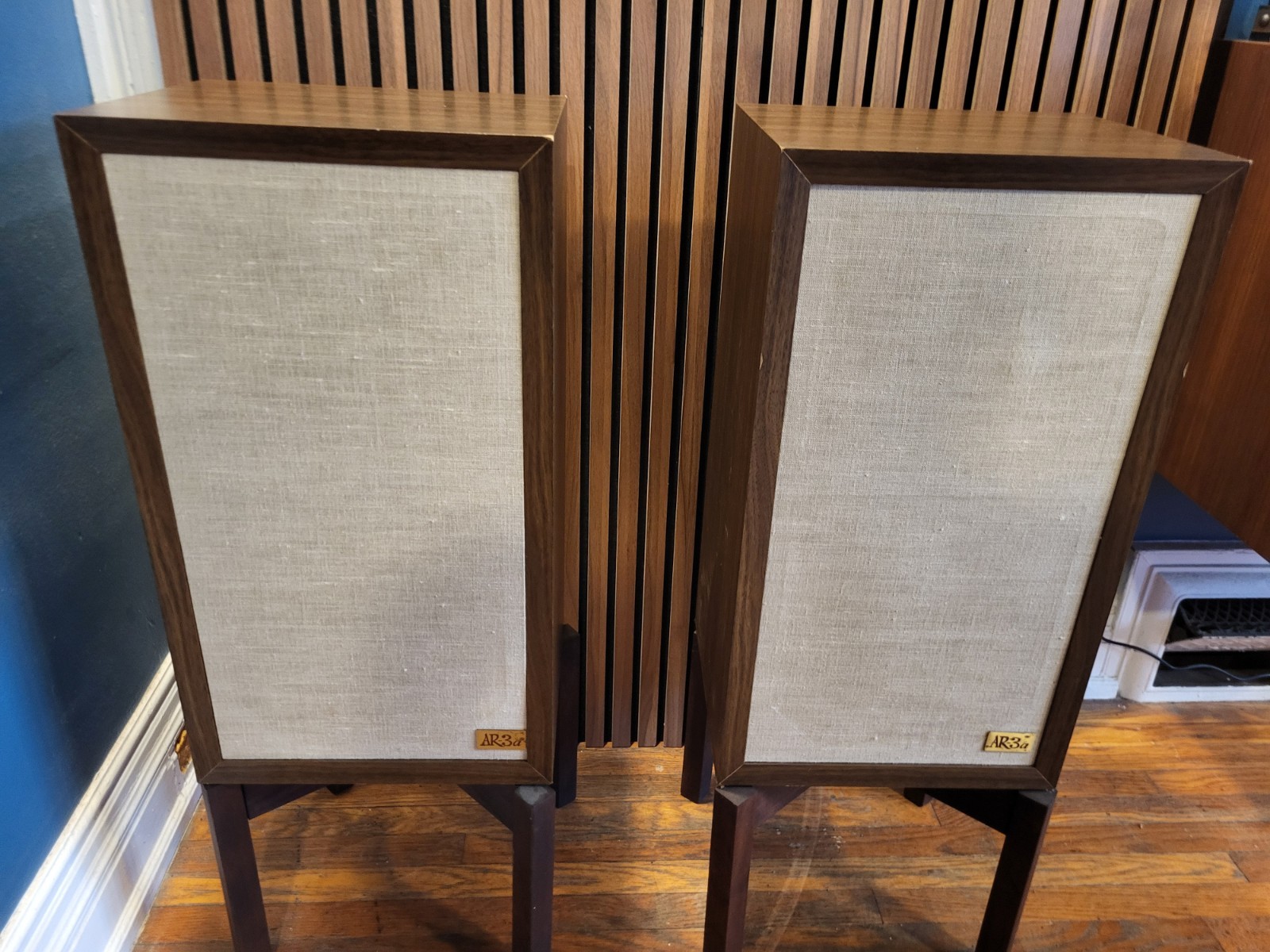
The Acoustic Research AR-3a is widely regarded as one of the most influential loudspeakers in the history of high-fidelity audio. Introduced in 1967, it represented the pinnacle of AR's engineering philosophy—accuracy, neutrality, and deep, controlled bass through acoustic suspension design. Revered by audiophiles and professional studios alike, the AR-3a set new standards for speaker performance and remained in production until 1975.
Specifications
| Feature | Specification |
| Model | AR-3a |
| Brand | Acoustic Research |
| Production Years | 1967–1975 |
| Design | 3-way, bass reflex with acoustic suspension |
| Woofer | 12-inch (30.5 cm) |
| Midrange Driver | 1.5-inch (3.8 cm) dome |
| Tweeter | 3/4-inch (1.9 cm) dome |
| Nominal Impedance | 4 ohms |
| Sensitivity | 86 dB (1W/1m) |
| Power Handling | Up to 100W RMS (stereo, dual channel) |
| Crossover Components | Oil-filled capacitors, precision resistors |
| Enclosure Type | Acoustic suspension |
| Level Controls | Adjustable sliders for midrange and tweeter output |
| Dimensions (H×W×D) | 25.5 × 14.5 × 12.5 inches (64.8 × 36.8 × 31.8 cm) |
| Weight | 62 lbs (28.1 kg) per cabinet |
| Frequency Response | 30 Hz to 20 kHz |
Historical Context
The AR-3a was the flagship model in Acoustic Research’s legendary line of acoustic suspension loudspeakers, developed under the leadership of engineer Edgar Villchur and refined by Henry Kloss. Building on the success of the AR-1 and AR-2, the AR-3a introduced a three-way driver configuration to achieve unprecedented accuracy across the frequency spectrum.
Its 12-inch woofer delivered deep, tight bass without the need for porting, thanks to the sealed acoustic suspension cabinet. The addition of a dedicated midrange driver and soft-dome tweeter allowed for exceptional clarity and reduced distortion in the critical vocal and upper-midrange regions.
The AR-3a became a staple in professional recording studios and high-end home audio systems throughout the 1970s. Its neutral sound signature made it ideal for critical listening, and its influence can be heard in the design principles of countless speakers that followed. It is often credited with helping define the "hi-fi golden era" and remains a benchmark for natural sound reproduction.
Sound Signature
The AR-3a is celebrated for its neutral, detailed, and smooth sonic character. Its bass is deep and well-controlled, avoiding the boominess common in ported designs of the era. The midrange is exceptionally clear and lifelike, making it ideal for vocal and acoustic music. The tweeter provides extended highs without harshness or listener fatigue—often described as "non-fatiguing" and "refined."
Compared to many modern speakers, the AR-3a is less bright and more balanced, favoring realism over exaggerated detail. This makes it a favorite among listeners who value musicality and long-term listening comfort.
Maintenance and Restoration Tips
Due to their age, most AR-3a speakers require some level of restoration to perform optimally. Here are common issues and recommended maintenance steps:
1. Woofer Foam Surrounds
- The original foam surrounds degrade over time, leading to flaking and loss of bass response.
- Solution: Replace with modern rubber or foam surrounds. Re-coning services are widely available from vintage audio specialists.
2. Crossover Components
- Oil-filled capacitors can dry out or leak, affecting sound quality and potentially damaging drivers.
- Solution: Replace capacitors and resistors with modern equivalents. Use high-quality film capacitors for best results.
3. Level Control Potentiometers
- The slide controls for midrange and tweeter levels are prone to crackling or failure due to oxidation.
- Solution: Clean with contact cleaner or replace with modern conductive plastic sliders. Some restorers bypass the controls for a fixed level if originality is not critical.
4. Grilles and Cabinet Finish
- Original grilles may be torn or missing. Cabinet veneer can show wear.
- Solution: Reproduce grilles using original specs. Refinish cabinets with care to preserve vintage value.
5. General Advice
- Always use a protective grill to prevent accidental damage to the delicate dome drivers.
- Avoid overdriving the speakers, especially with modern high-powered amplifiers.
- Store in a dry, temperature-stable environment to prevent further aging.
Collectibility and Market Value
The AR-3a ranks 9/10 in collectibility among vintage audio enthusiasts. Fully restored pairs in excellent condition command strong prices, while original un-restored units are valued for their authenticity.
- Unrestored, working condition: $800–$1,200 per pair
- Professionally restored, original parts: $1,500–$2,000 per pair
- Mint, original, rare finishes: Up to $2,500 per pair
Originality, especially in drivers and crossover components, significantly impacts value. Collectors often seek units with original documentation, grilles, and packaging.
Conclusion
The Acoustic Research AR-3a remains a landmark achievement in loudspeaker design. Its combination of technical innovation, sonic accuracy, and enduring build quality has secured its place in audio history. Whether used as a daily listener or preserved as a collector’s item, the AR-3a continues to deliver a listening experience that few speakers—vintage or modern—can match.
eBay Listings


As an eBay Partner, we earn from qualifying purchases. This helps support our independent vintage technology research.
Service Manuals, Schematics & Catalogs
- Catalog — archive.org
- Catalog (1968) — archive.org
Related Models
- Acoustic Research research-ar-17 (1978)
- Acoustic Research AR-19 (1994)
- Acoustic Research AR-1W (1954)
- Acoustic Research AR-28S (1992)
- Acoustic Research AR-303a (1994)
- Akai AM-2850 (1975)
- Akai AP-206 (1975)
- Nakamichi BX-1 (1985)
- Acoustic Research AR-8BX (1983)
- Acoustic Research AR-915 (1985)