Acoustic Research AR-17 (1978)
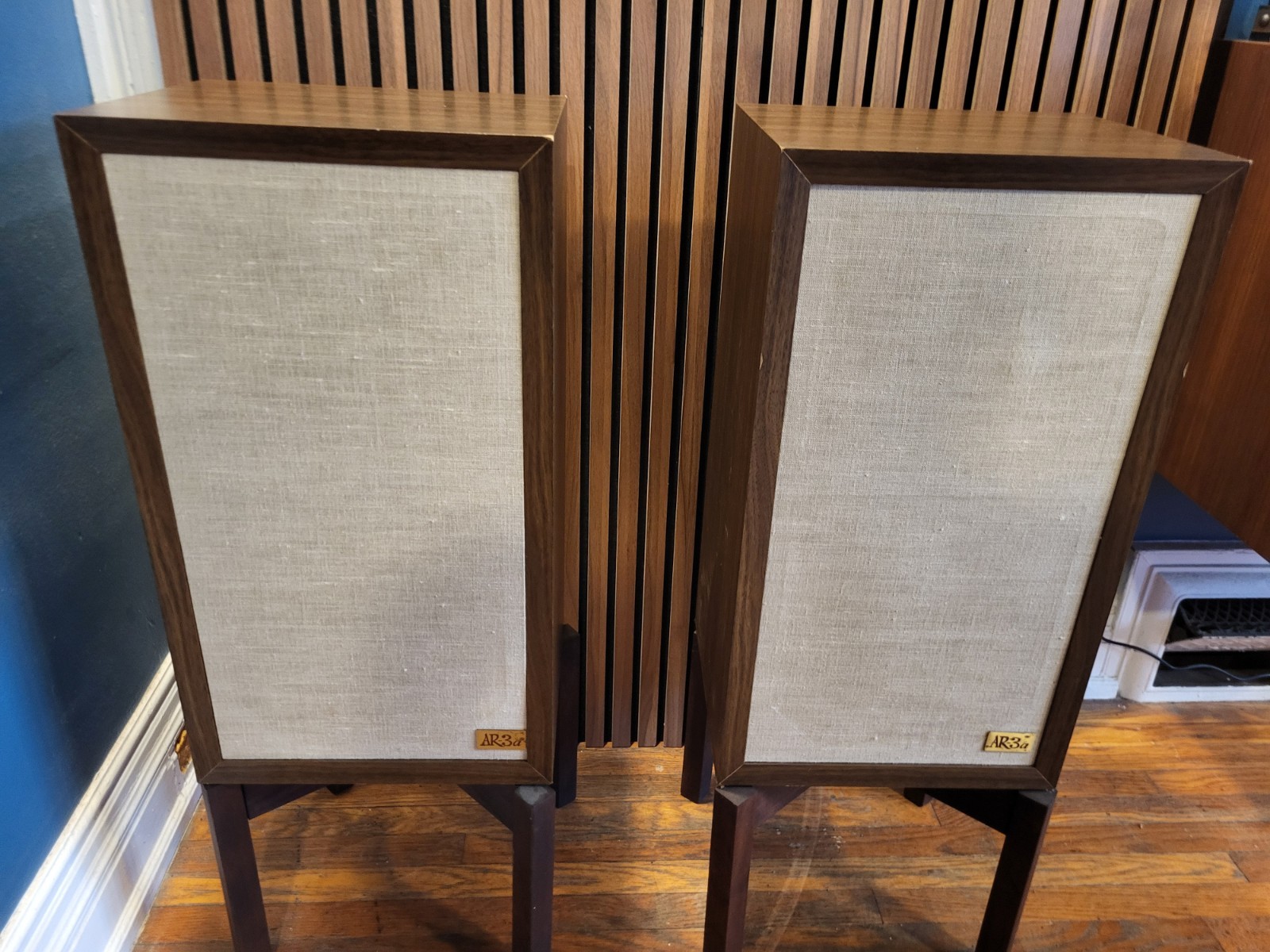
The Acoustic Research AR-17 is a compact bookshelf loudspeaker introduced in 1978 as part of AR's "Advanced Development" series. Designed to deliver high-fidelity sound at an accessible price point, the AR-17 became a favorite among audiophiles seeking accurate, balanced audio in smaller listening environments. With its acoustic suspension design and carefully engineered driver array, the AR-17 exemplifies AR’s commitment to scientific speaker design during the late 1970s.
Specifications
| Feature | Specification |
| Model | AR-17 |
| Production Years | 1978–1984 |
| Type | 2-way, passive, acoustic suspension |
| Woofer | 8-inch (20 cm) paper cone with foam surround |
| Tweeter | 1 x 32mm pressure |
| Crossover Frequency | 2,000 Hz |
| Power Handling | 50 watts RMS (per channel) |
| Nominal Impedance | 8 ohms |
| Sensitivity | 86 dB (1W/1m) |
| Frequency Response | 43 Hz – 25,000 Hz (DIN) |
| Cabinet Finish | Walnut veneer |
| Grille | Black foam with fabric cover |
| Dimensions (H×W×D) | 10.0 × 18.6 × 8.7 inches (25.4 × 47.3 × 22.2 cm) |
| Weight | 17 lbs (7.7 kg) per speaker |
Historical Context
The AR-17 was developed during a transitional period for Acoustic Research, following the company’s acquisition by Teledyne in the 1960s. As part of the Advanced Development (AD) series, the AR-17 was engineered to bridge the gap between high-performance flagship models like the AR-9 and more budget-conscious consumers. It retained core AR design principles—most notably the acoustic suspension alignment pioneered by Edgar Villchur—while simplifying construction to reduce cost.
Despite its compact size, the AR-17 delivered a remarkably neutral and transparent sound, making it popular in both home stereo setups and professional near-field monitoring applications. Its balanced tonality and tight bass response distinguished it from competitors who often emphasized bass boost for perceived "warmth." The AR-17 became a staple in many audiophile systems of the late 1970s and early 1980s, praised for its clarity and imaging precision.
Sound Signature
The AR-17 offers a neutral and balanced sound profile, with a focus on accuracy over coloration. Its 8-inch woofer provides tight, well-controlled bass, though it rolls off earlier than larger AR models—down to about 55 Hz. The 1-inch dome tweeter delivers smooth, non-fatiguing highs, avoiding the harshness found in some contemporary designs.
The crossover is well-integrated, resulting in a cohesive midrange and excellent vocal reproduction. While not a high-sensitivity speaker, the 88 dB output is manageable with mid-powered amplifiers of the era, including tube and solid-state models. Overall, the AR-17 excels in clarity, imaging, and tonal accuracy, making it ideal for jazz, classical, and vocal-centric listening.
Maintenance and Restoration Tips
Like many vintage speakers from this era, the AR-17 requires periodic maintenance to perform optimally:
- Foam Surround Replacement: The most common issue is degraded foam surrounds on the woofers, which can crumble over time due to age and environmental exposure. Replacing them with modern rubber or foam kits (widely available) restores bass response and prevents driver damage.
- Grille Care: The original foam grilles often sag or discolor with age. While some prefer to restore them with new fabric, others opt to remove them entirely for improved high-frequency clarity.
- Crossover Inspection: Though generally reliable, older capacitors in the crossover network may drift in value. If sound seems off after surround replacement, consider checking or recapping the crossover.
- Placement Tips: For best performance, place the AR-17 on sturdy stands, away from walls, and slightly toed-in. Their acoustic suspension design benefits from controlled room interaction.
Collectibility and Market Value
The AR-17 holds moderate collectible appeal, rated 6/10 among vintage audio enthusiasts. While not as rare or revered as the AR-3a or AR-7, it remains a respected performer in the compact speaker category.
- Market Value: $100–$300 per pair, depending on condition
- Unrestored: $100–$150
- Refurbished (foam replaced, clean cabinet): $200–$300
- Original, mint condition: Rare; may command higher prices
Well-maintained or professionally restored pairs are increasingly sought after, especially by listeners who value accurate, uncolored sound in small to medium rooms.
Conclusion
The Acoustic Research AR-17 stands as a testament to AR’s philosophy of scientific audio engineering made accessible. Though modest in size and power, it delivers a listening experience that remains relevant today. With proper care and restoration, the AR-17 continues to offer exceptional value and sonic integrity, making it a worthy addition to any vintage audio collection.
eBay Listings


As an eBay Partner, we earn from qualifying purchases. This helps support our independent vintage technology research.
Service Manuals, Schematics & Catalogs
- Catalog — archive.org
- Catalog (1968) — archive.org
Related Models
- Acoustic Research AR-19 (1994)
- Acoustic Research AR-1W (1954)
- Acoustic Research AR-28S (1992)
- Acoustic Research AR-303a (1994)
- Acoustic Research AR-8BX (1983)
- Akai AM-2850 (1975)
- Akai AP-206 (1975)
- Nakamichi BX-1 (1985)
- Acoustic Research AR-915 (1985)
- Acoustic Research research-edge-sequel (1988)