Acoustic Research AR3a (1967 – 1980)
There is a specific warmth in the human voice that emerges from the AR3a, a realism that makes listeners forget they are hearing a reproduction.
Overview
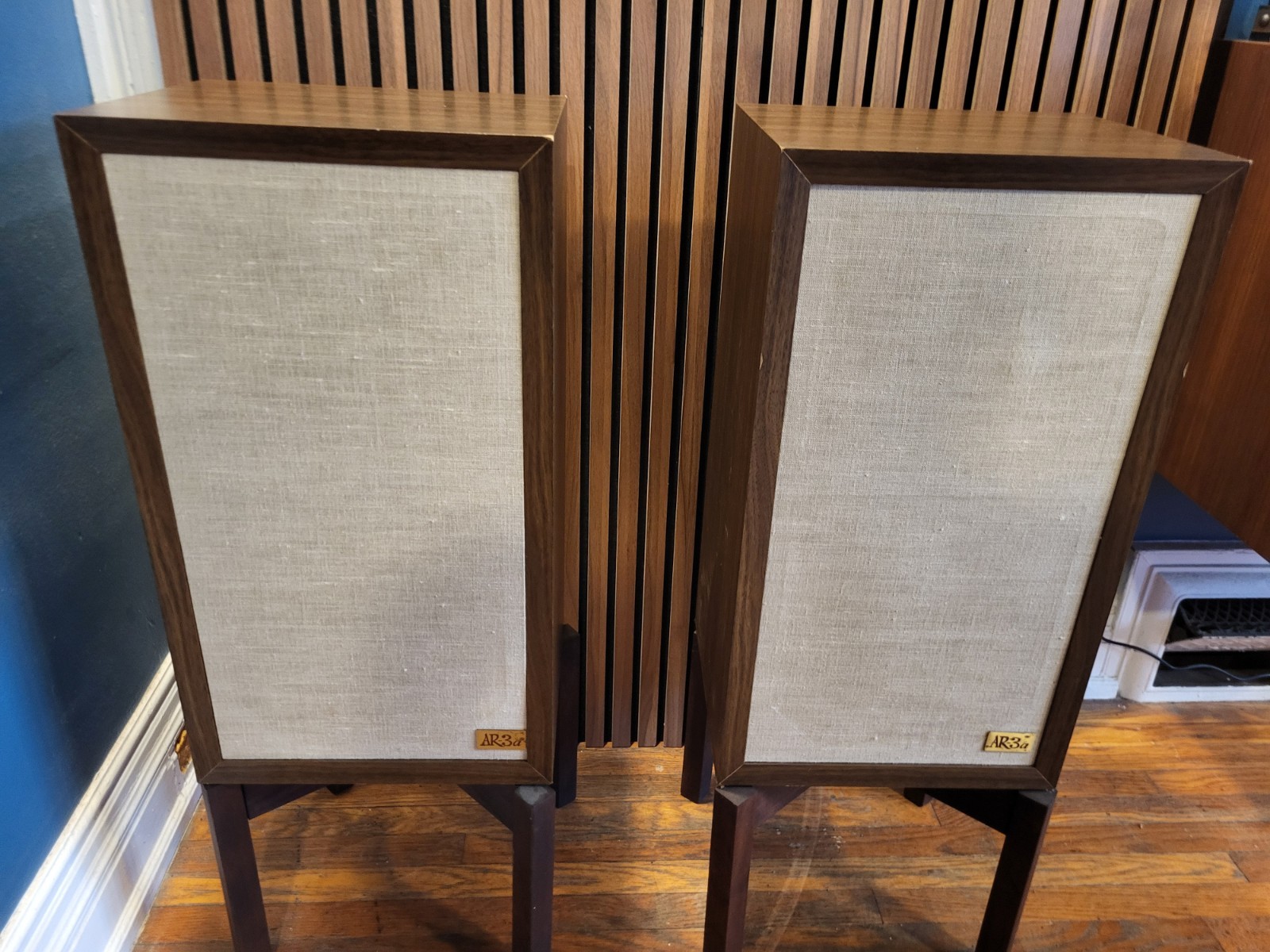
The Acoustic Research AR3a stands as a definitive arrangement of acoustic suspension engineering, capturing the moment when high fidelity shifted from laboratory curiosity to living room necessity. When this model arrived in the mid-1960s, it inherited the mantle of the original AR-3, a speaker so accurate that audiences in concert halls could not distinguish between a live string quartet and the recorded version played through the system. The AR3a refined that legacy with updated crossover networks and smaller dome drivers, claiming the title of the best home speaker system the company knew how to make at the time. Owners report that the cabinet vibrates with a confidence rare in modern equipment, delivering bass down to 30Hz without the port noise or distortion common in competing designs of the era.
This speaker represents a high-end flagship position within the classic Acoustic Research lineage, sitting above the ubiquitous AR-2ax while predating the monumental AR-5 and AR-7 super-systems. It was not merely a budget entry or a mid-range compromise; it was the primary tool for serious listeners who demanded transparency over coloration. Documentation shows that the company charged approximately $500 for a pair during its initial release, a fortune that signaled this equipment was intended for those who viewed audio as an investment rather than an accessory. The narrative surrounding the AR3a is not just about specifications, but about a cultural shift where music reproduction became so precise that the equipment itself seemed to disappear.
Specifications
| Manufacturer | Acoustic Research |
| Production Years | 1967 – 1980 |
| Original Price | $500 (pair) |
| Speaker Type | 3-way acoustic suspension |
| Woofer Diameter | 12 inch (305 mm) |
| Woofer Material | Paper pulp cone |
| Midrange Diameter | 1.5 inch (38 mm) |
| Midrange Type | Hemispherical dome |
| Tweeter Diameter | 0.75 inch (19 mm) |
| Tweeter Type | Hemispherical dome |
| Crossover Frequency 1 | 575 Hz |
| Crossover Frequency 2 | 5000 Hz |
| Nominal Impedance | 4 ohms |
| Recommended Power | Up to 100 watts per channel |
| Height | 25 inches (636 mm) |
| Width | 14 inches (356 mm) |
| Depth | 11.5 inches (289 mm) |
| Weight | 46 – 53 lbs (24 kg) |
| Enclosure Volume | 1.7 cu ft (48.2 litres) |
| Woofer Resonance (Free Air) | 18 Hz |
| Woofer Resonance (In Enclosure) | 42 Hz |
| Bass Extension | 30 Hz |
| Cabinet Finish | Walnut veneer |
| Grille Color | Cream |
| Control Locations | Midrange and high-frequency level controls on back |
Key Features
The Acoustic Suspension Woofer
The foundation of the AR3a performance lies in the tightly sprung 11.5-inch paper pulp cone woofer, a direct descendant of the technology that launched the acoustic suspension revolution. Service technicians observe that this driver relies on the elasticity of air within the sealed 1.7 cubic foot enclosure to provide the restoring force, eliminating the non-linear mechanical suspensions that caused bass distortion in conventional speakers of the period. This design choice allows the cone to move large distances linearly, producing low, powerful bass that reaches 30Hz without the port chuffing associated with bass reflex designs. The trade-off was low efficiency, requiring amplifiers capable of delivering up to 100 watts per channel, but the resulting accuracy in the low frequencies set a benchmark that competitors struggled to match for decades.
Dome Midrange and Tweeter
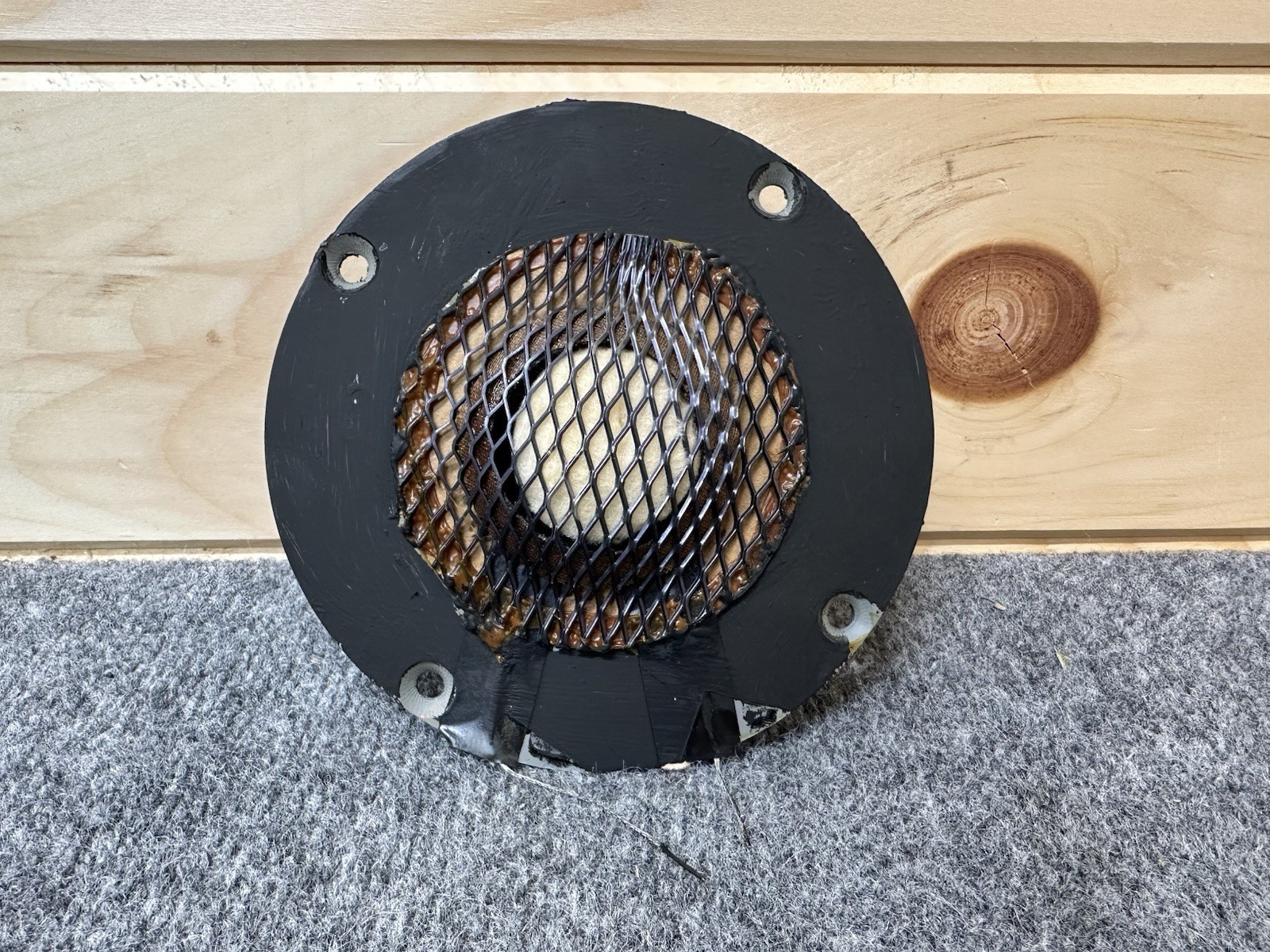
Acoustic Research placed a new set of smaller dome midrange and tweeter drivers into the cabinets to improve dispersion compared to the original AR-3. The 1.5-inch midrange and 0.75-inch tweeter utilize hemispherical dome geometry, which spreads high frequencies through a wide angle rather beaming them straight forward. Documentation from the owner's manual highlights that this technical difficulty allowed the laws of physics to operate to the listener's advantage, considerably improving the realism of music reproduction for listeners in all parts of the room. The crossover frequencies were adjusted to 575 Hz and 5000 Hz, lowering the midrange crossover point to enhance dispersion in the lower midrange frequencies where the original AR-3 had been more constrained.
Adjustable Controls
High and mid-frequencies can be additionally adjusted at the back of each speaker, granting the owner the ability to tune the output to the specific acoustic environment of the room. Collectors note that these controls often develop scratchy tones after decades of use, but the service procedure is straightforward and does not require specialized calibration equipment. The presence of these adjustments acknowledges that while the speaker was designed for accuracy, the listening space often dictated the final sound signature. This flexibility ensures that the AR3a can adapt to modern listening habits without sacrificing the core tonal balance engineered by Roy Allison.
Historical Context
The AR3a was built to capitalize on a moment when Acoustic Research held more than a third of the US market shares in the speaker market, the highest share ever measured in the industry at that time. By 1966, the company had grown from a niche laboratory into a dominant force, and the AR3a served as the flagship product that justified that market position. It took over the role of the original AR-3, which had been used in professional settings such as concert halls and record studios for nearly a decade. The industry moment was defined by a shift from large, inefficient cabinets to smaller, sealed enclosures that could deliver extended bass without occupying entire walls of a living room.
Competitors during this era struggled to replicate the flat response and wide dispersion of the AR3a without inflating the cabinet size or cost. The live versus recorded demonstrations conducted by Acoustic Research in the early 1960s, where listeners could not detect the switch between a live string quartet and the AR-3 system, created a reputation for unmet accuracy that the AR3a inherited. This reputation underlined the speaker's usage in professional settings and left a great impression as to how accurate the lineage has been. Even after the improved version was introduced, Acoustic Research continued to manufacture the original AR-3 until the 1970s, indicating that the AR3a was not a replacement due to failure, but an evolution of an already successful standard.
Collectibility & Value
Current market values for the AR3a range from $800 to $1400 for pairs in good condition, reflecting their status as impressing vintage speakers that still compete with modern equipment. Common failures primarily involve the foam surrounds on the woofer, which crumble over time due to material degradation. Owners report that replacement kits are available for approximately $30 and the install is a Saturday project that requires a calm hand and a little patience rather than particular skill. The mid-range and tweeter drivers are generally robust, but the level controls on the rear panel often require cleaning to eliminate scratchiness during adjustment.
Bring a raking light to examine the faceplate and walnut veneer, as sunlight exposure can dull the wood color over decades of storage. Restoration guides suggest using a very fine sandpaper and an oil finish to maintain the original wood color if the cabinets look out of color. Service technicians observe that maintaining the original Acoustic Research AR3a is less difficult than the newer AR-3 or original AR-3 models, as parts are easier to find and more units are on the market in general. A big plus for potential buyers is the huge variety of replacement parts available, including replacement screens and refoam kits found regularly on secondary markets. Buyers should be aware that they can cost quite a bit of money and sometimes it can be beneficial if they know how to restore vintage speakers, as many have worn down parts.
eBay Listings


As an eBay Partner, we earn from qualifying purchases. This helps support our independent vintage technology research.
Related Models
- Acoustic Research research-ar-17 (1978)
- Acoustic Research AR-19 (1994)
- Acoustic Research AR-1W (1954)
- Acoustic Research AR-28S (1992)
- Acoustic Research AR-303a (1994)
- Akai AM-2850 (1975)
- Akai AP-206 (1975)
- Nakamichi BX-1 (1985)
- Acoustic Research AR-8BX (1983)
- Acoustic Research AR-915 (1985)