Acoustic Research AR-9 (1978–1980s)
The first speaker that made audiophiles believe they could hear the recording studio from their living room.
Overview
It hits you before you even press play: the sheer physical presence of the AR-9. These aren’t just speakers; they’re monoliths of walnut-clad engineering ambition, standing over six feet tall and weighing nearly 130 pounds each. When Acoustic Research dropped the AR-9 in 1978, it wasn’t just another floorstander—it was a declaration that high fidelity had evolved from shelf-sized curiosities into full-range, room-filling orchestral instruments. This was the flagship of Teledyne Acoustic Research’s acoustic suspension dynasty, the culmination of decades spent perfecting sealed-box design, and for a brief moment in the late ’70s, it was the undisputed king of the audiophile world.
The AR-9’s magic starts with its four-way configuration—rare for the era and still impressive today. Dual 12-inch woofers (300mm) are mounted on either side of the cabinet, wired in parallel to halve excursion and double control. That means deeper, cleaner bass with less distortion, even at high volumes. Between them sits a 200mm midrange driver, isolated in its own subchamber to prevent interference, feeding into a 38mm dome mid-tweeter and a 19mm high-frequency dome. The crossover network, built with audiophile-grade components like 17 AWG air-core inductors, computer-grade electrolytic capacitors, and high-stability ceramic resistors, routes signals with surgical precision at 200 Hz, 1.2 kHz, and 7 kHz. But the real innovation lies in the “electronic automatic transmission” system—a proprietary circuit that dynamically adjusts damping at the woofer’s resonance frequency, maximizing control without sacrificing output. It’s like cruise control for bass: smooth, stable, and eerily precise.
And then there’s the sound. Owners consistently describe it as startlingly neutral, with a transparency that made other speakers of the era sound colored or compressed. The midrange is lush without being warm, the highs extended but never harsh. There’s no veil, no sonic signature to get in the way of the music. When properly set up—spaced well from walls, with the mid and high-frequency level controls dialed in—the AR-9 disappears, leaving only the illusion of musicians in the room. That’s why, even decades later, people who heard them as kids still chase that sound. One owner described listening to ELP’s “Still You Turn Me On” through his father’s pair as a near-spiritual experience. Others compare them favorably to six-figure modern systems. They weren’t just good for their time—they were generational.
Still, the AR-9 wasn’t for everyone. Its size alone disqualified it from most living rooms, and its 4-ohm nominal impedance (dipping to 3.2 ohms) demanded serious amplification. It didn’t play well with solid-state amps that couldn’t handle low impedances, and tube lovers often found it too revealing of upstream colorations. It was a speaker that demanded respect—and a properly tuned system—to shine.
Specifications
| Manufacturer | Acoustic Research (Teledyne) |
| Production Years | 1978–early 1980s |
| Original Price | $2,780 per pair (circa 1980) |
| Speaker Type | 4-Way, 5-Driver, Acoustic Suspension |
| Enclosure Type | Acoustic Suspension (Sealed) |
| Low Frequency Drivers | Two 300mm (12") cone woofers |
| Midrange Driver | 200mm (8") cone |
| Mid-High Driver | 38mm (1.5") dome |
| High Frequency Driver | 19mm (0.75") dome |
| Frequency Response | 18 Hz – 30 kHz |
| Low-Frequency Extension | 28 Hz (-3dB) |
| System Q | 0.5 |
| Impedance | 4 Ω (minimum 3.2 Ω) |
| Recommended Amplifier Power | 50–175W RMS (400W peak) |
| Output Sensitivity | 87 dB/W/m |
| Crossover Frequencies | 200 Hz, 1.2 kHz, 7 kHz |
| Crossover Components | 17 AWG air-core coil, computer-grade electrolytic capacitor, high-resistance ceramic resistor |
| Level Controls | Low: Automatic; Mid-Low, Mid-High, High: 3-step switches each |
| Internal Volume | 120 liters |
| External Dimensions (H×W×D) | 1340 × 381 × 402 mm (52.8" × 15" × 15.8") |
| Weight | 59 kg (130 lbs) per speaker |
| Finish | Walnut veneer with oil finish |
Key Features
The Twin-Woofer Power Play
Mounting two 12-inch woofers on either side of the cabinet wasn’t just for show—it was a structural and acoustic masterstroke. By wiring them in parallel, Acoustic Research effectively halved the mechanical load on each driver. This reduced cone excursion, minimized distortion, and allowed the system to handle massive power without flubbing the bass. It also helped mitigate boundary effects: because the woofers were placed symmetrically and fired inward, the cabinet’s interaction with the rear wall was dramatically reduced. The 200 Hz crossover point ensured that bass energy stayed below the frequency where room modes wreak havoc, resulting in tighter, more consistent low end across different listening spaces.
Acoustic Suspension Perfected
The AR-9 was the pinnacle of AR’s decades-long commitment to acoustic suspension design. Unlike bass reflex systems that rely on ports to augment low-frequency output, the sealed cabinet uses trapped air as a spring, providing linear restoring force and superior transient response. The 120-liter internal volume was carefully tuned to achieve a system Q of 0.5—critically damped for fast, accurate bass without overhang or boominess. Inside, an acoustic blanket made of proprietary sound-absorbing material lined the chamber, damping internal reflections that could smear the midrange. This attention to internal damping, combined with the sealed design, gave the AR-9 its legendary clarity and speed.
Proprietary Crossover Intelligence
The so-called “electronic automatic transmission” wasn’t a mechanical device but an electrical network designed to optimize woofer damping at resonance. At the driver’s natural resonance frequency, the circuit maximized damping from the amplifier, preventing overhang and tightening the bass. Above resonance, it electrically switched to maintain flat frequency response, even under high signal loads. This was a rare example of active-like behavior in a passive crossover, and it contributed significantly to the AR-9’s ability to remain composed at high volumes. Combined with premium components—like air-core inductors that avoid magnetic saturation and computer-grade capacitors with tight tolerances—the crossover delivered phase coherence and minimal signal loss.
Historical Context
The AR-9 arrived at a turning point in high-fidelity history. The 1970s saw a surge in home audio spending, driven by the rise of quadraphonic sound, high-quality reel-to-reel tapes, and increasingly powerful solid-state amplifiers. Competitors like JBL, KLH, and Advent were pushing the limits of bass response and efficiency, but often at the cost of accuracy. Acoustic Research, under the Teledyne umbrella, took the opposite approach: prioritize neutrality, transient response, and low distortion over raw volume or bass extension. The AR-9 was the ultimate expression of that philosophy.
It stood in direct contrast to popular models like the JBL L100 Century (which leaned on ported bass and horn-loaded mids for punch) and the Bose 901 (which used rear-firing drivers and equalization to simulate spaciousness). The AR-9 offered none of that theatricality—just a transparent window into the recording. Critics at the time noted its clinical precision, sometimes calling it “sterile” compared to warmer British speakers like the Quad ESL or Tannoy. But for purists, that neutrality was the point. It didn’t impose a sound; it revealed what was on the tape.
The AR-9 also marked the end of an era. By the mid-1980s, the market was shifting toward smaller, more efficient speakers, and the acoustic suspension formula—while technically superior—was being eclipsed by ported designs that offered more bass for less money. Acoustic Research itself would eventually lose its engineering independence under Teledyne, and the AR-9 became a swan song for the brand’s golden age.
Collectibility & Value
Today, the AR-9 is a trophy piece—rare, massive, and revered. Pairs in good condition typically sell between $1,800 and $3,500, with pristine, original examples fetching more. Condition is everything: original grilles, undamaged walnut veneer, and intact internal components can double a pair’s value. Refoamed units are common, but poorly executed refoams—especially on the large woofers—can ruin the bass response and are a red flag for buyers.
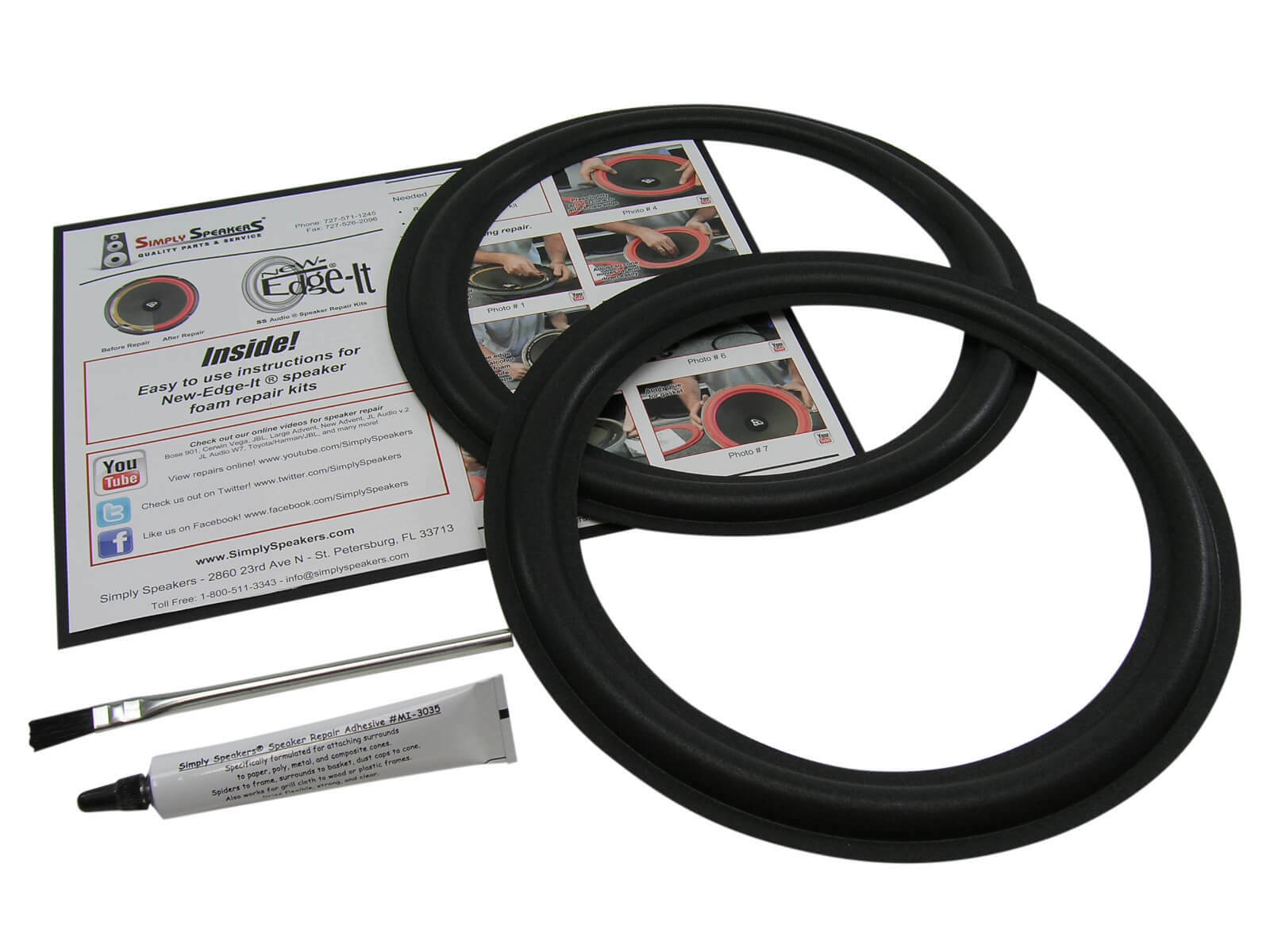
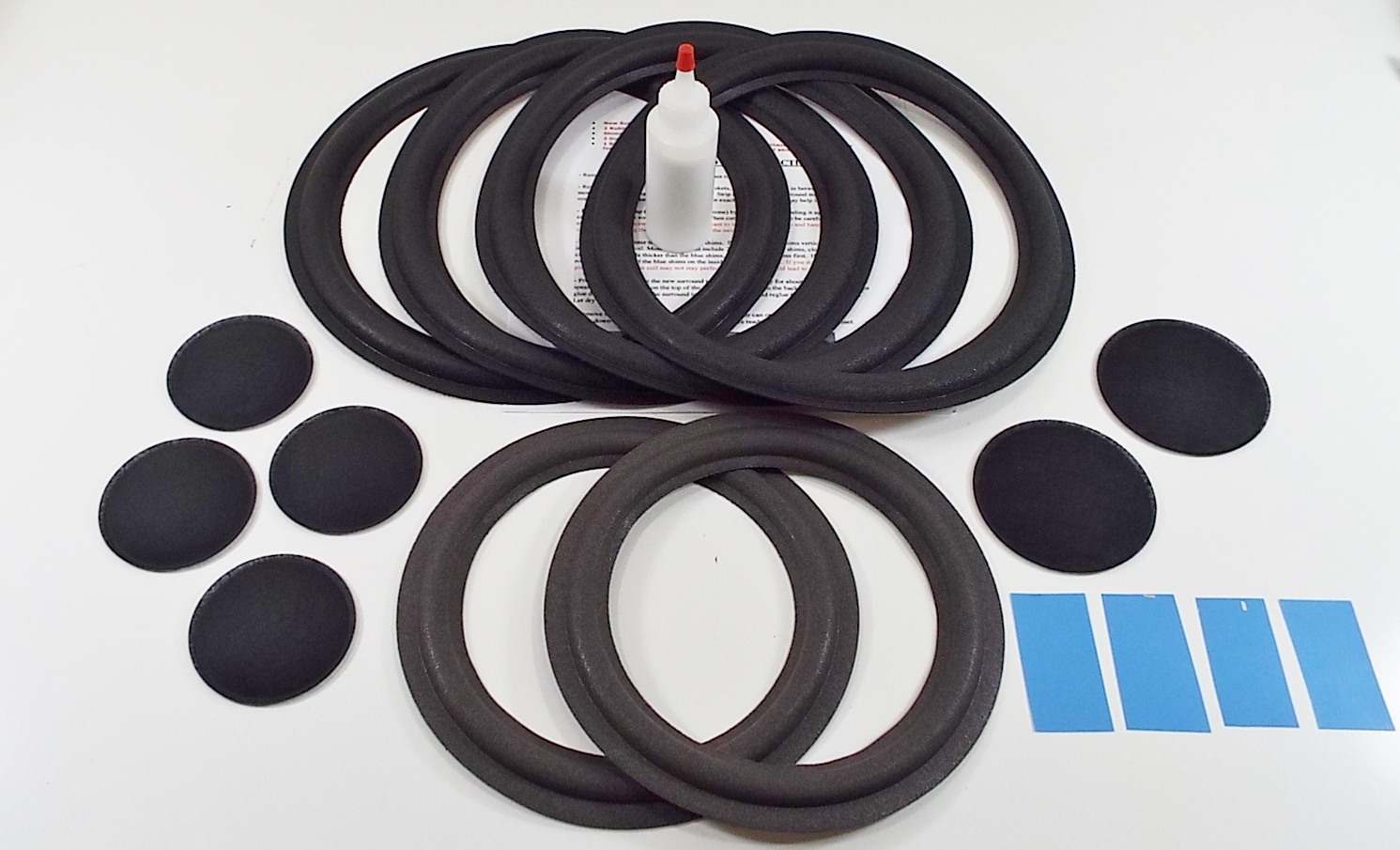
The most common failure points are the foam surrounds on the woofers and midrange drivers, which degrade over time and must be replaced. The original foam was high-quality, but nothing lasts 40+ years without deterioration. Replacing them requires skill, as misalignment or poor adhesion can cause rubbing or distortion. The crossover capacitors, while built to last, should be checked or replaced during restoration—especially the electrolytics, which can dry out and alter frequency response.
Buying advice: Always audition if possible. These speakers are unforgiving of poor setup. Listen for tight, articulate bass—if it’s flabby or one-sided, the woofers may be damaged or improperly refoamed. Check the level controls: they should click cleanly between positions without crackling. Verify that all drivers are original; replacement tweeters or midranges often don’t match the tonal balance. And be honest about space: these are not apartment speakers. They need room to breathe, and moving them is a two-person job.
Despite their age, well-maintained AR-9s still compete with modern high-end floorstanders. They’re not the most dynamic or bass-heavy by today’s standards, but their clarity, coherence, and lack of coloration remain remarkable. For collectors, they represent a landmark in speaker design—one of the first truly full-range systems that didn’t sacrifice accuracy for impact.
eBay Listings


As an eBay Partner, we earn from qualifying purchases. This helps support our independent vintage technology research.
Service Manuals, Schematics & Catalogs
- Catalog — archive.org
- Catalog (1968) — archive.org