Acoustic Research AR-7 (1972–1974)
Twisting the high-frequency level knob on the back panel reveals a deliberate engineering choice that prioritizes room interaction over raw on-axis accuracy.
Overview
The AR-7 sits at the bottom of the Acoustic Research ladder during the early 1970s, functioning as the entry point into the legendary acoustic suspension family. While larger siblings like the AR-3a commanded respect and higher prices, this compact two-way system offered the same philosophical approach to bass reproduction in a footprint designed for shelf mounting rather than floor placement. Owners report that the speaker demands a specific placement strategy; when positioned on a shelf, the mid-bass energy lifts to balance the upper midrange, a characteristic that vanishes if the unit is placed on the floor without stands.
Sound character leans toward the lively side of the spectrum, driven by wide dispersion properties that fill a room more effectively than narrow-beam competitors. Documentation shows the tweeter level switch was calibrated lower than later models, reflecting the brightness of vinyl records produced in the 1960s and 1970s. Modern listeners often find the "flat" position more satisfying for contemporary sources, while the "normal" setting drops output by another 2dB to tame aggressive highs. This adjustment capability remains one of the most practical features for adapting vintage gear to modern listening habits.
Physical construction varies significantly between units, with the majority clad in vinyl wrap while a rare minority feature real teak veneer. Restoration enthusiasts note that the oiled finish on wood cabinets makes refinishing simpler than lacquered alternatives, though the vinyl models require careful cleaning to avoid damaging the texture. Weight remains remarkably low at approximately 5 kg, allowing for easy relocation but requiring sturdy shelving to prevent resonance transfer from the furniture itself.
Specifications
| Manufacturer | Acoustic Research |
| Model | AR-7 |
| Type | 2-way, 2-driver loudspeaker system |
| Production Years | 1972–1974 |
| Country of Origin | USA |
| Original Price | Approx. $65–$70 USD |
| Woofer Size | 8 inch (acoustic suspension) |
| Tweeter Size | 1 1/4 inch (wide dispersion) |
| Impedance | 8 ohms |
| Frequency Response | 65–15 kHz ±2dB |
| Crossover Frequency | 2000 Hz |
| Recommended Amplifier Power | 15W minimum |
| System Resonance | 64 Hz (in cabinet) |
| Driver Free Air Resonance (Fs) | Approx. 25 Hz |
| Minimum Impedance | 5.5 ohms |
| Cabinet Finish | American Walnut or Teak Veneer (rare), Vinyl Wrap (common) |
| Dimensions (WxHxD) | 247 x 400 x 146 mm |
| Weight | 5 kg (11 lbs) |
| Front Fabric Color | Light Brown |
Key Features
Driver Compliance and Surround Technology
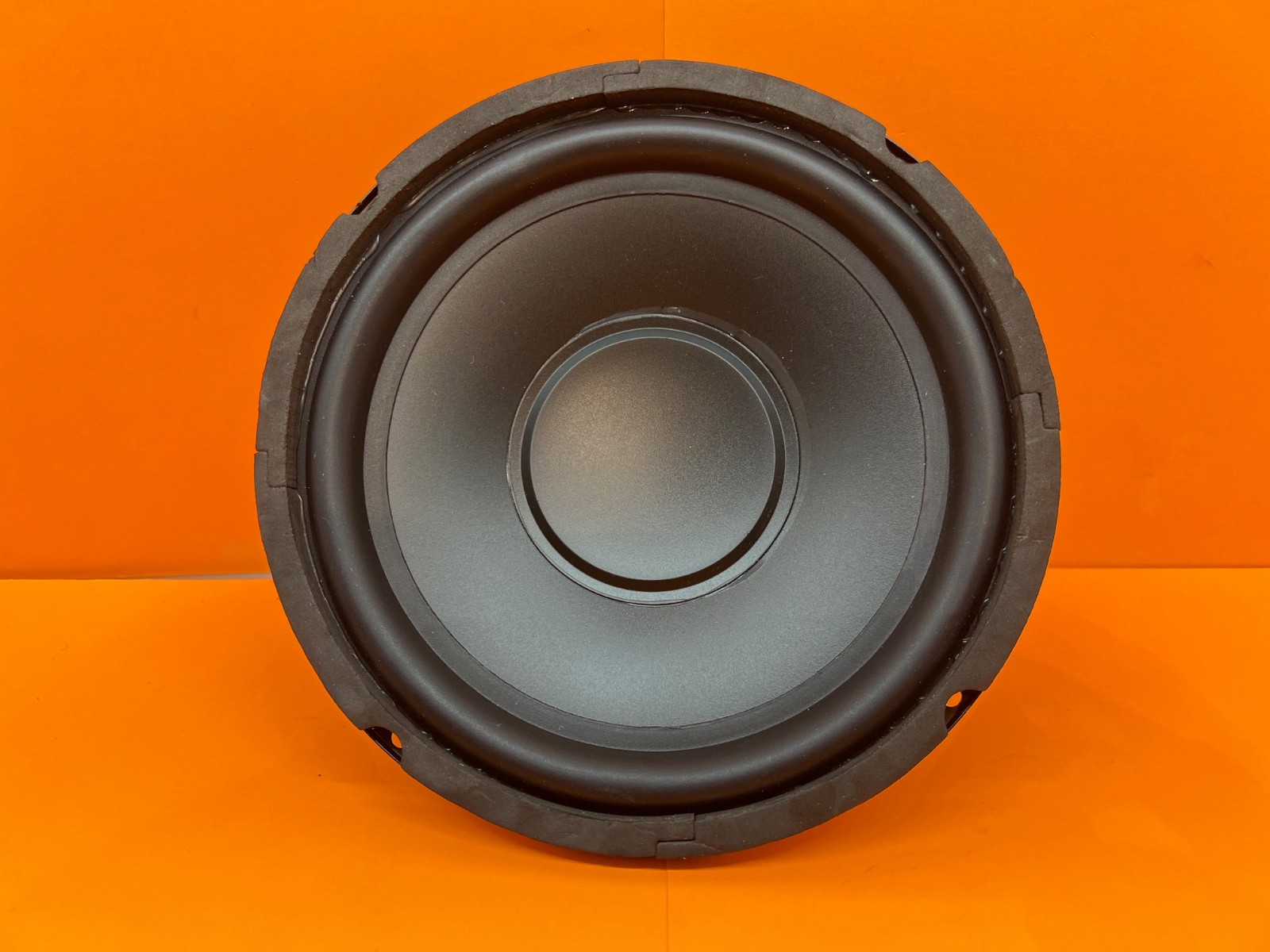
The 8-inch woofer relies on a specific compliance match to achieve the low free air resonance required for acoustic suspension performance. Service technicians observe that standard replacement foams often raise the resonance frequency, compromising the bass extension that defines the AR sound. Successful restoration requires surrounds manufactured with extreme softness to maintain the factory specification of approximately 25 Hz Fs. When fitted correctly, the system resonance locks at 64 Hz, preserving the tight, non-ported bass behavior that competitors with larger cabinets struggled to match.
Crossover Simplicity and Midrange Behavior
Internal circuitry utilizes a minimalist approach, employing a single 6µf capacitor to drive the bass unit without an inductor. This design choice contrasts with the larger AR-6, which used an inductor to pull down the upper end of the bass driver's range. Analysis suggests the inductor was omitted on the AR-7 to reduce costs for this entry-level model, resulting in a slight midrise that becomes audible during critical listening. While this adds presence to vocals, it can introduce fatigue if the tweeter level is not adjusted to compensate for the forward midrange energy.
Cabinet Finish Variations
Surviving units display a clear hierarchy in finish quality, with vinyl wrap dominating the production volume and real wood veneer appearing as a premium option. Collectors note that the vinyl models resist physical damage better over decades, while the wood versions offer aesthetic warmth but require periodic oiling to prevent drying. The brass badge on the front grille often suffers from adhesive discoloration if the plastic protective covering was never removed during the 1970s, requiring careful polishing with brass cleaner to restore the original luster without damaging the surrounding fabric.
Historical Context
Acoustic Research dominated the high-fidelity market in the early 1970s by proving that small cabinets could produce deep bass through suspension physics rather than box volume. The AR-7 entered the scene as a budget-friendly alternative to the flagship models, targeting consumers who wanted the AR brand reputation without the footprint of a floor-standing monitor. Competitors during this period focused on ported designs to achieve efficiency, but AR maintained the sealed box philosophy to ensure linearity and low distortion at the expense of sensitivity.
The industry moment favored compact speakers for apartment living and shelf placement, as dedicated speaker stands were not yet standard furniture in average homes. This AR-7 was engineered to thrive in that environment, leveraging boundary reinforcement from shelves to boost the lower midrange. As the decade progressed, listener preferences shifted toward higher efficiency and louder dynamic range, pushing acoustic suspension designs into a niche role reserved for purists who prioritized bass accuracy over volume capability.
Collectibility & Value
Market prices for the AR-7 fluctuate based on cabinet condition and driver integrity, with restored pairs commanding premiums over unrestored examples. Recent listings show values ranging from $160 for functional vintage pairs to €250 for fully restored units with new surrounds and capacitors. The rarity of the teak veneer finish adds a significant multiplier to value, as most surviving examples are the vinyl-wrapped variants. Buyers should verify the tweeter switch functionality before purchase, as corrosion on the contacts can cause intermittent signal loss in the high frequencies.
The most critical failure point remains the woofer foam surround, which disintegrates over time due to environmental exposure. Replacement costs vary depending on the supplier, but generic foams often fail to match the compliance required for the 25 Hz resonance target. Ownership quirks include the need for capacitor replacement in the crossover network, where old electrolytic components drift from their original values and alter the tonal balance. Service records indicate that a Solen capacitor replacement restores the intended frequency split, ensuring the 2000 Hz crossover point remains accurate.
Pair matching represents another hidden challenge, with vintage reviews noting variance of up to 12.3dB between speakers in some batches. This discrepancy suggests that buyers should test both units individually to ensure consistent output levels before integrating them into a stereo system. Despite these potential issues, the restoration economy supports this model well, with dedicated suppliers offering compliant surrounds that allow the driver to work perfectly to factory spec once installed.
eBay Listings



As an eBay Partner, we earn from qualifying purchases. This helps support our independent vintage technology research.
Service Manuals, Schematics & Catalogs
- Catalog — archive.org
- Catalog (1968) — archive.org