Acoustic Research AR-3 (1959)
The Acoustic Research AR-3 is widely regarded as one of the most influential loudspeakers in the history of high-fidelity audio. Introduced in 1959 by Acoustic Research (AR), the AR-3 represented a revolutionary leap in speaker design and helped define the standards for accurate sound reproduction in home audio systems. Designed under the leadership of Dr. Edgar Villchur and further refined by Henry Kloss, the AR-3 set a new benchmark for compact, full-range speaker performance and became a favorite among audiophiles, recording engineers, and music lovers alike.
Acoustic Suspension Innovation
The AR-3’s most significant contribution to audio engineering was its use of the acoustic suspension principle, a technology pioneered by Dr. Villchur in the early 1950s. Before this innovation, most loudspeakers used bass reflex or infinite baffle designs, which often suffered from boomy, distorted low-frequency response. The acoustic suspension design employed a sealed cabinet with a highly compliant (soft) surround and airtight enclosure, allowing the air inside the cabinet to act as a spring for the woofer cone. This resulted in tighter, more controlled bass with significantly reduced distortion—especially at lower frequencies.
This design allowed the AR-3 to deliver deep, articulate bass from a relatively compact cabinet, a feat that was nearly unheard of at the time. The sealed enclosure also eliminated the time-smearing and phase anomalies associated with ported designs, contributing to a more accurate and time-coherent sound.
Design and Components
The AR-3 is a two-way speaker system featuring a 12-inch woofer and a unique high-frequency unit. The woofer, designated the AR-12d, was specifically engineered for the acoustic suspension system. It featured a large magnet structure, a doped paper cone, and a cloth surround, all optimized for low distortion and extended low-frequency response down to around 35 Hz.
For high frequencies, the AR-3 used the AR-1 tweeter, a 1-inch dome compression driver coupled to a folded horn (also known as a "labyrinth" or "phase plug") that provided smooth, extended response up to 15 kHz. This high-frequency unit was mounted coaxially in the center of the woofer, creating a point-source configuration that improved imaging and off-axis dispersion. This coaxial design contributed to the AR-3’s renowned stereo imaging and lifelike soundstage.
The crossover network, located inside the cabinet, was a first-order (6 dB/octave) design, which minimized phase shift and preserved the time alignment between the drivers. This simplicity in crossover design was a hallmark of AR’s engineering philosophy—prioritizing transparency and natural sound over complex filtering.
Cabinet and Aesthetics
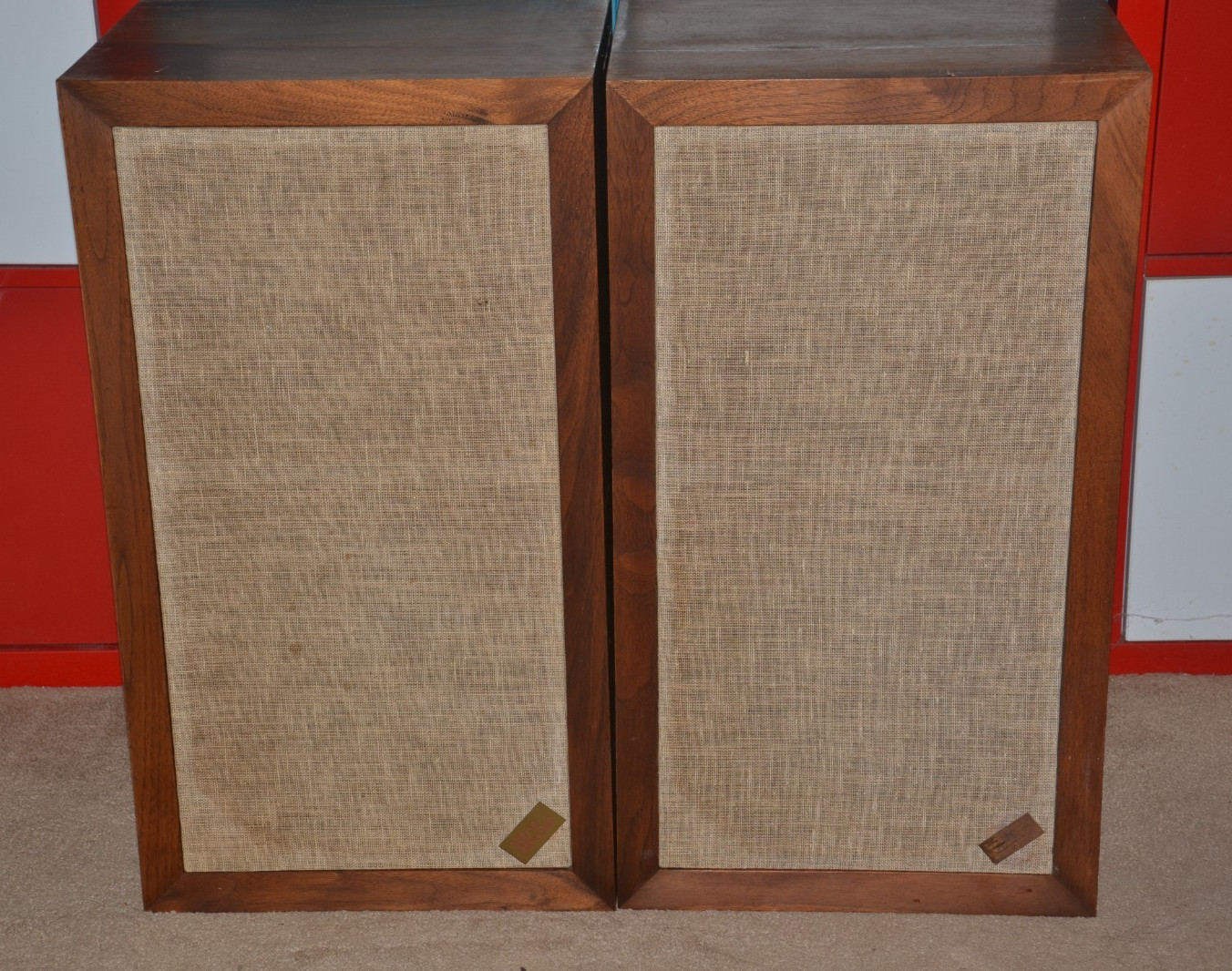
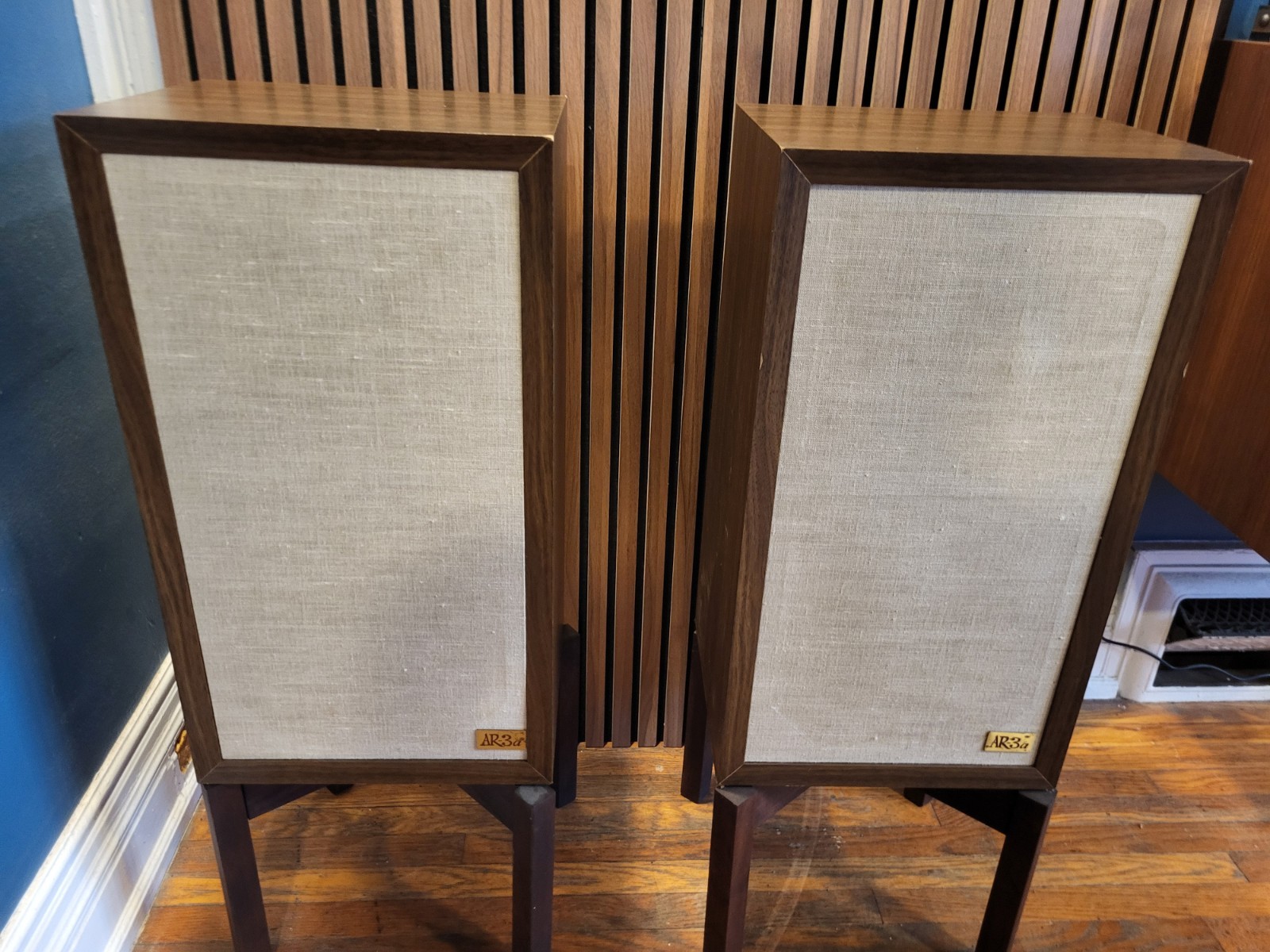
The AR-3’s cabinet was constructed from high-quality plywood and finished in a luxurious real walnut veneer, giving it a warm, elegant appearance that blended well with mid-century home decor. The speaker measured approximately 22 inches high, 13 inches wide, and 10 inches deep, making it a substantial but not overly large floor-standing speaker for its era.
The front baffle was slightly curved, which helped reduce diffraction effects and improve high-frequency dispersion. The grille was a removable fabric cover stretched over a wooden frame, protecting the drivers while maintaining acoustic transparency.
Performance and Sound Characteristics
The AR-3 was celebrated for its natural, uncolored sound. Unlike many speakers of the time that emphasized brightness or exaggerated bass, the AR-3 aimed for accuracy and neutrality. Its frequency response ranged from 35 Hz to 15 kHz with a tolerance of ±2 dB, an impressive specification for the late 1950s.
Listeners and critics praised the AR-3 for its detailed midrange, smooth treble, and remarkably tight bass. Vocals and acoustic instruments were rendered with exceptional clarity and presence. The speaker’s ability to reproduce the spatial cues in recordings made it a favorite in professional studios and broadcast facilities, where accurate monitoring was essential.
The AR-3 had a nominal impedance of 8 ohms, making it compatible with a wide range of tube and early solid-state amplifiers. While it was not particularly efficient—sensitivity was around 86 dB (1W/1m)—it responded well to quality amplification and could deliver satisfying volume levels in medium-sized rooms.
Legacy and Impact
The AR-3 was not just a commercial success—it was a cultural and technical milestone. It helped popularize the concept of the “hi-fi” speaker for the average consumer, bringing high-fidelity sound out of specialty shops and into living rooms across America. By 1960, Acoustic Research had become the largest loudspeaker manufacturer in the United States, largely due to the popularity of the AR-3 and its siblings like the AR-2 and AR-1.
The AR-3 also influenced a generation of speaker designers. Its emphasis on measured performance, low distortion, and time-domain accuracy laid the groundwork for the modern high-end audio industry. Companies like Bose (founded by AR alum Amar Bose), KLH, and Advent were directly inspired by AR’s engineering principles.
Production of the AR-3 continued until 1967, when it was succeeded by the AR-3a—an updated version with improved materials and slightly refined response. The AR-3a became even more iconic, but the original AR-3 remains a sought-after collector’s item and a symbol of audio innovation.
Collectibility and Modern Relevance
Today, original AR-3 speakers are prized by vintage audio enthusiasts. Well-preserved pairs with functional drivers and clean cabinets can command high prices in the collector’s market. Restorations are common, with many owners replacing foam surrounds and repairing aging components to bring the speakers back to their original performance.
While modern speakers often surpass the AR-3 in raw specifications, few match its historical significance or the charm of its analog warmth. In an age of digital processing and active speakers, the AR-3 stands as a testament to elegant, physics-based engineering and the pursuit of musical truth.
Conclusion
The Acoustic Research AR-3 is more than just a vintage speaker—it is a landmark in audio history. Its pioneering use of acoustic suspension, point-source coaxial design, and commitment to sonic accuracy reshaped the loudspeaker industry. For audiophiles, engineers, and historians, the AR-3 represents a golden era of innovation, where scientific rigor met musical passion. Whether used as a primary system or appreciated as a classic artifact, the AR-3 continues to inspire reverence and admiration over six decades after its debut.
eBay Listings


As an eBay Partner, we earn from qualifying purchases. This helps support our independent vintage technology research.
Service Manuals, Schematics & Catalogs
- Catalog — archive.org
- Catalog (1968) — archive.org
Related Models
- Acoustic Research research-ar-17 (1978)
- Acoustic Research AR-19 (1994)
- Acoustic Research AR-1W (1954)
- Acoustic Research AR-28S (1992)
- Acoustic Research AR-303a (1994)
- Akai AM-2850 (1975)
- Akai AP-206 (1975)
- Nakamichi BX-1 (1985)
- Acoustic Research AR-8BX (1983)
- Acoustic Research AR-915 (1985)