Acoustic Research AR-10pi (1977–1980s)
The last word in AR’s golden era—deep, taut bass and switchable voicing that let you tune the room, not the speakers.
Overview
When you first see a pair of AR-10pi speakers, their presence is both imposing and understated—a paradox that mirrors their sound. These aren’t flashy boxes with flared ports or glossy finishes; they’re serious instruments wrapped in real walnut veneer, built like lab equipment for the living room. Standing nearly two and a half feet tall, they carry a heft—55 pounds each—that tells you this isn’t consumer fluff. The AR-10pi arrived in 1977 as Acoustic Research’s top-tier floorstander, a no-compromise evolution of the legendary AR-3a lineage, but with a twist: unprecedented user control over tonal balance. Where most speakers of the era demanded you adapt your room to them, the 10pi flipped the script. Three front-mounted rocker switches—hidden behind a flip-down panel—let you adjust woofer output and midrange/tweeter levels to match your space and taste. It was a rare moment when high-end accuracy met genuine usability, and it still feels advanced today.
Sonically, the 10pi splits the difference between the warmth of vintage hi-fi and the clinical precision that would dominate the 1980s. The 12-inch acoustic suspension woofer delivers bass that’s deep (down to 27 Hz on paper) but never loose—a hallmark of AR’s air-spring design. Unlike ported speakers that can boom or overhang, the 10pi’s low end stays tight, articulate, and shockingly powerful for a sealed cabinet. The midrange, handled by a 1.5-inch hemispherical fabric dome, is clear and neutral, avoiding the cupped-hands coloration that plagued many contemporaries. The 3/4-inch tweeter, coated and padded to reduce diffraction, offers smooth, extended highs without harshness. Together, they form a 3-way system with a coherence that’s rare even among modern designs. The crossover—using air-core inductors and computer-grade capacitors—was engineered for minimal phase shift, contributing to a soundstage that’s wide, stable, and eerily precise. When properly set up, a pair of 10pis can make a string quartet feel like it’s playing in your room, not just through your speakers.
Despite its flagship status, the 10pi wasn’t a runaway success. It was expensive—more so than the revered AR-3a—and launched alongside the simpler AR-11, which used the same drivers but lacked the 10pi’s adjustable voicing. That made the 10pi a niche product, even in its day. Today, that rarity gives it cult status among AR collectors. It’s not just a speaker; it’s the final statement of a company that once defined American high fidelity, built during the twilight of AR’s independence before Teledyne took over and the brand’s focus began to shift.
Specifications
| Manufacturer | Acoustic Research |
| Production Years | 1977–1980s |
| Original Price | $1,295 per pair (1977) |
| Drive Units | Low-Frequency: 300 mm (12 in.) acoustic suspension woofer; Mid-Frequency: 38 mm (1.5 in.) hemispherical fabric dome; High-Frequency: 19 mm (0.75 in.) hemispherical fabric dome |
| Crossover Frequencies | 525 Hz, 5000 Hz |
| Frequency Response | 27 Hz – 30 kHz |
| Impedance | 4–8 Ω (nominal, switch-dependent) |
| Sensitivity | 86 dB SPL (1 watt, 1 meter, on axis) |
| Amplifier Power Requirement | 25 watts per channel for 100 dB SPL in a 3000 cu ft room |
| Power Handling | 100 watts nominal, up to 250 watts peak |
| Controls | Three 3-position switches: woofer environmental control, midrange level, highrange level |
| Cabinet Volume | 41.9 liters (1.48 cu ft) |
| Dimensions | 354 x 635 x 273 mm (13.9 x 25 x 10.7 in) |
| Weight | 24.9 kg (55 lb) each |
| Crossover Network | Half-section LC network with air-core chokes and bipolar electrolytic capacitors |
| System Resonance Frequency | 42 Hz |
| System Low Frequency Response | -3 dB at 35 Hz |
| Driver Resonance Frequencies | Woofer: 18 Hz (free air), Midrange: 400 Hz, Tweeter: 400 Hz |
| Flux Density | Woofer: 9800 gauss, Midrange: 13000 gauss, Tweeter: 14000 gauss |
Key Features
Room-Adaptive Voicing Switches
The AR-10pi’s most radical feature was its trio of 3-position switches mounted on the top front panel, tucked behind a hinged door. The woofer environmental control adjusts bass output based on placement—ideal for speakers near walls, in corners, or out in the room. The midrange and tweeter level switches let you tame a bright room or liven up a dull one. This wasn’t just EQ; it was a holistic recalibration of the speaker’s energy balance, achieved via autotransformer networks in the crossover. In an era when most high-end speakers were “set and forget,” this level of user control was almost unheard of in consumer gear. Recording studios took note—some engineers used 10pis as nearfields because the switches allowed quick tonal matching without external processors.
Acoustic Suspension Bass with Modern Control
The 12-inch woofer is pure AR DNA: a high-compliance cone in a sealed 1.48 cu ft cabinet, using air as the restoring spring. This design eliminates port noise and minimizes distortion, delivering bass that’s deep and tight, not boomy. The system resonance sits at 42 Hz, with a -3 dB point at 35 Hz—remarkable for a sealed box in the 1970s. Unlike later ported designs that sacrificed transient accuracy for output, the 10pi’s bass hits hard and stops on a dime. It’s the kind of low end that makes acoustic bass feel physical, not just audible. And because it’s not dependent on a tuned port, the bass remains consistent across different volumes and room placements—especially when paired with the environmental switch.
Coherent 3-Way Crossover with Premium Components
AR didn’t cut corners on the crossover. The half-section LC design uses air-core inductors to avoid magnetic saturation and computer-grade bipolar electrolytic capacitors for stable performance. The result is a phase-coherent transition between drivers, contributing to a seamless tonal handoff and a stable stereo image. The use of autotransformers for level adjustment is particularly clever—it maintains impedance stability across switch settings, so your amplifier isn’t punished when you tweak the voicing. This attention to electrical behavior is why the 10pi can work well with both vintage tube amps and modern solid-state designs, as long as they can handle the 4–8 Ω load.
Historical Context
The AR-10pi arrived at a turning point. By 1977, Acoustic Research had already cemented its legacy with the AR-3 and AR-3a, speakers that defined accuracy in an era of colored, boomy alternatives. But the market was shifting. Japanese brands like Sony, Pioneer, and Kenwood were flooding the U.S. with sleek, high-powered systems, and even AR’s parent company, Teledyne, was pushing for broader appeal. The 10pi was AR’s answer: a speaker that retained the brand’s scientific rigor but added practical flexibility for real-world rooms. It shared drivers with the AR-3a and AR-11, but its switchable voicing set it apart as the engineer’s choice. Competitors like JBL, KLH, and Advent offered powerful or efficient designs, but none matched the 10pi’s blend of neutrality, adjustability, and measured performance. It was also one of the last true AR designs before the brand’s identity began to dilute under corporate ownership—making it a symbolic endpoint of the Villchur/Kloss era.
Collectibility & Value
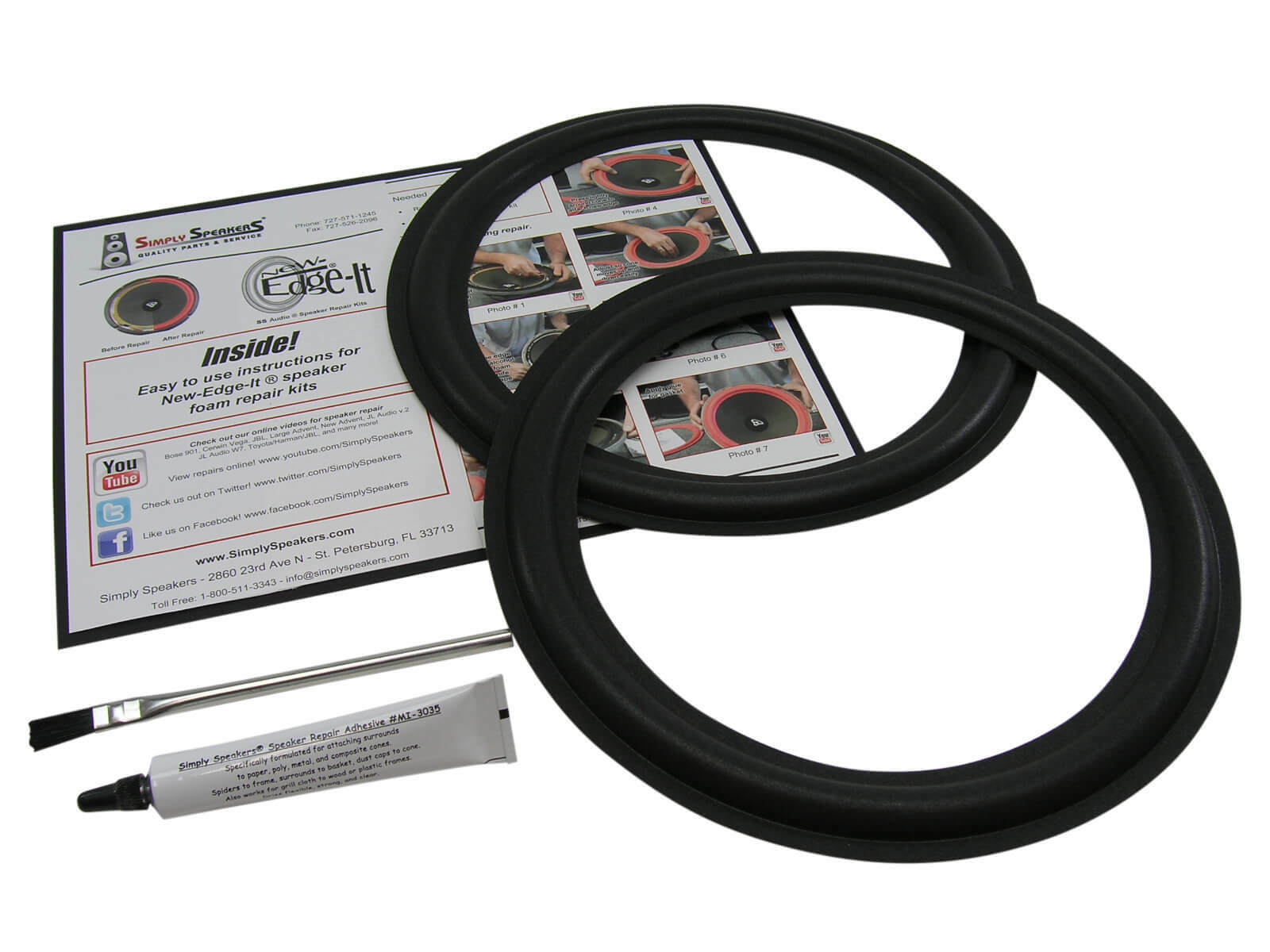
Today, the AR-10pi is a sought-after piece among vintage audio collectors, but condition is everything. Prices vary wildly: unrestored pairs with original foam rotting and drivers failing can go for $200–$400, while fully restored units from reputable shops like Holt Hill Audio or SkyFi Audio command $1,200–$1,700. The difference is in the work. The original foam surrounds on the 12-inch woofers almost always need replacement—this isn’t optional maintenance, it’s essential. The midrange and tweeter domes are more durable, but they can suffer from age-related stiffness or damage from overdriving. Re-foaming a pair properly, including recapping the crossover if needed, can cost $400–$600, so factor that into any purchase.
Look for original badges, real wood veneer (not laminate), and intact switch mechanisms—these are signs of a well-kept unit. The original foam grilles are rare; most surviving pairs have been re-grilled or lack them entirely. Avoid units with cabinet cracks or water damage, as the MDF-like material used in the enclosures doesn’t repair well. When buying, ask if the crossover has been inspected—old electrolytic capacitors can leak and damage the circuit board. If you’re buying unrestored, budget for service. But if you find a clean, restored pair, you’re getting a piece of audio history that still competes with modern speakers in clarity and balance. For the price of a new bookshelf pair, you can own a flagship from AR’s golden age—just don’t expect Bluetooth or a remote.
eBay Listings


As an eBay Partner, we earn from qualifying purchases. This helps support our independent vintage technology research.